
Post-traumatic stress disorder is not a phase, a weakness, or something that resolves on its own with enough time. For many veterans, particularly those who experienced combat, military sexual trauma, or other high-stress service events, PTSD is a long-term condition that shapes the way they experience the world, their relationships, their environment, their sense of safety, and their ability to accept help from others.
As veterans age and begin to need support at home, PTSD does not step aside to make caregiving easier. In many cases, it becomes more pronounced when old triggers resurface when structure disappears, hypervigilance increases under the stress of health decline, and the experience of needing help can feel like a profound threat to the identity a veteran spent a lifetime building.
For families in Bay County, many of whom have deep connections to Tyndall Air Force Base and the broader military community throughout Panama City, Lynn Haven, Callaway, and Panama City Beach, understanding how PTSD affects the caregiving relationship is not a peripheral concern. It is central to providing care that actually works.
This guide is written for the family members and professional caregivers who are showing up for veterans with PTSD every day, and who want to do it better.
PTSD is a trauma response. When a person experiences or witnesses a life-threatening event or a sustained series of threatening or violating experiences the brain's threat-detection system can become dysregulated in ways that persist long after the danger has passed. The nervous system remains on alert. Responses that were adaptive in the original environment hypervigilance, a hair-trigger startle response, emotional shutdown, avoidance of anything that resembles the original threat continue to fire in contexts where they are no longer protective but become disruptive instead.
For veterans, this can mean any number of things in daily life. It may mean being unable to sleep with their back to a door. It may mean reacting with sudden and intense alarm to a car backfiring, a loud voice, or an unexpected touch. It may mean periods of profound emotional withdrawal alternating with anger or agitation that seems disproportionate to what triggered it. It may mean distrust of new people, resistance to any situation that feels like a loss of control, and a near-total reliance on predictability and routine to maintain a sense of safety.
All of these things matter for caregiving because caregiving, by its nature, involves exactly the kind of things that PTSD makes difficult: new people entering the home, intimate personal care tasks, changes in routine, the implicit acknowledgment of vulnerability and need.
Our Veteran Care Services Call Us Today
It is common for PTSD symptoms to intensify in later life and the reasons are worth understanding, because they explain dynamics that families often find confusing.
When a veteran is working, their days have structure. A career provides purpose, routine, and a framework that keeps the nervous system occupied and organized. Social relationships with colleagues provide connection. Physical activity, even incidental activity, helps regulate the body's stress response.
Retirement and aging strip many of those structures away. As the veteran has fewer external demands, more unstructured time, and reduced physical capability, the symptoms that were managed through busyness and routine become harder to contain. Memories and nightmares may intensify. Irritability and hypervigilance may increase. The veteran who seemed to manage relatively well for decades may present very differently in their seventies and eighties.
Health decline compounds this further. Illness, surgery, mobility limitations, and cognitive changes can all trigger PTSD-related responses because they reduce control, increase dependence, and may physically or situationally resemble elements of the original trauma. A hospital stay, for example, can be intensely dysregulating for a veteran with combat-related PTSD: unfamiliar people performing procedures on the body, loss of autonomy, disorienting environments. Returning home may bring relief but the transition still requires careful, informed support.
PTSD responses are not primarily cognitive. They originate in the nervous system, not in a logical error that can be corrected with better information. Arguing with a veteran who is in a triggered state does not resolve the trigger; it adds conflict to dysregulation, which usually makes things worse.
What tends to work instead is a calm, quiet presence. Acknowledging that the veteran is distressed without escalating the interaction. Giving space when space is needed. Not demanding explanation or reassurance. Waiting for the nervous system to regulate before attempting any kind of conversation about what happened.
A more effective approach is to move slowly and collaboratively. Introduce new care arrangements gradually. Let the veteran set the pace wherever possible. Explain what is going to happen before it happens. Ask permission before touching. Allow the veteran to decline certain aspects of care on certain days without treating that as a crisis. The goal is to build enough trust over time that care becomes something the veteran can accept, not something done to them against their will.
It is important for family caregivers to understand, as clearly as possible, that PTSD symptoms directed at them are not a reflection of how the veteran actually feels about them. The nervous system does not distinguish carefully between safe people and threatening situations; it is responding to a perceived threat, not making a considered statement about the relationship. This does not make the experience painless, but it can change how a family member receives it.
Family caregivers of veterans with PTSD need support for themselves not as a secondary concern, but as a fundamental part of the caregiving arrangement. Without it, burnout is not a possibility. It is a probability.
Our Veteran Care Services Call Us Today
For professional caregivers working with veterans who have PTSD, specific knowledge and specific approaches make a meaningful difference in both the quality and the safety of the caregiving relationship.
Introduce yourself the same way every time. For a veteran whose nervous system is calibrated to detect novelty as a potential threat, a caregiver who arrives with the same greeting, the same manner, and the same routine visit after visit is providing something genuinely stabilizing. Consistency in the person, the schedule, and the approach is not just good practice it is therapeutic.
Announce before you act. Before entering a room, before touching the veteran, before beginning a care task, say what you are about to do. This gives the nervous system a moment to process and prepare rather than being caught off guard. It sounds simple. For a veteran with PTSD, it matters enormously.
Never approach from behind. A veteran with combat-related PTSD may have a profound startle response to unexpected contact or presence from behind. Approaching from the front, making sure you are visible and recognized before you get close, is a basic safety and dignity practice that professional caregivers should follow without exception.
Know the triggers specific to this veteran. Every veteran with PTSD has a unique profile that triggers things that reliably activate the threat response for them specifically. Loud noises, sudden movements, certain smells, discussions of particular topics, specific situations. Families can share what they know. A good caregiver asks and listens.
Do not ask about the trauma. A professional caregiver is not a therapist, and probing a veteran's trauma history even out of genuine care and curiosity is not appropriate in the caregiving context. What a caregiver needs to know is how to support the veteran today. What happened in the past is the veteran's, and it is the therapist's.
Stay calm during difficult moments. A caregiver who remains regulated when the veteran is dysregulated is providing something valuable simply through their presence. Anxiety is contagious; so is calm. A steady, unhurried, unfrightened caregiver helps a veteran's nervous system regulate in ways that an anxious or reactive caregiver cannot.
Professional caregiving supports daily life. Managing PTSD effectively requires mental health treatment and the VA provides significant mental health resources for veterans, including individual therapy, group therapy, and medications specifically indicated for PTSD.
For veterans in Bay County, the Panama City VA Clinic provides mental health services and can connect veterans with the broader range of VA mental health programs available through the Gulf Coast VA Health Care System. The VA's PTSD Coach app and the Veterans Crisis Line (988, then press 1) are also available resources for veterans and their families.
Caregivers and family members who are struggling can also access support through the VA's Caregiver Support Line at 1-855-260-3274, which provides counseling referrals and practical resources for people caring for veterans.
At BrightStar Care of Bay County, we provide both skilled nursing and non-medical home care for veterans and their families throughout Panama City, Lynn Haven, Callaway, Panama City Beach, Parker, and surrounding Bay County communities.
For veterans living with PTSD, the quality of the caregiver relationship is not incidental to the care it is the care. We take the matching of caregiver to veteran seriously, and for veterans with PTSD, that means looking for consistency, patience, and genuine respect for military service and military culture as core qualities in the caregivers we place.
Our care coordinators work with families to understand the veteran's specific needs and preferences before care begins, not after. The goal is a caregiving relationship that feels safe enough for the veteran to accept, and sustainable enough for the family to rely on.
Our Care Services Call Us Today
BrightStar Care of Bay County provides skilled nursing and non-medical home care services for veterans and their families throughout Panama City, Lynn Haven, Callaway, Panama City Beach, Parker, and surrounding Bay County communities. To speak with a care coordinator about veteran care, contact our Bay County office today.
Schedule a consultation with us:
As veterans age and begin to need support at home, PTSD does not step aside to make caregiving easier. In many cases, it becomes more pronounced when old triggers resurface when structure disappears, hypervigilance increases under the stress of health decline, and the experience of needing help can feel like a profound threat to the identity a veteran spent a lifetime building.
For families in Bay County, many of whom have deep connections to Tyndall Air Force Base and the broader military community throughout Panama City, Lynn Haven, Callaway, and Panama City Beach, understanding how PTSD affects the caregiving relationship is not a peripheral concern. It is central to providing care that actually works.
This guide is written for the family members and professional caregivers who are showing up for veterans with PTSD every day, and who want to do it better.
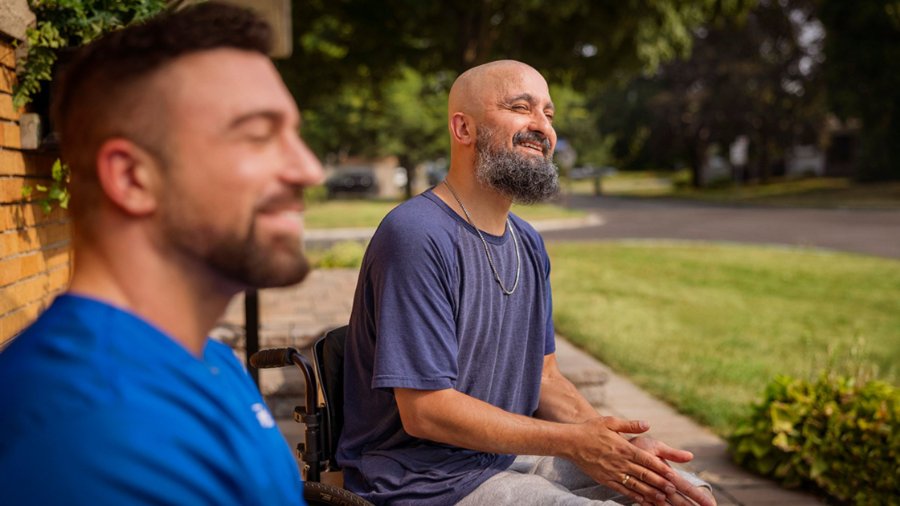
What PTSD Actually Does and Why It Matters for Caregiving
PTSD is a trauma response. When a person experiences or witnesses a life-threatening event or a sustained series of threatening or violating experiences the brain's threat-detection system can become dysregulated in ways that persist long after the danger has passed. The nervous system remains on alert. Responses that were adaptive in the original environment hypervigilance, a hair-trigger startle response, emotional shutdown, avoidance of anything that resembles the original threat continue to fire in contexts where they are no longer protective but become disruptive instead.For veterans, this can mean any number of things in daily life. It may mean being unable to sleep with their back to a door. It may mean reacting with sudden and intense alarm to a car backfiring, a loud voice, or an unexpected touch. It may mean periods of profound emotional withdrawal alternating with anger or agitation that seems disproportionate to what triggered it. It may mean distrust of new people, resistance to any situation that feels like a loss of control, and a near-total reliance on predictability and routine to maintain a sense of safety.
All of these things matter for caregiving because caregiving, by its nature, involves exactly the kind of things that PTSD makes difficult: new people entering the home, intimate personal care tasks, changes in routine, the implicit acknowledgment of vulnerability and need.
Our Veteran Care Services Call Us Today
The Impact of Aging on PTSD
It is common for PTSD symptoms to intensify in later life and the reasons are worth understanding, because they explain dynamics that families often find confusing.When a veteran is working, their days have structure. A career provides purpose, routine, and a framework that keeps the nervous system occupied and organized. Social relationships with colleagues provide connection. Physical activity, even incidental activity, helps regulate the body's stress response.
Retirement and aging strip many of those structures away. As the veteran has fewer external demands, more unstructured time, and reduced physical capability, the symptoms that were managed through busyness and routine become harder to contain. Memories and nightmares may intensify. Irritability and hypervigilance may increase. The veteran who seemed to manage relatively well for decades may present very differently in their seventies and eighties.
Health decline compounds this further. Illness, surgery, mobility limitations, and cognitive changes can all trigger PTSD-related responses because they reduce control, increase dependence, and may physically or situationally resemble elements of the original trauma. A hospital stay, for example, can be intensely dysregulating for a veteran with combat-related PTSD: unfamiliar people performing procedures on the body, loss of autonomy, disorienting environments. Returning home may bring relief but the transition still requires careful, informed support.
What Families Often Get Wrong and What to Do Instead
Trying to Fix It
Many family members respond to a veteran's PTSD symptoms with an impulse to fix them to explain away the alarm, correct the misperception, or argue the veteran out of a response that seems irrational. This impulse, however loving, is rarely effective and often counterproductive.PTSD responses are not primarily cognitive. They originate in the nervous system, not in a logical error that can be corrected with better information. Arguing with a veteran who is in a triggered state does not resolve the trigger; it adds conflict to dysregulation, which usually makes things worse.
What tends to work instead is a calm, quiet presence. Acknowledging that the veteran is distressed without escalating the interaction. Giving space when space is needed. Not demanding explanation or reassurance. Waiting for the nervous system to regulate before attempting any kind of conversation about what happened.
Pushing Through Resistance to Care
Veterans with PTSD often resist care, particularly personal care that involves physical touch, unfamiliar people in their home, or any situation that feels like a loss of control. Families sometimes interpret this resistance as stubbornness or irrationality and try to push through it, resulting in significant distress for the veteran and damage to the caregiving relationship.A more effective approach is to move slowly and collaboratively. Introduce new care arrangements gradually. Let the veteran set the pace wherever possible. Explain what is going to happen before it happens. Ask permission before touching. Allow the veteran to decline certain aspects of care on certain days without treating that as a crisis. The goal is to build enough trust over time that care becomes something the veteran can accept, not something done to them against their will.
Taking It Personally
Living with and caring for a veteran with PTSD is emotionally demanding in ways that are hard to overstate. The anger, the withdrawal, the hypervigilance, the resistance family members are frequently on the receiving end of these symptoms, and it is genuinely painful.It is important for family caregivers to understand, as clearly as possible, that PTSD symptoms directed at them are not a reflection of how the veteran actually feels about them. The nervous system does not distinguish carefully between safe people and threatening situations; it is responding to a perceived threat, not making a considered statement about the relationship. This does not make the experience painless, but it can change how a family member receives it.
Family caregivers of veterans with PTSD need support for themselves not as a secondary concern, but as a fundamental part of the caregiving arrangement. Without it, burnout is not a possibility. It is a probability.
Our Veteran Care Services Call Us Today
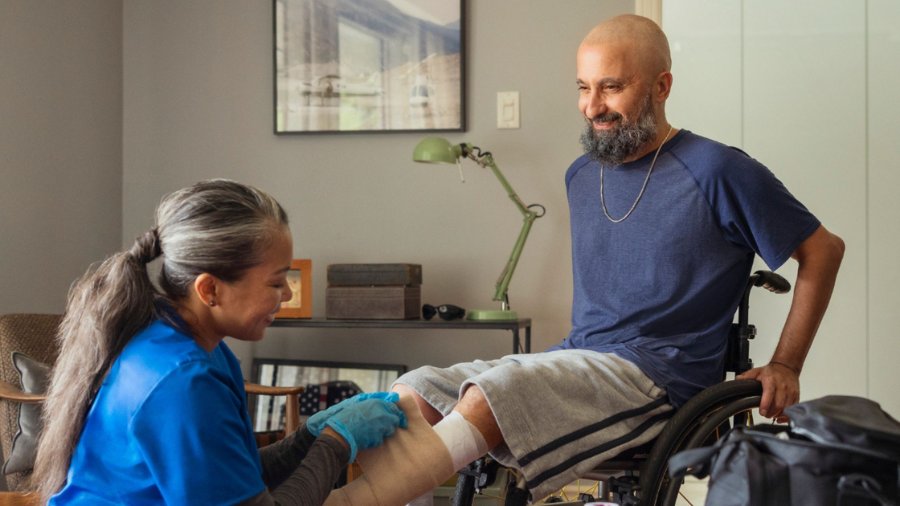
What Professional Caregivers Need to Know
For professional caregivers working with veterans who have PTSD, specific knowledge and specific approaches make a meaningful difference in both the quality and the safety of the caregiving relationship.Introduce yourself the same way every time. For a veteran whose nervous system is calibrated to detect novelty as a potential threat, a caregiver who arrives with the same greeting, the same manner, and the same routine visit after visit is providing something genuinely stabilizing. Consistency in the person, the schedule, and the approach is not just good practice it is therapeutic.
Announce before you act. Before entering a room, before touching the veteran, before beginning a care task, say what you are about to do. This gives the nervous system a moment to process and prepare rather than being caught off guard. It sounds simple. For a veteran with PTSD, it matters enormously.
Never approach from behind. A veteran with combat-related PTSD may have a profound startle response to unexpected contact or presence from behind. Approaching from the front, making sure you are visible and recognized before you get close, is a basic safety and dignity practice that professional caregivers should follow without exception.
Know the triggers specific to this veteran. Every veteran with PTSD has a unique profile that triggers things that reliably activate the threat response for them specifically. Loud noises, sudden movements, certain smells, discussions of particular topics, specific situations. Families can share what they know. A good caregiver asks and listens.
Do not ask about the trauma. A professional caregiver is not a therapist, and probing a veteran's trauma history even out of genuine care and curiosity is not appropriate in the caregiving context. What a caregiver needs to know is how to support the veteran today. What happened in the past is the veteran's, and it is the therapist's.
Stay calm during difficult moments. A caregiver who remains regulated when the veteran is dysregulated is providing something valuable simply through their presence. Anxiety is contagious; so is calm. A steady, unhurried, unfrightened caregiver helps a veteran's nervous system regulate in ways that an anxious or reactive caregiver cannot.
The Role of VA Mental Health Services
Professional caregiving supports daily life. Managing PTSD effectively requires mental health treatment and the VA provides significant mental health resources for veterans, including individual therapy, group therapy, and medications specifically indicated for PTSD.For veterans in Bay County, the Panama City VA Clinic provides mental health services and can connect veterans with the broader range of VA mental health programs available through the Gulf Coast VA Health Care System. The VA's PTSD Coach app and the Veterans Crisis Line (988, then press 1) are also available resources for veterans and their families.
Caregivers and family members who are struggling can also access support through the VA's Caregiver Support Line at 1-855-260-3274, which provides counseling referrals and practical resources for people caring for veterans.
How BrightStar Care of Bay County Supports Veterans With PTSD
At BrightStar Care of Bay County, we provide both skilled nursing and non-medical home care for veterans and their families throughout Panama City, Lynn Haven, Callaway, Panama City Beach, Parker, and surrounding Bay County communities.For veterans living with PTSD, the quality of the caregiver relationship is not incidental to the care it is the care. We take the matching of caregiver to veteran seriously, and for veterans with PTSD, that means looking for consistency, patience, and genuine respect for military service and military culture as core qualities in the caregivers we place.
Our care coordinators work with families to understand the veteran's specific needs and preferences before care begins, not after. The goal is a caregiving relationship that feels safe enough for the veteran to accept, and sustainable enough for the family to rely on.
Our Care Services Call Us Today
Frequently Asked Questions
Q: How does PTSD affect a veteran's ability to accept home care?
PTSD can make accepting home care significantly more challenging. Veterans with PTSD often have heightened responses to unfamiliar people in their home, physical touch, changes in routine, and situations that feel like a loss of control all of which are inherent in caregiving. Resistance to care is common and should not be interpreted as mere stubbornness. Effective caregiving for veterans with PTSD requires a gradual, consistent, and collaborative approach that prioritizes the veteran's sense of safety and autonomy over the speed of care delivery.Q: What are the best ways to approach personal care for a veteran with PTSD?
Announce what you are going to do before doing it. Always approach from the front and ensure the veteran can see and recognize you before getting close. Ask permission before touching. Maintain a calm, unhurried demeanor regardless of how the veteran responds. Keep routines as consistent as possible from visit to visit. Move at the pace the veteran can tolerate rather than the pace that is most efficient. Building trust gradually is the most reliable path to a caregiving relationship that the veteran will accept over time.Q: What resources are available for family caregivers of veterans with PTSD?
Family caregivers can access support through the VA's Caregiver Support Line at 1-855-260-3274, which provides referrals to counseling, respite care, and other resources. The VA's Program of Comprehensive Assistance for Family Caregivers (PCAFC) provides a monthly stipend and additional support to eligible family caregivers of veterans with serious service-connected injuries. Local VSOs, the Panama City VA Clinic, and national organizations including the Elizabeth Dole Foundation offer additional resources specifically for veteran caregivers. Family caregivers should prioritize their own support as actively as they prioritize the veteran's care burnout is a serious risk in this caregiving population.BrightStar Care of Bay County provides skilled nursing and non-medical home care services for veterans and their families throughout Panama City, Lynn Haven, Callaway, Panama City Beach, Parker, and surrounding Bay County communities. To speak with a care coordinator about veteran care, contact our Bay County office today.
Schedule a consultation with us:
- Phone: 850-238-3270
- Address: 3477 FL-77 Ste B, Lynn Haven, FL 32444
- Visit Us Online: BrightStar Care of Bay County