
Bay County carries a deep military identity. Tyndall Air Force Base has shaped this community for decades, and the Navy Dive School in Panama City Beach has drawn generations of service members to this stretch of the Gulf Coast. Many of them never left. They raised families here, built careers here, and now, in their 70s and 80s, they are aging here, often in the same neighborhoods they put down roots in after their service ended.
That longevity is something to honor. But it also comes with a reality that families do not always see until they are standing in it: a lot of these veterans are living alone. Spouses have passed. Adult children are scattered across other states. Friends from the unit are fewer every year. And the culture that shaped most of these men and women, one built on self-sufficiency and stoicism and getting through it without asking for help, can make it very hard for them to say out loud that they are lonely, or struggling, or that some days the house feels very quiet.
Call 850-238-3270 Our Services
Veterans who live alone are more likely to miss medications, skip meals, skip doctor appointments. They are more likely to let a manageable health problem become an unmanageable one. They are less likely to notice when something has changed in their own body or mood, because there is no one around to reflect it back to them. And for a veteran managing PTSD or depression, the particular cruelty of isolation is that it feeds both conditions: the more cut off someone becomes, the harder re-engagement feels, and the cycle tightens.
This is not about weakness. It is about biology, psychology, and the math of what happens when a human being spends too many hours alone. Veterans who were trained to put the mission first often have a very hard time asking for what they need, even when they know they need it. Companion care is designed to meet that resistance gently, without making a veteran feel like they are becoming a burden or losing their independence.
It helps to be specific, because companion care is often misunderstood. It is not skilled nursing. It is not personal care in the clinical sense. A companion caregiver does not manage wounds or administer medications or provide physical therapy. What they provide is something that sounds simple but is genuinely hard to replicate: consistent, caring presence.
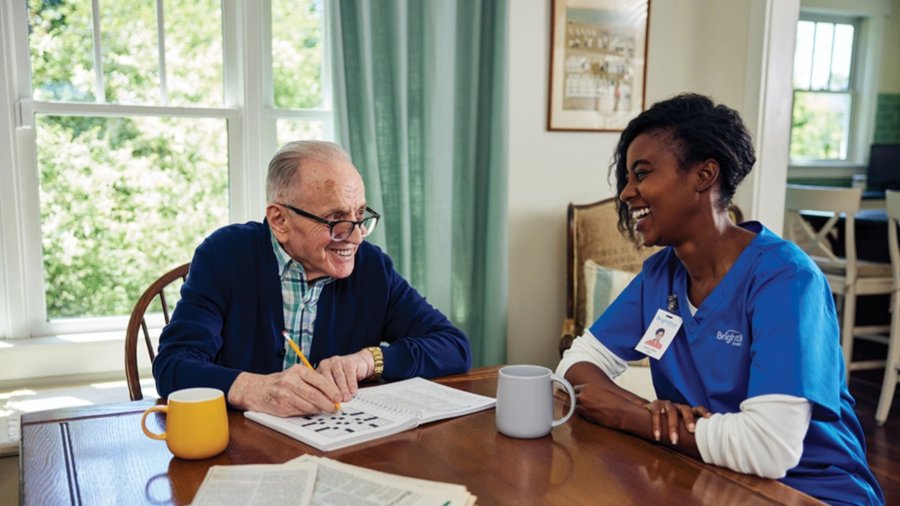
On a practical level, that looks like showing up. It looks like sitting at the kitchen table and talking over coffee. It looks like driving someone to a VA appointment so they do not have to navigate that alone. It looks like playing cards, watching the game, taking a walk, running errands, or just being in the house so the day has some shape to it. It looks like sharing a meal with someone who has been eating alone for too long.
But companion care is also something more than a warm presence. A good companion caregiver pays attention. They notice when a client seems more withdrawn than usual, when they have not eaten well, when something seems off in a way that is hard to name but worth mentioning. They become part of the early warning system that families cannot always be there to provide. And because they show up consistently, over weeks and months, they build the kind of relationship where a veteran might actually say something is wrong, rather than just getting through the day.
Call 850-238-3270 Our Services
There is something worth naming that does not always make it into conversations about home care. Companion care is frequently the first service a resistant veteran will accept.
A veteran who has flat-out refused to consider home care of any kind, who insists they are fine, who does not want strangers in the house, will sometimes agree to have someone come spend time with them. Not to help. Not because they need it. Just to visit. And what happens, over time, is that a relationship forms. Trust develops. When that veteran eventually does need more support, whether that is personal care, medication management, or something clinical, there is already a bridge. The companion caregiver, and the agency behind them, is no longer a stranger.
That transition matters enormously. It is much easier to expand care for someone who already has a relationship with a caregiver than it is to introduce professional care to someone who is starting from resistance. Companion care opens that door.
Veterans in Bay County have access to services through the Gulf Coast Veterans Health Care System, headquartered in Biloxi, Mississippi, with the Panama City VA Outpatient Clinic serving local veterans closer to home. Non-medical home care services, including companion care, may be covered for eligible veterans through the VA Community Care Network, administered in this region by TriWest Healthcare Alliance.
Eligibility and authorization vary by individual circumstance, and not every veteran will qualify for covered companion care through the VA. But for families who want to arrange this support now, without waiting for the authorization process to run its course, companion care through BrightStar Care of Bay County is available as a private pay service. It is accessible, it can start quickly, and it does not require navigating a benefits approval before a veteran gets consistent company.
BrightStar Care of Bay County is a Joint Commission accredited agency. In practical terms, that means this agency meets the clinical and operational standards that most home care providers are not held to. For families entrusting someone with a veteran's daily life, that accreditation is a meaningful signal: this is not a referral service or a gig arrangement. It is a professionally run organization with real accountability for the quality of care it provides.
That matters especially for veterans, whose families may be managing care from a distance and who need to know that the person showing up consistently is backed by an organization that takes that responsibility seriously.
The conversations about honoring veterans this November tend to focus on grand gestures. The parades, the ceremonies, the social media posts. Those things have their place. But for a veteran who is aging alone in Panama City or Lynn Haven or Callaway or Springfield, what would actually change their day is simpler than any of that. It is someone at the door. Someone who shows up, stays a while, and comes back next week.
If you have a veteran in your life who is living alone, especially one who has been quieter lately, more isolated, slower to return calls, the most meaningful thing you could do this month might not be a card or a phone call. It might be making a call to arrange for someone to be there consistently, not just once, but week after week, as a real presence in their life.
That is what companion care is. And for a lot of veterans in Bay County, it is exactly what is missing.
Call 850-238-3270 Our Services
BrightStar Care of Bay County provides companion care, personal care, and skilled nursing for veterans and families throughout Panama City, Panama City Beach, Lynn Haven, Callaway, Parker, Springfield, Southport, and Bay County, FL. We are a Joint Commission accredited agency and work with VA CCN through TriWest Healthcare Alliance as well as private pay.
Schedule a consultation with us:
That longevity is something to honor. But it also comes with a reality that families do not always see until they are standing in it: a lot of these veterans are living alone. Spouses have passed. Adult children are scattered across other states. Friends from the unit are fewer every year. And the culture that shaped most of these men and women, one built on self-sufficiency and stoicism and getting through it without asking for help, can make it very hard for them to say out loud that they are lonely, or struggling, or that some days the house feels very quiet.
Call 850-238-3270 Our Services
What Isolation Actually Does to a Veteran
This is not a soft concern. Social isolation is a documented clinical risk factor, and for veterans it carries particular weight. The combination of post-traumatic stress, depression, traumatic brain injury, and the accumulated physical effects of years of service creates a profile where being cut off from regular human contact can accelerate decline in ways that are hard to reverse once they take hold.Veterans who live alone are more likely to miss medications, skip meals, skip doctor appointments. They are more likely to let a manageable health problem become an unmanageable one. They are less likely to notice when something has changed in their own body or mood, because there is no one around to reflect it back to them. And for a veteran managing PTSD or depression, the particular cruelty of isolation is that it feeds both conditions: the more cut off someone becomes, the harder re-engagement feels, and the cycle tightens.
This is not about weakness. It is about biology, psychology, and the math of what happens when a human being spends too many hours alone. Veterans who were trained to put the mission first often have a very hard time asking for what they need, even when they know they need it. Companion care is designed to meet that resistance gently, without making a veteran feel like they are becoming a burden or losing their independence.
What Companion Care Actually Is
It helps to be specific, because companion care is often misunderstood. It is not skilled nursing. It is not personal care in the clinical sense. A companion caregiver does not manage wounds or administer medications or provide physical therapy. What they provide is something that sounds simple but is genuinely hard to replicate: consistent, caring presence.On a practical level, that looks like showing up. It looks like sitting at the kitchen table and talking over coffee. It looks like driving someone to a VA appointment so they do not have to navigate that alone. It looks like playing cards, watching the game, taking a walk, running errands, or just being in the house so the day has some shape to it. It looks like sharing a meal with someone who has been eating alone for too long.
But companion care is also something more than a warm presence. A good companion caregiver pays attention. They notice when a client seems more withdrawn than usual, when they have not eaten well, when something seems off in a way that is hard to name but worth mentioning. They become part of the early warning system that families cannot always be there to provide. And because they show up consistently, over weeks and months, they build the kind of relationship where a veteran might actually say something is wrong, rather than just getting through the day.
Call 850-238-3270 Our Services
The Doorway Nobody Talks About
There is something worth naming that does not always make it into conversations about home care. Companion care is frequently the first service a resistant veteran will accept.A veteran who has flat-out refused to consider home care of any kind, who insists they are fine, who does not want strangers in the house, will sometimes agree to have someone come spend time with them. Not to help. Not because they need it. Just to visit. And what happens, over time, is that a relationship forms. Trust develops. When that veteran eventually does need more support, whether that is personal care, medication management, or something clinical, there is already a bridge. The companion caregiver, and the agency behind them, is no longer a stranger.
That transition matters enormously. It is much easier to expand care for someone who already has a relationship with a caregiver than it is to introduce professional care to someone who is starting from resistance. Companion care opens that door.
Working With VA Benefits in Bay County
Veterans in Bay County have access to services through the Gulf Coast Veterans Health Care System, headquartered in Biloxi, Mississippi, with the Panama City VA Outpatient Clinic serving local veterans closer to home. Non-medical home care services, including companion care, may be covered for eligible veterans through the VA Community Care Network, administered in this region by TriWest Healthcare Alliance.Eligibility and authorization vary by individual circumstance, and not every veteran will qualify for covered companion care through the VA. But for families who want to arrange this support now, without waiting for the authorization process to run its course, companion care through BrightStar Care of Bay County is available as a private pay service. It is accessible, it can start quickly, and it does not require navigating a benefits approval before a veteran gets consistent company.
The Standard Behind the Care
BrightStar Care of Bay County is a Joint Commission accredited agency. In practical terms, that means this agency meets the clinical and operational standards that most home care providers are not held to. For families entrusting someone with a veteran's daily life, that accreditation is a meaningful signal: this is not a referral service or a gig arrangement. It is a professionally run organization with real accountability for the quality of care it provides.That matters especially for veterans, whose families may be managing care from a distance and who need to know that the person showing up consistently is backed by an organization that takes that responsibility seriously.
This Veterans Month
The conversations about honoring veterans this November tend to focus on grand gestures. The parades, the ceremonies, the social media posts. Those things have their place. But for a veteran who is aging alone in Panama City or Lynn Haven or Callaway or Springfield, what would actually change their day is simpler than any of that. It is someone at the door. Someone who shows up, stays a while, and comes back next week.If you have a veteran in your life who is living alone, especially one who has been quieter lately, more isolated, slower to return calls, the most meaningful thing you could do this month might not be a card or a phone call. It might be making a call to arrange for someone to be there consistently, not just once, but week after week, as a real presence in their life.
That is what companion care is. And for a lot of veterans in Bay County, it is exactly what is missing.
Call 850-238-3270 Our Services
Frequently Asked Questions
Q: What is companion care and how is it different from other home care services?
A: Companion care is non-medical home care focused on social engagement, consistent presence, and everyday support. Unlike skilled nursing, which involves clinical tasks like wound care or IV management, or personal care, which includes hands-on assistance with bathing and grooming, companion care centers on relationship and engagement. A companion caregiver provides conversation, help with errands and appointments, shared meals, and the kind of attentive company that keeps an older adult connected to daily life. It is not medical care, but it supports health in ways that are easy to underestimate, particularly for veterans who live alone.Q: Can VA benefits cover companion care for veterans in Bay County?
A: Potentially, yes. Non-medical home care, including companion care, may be covered for eligible veterans through the VA Community Care Network. In Bay County and the Florida Panhandle, the CCN is administered by TriWest Healthcare Alliance, and veterans receive care through the Gulf Coast Veterans Health Care System and the Panama City VA Outpatient Clinic. Eligibility depends on individual circumstances, including service-connected conditions and VA enrollment status. For families who want to arrange companion care without waiting for authorization, BrightStar Care of Bay County also offers private pay services that can begin quickly.Q: How does companion care help veterans with PTSD or depression?
A: Social isolation worsens both PTSD and depression, and for veterans who tend to internalize and push through rather than ask for help, being alone for extended periods can tighten a cycle that is hard to break from the inside. A companion caregiver provides consistent, non-clinical human contact that interrupts that isolation. They notice changes in mood or behavior before those changes become a crisis. They get a veteran out of the house and into the world, which matters more than it sounds. Over time, that consistent relationship can become the foundation of trust that makes a veteran more willing to accept other forms of support when they need it. Companion care does not treat PTSD or depression, but it directly addresses one of the conditions that allows both to worsen.BrightStar Care of Bay County provides companion care, personal care, and skilled nursing for veterans and families throughout Panama City, Panama City Beach, Lynn Haven, Callaway, Parker, Springfield, Southport, and Bay County, FL. We are a Joint Commission accredited agency and work with VA CCN through TriWest Healthcare Alliance as well as private pay.
Schedule a consultation with us:
- Phone: 850-238-3270
- Address: 3477 FL-77 Ste B, Lynn Haven, FL 32444
- Visit Us Online: https://www.brightstarcare.com/locations/bay-county/