
Raising a medically complex child is not a medical problem. It is a life. There are school mornings and homework and siblings and soccer games and everything else that makes up a family — and running through all of it is the constant clinical vigilance that a child with a tracheostomy, a feeding tube, a seizure disorder, or a ventilator requires.
For families in Brooksville, Spring Hill, Weeki Wachee, Hernando Beach, and throughout Hernando County, that clinical vigilance has historically meant one of two things: either a parent who never fully sleeps, or a long drive to Tampa every time the child needs skilled nursing care. This post is about a third option — skilled pediatric nursing that comes to the child's home, school, and wherever the family goes, so the family can live their life while the clinical needs are professionally managed.
Call (813) 819-0470 Visit Our Website
For medically complex children, the line between "care" and "clinical care" is the line between safety and emergency. A nurse who recognizes that a child's secretions have changed character and suctions more aggressively before the airway is compromised is doing something that a caregiver without clinical training cannot do. A nurse who notices that a child's color, work of breathing, or feeding tolerance has shifted and calls the physician before the family is in the emergency department has changed the outcome for that child.
Skilled pediatric nursing at home means a licensed nurse — an RN or LPN supervised by an RN — is present with the child during the hours their family needs clinical backup. Not a generic adult home care nurse who has been given a brief orientation to pediatric equipment. A nurse with specific training in pediatric care and the clinical conditions the child lives with.
Tracheostomy management. Children with tracheostomies require skilled nursing for routine stoma care, inner cannula changes where applicable, routine and emergency suctioning, trach tie changes, and the clinical monitoring that keeps the airway clear and the stoma healthy. Parents can and do learn trach care — but having a skilled nurse present during the hours a family is otherwise managing school, work, younger siblings, and daily life provides the clinical coverage that prevents the trach emergency from becoming the thing that defines a family's week.
Ventilator dependency. Children who rely on mechanical ventilation for respiratory support require nursing presence to manage the ventilator circuit, recognize and respond to alarms, troubleshoot equipment malfunctions, and monitor the child's respiratory status and tolerance. Ventilator nursing in the home is one of the highest-complexity skilled pediatric nursing services, and it is one of the services BrightStar Care of Tampa Bay provides to Hernando County families.
Enteral feeding support. G-tube and j-tube feeding management — rate adjustments, formula preparation, tube patency, site care, and the troubleshooting that happens when feeding is interrupted by a clogged tube, a dislodged button, or intolerance symptoms — is skilled nursing work. For children who receive all or most of their nutrition enterally, the feeding tube is not a supplement to their diet. It is their nutrition, and its clinical management matters accordingly.
Seizure disorders. Children with epilepsy or other seizure disorders often have complex PRN medication protocols — rescue medications that must be administered by a licensed nurse under a physician's order. A nurse who is present during seizure activity monitors duration, maintains airway safety, administers rescue medications as ordered, documents accurately, and communicates to the physician when the seizure pattern warrants escalation. For families managing a child with breakthrough seizure activity, nurse presence is the difference between a PRN protocol that works and a 911 call every time.
Post-surgical and acute recovery. Children recovering from significant surgeries — cardiac, orthopedic, neurological, abdominal — often return home with wound care needs, activity restrictions, medication regimens, and monitoring requirements that skilled nursing can manage in the home rather than requiring extended inpatient stays or repeated outpatient visits. Skilled nursing in the home during the post-surgical recovery period supports faster, safer recovery in the environment where children heal best.
Medically fragile infants. Infants who have come home from the NICU with ongoing monitoring needs, oxygen requirements, feeding challenges, or cardiac conditions require skilled nursing presence that goes beyond what a non-clinical caregiver provides. For NICU graduates in Hernando County whose families are navigating the transition to home care for the first time, skilled nursing visits provide the clinical bridge between the NICU and the fully home-managed care that develops over time.
IV therapy and complex medication management. Children requiring IV antibiotics, IV hydration, infusion medications, or complex multi-medication regimens that must be administered at specific times and observed for reactions require a licensed nurse. This category includes children in oncology treatment, children with immune deficiencies, and children with conditions that require ongoing intravenous support between hospital visits.
Call (813) 819-0470 Visit Our Website
One thing that is easy to lose in a clinical discussion of pediatric conditions is what the family is actually managing. A parent of a ventilator-dependent child is not only managing a ventilator. They are managing a ventilator, a child who wants to go to school and play with friends and be a kid, the insurance calls, the equipment supply deliveries, the physician appointments, the siblings who also need parenting, and the constant low-level calculation of what happens if something goes wrong in the next hour.
Caregiver burnout in families of medically complex children is not a side issue. It is a clinical risk factor for the child. A parent who has been awake managing a child's respiratory event at 3 a.m. for the fifth consecutive night is not a parent who is able to provide the same quality of care during the day. Caregiver exhaustion accumulates, and its effects show up in missed medication timing, delayed recognition of symptom changes, and the kind of errors that happen to capable, dedicated people who are simply past their limits.
Skilled nursing at home is not just clinical support for the child. It is clinical support for the family system that the child depends on. When a nurse is present during night hours, a parent sleeps. When a nurse is managing the morning trach routine, a parent can get other children to school on time. When a nurse is present at a school event, a parent can be a parent at that event rather than a clinical monitor.
This is what skilled pediatric home nursing gives Hernando County families: the capacity to be a family, not only a care team.
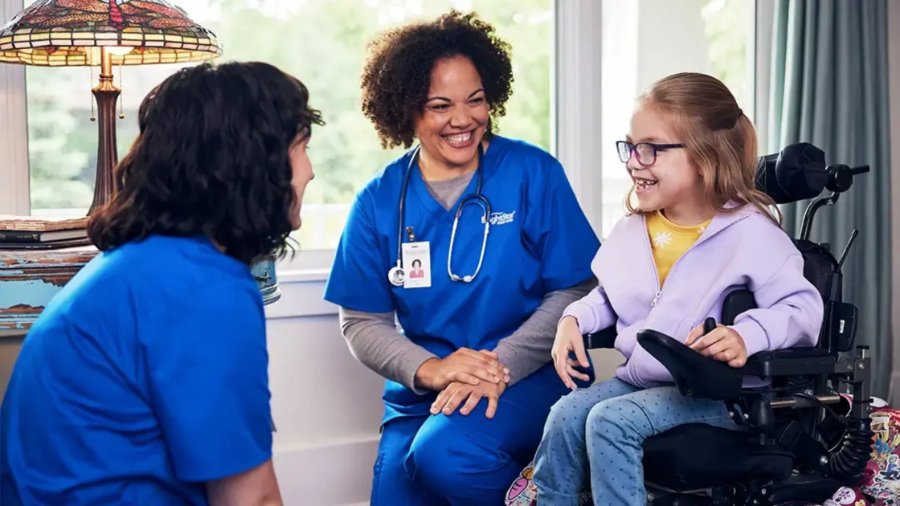
Schools in Hernando County are required to provide nursing support for students with medical needs during the school day — but school nurse staffing is not always sufficient to provide the continuous, condition-specific nursing presence that a trach-dependent or vent-dependent child requires in a classroom. When a school district's nursing staff cannot safely meet a child's individual needs during the school day, a private-duty nurse accompanying the child to school is the appropriate solution.
BrightStar Care of Brooksville has provided skilled nursing for pediatric clients in school settings throughout the region. A nurse who accompanies a child to school is present on the school bus, in the classroom, during lunch, and at recess — managing the child's clinical needs in real time so the child can participate in school alongside their peers rather than being limited by the absence of clinical support.
For families who are navigating a school district discussion about nursing support for their child, a skilled nursing agency that has experience in school-based pediatric nursing is a resource worth knowing about. The conversation between the family, the school, and the nursing agency is one that BrightStar Care of Tampa Bay can participate in.
Florida Medicaid. Florida Medicaid is the primary payer for skilled pediatric nursing for families who qualify. Children with complex medical needs who meet the clinical criteria for private-duty nursing may be authorized for skilled nursing hours through their Medicaid plan. In Florida, Medicaid managed care organizations including Sunshine Health, Molina Healthcare of Florida, and Florida Complete Health administer these benefits for most Medicaid-enrolled children. The authorization process involves physician orders documenting the medical necessity of skilled nursing and a clinical review by the Medicaid plan. The number of nursing hours authorized reflects the child's assessed clinical needs.
Home and Community-Based Waiver Programs. Florida's waiver programs — including the Medically Needy program and other home and community-based waiver options — provide an additional pathway to skilled nursing hours for children who may exceed standard Medicaid authorization thresholds or who have specific needs that waiver funding is structured to address. Families who have been told that their Medicaid hours are insufficient for their child's actual needs should ask specifically about waiver program eligibility.
Private insurance. Many private insurance plans cover skilled pediatric nursing through the home health benefit, with prior authorization required and coverage defined by the plan's specific terms. Benefit-verification as part of the intake process helps families understand what their private plan will cover before services begin.
Private pay. Families who do not qualify for Medicaid, who have exhausted authorized insurance hours, or who need skilled nursing coverage during hours not covered by their authorized benefit can arrange private pay skilled nursing directly. Private pay provides immediate access without authorization timelines.
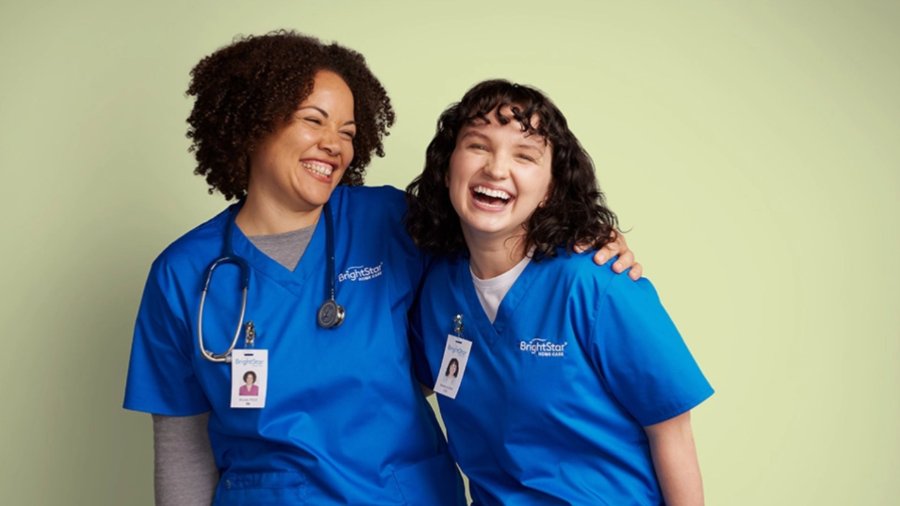
Does the agency employ licensed nurses with pediatric experience? General home care agencies and non-medical personal care agencies cannot legally provide skilled nursing services in Florida. The agency must hold a skilled nursing license and employ nurses with specific training and experience in pediatric care and the child's particular conditions. Ask directly about the nursing staff's experience with tracheostomy care, ventilator management, enteral feeding, or whatever the child's specific clinical needs are before committing to an agency.
How does the agency match nurses to pediatric clients? Pediatric skilled nursing depends on clinical competency that is specific to the child's conditions and equipment. The nurse assigned to a child with a trach and a vent must be trained on that type of trach, on that ventilator model, and on the child's individual protocol. Ask how the agency verifies competency before placing a nurse with a new pediatric client, and what the process looks like when a nurse is not the right fit.
How consistent is the assigned nurse? Consistency matters enormously for medically complex children. A nurse who knows the child's baseline, their tolerance for changes, their behavioral cues before a seizure, and their feeding tube's quirks is providing better clinical care than a nurse encountering the child for the first time. Ask about nurse turnover and the agency's approach to maintaining consistent assignment for pediatric clients.
Does the agency have a registered nurse overseeing every care plan? RN oversight of the care plan and clinical supervision of LPNs providing direct care is the structure that maintains quality and catches problems before they become clinical events. Ask specifically whether an RN develops and supervises the care plan and what the supervisory nursing visit schedule looks like.
Can the agency cover school-based nursing? If the child attends school and needs nursing presence during the school day, the agency must be able to provide a nurse in that setting. Not all agencies are equipped for school-based pediatric nursing. Confirm this capability explicitly if it is part of the child's needs.
Families in Brooksville, Spring Hill, Weeki Wachee, Hernando Beach, and throughout Hernando County who are navigating skilled pediatric nursing for the first time, or who are looking for an agency better matched to their child's needs, can reach BrightStar Care of Tampa Bay directly.
The intake process begins with a conversation about the child's clinical profile and what the family needs. From there, a registered nurse conducts a clinical assessment that forms the basis of the care plan, and the process of matching a qualified nurse and initiating authorization through the family's payer moves forward from that point.
Families who have been managing their child's clinical needs largely alone — and who are not sure whether skilled nursing is available to them or what it would actually look like at home — are the families we most want to hear from. The first call does not commit you to anything. It gives you information about what is possible.
Call (813) 819-0470 Visit Our Website
BrightStar Care of Brooksville provides skilled pediatric nursing — including tracheostomy care, ventilator management, enteral feeding support, seizure monitoring, and post-surgical nursing — for children and families throughout Brooksville, Spring Hill, Weeki Wachee, Hernando Beach, and Hernando County. We accept Florida Medicaid, Medicaid managed care plans, private insurance, and private pay. To speak with a care coordinator about skilled pediatric nursing for your child, contact our office today.
For families in Brooksville, Spring Hill, Weeki Wachee, Hernando Beach, and throughout Hernando County, that clinical vigilance has historically meant one of two things: either a parent who never fully sleeps, or a long drive to Tampa every time the child needs skilled nursing care. This post is about a third option — skilled pediatric nursing that comes to the child's home, school, and wherever the family goes, so the family can live their life while the clinical needs are professionally managed.
Call (813) 819-0470 Visit Our Website
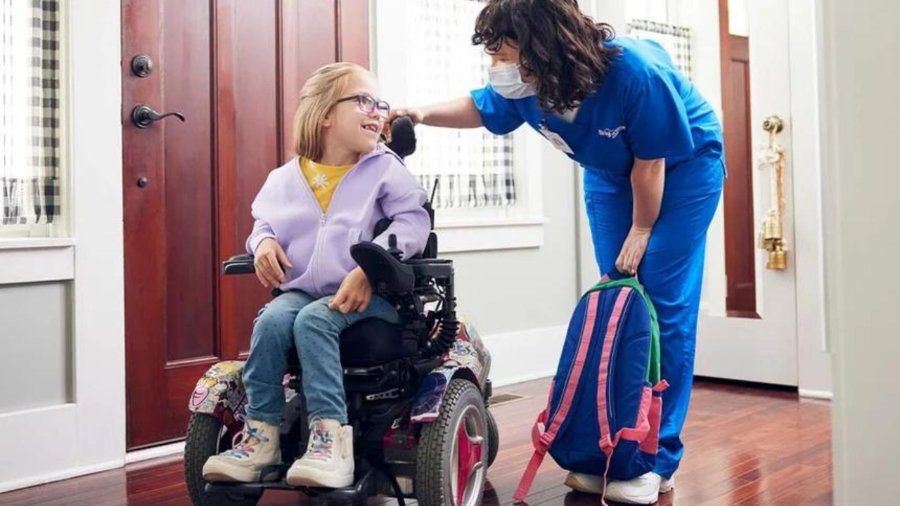
What Skilled Pediatric Nursing Actually Means
Skilled nursing is not the same as personal care. A personal care aide can help with bathing, feeding, dressing, and transportation. Skilled nursing is the clinical work that requires a licensed nurse: tracheostomy care and suctioning, ventilator management, g-tube and j-tube feeding and troubleshooting, seizure monitoring and response per physician protocol, IV therapy and medication administration, wound care, and the ongoing clinical assessment that detects a change in status before it becomes a crisis.For medically complex children, the line between "care" and "clinical care" is the line between safety and emergency. A nurse who recognizes that a child's secretions have changed character and suctions more aggressively before the airway is compromised is doing something that a caregiver without clinical training cannot do. A nurse who notices that a child's color, work of breathing, or feeding tolerance has shifted and calls the physician before the family is in the emergency department has changed the outcome for that child.
Skilled pediatric nursing at home means a licensed nurse — an RN or LPN supervised by an RN — is present with the child during the hours their family needs clinical backup. Not a generic adult home care nurse who has been given a brief orientation to pediatric equipment. A nurse with specific training in pediatric care and the clinical conditions the child lives with.
The Conditions Skilled Pediatric Nursing Supports
Tracheostomy management. Children with tracheostomies require skilled nursing for routine stoma care, inner cannula changes where applicable, routine and emergency suctioning, trach tie changes, and the clinical monitoring that keeps the airway clear and the stoma healthy. Parents can and do learn trach care — but having a skilled nurse present during the hours a family is otherwise managing school, work, younger siblings, and daily life provides the clinical coverage that prevents the trach emergency from becoming the thing that defines a family's week.Ventilator dependency. Children who rely on mechanical ventilation for respiratory support require nursing presence to manage the ventilator circuit, recognize and respond to alarms, troubleshoot equipment malfunctions, and monitor the child's respiratory status and tolerance. Ventilator nursing in the home is one of the highest-complexity skilled pediatric nursing services, and it is one of the services BrightStar Care of Tampa Bay provides to Hernando County families.
Enteral feeding support. G-tube and j-tube feeding management — rate adjustments, formula preparation, tube patency, site care, and the troubleshooting that happens when feeding is interrupted by a clogged tube, a dislodged button, or intolerance symptoms — is skilled nursing work. For children who receive all or most of their nutrition enterally, the feeding tube is not a supplement to their diet. It is their nutrition, and its clinical management matters accordingly.
Seizure disorders. Children with epilepsy or other seizure disorders often have complex PRN medication protocols — rescue medications that must be administered by a licensed nurse under a physician's order. A nurse who is present during seizure activity monitors duration, maintains airway safety, administers rescue medications as ordered, documents accurately, and communicates to the physician when the seizure pattern warrants escalation. For families managing a child with breakthrough seizure activity, nurse presence is the difference between a PRN protocol that works and a 911 call every time.
Post-surgical and acute recovery. Children recovering from significant surgeries — cardiac, orthopedic, neurological, abdominal — often return home with wound care needs, activity restrictions, medication regimens, and monitoring requirements that skilled nursing can manage in the home rather than requiring extended inpatient stays or repeated outpatient visits. Skilled nursing in the home during the post-surgical recovery period supports faster, safer recovery in the environment where children heal best.
Medically fragile infants. Infants who have come home from the NICU with ongoing monitoring needs, oxygen requirements, feeding challenges, or cardiac conditions require skilled nursing presence that goes beyond what a non-clinical caregiver provides. For NICU graduates in Hernando County whose families are navigating the transition to home care for the first time, skilled nursing visits provide the clinical bridge between the NICU and the fully home-managed care that develops over time.
IV therapy and complex medication management. Children requiring IV antibiotics, IV hydration, infusion medications, or complex multi-medication regimens that must be administered at specific times and observed for reactions require a licensed nurse. This category includes children in oncology treatment, children with immune deficiencies, and children with conditions that require ongoing intravenous support between hospital visits.
Call (813) 819-0470 Visit Our Website
The Family Behind the Patient
One thing that is easy to lose in a clinical discussion of pediatric conditions is what the family is actually managing. A parent of a ventilator-dependent child is not only managing a ventilator. They are managing a ventilator, a child who wants to go to school and play with friends and be a kid, the insurance calls, the equipment supply deliveries, the physician appointments, the siblings who also need parenting, and the constant low-level calculation of what happens if something goes wrong in the next hour.Caregiver burnout in families of medically complex children is not a side issue. It is a clinical risk factor for the child. A parent who has been awake managing a child's respiratory event at 3 a.m. for the fifth consecutive night is not a parent who is able to provide the same quality of care during the day. Caregiver exhaustion accumulates, and its effects show up in missed medication timing, delayed recognition of symptom changes, and the kind of errors that happen to capable, dedicated people who are simply past their limits.
Skilled nursing at home is not just clinical support for the child. It is clinical support for the family system that the child depends on. When a nurse is present during night hours, a parent sleeps. When a nurse is managing the morning trach routine, a parent can get other children to school on time. When a nurse is present at a school event, a parent can be a parent at that event rather than a clinical monitor.
This is what skilled pediatric home nursing gives Hernando County families: the capacity to be a family, not only a care team.
Skilled Nursing Beyond the Home
Medically complex children do not only need nursing at home. They need it wherever they go.Schools in Hernando County are required to provide nursing support for students with medical needs during the school day — but school nurse staffing is not always sufficient to provide the continuous, condition-specific nursing presence that a trach-dependent or vent-dependent child requires in a classroom. When a school district's nursing staff cannot safely meet a child's individual needs during the school day, a private-duty nurse accompanying the child to school is the appropriate solution.
BrightStar Care of Brooksville has provided skilled nursing for pediatric clients in school settings throughout the region. A nurse who accompanies a child to school is present on the school bus, in the classroom, during lunch, and at recess — managing the child's clinical needs in real time so the child can participate in school alongside their peers rather than being limited by the absence of clinical support.
For families who are navigating a school district discussion about nursing support for their child, a skilled nursing agency that has experience in school-based pediatric nursing is a resource worth knowing about. The conversation between the family, the school, and the nursing agency is one that BrightStar Care of Tampa Bay can participate in.
How Hernando County Families Access Skilled Pediatric Nursing
Florida Medicaid. Florida Medicaid is the primary payer for skilled pediatric nursing for families who qualify. Children with complex medical needs who meet the clinical criteria for private-duty nursing may be authorized for skilled nursing hours through their Medicaid plan. In Florida, Medicaid managed care organizations including Sunshine Health, Molina Healthcare of Florida, and Florida Complete Health administer these benefits for most Medicaid-enrolled children. The authorization process involves physician orders documenting the medical necessity of skilled nursing and a clinical review by the Medicaid plan. The number of nursing hours authorized reflects the child's assessed clinical needs.Home and Community-Based Waiver Programs. Florida's waiver programs — including the Medically Needy program and other home and community-based waiver options — provide an additional pathway to skilled nursing hours for children who may exceed standard Medicaid authorization thresholds or who have specific needs that waiver funding is structured to address. Families who have been told that their Medicaid hours are insufficient for their child's actual needs should ask specifically about waiver program eligibility.
Private insurance. Many private insurance plans cover skilled pediatric nursing through the home health benefit, with prior authorization required and coverage defined by the plan's specific terms. Benefit-verification as part of the intake process helps families understand what their private plan will cover before services begin.
Private pay. Families who do not qualify for Medicaid, who have exhausted authorized insurance hours, or who need skilled nursing coverage during hours not covered by their authorized benefit can arrange private pay skilled nursing directly. Private pay provides immediate access without authorization timelines.
What to Look for When Choosing a Skilled Pediatric Nursing Agency in Hernando County
Does the agency employ licensed nurses with pediatric experience? General home care agencies and non-medical personal care agencies cannot legally provide skilled nursing services in Florida. The agency must hold a skilled nursing license and employ nurses with specific training and experience in pediatric care and the child's particular conditions. Ask directly about the nursing staff's experience with tracheostomy care, ventilator management, enteral feeding, or whatever the child's specific clinical needs are before committing to an agency.How does the agency match nurses to pediatric clients? Pediatric skilled nursing depends on clinical competency that is specific to the child's conditions and equipment. The nurse assigned to a child with a trach and a vent must be trained on that type of trach, on that ventilator model, and on the child's individual protocol. Ask how the agency verifies competency before placing a nurse with a new pediatric client, and what the process looks like when a nurse is not the right fit.
How consistent is the assigned nurse? Consistency matters enormously for medically complex children. A nurse who knows the child's baseline, their tolerance for changes, their behavioral cues before a seizure, and their feeding tube's quirks is providing better clinical care than a nurse encountering the child for the first time. Ask about nurse turnover and the agency's approach to maintaining consistent assignment for pediatric clients.
Does the agency have a registered nurse overseeing every care plan? RN oversight of the care plan and clinical supervision of LPNs providing direct care is the structure that maintains quality and catches problems before they become clinical events. Ask specifically whether an RN develops and supervises the care plan and what the supervisory nursing visit schedule looks like.
Can the agency cover school-based nursing? If the child attends school and needs nursing presence during the school day, the agency must be able to provide a nurse in that setting. Not all agencies are equipped for school-based pediatric nursing. Confirm this capability explicitly if it is part of the child's needs.
Getting Started in Brooksville and Hernando County
Families in Brooksville, Spring Hill, Weeki Wachee, Hernando Beach, and throughout Hernando County who are navigating skilled pediatric nursing for the first time, or who are looking for an agency better matched to their child's needs, can reach BrightStar Care of Tampa Bay directly.The intake process begins with a conversation about the child's clinical profile and what the family needs. From there, a registered nurse conducts a clinical assessment that forms the basis of the care plan, and the process of matching a qualified nurse and initiating authorization through the family's payer moves forward from that point.
Families who have been managing their child's clinical needs largely alone — and who are not sure whether skilled nursing is available to them or what it would actually look like at home — are the families we most want to hear from. The first call does not commit you to anything. It gives you information about what is possible.
Call (813) 819-0470 Visit Our Website
Frequently Asked Questions
Q: My child's pediatrician has not mentioned home nursing. Do we need a referral, or can we initiate this ourselves?
Skilled pediatric nursing requires a physician's order documenting the medical necessity of skilled nursing services, so your child's physician does need to be part of the process. However, the conversation about home nursing does not have to be initiated by the physician. Many families raise it themselves after recognizing that their child's clinical needs exceed what they can safely manage without professional support. If your child's pediatrician or specialist has not raised home nursing, you can bring it up at the next appointment and ask specifically whether a private-duty nursing order is appropriate for your child's situation. If the physician agrees, the order documentation is the starting point for Medicaid or insurance authorization. BrightStar Care of Tampa Bay can assist with the paperwork on our end once a physician's order is in place.Q: We are already receiving some Medicaid-authorized nursing hours, but they are not enough for what our child actually needs. What are our options?
This is one of the most common situations families of medically complex children face. Authorized hours reflect what the Medicaid plan determined to be medically necessary based on the documentation submitted — and in many cases, families and physicians believe the actual clinical need exceeds what was authorized. The first step is working with your child's physician to ensure the authorization request was supported by complete and specific medical necessity documentation. If the documentation was thorough and the hours are still insufficient, the physician can request a clinical review or appeal. In the interim, or for hours that remain uncovered after exhausting the Medicaid authorization, private pay skilled nursing can fill the gap so the child has the coverage they need without waiting for the authorization process to resolve. Contact our office to discuss what a combination of Medicaid-authorized and private pay hours would look like for your family's situation.Q: Our child is medically complex but relatively stable at home. Is skilled nursing only for children who are in active clinical crisis?
Skilled nursing is not only for crisis moments. It is for the ongoing clinical management that keeps a medically complex child out of crisis. The child who is "stable" with a tracheostomy is stable because someone with clinical training is managing the trach correctly, recognizing early signs of mucus plugging, and intervening before the airway is compromised. The child who is "stable" on a ventilator is stable because the ventilator circuit is being maintained, the alarms are being responded to appropriately, and the nurse is monitoring the child's respiratory status at every visit. Stability in a medically complex child is not the absence of need. It is often the result of consistent, skilled clinical management. Families who feel their child is "doing well" should not interpret that as a sign that skilled nursing is unnecessary — in many cases, it is a sign that the current level of clinical support is working.BrightStar Care of Brooksville provides skilled pediatric nursing — including tracheostomy care, ventilator management, enteral feeding support, seizure monitoring, and post-surgical nursing — for children and families throughout Brooksville, Spring Hill, Weeki Wachee, Hernando Beach, and Hernando County. We accept Florida Medicaid, Medicaid managed care plans, private insurance, and private pay. To speak with a care coordinator about skilled pediatric nursing for your child, contact our office today.