
When a loved one comes home from the hospital, a rehabilitation facility, or a skilled nursing stay, the transition is often the most vulnerable moment in their recovery. The therapists who were available every day in the facility are no longer there. The nursing oversight that caught problems before they became crises has ended. And the family — relieved to have their person home, and often exhausted from weeks of navigating the healthcare system — is now responsible for making sure the recovery continues.
For families in Camden, Cherry Hill, Haddonfield, Moorestown, Voorhees, Collingswood, Marlton, and throughout Camden and Burlington County, BrightStar Care provides Physical Therapy, Occupational Therapy, and Speech Therapy in the home — delivered by New Jersey-licensed therapists, integrated into a nurse-led care plan, and coordinated with the physicians and case managers who are already involved in the patient's care.
This post explains what each therapy discipline does, who benefits from in-home therapy specifically, and why receiving PT, OT, and Speech Therapy through one Joint Commission accredited agency — alongside skilled nursing and personal care when needed — produces better outcomes than managing multiple providers.
Physical, Occupational & Speech Therapy at Home
The case for in-home therapy is not simply about convenience, though convenience is real for patients who cannot drive, who fatigue easily, or for whom the trip to an outpatient clinic represents a significant physical expenditure that leaves less energy for the therapy itself.
The clinical case is more substantive than that.
In-home therapy takes place in the actual environment where the patient lives — where the fall risk exists, where the bathroom presents its specific challenges, where the kitchen layout affects how meals get prepared, where the stairs are the specific stairs that person has to navigate. An outpatient physical therapist can work with a patient on a standardized parallel bars setup. An in-home physical therapist can work with that same patient on the four steps from their front door to their driveway in Cherry Hill.
That specificity is not incidental. It is the whole point. Recovery goals that are built around the patient's actual home and actual life are more likely to be achieved and maintained than goals built around a generic clinical environment. And the therapist who can assess the home directly — who can see the loose rug at the top of the stairs, the bathroom grab bar that is positioned incorrectly for this patient's specific presentation, the hospital bed in the living room that is creating a transfer problem — is providing an evaluation that no outpatient assessment can replicate.
Physical therapy for home-based patients focuses on rebuilding the physical capacity that illness, injury, surgery, or neurological change has reduced — in the setting where that capacity actually needs to function.
BrightStar Care's New Jersey-licensed physical therapists address strength, mobility, and endurance; gait, balance, and transfer training; fall prevention; post-hospital, post-rehabilitation, and post-surgical recovery; joint replacement, stroke, and neurological rehabilitation; and mobility device and caregiver training.
Strength, mobility and endurance are typically the first priorities after hospitalization or surgery. Periods of bed rest and inactivity produce rapid deconditioning even in otherwise healthy adults — for older adults or those with chronic conditions, the functional decline from a single hospitalization can be dramatic. PT rebuilds this foundational capacity through progressive exercise programs that are calibrated to the patient's current status and designed to advance as function improves.
Gait, balance, and transfer training address the specific movement patterns that create fall risk at home. A physical therapist who assesses how a patient gets out of their specific chair, navigates their specific hallway, and manages their specific bathroom layout can target the exact movements where the risk is highest. Fall prevention is not generic — it is specific to the person and the environment.
Post-hospital, post-rehabilitation, and post-surgical recovery is among the highest-value applications of in-home PT. Patients discharged from hospitals and rehabilitation facilities often have significant remaining recovery ahead of them. Without continued therapy at home, that recovery slows or stalls. PT picks up where the facility left off, maintaining momentum and reducing the readmission risk that interruption of recovery creates.
Joint replacement, stroke, and neurological rehabilitation require sustained, progressive therapeutic work over weeks to months. The specificity and consistency of in-home therapy — where the therapist is working with the patient in their actual environment, on the actual functional tasks that matter to them — produces outcomes that generic outpatient care cannot always match.
Mobility device and caregiver training ensures that the walker, cane, or wheelchair is being used correctly and that the family members or caregivers assisting with mobility are using technique that is safe for both the patient and themselves. Incorrect technique is a significant and preventable source of falls and injury.
Occupational therapy focuses on the activities of daily living — the tasks that define functional independence at home. After illness, injury, or surgery, these tasks frequently require relearning, adaptation, or environmental modification to be safely manageable again.
BrightStar Care's NJ-licensed occupational therapists address ADL retraining, home safety evaluations, and adaptive equipment — the three pillars of OT's contribution to recovery and independence at home.
ADL retraining covers the full range of daily living tasks that illness or injury has made difficult: bathing, dressing, grooming, meal preparation, household management, and mobility within the home. The OT assesses what specific aspects of each task are presenting difficulty, develops an adapted approach that the patient can perform safely, and works with the patient on the repeated practice that builds the new skill or compensatory strategy until it is reliable.
Home safety evaluations are among the most concretely impactful things an occupational therapist does. The OT walks through the patient's home and identifies the specific hazards — lighting, flooring, furniture placement, bathroom accessibility, stair safety, kitchen organization — that create risk for this patient's specific presentation. The recommendations that come from a thorough home safety evaluation are not generic advice. They are specific modifications to a specific home for a specific patient, with a realistic assessment of which changes are highest priority.
Adaptive equipment bridges the gap between the patient's current functional capacity and the tasks they need to perform. Grab bars in the shower. A long-handled reacher for someone who cannot safely bend. A shower chair. A raised toilet seat. A bath bench. The OT assesses what equipment would address the patient's specific functional limitations, recommends what is needed, and works with the patient on using it correctly until the use is habitual.
Speech therapy for home-based patients is broader in scope than its name suggests. While it addresses speech and language difficulties, it also covers cognition, memory, and swallowing — three areas of significant clinical importance for patients recovering from stroke, neurological conditions, or the cognitive effects of hospitalization and illness.
BrightStar Care's NJ-licensed speech therapists address speech and language rehabilitation; cognitive-communication and memory strategies; stroke and neurological recovery; voice therapy when clinically appropriate; swallowing and dysphagia services when ordered and clinically appropriate; and patient and caregiver education.
Cognitive-communication and memory strategies are particularly relevant after stroke, traumatic brain injury, or the significant cognitive disruption that major illness and hospitalization can produce even without a primary neurological event. A speech therapist who works with a patient on organizational strategies, memory compensation techniques, and communication approaches that work around cognitive deficits is providing support that substantially affects the patient's ability to manage their own daily life and to participate meaningfully in their own recovery.
Swallowing and dysphagia services address one of the most clinically significant and most underappreciated consequences of stroke, neurological disease, and prolonged illness. Difficulty swallowing affects nutrition, hydration, and creates aspiration risk that can produce serious pulmonary complications. A speech therapist who evaluates swallowing function and develops a safe swallowing program — appropriate food and liquid textures, positioning strategies, compensatory techniques — is protecting the patient from a category of complication that has major health consequences.
Patient and caregiver education is woven through everything speech therapy does. The strategies that the ST develops only work if they are consistently used throughout the patient's day — not just during therapy sessions. Teaching family members and caregivers how to support communication, how to implement safe swallowing protocols, and how to recognize when a cognitive or communication change warrants clinical attention multiplies the impact of every therapy visit.
What distinguishes BrightStar Care of Camden and Cherry Hill from a therapy-only provider is the nurse-led approach that integrates therapy into the patient's broader care picture.
A registered nurse oversees every BrightStar Care client's care plan. The nurse conducts the initial assessment, develops the individualized care plan, coordinates between disciplines when the patient is receiving more than one type of therapy, communicates with the treating physician and case manager throughout the episode of care, and monitors the overall clinical picture between therapy visits.
This matters in practice because recovery is not a single-discipline process. A patient recovering from a stroke may be receiving physical therapy for mobility, occupational therapy for ADL retraining, and speech therapy for communication and swallowing — while also receiving skilled nursing for medication management and wound care, and personal care for daily living support. Without a coordinating clinical presence, these services can operate in parallel without integrating into a coherent plan. With nurse oversight, they inform each other, adjust to each other, and collectively serve a single individualized goal: the patient's best possible recovery and the highest sustainable level of independence at home.
BrightStar Care of Camden and Cherry Hill is Joint Commission accredited — an independently verified standard of clinical quality that goes beyond New Jersey state licensing requirements and that establishes the care coordination, documentation, and quality monitoring standards that accreditation requires. For patients with complex recovery needs, this standard matters.Physical, Occupational & Speech Therapy at Home
Families managing a loved one's recovery often find themselves coordinating between a hospital discharge planner, a visiting nurse agency, a separate therapy provider, a home health aide service, and the treating physician — all of whom may have limited visibility into what the others are doing.
BrightStar Care of Camden and Cherry Hill provides Physical Therapy, Occupational Therapy, Speech Therapy, Skilled Nursing, and Personal Care through one local agency. One care coordinator. One care plan. One point of contact for the family when something changes or a concern arises.
This is not a minor convenience. Fragmented care produces gaps — moments between disciplines and providers where changes in the patient's condition go unnoticed, where communication between services fails, where the transition from hospital to home produces a readmission that coordinated care would have prevented. One agency that sees the whole picture closes those gaps.
We also provide benefits-verification assistance for families navigating coverage — helping families understand what their insurance covers for in-home therapy and how to access the benefits they are entitled to.
If your family is navigating a recovery and wants to understand whether in-home therapy is appropriate for your loved one, we are glad to speak with you.
Physical, Occupational & Speech Therapy at Home
BrightStar Care of Camden and Cherry Hill provides Joint Commission accredited Physical Therapy, Occupational Therapy, Speech Therapy, Skilled Nursing, and Personal Care throughout Camden, Cherry Hill, Haddonfield, Moorestown, Voorhees, Collingswood, Marlton, and surrounding Camden and Burlington County communities. To speak with a care coordinator or request a consultation, contact our office today.
Contact us for a free consultation:
For families in Camden, Cherry Hill, Haddonfield, Moorestown, Voorhees, Collingswood, Marlton, and throughout Camden and Burlington County, BrightStar Care provides Physical Therapy, Occupational Therapy, and Speech Therapy in the home — delivered by New Jersey-licensed therapists, integrated into a nurse-led care plan, and coordinated with the physicians and case managers who are already involved in the patient's care.
This post explains what each therapy discipline does, who benefits from in-home therapy specifically, and why receiving PT, OT, and Speech Therapy through one Joint Commission accredited agency — alongside skilled nursing and personal care when needed — produces better outcomes than managing multiple providers.
Physical, Occupational & Speech Therapy at Home
Why In-Home Therapy Is Clinically Different From Outpatient Therapy
The case for in-home therapy is not simply about convenience, though convenience is real for patients who cannot drive, who fatigue easily, or for whom the trip to an outpatient clinic represents a significant physical expenditure that leaves less energy for the therapy itself.The clinical case is more substantive than that.
In-home therapy takes place in the actual environment where the patient lives — where the fall risk exists, where the bathroom presents its specific challenges, where the kitchen layout affects how meals get prepared, where the stairs are the specific stairs that person has to navigate. An outpatient physical therapist can work with a patient on a standardized parallel bars setup. An in-home physical therapist can work with that same patient on the four steps from their front door to their driveway in Cherry Hill.
That specificity is not incidental. It is the whole point. Recovery goals that are built around the patient's actual home and actual life are more likely to be achieved and maintained than goals built around a generic clinical environment. And the therapist who can assess the home directly — who can see the loose rug at the top of the stairs, the bathroom grab bar that is positioned incorrectly for this patient's specific presentation, the hospital bed in the living room that is creating a transfer problem — is providing an evaluation that no outpatient assessment can replicate.
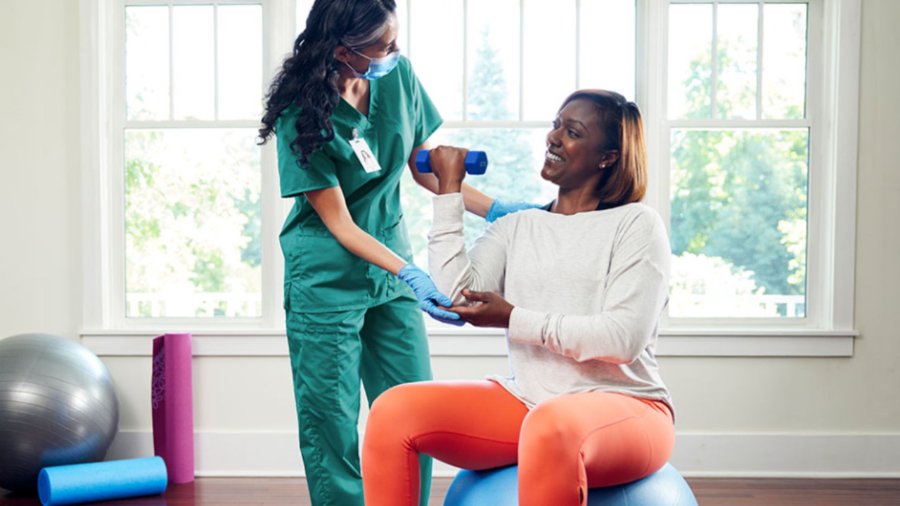
Physical Therapy at Home
Physical therapy for home-based patients focuses on rebuilding the physical capacity that illness, injury, surgery, or neurological change has reduced — in the setting where that capacity actually needs to function.BrightStar Care's New Jersey-licensed physical therapists address strength, mobility, and endurance; gait, balance, and transfer training; fall prevention; post-hospital, post-rehabilitation, and post-surgical recovery; joint replacement, stroke, and neurological rehabilitation; and mobility device and caregiver training.
Strength, mobility and endurance are typically the first priorities after hospitalization or surgery. Periods of bed rest and inactivity produce rapid deconditioning even in otherwise healthy adults — for older adults or those with chronic conditions, the functional decline from a single hospitalization can be dramatic. PT rebuilds this foundational capacity through progressive exercise programs that are calibrated to the patient's current status and designed to advance as function improves.
Gait, balance, and transfer training address the specific movement patterns that create fall risk at home. A physical therapist who assesses how a patient gets out of their specific chair, navigates their specific hallway, and manages their specific bathroom layout can target the exact movements where the risk is highest. Fall prevention is not generic — it is specific to the person and the environment.
Post-hospital, post-rehabilitation, and post-surgical recovery is among the highest-value applications of in-home PT. Patients discharged from hospitals and rehabilitation facilities often have significant remaining recovery ahead of them. Without continued therapy at home, that recovery slows or stalls. PT picks up where the facility left off, maintaining momentum and reducing the readmission risk that interruption of recovery creates.
Joint replacement, stroke, and neurological rehabilitation require sustained, progressive therapeutic work over weeks to months. The specificity and consistency of in-home therapy — where the therapist is working with the patient in their actual environment, on the actual functional tasks that matter to them — produces outcomes that generic outpatient care cannot always match.
Mobility device and caregiver training ensures that the walker, cane, or wheelchair is being used correctly and that the family members or caregivers assisting with mobility are using technique that is safe for both the patient and themselves. Incorrect technique is a significant and preventable source of falls and injury.

Occupational Therapy at Home
Occupational therapy focuses on the activities of daily living — the tasks that define functional independence at home. After illness, injury, or surgery, these tasks frequently require relearning, adaptation, or environmental modification to be safely manageable again.BrightStar Care's NJ-licensed occupational therapists address ADL retraining, home safety evaluations, and adaptive equipment — the three pillars of OT's contribution to recovery and independence at home.
ADL retraining covers the full range of daily living tasks that illness or injury has made difficult: bathing, dressing, grooming, meal preparation, household management, and mobility within the home. The OT assesses what specific aspects of each task are presenting difficulty, develops an adapted approach that the patient can perform safely, and works with the patient on the repeated practice that builds the new skill or compensatory strategy until it is reliable.
Home safety evaluations are among the most concretely impactful things an occupational therapist does. The OT walks through the patient's home and identifies the specific hazards — lighting, flooring, furniture placement, bathroom accessibility, stair safety, kitchen organization — that create risk for this patient's specific presentation. The recommendations that come from a thorough home safety evaluation are not generic advice. They are specific modifications to a specific home for a specific patient, with a realistic assessment of which changes are highest priority.
Adaptive equipment bridges the gap between the patient's current functional capacity and the tasks they need to perform. Grab bars in the shower. A long-handled reacher for someone who cannot safely bend. A shower chair. A raised toilet seat. A bath bench. The OT assesses what equipment would address the patient's specific functional limitations, recommends what is needed, and works with the patient on using it correctly until the use is habitual.
Speech Therapy at Home
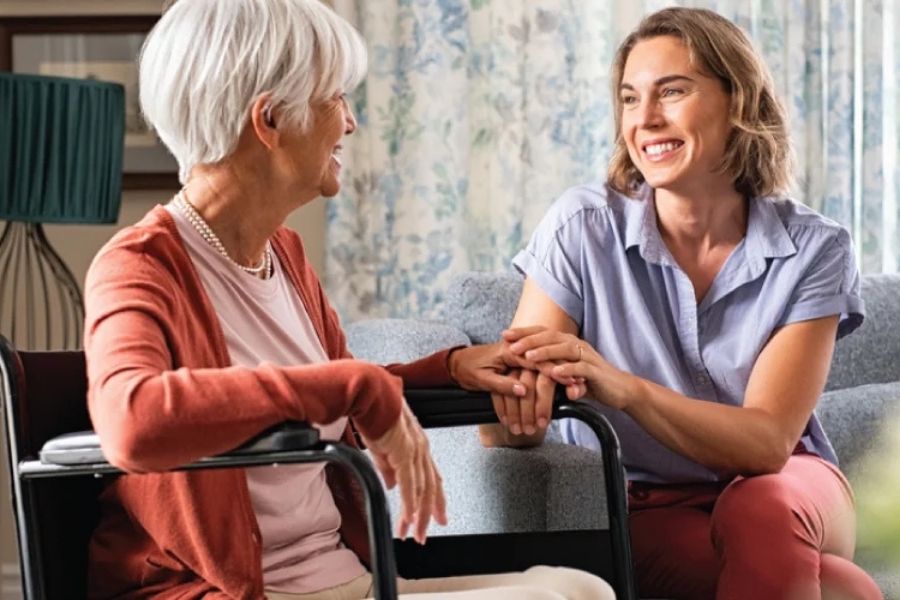
Speech therapy for home-based patients is broader in scope than its name suggests. While it addresses speech and language difficulties, it also covers cognition, memory, and swallowing — three areas of significant clinical importance for patients recovering from stroke, neurological conditions, or the cognitive effects of hospitalization and illness.BrightStar Care's NJ-licensed speech therapists address speech and language rehabilitation; cognitive-communication and memory strategies; stroke and neurological recovery; voice therapy when clinically appropriate; swallowing and dysphagia services when ordered and clinically appropriate; and patient and caregiver education.
Cognitive-communication and memory strategies are particularly relevant after stroke, traumatic brain injury, or the significant cognitive disruption that major illness and hospitalization can produce even without a primary neurological event. A speech therapist who works with a patient on organizational strategies, memory compensation techniques, and communication approaches that work around cognitive deficits is providing support that substantially affects the patient's ability to manage their own daily life and to participate meaningfully in their own recovery.
Swallowing and dysphagia services address one of the most clinically significant and most underappreciated consequences of stroke, neurological disease, and prolonged illness. Difficulty swallowing affects nutrition, hydration, and creates aspiration risk that can produce serious pulmonary complications. A speech therapist who evaluates swallowing function and develops a safe swallowing program — appropriate food and liquid textures, positioning strategies, compensatory techniques — is protecting the patient from a category of complication that has major health consequences.
Patient and caregiver education is woven through everything speech therapy does. The strategies that the ST develops only work if they are consistently used throughout the patient's day — not just during therapy sessions. Teaching family members and caregivers how to support communication, how to implement safe swallowing protocols, and how to recognize when a cognitive or communication change warrants clinical attention multiplies the impact of every therapy visit.
The Nurse-Led Difference
What distinguishes BrightStar Care of Camden and Cherry Hill from a therapy-only provider is the nurse-led approach that integrates therapy into the patient's broader care picture.A registered nurse oversees every BrightStar Care client's care plan. The nurse conducts the initial assessment, develops the individualized care plan, coordinates between disciplines when the patient is receiving more than one type of therapy, communicates with the treating physician and case manager throughout the episode of care, and monitors the overall clinical picture between therapy visits.
This matters in practice because recovery is not a single-discipline process. A patient recovering from a stroke may be receiving physical therapy for mobility, occupational therapy for ADL retraining, and speech therapy for communication and swallowing — while also receiving skilled nursing for medication management and wound care, and personal care for daily living support. Without a coordinating clinical presence, these services can operate in parallel without integrating into a coherent plan. With nurse oversight, they inform each other, adjust to each other, and collectively serve a single individualized goal: the patient's best possible recovery and the highest sustainable level of independence at home.
BrightStar Care of Camden and Cherry Hill is Joint Commission accredited — an independently verified standard of clinical quality that goes beyond New Jersey state licensing requirements and that establishes the care coordination, documentation, and quality monitoring standards that accreditation requires. For patients with complex recovery needs, this standard matters.
Physical, Occupational & Speech Therapy at Home
One Agency. Everything the Recovery Needs.
Families managing a loved one's recovery often find themselves coordinating between a hospital discharge planner, a visiting nurse agency, a separate therapy provider, a home health aide service, and the treating physician — all of whom may have limited visibility into what the others are doing.BrightStar Care of Camden and Cherry Hill provides Physical Therapy, Occupational Therapy, Speech Therapy, Skilled Nursing, and Personal Care through one local agency. One care coordinator. One care plan. One point of contact for the family when something changes or a concern arises.
This is not a minor convenience. Fragmented care produces gaps — moments between disciplines and providers where changes in the patient's condition go unnoticed, where communication between services fails, where the transition from hospital to home produces a readmission that coordinated care would have prevented. One agency that sees the whole picture closes those gaps.
We also provide benefits-verification assistance for families navigating coverage — helping families understand what their insurance covers for in-home therapy and how to access the benefits they are entitled to.
If your family is navigating a recovery and wants to understand whether in-home therapy is appropriate for your loved one, we are glad to speak with you.
Physical, Occupational & Speech Therapy at Home
Frequently Asked Questions
Q: Does my loved one need a physician's order to start in-home therapy with BrightStar Care?
Yes. Physical, Occupational, and Speech Therapy services require a physician's order before they can begin. If your loved one is being discharged from a hospital or rehabilitation facility, the discharge planning team will typically initiate this order as part of the discharge process. If you are reaching out independently, BrightStar Care can assist with coordinating with your loved one's physician to obtain the necessary orders and to communicate relevant clinical information that supports the referral.Q: How is in-home therapy different from what my loved one received in the hospital or rehabilitation facility?
In-hospital and in-facility therapy is delivered in a standardized clinical environment, often in a gymnasium or therapy suite, using equipment and conditions that do not reflect the patient's home. In-home therapy is delivered in the patient's actual living environment — the specific rooms, furniture, layout, and conditions where they will need to function after recovery. The goals are built around the patient's actual home and actual life, which produces more directly applicable outcomes. In-home therapy also allows the therapist to conduct a home safety evaluation and to work on the specific tasks and environments — the patient's own stairs, their own bathroom, their own kitchen — that matter most for their independent functioning.Q: What does Joint Commission accreditation mean for the quality of therapy we will receive?
Joint Commission accreditation means that BrightStar Care of Camden and Cherry Hill has been independently evaluated against national standards for clinical quality, care coordination, patient safety, and documentation that exceed New Jersey state licensing requirements. For therapy services specifically, accreditation requires that therapy is integrated into a coordinated care plan with nursing oversight, that individualized care plans are developed and followed, and that quality is monitored and documented throughout the episode of care. For families choosing between a general therapy provider and an accredited home care agency with nurse oversight, the accreditation represents a meaningful and verifiable difference in clinical standards.BrightStar Care of Camden and Cherry Hill provides Joint Commission accredited Physical Therapy, Occupational Therapy, Speech Therapy, Skilled Nursing, and Personal Care throughout Camden, Cherry Hill, Haddonfield, Moorestown, Voorhees, Collingswood, Marlton, and surrounding Camden and Burlington County communities. To speak with a care coordinator or request a consultation, contact our office today.
Contact us for a free consultation: