
This November, during Veterans Awareness Month, there is one health issue that does not get nearly enough attention in conversations about veteran care: wounds that do not heal the way they should. Not a minor cut or a scraped knee. Chronic wounds, surgical wounds, diabetic foot ulcers, wounds from amputation sites, pressure injuries that develop when someone cannot move freely. These are real, serious, and common in the veteran population. And when they are not managed with appropriate clinical oversight, the outcomes can be devastating.
If you are a veteran in Camden County or Burlington County, or a family member caring for one, this is worth understanding clearly.
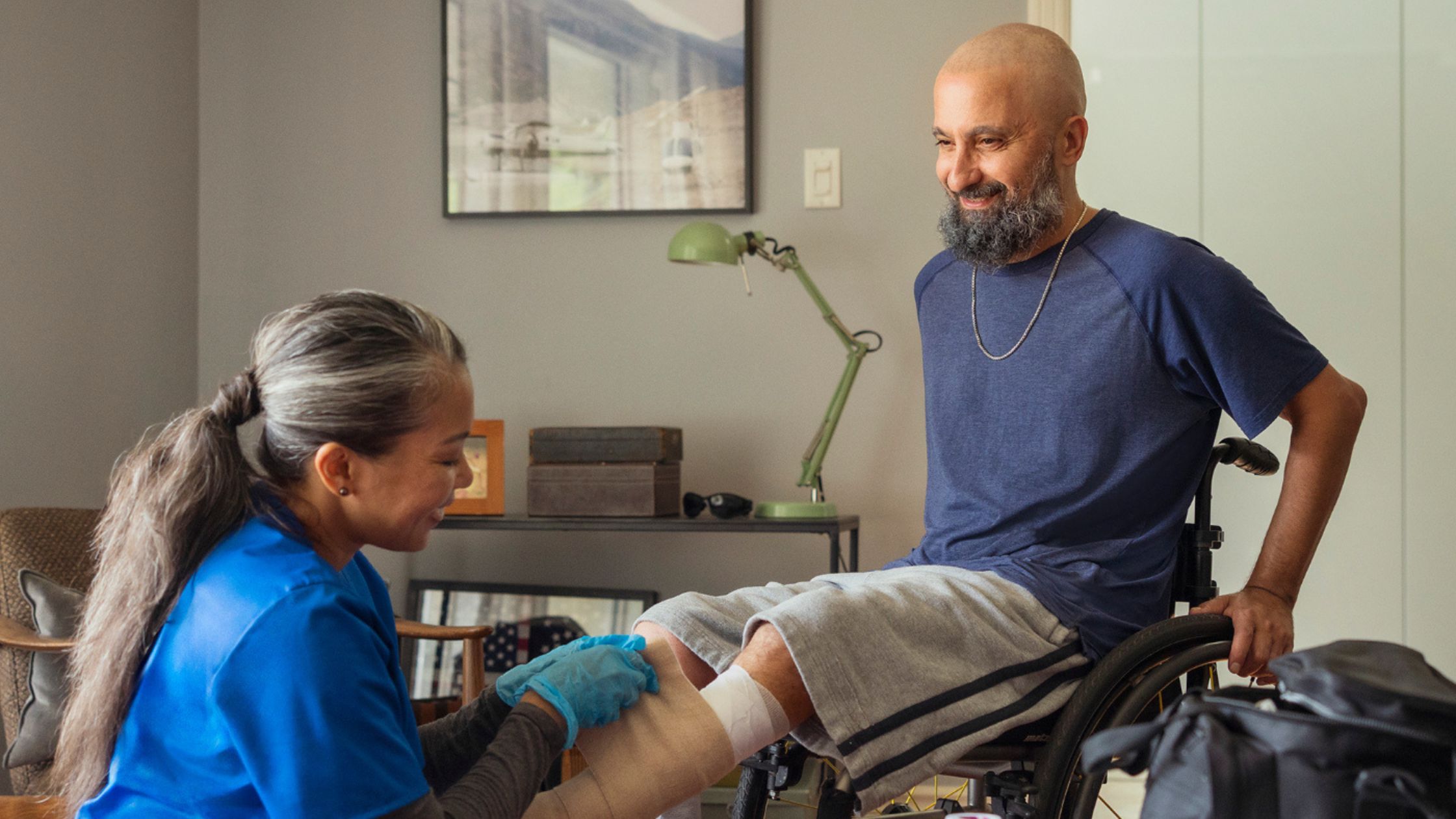
Veterans carry a disproportionate wound care burden, and it is not coincidental. It is the direct result of service.
Combat injuries requiring surgery leave behind scar tissue, altered circulation, and sites that are vulnerable to breakdown years or even decades later. Amputees, including those who received limb amputations as a result of injury or vascular disease, require careful monitoring of the residual limb, particularly around the stump site where skin integrity is critical for prosthetic use and infection prevention.
Diabetes is another significant driver, especially for Vietnam veterans. The association between Agent Orange exposure and Type 2 diabetes is well established, and the VA has recognized diabetes as a presumptive condition for Vietnam veterans. Diabetic foot wounds are among the most clinically complex chronic wounds in existence. Neuropathy reduces sensation so a veteran may not notice a wound forming; compromised circulation slows healing; and elevated blood glucose creates an environment where infection takes hold quickly.
Peripheral arterial disease causes lower extremity wounds that require specific dressing protocols and often coordination with a vascular surgeon. And veterans with spinal cord injuries or other neurological conditions from service are at elevated risk for pressure injuries, particularly if mobility is limited and skin surveillance is not consistent.
None of this is background information for its own sake. It is the reason wound care for veterans is a clinical issue, not just a caregiving one.
There is a common misconception that wound care at home means someone comes in to change a bandage. That is not what skilled wound care is.
When a licensed nurse provides wound care, the visit involves wound assessment and staging: determining the wound's size, depth, tissue type, exudate level, periwound skin condition, and any signs of infection or deterioration. The nurse is comparing today's wound status to prior documentation and making clinical judgments about whether the wound is progressing, stalling, or worsening.
Depending on the physician's orders, skilled wound care can also include debridement, the removal of necrotic or nonviable tissue that is preventing healing. It includes irrigation and cleansing protocols appropriate to the wound type. It includes dressing selection, which is far more nuanced than it sounds. A moisture-retentive dressing is appropriate for some wounds. An antimicrobial dressing is appropriate when bacterial burden is a concern. Compression therapy is indicated for venous ulcers. The wrong dressing choice does not just fail to help; it can actively harm a wound.
Skilled wound care also includes documentation, including photography, to create a clinical record of wound progression over time. And it includes communication with the wound care physician, vascular surgeon, or other providers on the care team so that orders can be adjusted as the wound changes.
This is clinical work. It requires clinical training and clinical judgment.
Home health aides perform important work, including personal care, bathing assistance, meal preparation, companionship, and light housekeeping. Wound care is not within their scope of practice. This is not a limitation of competence; it is a legal and clinical distinction.
A wound that looks stable can change quickly. Signs of infection, including changes in odor, exudate color, surrounding skin temperature, or patient symptoms, require a trained clinician to recognize and act on. A family member doing their best with gauze and tape is not equipped to identify the difference between normal wound healing and the early stages of cellulitis, and they should not have to be.
Cellulitis, osteomyelitis (bone infection), and systemic infection are documented outcomes of wounds that were not managed with appropriate clinical oversight. For a veteran with diabetes or peripheral arterial disease, a wound that is not healing correctly carries a real amputation risk. These are not hypothetical worst cases. They are outcomes that happen when wound care falls outside the scope of skilled nursing and no one catches the warning signs in time.
Call 856-843-7177 Our Website
Veterans enrolled in VA healthcare who need home wound care have a pathway for getting that care authorized through the VA Community Care Network (CCN). Veterans in South Jersey are primarily served by the Corporal Michael J. Crescenz VA Medical Center in Philadelphia and the VA New Jersey Health Care System, which has facilities in Lyons and East Orange.
When a VA provider determines that skilled wound care at home is medically appropriate, a CCN referral can be made through TriWest Healthcare Alliance, which administers the CCN for this region. That referral can authorize BrightStar Care of Camden and Cherry Hill to provide the skilled wound care in the veteran's home.
Veterans who have difficulty getting to a wound care clinic because of mobility limitations, transportation barriers, or the complexity of their overall health situation are strong candidates for this authorization. If you or a family member is in this situation, the conversation starts with the VA provider.
For families navigating an acute wound situation, knowing that private pay skilled nursing is available without a lengthy approval process is important. BrightStar Care of Camden and Cherry Hill accepts private pay for skilled wound care visits from the start.
Wound care does not happen in a silo. When a BrightStar Care registered nurse comes to a veteran's home to provide wound care, they are not only looking at the wound. They are conducting a broader nursing assessment: monitoring vital signs, observing the patient's overall condition, noting any signs of systemic infection or change in baseline status, reviewing medications, and communicating with the rest of the care team.
This is what Joint Commission accreditation reflects in practice. BrightStar Care of Camden and Cherry Hill is Joint Commission accredited, which means the organization meets rigorous standards for clinical quality, documentation, care coordination, and patient safety. That accreditation is not a marketing designation; it is evidence of the processes and oversight structures that exist to make sure skilled care is actually skilled.
If you are evaluating skilled nursing options for wound care, whether through VA CCN or private pay, here is what matters:
The agency should employ licensed nurses with wound care competency. RN oversight of wound care visits should be standard, not optional. Documentation should be thorough and consistent, including wound measurement, photography, and clear notation of any changes. The agency should have established communication protocols with the patient's physician and specialists. And if you are pursuing VA CCN coverage, the agency needs to be credentialed with TriWest and experienced with the referral and authorization process.
BrightStar Care of Camden and Cherry Hill meets each of these standards. We are Joint Commission accredited, staffed by licensed nurses with wound care training, and experienced in coordinating care with VA providers and community physicians across South Jersey.
BrightStar Care of Camden and Cherry Hill provides skilled wound care to veterans in Camden, Cherry Hill, Haddonfield, Moorestown, Voorhees, Collingswood, Marlton, and surrounding communities throughout Camden County and Burlington County, New Jersey.
If you have a wound that needs professional attention, or if you are caring for a veteran who does, you do not have to figure this out alone. Reach out to our team to talk through what coverage may be available and what care would look like.
Call 856-843-7177 Our Website
Contact us for a free consultation:
If you are a veteran in Camden County or Burlington County, or a family member caring for one, this is worth understanding clearly.
Why Wound Care Is a Veteran-Specific Concern
Veterans carry a disproportionate wound care burden, and it is not coincidental. It is the direct result of service.Combat injuries requiring surgery leave behind scar tissue, altered circulation, and sites that are vulnerable to breakdown years or even decades later. Amputees, including those who received limb amputations as a result of injury or vascular disease, require careful monitoring of the residual limb, particularly around the stump site where skin integrity is critical for prosthetic use and infection prevention.
Diabetes is another significant driver, especially for Vietnam veterans. The association between Agent Orange exposure and Type 2 diabetes is well established, and the VA has recognized diabetes as a presumptive condition for Vietnam veterans. Diabetic foot wounds are among the most clinically complex chronic wounds in existence. Neuropathy reduces sensation so a veteran may not notice a wound forming; compromised circulation slows healing; and elevated blood glucose creates an environment where infection takes hold quickly.
Peripheral arterial disease causes lower extremity wounds that require specific dressing protocols and often coordination with a vascular surgeon. And veterans with spinal cord injuries or other neurological conditions from service are at elevated risk for pressure injuries, particularly if mobility is limited and skin surveillance is not consistent.
None of this is background information for its own sake. It is the reason wound care for veterans is a clinical issue, not just a caregiving one.
What Skilled Wound Care Actually Involves
There is a common misconception that wound care at home means someone comes in to change a bandage. That is not what skilled wound care is.When a licensed nurse provides wound care, the visit involves wound assessment and staging: determining the wound's size, depth, tissue type, exudate level, periwound skin condition, and any signs of infection or deterioration. The nurse is comparing today's wound status to prior documentation and making clinical judgments about whether the wound is progressing, stalling, or worsening.
Depending on the physician's orders, skilled wound care can also include debridement, the removal of necrotic or nonviable tissue that is preventing healing. It includes irrigation and cleansing protocols appropriate to the wound type. It includes dressing selection, which is far more nuanced than it sounds. A moisture-retentive dressing is appropriate for some wounds. An antimicrobial dressing is appropriate when bacterial burden is a concern. Compression therapy is indicated for venous ulcers. The wrong dressing choice does not just fail to help; it can actively harm a wound.
Skilled wound care also includes documentation, including photography, to create a clinical record of wound progression over time. And it includes communication with the wound care physician, vascular surgeon, or other providers on the care team so that orders can be adjusted as the wound changes.
This is clinical work. It requires clinical training and clinical judgment.
Why This Cannot Be Delegated to an Aide or a Family Member
Home health aides perform important work, including personal care, bathing assistance, meal preparation, companionship, and light housekeeping. Wound care is not within their scope of practice. This is not a limitation of competence; it is a legal and clinical distinction.A wound that looks stable can change quickly. Signs of infection, including changes in odor, exudate color, surrounding skin temperature, or patient symptoms, require a trained clinician to recognize and act on. A family member doing their best with gauze and tape is not equipped to identify the difference between normal wound healing and the early stages of cellulitis, and they should not have to be.
Cellulitis, osteomyelitis (bone infection), and systemic infection are documented outcomes of wounds that were not managed with appropriate clinical oversight. For a veteran with diabetes or peripheral arterial disease, a wound that is not healing correctly carries a real amputation risk. These are not hypothetical worst cases. They are outcomes that happen when wound care falls outside the scope of skilled nursing and no one catches the warning signs in time.
Call 856-843-7177 Our Website
VA Community Care Network Coverage for South Jersey Veterans
Veterans enrolled in VA healthcare who need home wound care have a pathway for getting that care authorized through the VA Community Care Network (CCN). Veterans in South Jersey are primarily served by the Corporal Michael J. Crescenz VA Medical Center in Philadelphia and the VA New Jersey Health Care System, which has facilities in Lyons and East Orange.When a VA provider determines that skilled wound care at home is medically appropriate, a CCN referral can be made through TriWest Healthcare Alliance, which administers the CCN for this region. That referral can authorize BrightStar Care of Camden and Cherry Hill to provide the skilled wound care in the veteran's home.
Veterans who have difficulty getting to a wound care clinic because of mobility limitations, transportation barriers, or the complexity of their overall health situation are strong candidates for this authorization. If you or a family member is in this situation, the conversation starts with the VA provider.
Private Pay Wound Care for Veterans
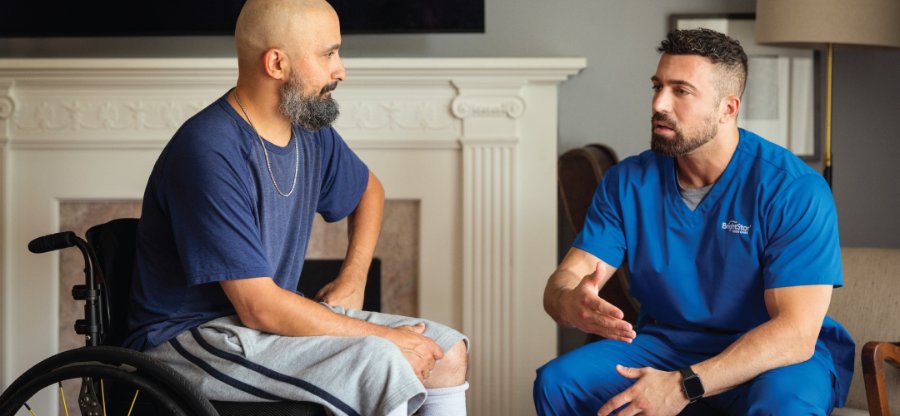
VA CCN authorization is not the only path. Veterans who are not enrolled in VA healthcare, who have let enrollment lapse, or whose VA coverage does not extend to their current wound care frequency can arrange skilled wound care through private pay. There is no prior authorization required, and care can typically begin much faster through this route.For families navigating an acute wound situation, knowing that private pay skilled nursing is available without a lengthy approval process is important. BrightStar Care of Camden and Cherry Hill accepts private pay for skilled wound care visits from the start.
Wound Care as Part of a Complete Picture
Wound care does not happen in a silo. When a BrightStar Care registered nurse comes to a veteran's home to provide wound care, they are not only looking at the wound. They are conducting a broader nursing assessment: monitoring vital signs, observing the patient's overall condition, noting any signs of systemic infection or change in baseline status, reviewing medications, and communicating with the rest of the care team.This is what Joint Commission accreditation reflects in practice. BrightStar Care of Camden and Cherry Hill is Joint Commission accredited, which means the organization meets rigorous standards for clinical quality, documentation, care coordination, and patient safety. That accreditation is not a marketing designation; it is evidence of the processes and oversight structures that exist to make sure skilled care is actually skilled.
What to Look for in a Wound Care Skilled Nursing Provider
If you are evaluating skilled nursing options for wound care, whether through VA CCN or private pay, here is what matters:The agency should employ licensed nurses with wound care competency. RN oversight of wound care visits should be standard, not optional. Documentation should be thorough and consistent, including wound measurement, photography, and clear notation of any changes. The agency should have established communication protocols with the patient's physician and specialists. And if you are pursuing VA CCN coverage, the agency needs to be credentialed with TriWest and experienced with the referral and authorization process.
BrightStar Care of Camden and Cherry Hill meets each of these standards. We are Joint Commission accredited, staffed by licensed nurses with wound care training, and experienced in coordinating care with VA providers and community physicians across South Jersey.
Serving Veterans Across Camden County and Burlington County
BrightStar Care of Camden and Cherry Hill provides skilled wound care to veterans in Camden, Cherry Hill, Haddonfield, Moorestown, Voorhees, Collingswood, Marlton, and surrounding communities throughout Camden County and Burlington County, New Jersey.If you have a wound that needs professional attention, or if you are caring for a veteran who does, you do not have to figure this out alone. Reach out to our team to talk through what coverage may be available and what care would look like.
Call 856-843-7177 Our Website
Frequently Asked Questions
Q: Can a veteran get wound care at home through the VA without going to the clinic?
A: Yes. If a VA provider determines that home skilled nursing for wound care is clinically appropriate, they can issue a Community Care Network (CCN) referral through TriWest. That referral authorizes a credentialed home health agency like BrightStar Care of Camden and Cherry Hill to provide wound care visits in the veteran's home. Veterans with mobility or transportation limitations are often strong candidates for this type of authorization.Q: What is the difference between skilled wound care and having a family member or aide manage a wound at home?
A: Skilled wound care is performed by a licensed nurse and involves clinical wound assessment, appropriate dressing selection, debridement as ordered, documentation, and communication with the care team. Home health aides and family members are not trained or legally authorized to perform these tasks. Wounds that appear stable can deteriorate quickly, and recognizing infection, tissue changes, or other complications requires clinical judgment. The risk of delegating wound care to a non-clinical caregiver includes cellulitis, osteomyelitis, hospitalization, and for veterans with diabetes or poor circulation, potential amputation.Q: Does BrightStar Care of Camden and Cherry Hill accept private pay for skilled wound care?
A: Yes. Veterans who do not have VA CCN authorization, or whose current care schedule is not fully covered, can arrange skilled nursing wound care visits through private pay. No prior authorization is required, and care can begin more quickly than through insurance-based pathways. Our team can walk through what private pay wound care visits look like and help you determine what level of care is appropriate.Contact us for a free consultation: