
Hip and knee replacements are among the most common surgical procedures performed in the United States and for good reason. When arthritis, injury, or years of wear have made every step painful, joint replacement surgery can restore mobility, reduce chronic pain, and give people back a quality of life they thought they'd lost for good.
But the surgery is only half the equation. What happens in the weeks and months after you leave the hospital determines how fully and how quickly you recover. And for patients in the greater Milwaukee area returning home after a joint replacement, the difference between a smooth recovery and a difficult one often comes down to the quality of support waiting for them at home.
Hospitals and surgical centers move patients through quickly. It's common today for a hip or knee replacement patient to be discharged within one to three days of surgery well before they feel steady on their feet, capable of managing medications independently, or confident navigating their own home safely.
That gap between hospital discharge and genuine independence is where complications happen. Falls are the most serious risk. A fall on a newly replaced joint can be catastrophic, potentially requiring revision surgery and setting recovery back by months. But there are other risks too: wound infections, blood clots, medication errors, and the kind of slow functional decline that happens when patients don't follow through consistently with their physical therapy exercises because no one is there to help and encourage them.
This is the window where professional in-home care makes the greatest difference.
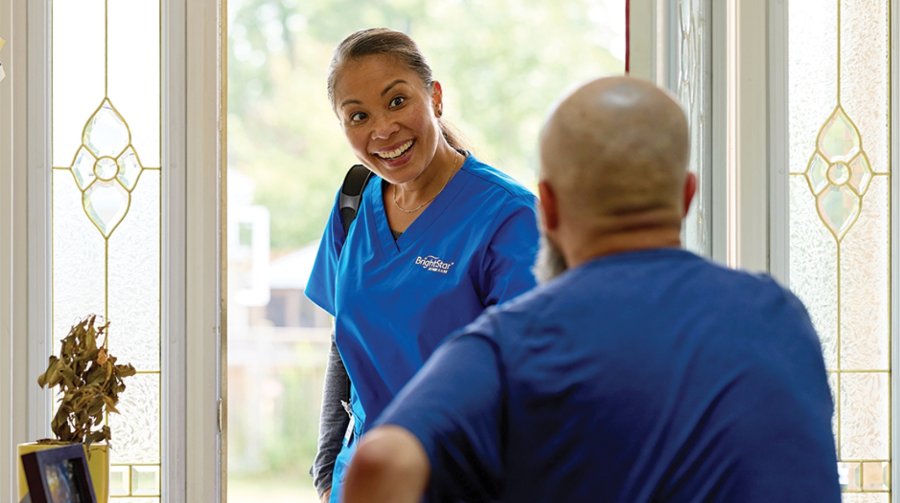
Understanding what the recovery process demands makes it clear why going it alone or relying entirely on a spouse or adult child who also has a life to manage is so difficult.
Swelling, bruising, and wound care are also part of the picture. Surgical incision sites need to be monitored and kept clean and dry. Signs of infection increasing redness, warmth, drainage, fever need to be recognized and reported promptly.
At BrightStar Care of Central Milwaukee, we provide both skilled nursing and non-medical home care which means we can support patients across the full range of what joint replacement recovery actually requires, from the clinical to the practical.
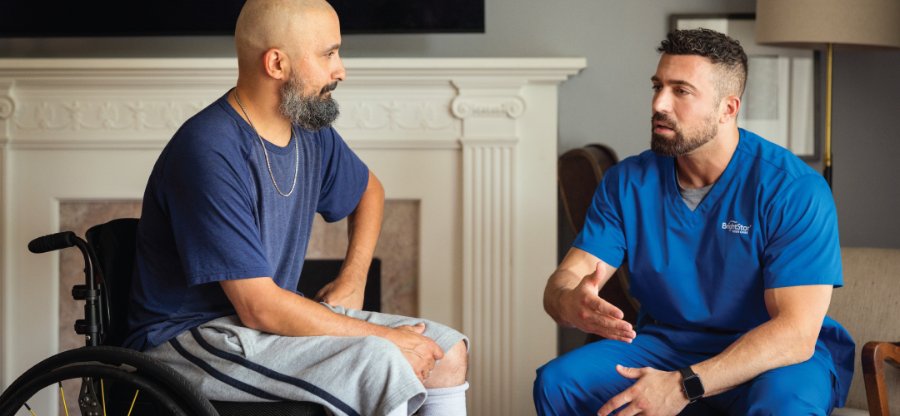
Wound assessment and care. A skilled nurse can monitor the surgical incision at every visit, assess for early signs of infection or healing complications, perform dressing changes, and communicate directly with the surgical team if anything requires attention. This clinical vigilance is one of the most important safeguards against one of the most serious post-surgical risks.
Medication management. Our nurses review the full medication regimen, ensure the patient understands the schedule and dosage, set up medication organizers, and monitor for side effects or interactions. For patients on blood thinners which carry specific risks if taken incorrectly, skilled nursing oversight is especially valuable.
Vital sign monitoring. Blood pressure, heart rate, temperature, and oxygen levels can all flag early complications. Regular monitoring by a nurse provides a clinical baseline and ensures that anything unusual is caught and addressed quickly rather than waiting until the next outpatient appointment.
Communication with the care team. Our nurses serve as a bridge between the patient at home and the surgical and primary care team documenting observations, flagging concerns, and ensuring continuity of clinical care after discharge.
Call us Today Visit Our Website
Skilled nursing handles the clinical layer. Our non-medical caregivers handle the daily reality of recovery, the practical, hands-on support that makes it possible for a patient to rest, heal, and do the work of getting better without burning through what little energy they have on tasks that should be easier.
Safe mobility and fall prevention. Caregivers assist with transfers getting in and out of bed, on and off the toilet, in and out of the shower using proper body mechanics that protect the new joint. They accompany patients on prescribed walking routines, provide steadying support, and keep the home environment clear of fall hazards. This consistent, knowledgeable assistance is one of the most direct ways home care reduces the risk of a post-surgical fall.
Personal care. Showering, dressing, and grooming are physically demanding and sometimes risky immediately after joint replacement surgery. A caregiver who knows how to assist with these tasks safely without placing the joint in a compromised position makes these daily necessities manageable without stress or risk.
Meal preparation and nutrition. Recovery from surgery is physically demanding. The body needs adequate protein, hydration, and nutrition to heal effectively. When a patient is fatigued and in pain, cooking a real meal is often the last thing they feel capable of. Caregivers prepare meals, ensure the patient is eating and drinking adequately, and tailor food to any dietary restrictions or preferences.
Exercise encouragement and support. Physical therapy exercises are prescribed for a reason and they work best when done consistently. Caregivers can be present and encouraging during home exercise routines, assist with positioning, and help patients stay on the schedule their physical therapist has outlined. This accountability and support is genuinely one of the most underappreciated values of home care during joint replacement recovery.
Household support and errands. Laundry, dishes, grocery runs, pharmacy pickups, the ordinary tasks of daily life don't stop because someone is recovering from surgery. Caregivers handle these so that the patient's energy goes toward healing, not household management.
Companionship. Recovery is isolating. Patients who live alone or whose family members can only visit occasionally can spend long stretches of the day alone which affects mood, motivation, and often adherence to the recovery plan. A caregiver's consistent, warm presence matters more than families often anticipate.
Contact BrightStar Care of Central Milwaukee for a Free Consultation:
Some patients after hip or knee replacement are discharged to a short-term rehabilitation facility before returning home either because they live alone, because their home isn't yet set up safely, or because their insurance plan requires it. For these patients, the transition home from rehab carries its own risks and its own need for support.
BrightStar Care of Central Milwaukee can begin services at the time of discharge from the rehab facility, ensuring that the transition home is as smooth and safe as the transition from the hospital. We coordinate with the rehab team on the care plan, pick up where their oversight left off, and make sure no clinical or practical detail falls through the gap between one setting and another.
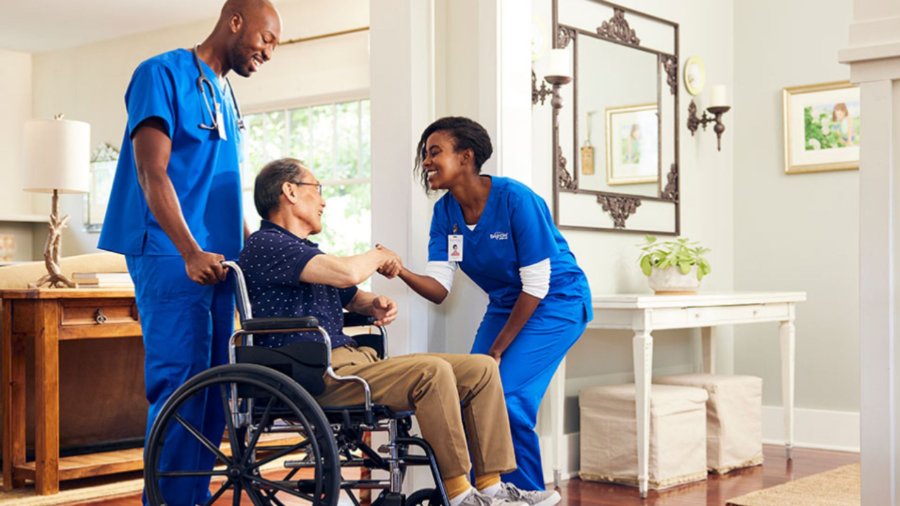
Long-term care insurance, if your loved one has a policy, may cover home care services during recovery. Veterans' benefits may also apply for eligible patients. For most families, some or all of the cost will be paid directly which is why it's worth having a frank conversation with a care coordinator early to understand what level of support is needed and what that realistically costs.
BrightStar Care is a private pay agency. Our care coordinators are transparent about costs and experienced at helping families build a care plan that provides the right level of support for the recovery period without overextending the budget.
If your loved one has a joint replacement scheduled or has already been discharged and is struggling at home the best time to call is now.
Call us Today Visit Our Website
BrightStar Care of Central Milwaukee provides skilled nursing and non-medical home care services for patients and families throughout Milwaukee, Wauwatosa, West Allis, Brookfield, Greenfield, Cudahy, and surrounding communities. To speak with a care coordinator about post-surgical home care, contact our Central Milwaukee office today at 414-944-0280.
Call us Today Visit Our Website
But the surgery is only half the equation. What happens in the weeks and months after you leave the hospital determines how fully and how quickly you recover. And for patients in the greater Milwaukee area returning home after a joint replacement, the difference between a smooth recovery and a difficult one often comes down to the quality of support waiting for them at home.
Why the First Weeks Home Are the Most Critical
Hospitals and surgical centers move patients through quickly. It's common today for a hip or knee replacement patient to be discharged within one to three days of surgery well before they feel steady on their feet, capable of managing medications independently, or confident navigating their own home safely.That gap between hospital discharge and genuine independence is where complications happen. Falls are the most serious risk. A fall on a newly replaced joint can be catastrophic, potentially requiring revision surgery and setting recovery back by months. But there are other risks too: wound infections, blood clots, medication errors, and the kind of slow functional decline that happens when patients don't follow through consistently with their physical therapy exercises because no one is there to help and encourage them.
This is the window where professional in-home care makes the greatest difference.
What Recovery After Joint Replacement Actually Looks Like
Understanding what the recovery process demands makes it clear why going it alone or relying entirely on a spouse or adult child who also has a life to manage is so difficult.
The Physical Reality
In the first days and weeks home, a joint replacement patient is managing real pain, significant fatigue, and a body that doesn't yet move the way they expect it to. Getting out of bed, using the bathroom, showering, and dressing all require careful technique to avoid putting unsafe stress on the new joint. Many patients are on weight-bearing restrictions and need to use a walker or crutches consistently which requires upper body strength and coordination that doesn't come naturally under fatigue.Swelling, bruising, and wound care are also part of the picture. Surgical incision sites need to be monitored and kept clean and dry. Signs of infection increasing redness, warmth, drainage, fever need to be recognized and reported promptly.
The Medication Burden
Post-surgical pain management typically involves a combination of medications, prescription pain relievers, anti-inflammatories, and often blood thinners to prevent clots. Managing this regimen correctly and on schedule is critical both for comfort and for safety. Missed doses or medication errors in the early recovery period are a genuine risk, particularly for older adults managing multiple prescriptions.The Physical Therapy Commitment
The physical therapy protocol after joint replacement is non-negotiable. Exercises must be performed consistently often multiple times per day to restore range of motion, rebuild strength, and train the new joint. Patients who skip or shortcut their PT exercises because they're fatigued, in pain, or simply don't have the support to get through them reliably are the patients who experience slower recovery and suboptimal long-term outcomes.
How BrightStar Care of Central Milwaukee Supports Joint Replacement Recovery
At BrightStar Care of Central Milwaukee, we provide both skilled nursing and non-medical home care which means we can support patients across the full range of what joint replacement recovery actually requires, from the clinical to the practical.
Skilled Nursing: Clinical Oversight at Home
Our registered nurses and licensed practical nurses provide in-home skilled nursing visits that keep recovery on track clinically.Wound assessment and care. A skilled nurse can monitor the surgical incision at every visit, assess for early signs of infection or healing complications, perform dressing changes, and communicate directly with the surgical team if anything requires attention. This clinical vigilance is one of the most important safeguards against one of the most serious post-surgical risks.
Medication management. Our nurses review the full medication regimen, ensure the patient understands the schedule and dosage, set up medication organizers, and monitor for side effects or interactions. For patients on blood thinners which carry specific risks if taken incorrectly, skilled nursing oversight is especially valuable.
Vital sign monitoring. Blood pressure, heart rate, temperature, and oxygen levels can all flag early complications. Regular monitoring by a nurse provides a clinical baseline and ensures that anything unusual is caught and addressed quickly rather than waiting until the next outpatient appointment.
Communication with the care team. Our nurses serve as a bridge between the patient at home and the surgical and primary care team documenting observations, flagging concerns, and ensuring continuity of clinical care after discharge.
Call us Today Visit Our Website

Non-Medical Caregiving: The Daily Support That Makes Everything Else Possible
Skilled nursing handles the clinical layer. Our non-medical caregivers handle the daily reality of recovery, the practical, hands-on support that makes it possible for a patient to rest, heal, and do the work of getting better without burning through what little energy they have on tasks that should be easier.Safe mobility and fall prevention. Caregivers assist with transfers getting in and out of bed, on and off the toilet, in and out of the shower using proper body mechanics that protect the new joint. They accompany patients on prescribed walking routines, provide steadying support, and keep the home environment clear of fall hazards. This consistent, knowledgeable assistance is one of the most direct ways home care reduces the risk of a post-surgical fall.
Personal care. Showering, dressing, and grooming are physically demanding and sometimes risky immediately after joint replacement surgery. A caregiver who knows how to assist with these tasks safely without placing the joint in a compromised position makes these daily necessities manageable without stress or risk.
Meal preparation and nutrition. Recovery from surgery is physically demanding. The body needs adequate protein, hydration, and nutrition to heal effectively. When a patient is fatigued and in pain, cooking a real meal is often the last thing they feel capable of. Caregivers prepare meals, ensure the patient is eating and drinking adequately, and tailor food to any dietary restrictions or preferences.
Exercise encouragement and support. Physical therapy exercises are prescribed for a reason and they work best when done consistently. Caregivers can be present and encouraging during home exercise routines, assist with positioning, and help patients stay on the schedule their physical therapist has outlined. This accountability and support is genuinely one of the most underappreciated values of home care during joint replacement recovery.
Household support and errands. Laundry, dishes, grocery runs, pharmacy pickups, the ordinary tasks of daily life don't stop because someone is recovering from surgery. Caregivers handle these so that the patient's energy goes toward healing, not household management.
Companionship. Recovery is isolating. Patients who live alone or whose family members can only visit occasionally can spend long stretches of the day alone which affects mood, motivation, and often adherence to the recovery plan. A caregiver's consistent, warm presence matters more than families often anticipate.
Contact BrightStar Care of Central Milwaukee for a Free Consultation:
- Phone: 414-944-0280
- Address: 10425 W North Ave #246, Milwaukee, WI 53226, United States
- Visit Us Online: BrightStar Care of Central Milwaukee
What About Patients Discharged to a Rehab Facility First?
Some patients after hip or knee replacement are discharged to a short-term rehabilitation facility before returning home either because they live alone, because their home isn't yet set up safely, or because their insurance plan requires it. For these patients, the transition home from rehab carries its own risks and its own need for support.BrightStar Care of Central Milwaukee can begin services at the time of discharge from the rehab facility, ensuring that the transition home is as smooth and safe as the transition from the hospital. We coordinate with the rehab team on the care plan, pick up where their oversight left off, and make sure no clinical or practical detail falls through the gap between one setting and another.
Paying for Home Care After Joint Replacement
Home care after joint replacement is typically a private pay service. Medicare may cover a limited number of skilled nursing or therapy visits following discharge if specific eligibility criteria are met but ongoing non-medical caregiving support falls outside Medicare's scope.Long-term care insurance, if your loved one has a policy, may cover home care services during recovery. Veterans' benefits may also apply for eligible patients. For most families, some or all of the cost will be paid directly which is why it's worth having a frank conversation with a care coordinator early to understand what level of support is needed and what that realistically costs.
BrightStar Care is a private pay agency. Our care coordinators are transparent about costs and experienced at helping families build a care plan that provides the right level of support for the recovery period without overextending the budget.
A Note for Families in the Greater Milwaukee Area
For patients recovering from hip or knee replacement surgery in Milwaukee, Wauwatosa, West Allis, Brookfield, Greenfield, Cudahy, and the surrounding communities, BrightStar Care of Central Milwaukee is available to begin services quickly, often within 24 to 48 hours of a call. We understand that discharge from the hospital or rehab facility can happen faster than families expect, and we are experienced at mobilizing care plans on short timelines.If your loved one has a joint replacement scheduled or has already been discharged and is struggling at home the best time to call is now.
Call us Today Visit Our Website
Frequently Asked Questions
Q: Do I need home care after a hip or knee replacement if I have family nearby?
Family support is invaluable during joint replacement recovery but it has real limits. Family members who are also working, managing their own households, or living even a short distance away cannot always provide the consistent, daily presence that safe recovery requires. Professional home care fills the gaps: the early morning transfer assistance, the medication reminders throughout the day, the wound monitoring that requires clinical training. The two work best together, with professional care handling what family members realistically cannot.Q: How long will I need home care after a hip or knee replacement?
Most patients benefit from some level of home care support for two to six weeks following surgery, with the most intensive need in the first two to three weeks after discharge. The exact duration depends on the patient's age, overall health, living situation, and how quickly functional independence returns. A care coordinator and the surgical team can help determine the right timeline and adjust the care plan as recovery progresses.Q: What is the biggest risk during recovery from joint replacement surgery at home?
Falls are the most serious and most common risk during joint replacement recovery at home. A fall on a newly replaced joint can cause severe damage and may require revision surgery. Professional caregivers trained in post-surgical mobility assistance combined with skilled nursing oversight and a fall-safe home environment are the most effective combination for preventing this outcome. Wound infection and medication mismanagement are also significant risks that skilled nursing visits directly address.BrightStar Care of Central Milwaukee provides skilled nursing and non-medical home care services for patients and families throughout Milwaukee, Wauwatosa, West Allis, Brookfield, Greenfield, Cudahy, and surrounding communities. To speak with a care coordinator about post-surgical home care, contact our Central Milwaukee office today at 414-944-0280.
Call us Today Visit Our Website