
For most Americans, driving is not just transportation. It is autonomy. It is the ability to get to the doctor without asking anyone, to pick up groceries on a whim, to visit a friend across town without coordinating a ride. It is, in ways that go far beyond the practical, proof that you are still in charge of your own life.
Which is why asking an older adult to stop driving or even to consider it is one of the most emotionally loaded conversations a family can have. It touches independence, identity, pride, and fear all at once. And in a community like Sun City, Surprise, or Glendale, where the distances between destinations are long and public transportation is limited, giving up the car keys does not just mean giving up driving. It can feel like giving up freedom itself.
This guide is written for families in the West Valley who are approaching this conversation or who have already had it and are now trying to figure out what comes next. Both parts matter equally.
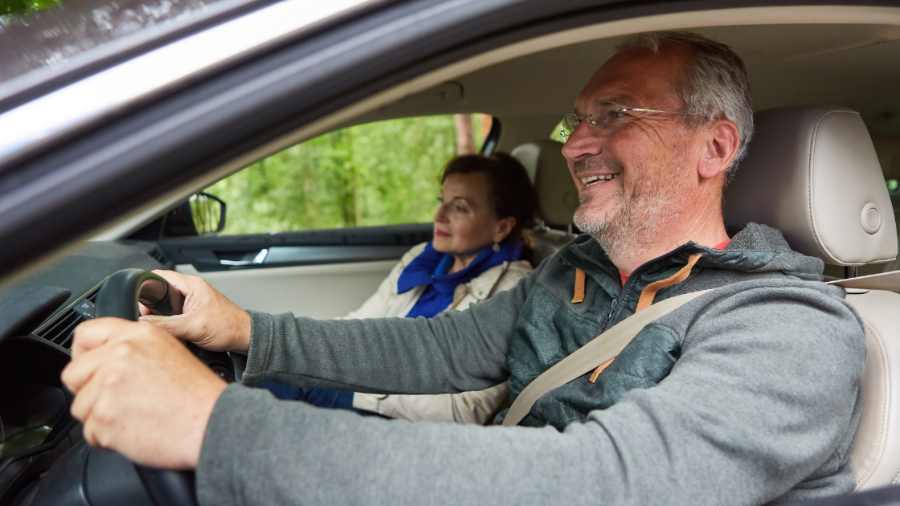
Age-related changes to vision, cognition, reaction time, and physical mobility all affect driving ability and they do so gradually, in ways that are easy to rationalize and difficult to assess from the inside.
Vision changes are often the most obvious but least acknowledged. Contrast sensitivity decreases, making it harder to distinguish objects in low light or glare a significant challenge during Arizona's bright midday sun and the long westward drives into sunset that are unavoidable in the West Valley. Peripheral vision narrows. Night vision deteriorates. Older eyes take longer to adjust from light to dark environments, making parking garages and tunnels more dangerous. Conditions like macular degeneration, glaucoma, and diabetic retinopathy compound these changes in ways that can progress faster than an annual eye exam detects.
Cognitive changes affect the processing demands of driving even before they affect daily conversation or memory in obvious ways. Highway merges, complex intersections, rapid decisions, managing multiple inputs simultaneously these tasks draw on executive function and processing speed that begin to decline earlier than most people realize. For seniors with early stage Alzheimer's or mild cognitive impairment, the driving risk is significant well before the diagnosis feels serious.
Reaction time slows. The gap between perceiving a hazard and responding to it widens with age. In Arizona's fast-moving freeway traffic, on the wide arterials of Glendale and Surprise, and in the high-speed environments of Loop 101 and the 303, that widening gap has real consequences.
Physical limitations, reduced neck rotation for checking blind spots, joint pain that affects steering or braking force, weakness or tremor in the hands and feet create mechanical challenges that most seniors quietly compensate for without realizing the limits of that compensation.
The harder truth is this: most older drivers are genuinely unaware of how much their driving has declined. The changes happen gradually, the brain compensates automatically, and a lifetime of driving competence creates confidence that outlasts capability. This is not denial, it is how the aging process works. And it means that waiting for a senior to identify the problem themselves is rarely an effective strategy.
Before having the conversation, families often spend months noticing signs and second-guessing whether what they are seeing is serious enough to act on. Here is a clear framework. Take driving concerns seriously when you observe:
In the car:
There is no version of this conversation that is easy. But there are approaches that are far more likely to succeed than others and approaches that are almost guaranteed to create conflict and resistance.
Leading with a conclusion "We've decided you should not be driving anymore" almost always fails. It removes agency from the person whose life is most affected, triggers defensiveness, and positions the family as adversaries rather than allies. Even when the conclusion is correct, this approach creates resistance that can persist for months.
Similarly, having the conversation in the heat of the moment immediately after a concerning incident, while emotions are high on both sides rarely produces a productive outcome. Urgency is understandable, but reactivity is counterproductive.
Be specific, not general. Vague concerns "We just worry about you driving" are easy to dismiss. Specific observations are harder to argue with. "I noticed last week when we were coming home from dinner that you ran the red light at Bell Road. That scared me, and I don't think you saw it." Specific, calm, non-accusatory observations give the conversation traction.
Acknowledge what's at stake for them. Do not minimize the loss. Name it directly. "I know how much driving means to you. I know it's how you get to your appointments, to the grocery store, to your friends. I'm not trying to take that away from you I'm trying to figure out how we make sure you can still do all of those things safely." Acknowledging the loss before proposing solutions changes the entire emotional tone of the conversation.
Make it collaborative, not conclusive. Frame the goal of the first conversation as gathering information and exploring options not arriving at a final decision. "Can we talk about what this might look like? I don't have all the answers, but I want us to figure this out together." This approach respects the senior's autonomy and gives them time to process before a decision is required.
Bring in a trusted third party. Sometimes the family member raising the concern is not the right messenger particularly if there is existing tension or if the senior perceives the conversation as coming from a controlling place rather than a caring one. A physician is often the most effective third party: a formal driving evaluation or a physician's recommendation to stop driving carries clinical authority that a family conversation sometimes cannot. In Arizona, physicians can report unsafe drivers to the Motor Vehicle Division, which can trigger a reassessment. This is worth knowing not as a threat, but as a legitimate pathway when the family conversation has not been sufficient.
There are situations where the gradual, collaborative approach must give way to immediate action: a serious accident, a citation for reckless or impaired driving, a senior who has become lost on a routine route, or a physician's explicit determination that driving is no longer safe.
In these cases, it is appropriate to be direct. "I love you, and I'm not able to let this continue. We need to find another way for you to get where you need to go and I'm committed to helping make that work."
If a senior with dementia continues to drive against the advice of their physician and family, practical steps may be necessary removing the keys, disabling the vehicle, or contacting the Arizona Motor Vehicle Division for a driver re-examination. These feel like drastic measures, but they are sometimes necessary to prevent a preventable tragedy.
Call us Today Visit Our Website
This is the part that families often underplan and it matters enormously. Telling a senior they can no longer drive without a concrete plan for how they will get where they need to go is not a solution. It is a problem with a different name.
The goal is not just to move them from one place to another. It is to preserve the independence, spontaneity, and connection that driving made possible. In Sun City, Surprise, and Glendale communities built around the car, where distances are long and options are fewer than in denser urban areas this requires intentional planning.
Professional caregiver transportation is one of the most reliable and dignified solutions available. A caregiver who provides transportation is not just a driver, they are a familiar, trusted companion who accompanies the senior to appointments, errands, social activities, and anywhere else they want to go. For seniors who have given up driving, having a consistent person who knows them and their routines, and who treats the ride as an enjoyable part of the day rather than a service transaction, preserves far more of the emotional value of independence than a rideshare app can.
At BrightStar Care of Glendale / Sun City / Surprise, transportation is a standard part of our non-medical caregiving services. Our caregivers accompany clients to medical appointments throughout the West Valley including Banner Health, Dignity Health, and the many specialist offices concentrated along the Bell Road and Grand Avenue corridors as well as to grocery stores, hair salons, places of worship, social clubs, and anywhere else that matters to the client's quality of life.
Rideshare services Uber and Lyft are an option for seniors who are comfortable with smartphones and who do not need a companion during the ride. For many older adults, however, the technology barrier is real, and the experience of being alone in a car with a stranger is not the independence replacement they were hoping for. GoGoGrandparent, a service that allows seniors to request rideshares via a regular phone call without a smartphone, is worth knowing about for families in this situation.
Community and senior-specific transportation in the West Valley includes Dial-a-Ride through Valley Metro and various programs through the Area Agency on Aging. These are useful for medical appointments and scheduled trips, though they typically require advance scheduling and are not suited for spontaneous outings.
Family transportation schedules coordinating among adult children and other family members to cover regular needs can work in the short term but are rarely sustainable as the only solution. Building professional transportation into the plan from the beginning prevents the burnout and resentment that an entirely family-dependent system creates over time.
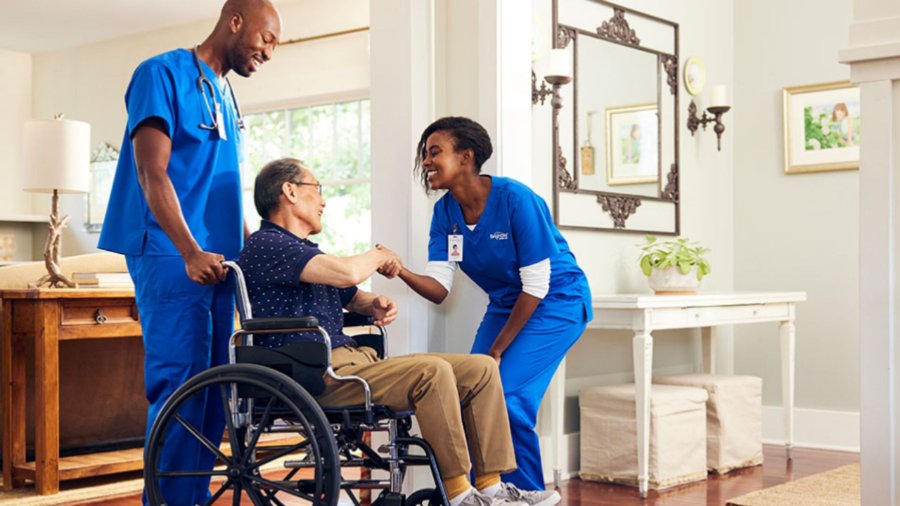
At BrightStar Care of Glendale / Sun City / Surprise, we provide both skilled nursing and non-medical home care for seniors and adults across the West Valley. For seniors who have recently stopped driving, our caregivers provide transportation as part of a broader caregiving relationship that also addresses the companionship, household support, personal care, and safety oversight that sustain independence at home.
For seniors whose driving cessation coincides with other emerging needs early cognitive decline, a recent health event, or simply the accumulated demands of aging we can conduct a care assessment to help families understand what level of support is appropriate and how to build a plan that grows with their loved one's needs.
We serve families throughout Glendale, Sun City, Sun City West, Surprise, Peoria, El Mirage, and surrounding West Valley communities.
Contact Us Today for a Free Consultation:
BrightStar Care of Glendale / Sun City / Surprise provides skilled nursing and non-medical home care services — including transportation — for seniors and adults throughout Glendale, Sun City, Sun City West, Surprise, Peoria, El Mirage, and surrounding West Valley communities. To speak with a care coordinator about transportation and in-home support options, contact our office today.
Call us Today Visit Our Website
Which is why asking an older adult to stop driving or even to consider it is one of the most emotionally loaded conversations a family can have. It touches independence, identity, pride, and fear all at once. And in a community like Sun City, Surprise, or Glendale, where the distances between destinations are long and public transportation is limited, giving up the car keys does not just mean giving up driving. It can feel like giving up freedom itself.
This guide is written for families in the West Valley who are approaching this conversation or who have already had it and are now trying to figure out what comes next. Both parts matter equally.
Why Driving Becomes Unsafe With Age and Why Seniors Often Cannot See It
Age-related changes to vision, cognition, reaction time, and physical mobility all affect driving ability and they do so gradually, in ways that are easy to rationalize and difficult to assess from the inside.Vision changes are often the most obvious but least acknowledged. Contrast sensitivity decreases, making it harder to distinguish objects in low light or glare a significant challenge during Arizona's bright midday sun and the long westward drives into sunset that are unavoidable in the West Valley. Peripheral vision narrows. Night vision deteriorates. Older eyes take longer to adjust from light to dark environments, making parking garages and tunnels more dangerous. Conditions like macular degeneration, glaucoma, and diabetic retinopathy compound these changes in ways that can progress faster than an annual eye exam detects.
Cognitive changes affect the processing demands of driving even before they affect daily conversation or memory in obvious ways. Highway merges, complex intersections, rapid decisions, managing multiple inputs simultaneously these tasks draw on executive function and processing speed that begin to decline earlier than most people realize. For seniors with early stage Alzheimer's or mild cognitive impairment, the driving risk is significant well before the diagnosis feels serious.
Reaction time slows. The gap between perceiving a hazard and responding to it widens with age. In Arizona's fast-moving freeway traffic, on the wide arterials of Glendale and Surprise, and in the high-speed environments of Loop 101 and the 303, that widening gap has real consequences.
Physical limitations, reduced neck rotation for checking blind spots, joint pain that affects steering or braking force, weakness or tremor in the hands and feet create mechanical challenges that most seniors quietly compensate for without realizing the limits of that compensation.
The harder truth is this: most older drivers are genuinely unaware of how much their driving has declined. The changes happen gradually, the brain compensates automatically, and a lifetime of driving competence creates confidence that outlasts capability. This is not denial, it is how the aging process works. And it means that waiting for a senior to identify the problem themselves is rarely an effective strategy.
The Warning Signs Families Should Know
Before having the conversation, families often spend months noticing signs and second-guessing whether what they are seeing is serious enough to act on. Here is a clear framework. Take driving concerns seriously when you observe:In the car:
- New dents, scrapes, or damage to the vehicle that went unnoticed or unexplained
- Difficulty staying in the lane, drifting, or straddling lane lines
- Missing stop signs, red lights, or failing to yield appropriately
- Driving significantly below the speed limit without reason
- Becoming confused or anxious in familiar areas
- Trouble with highway merging or navigating multi-lane traffic
- Slow or delayed reaction to traffic signals and hazards
- Difficulty judging distances when turning or following other vehicles
- Getting lost on routes that were previously routine
- A recent traffic citation or near collision
- Other drivers frequently honking or reacting to their driving
- The senior expressing anxiety or reluctance about driving
- A physician recommending they stop or be re-evaluated
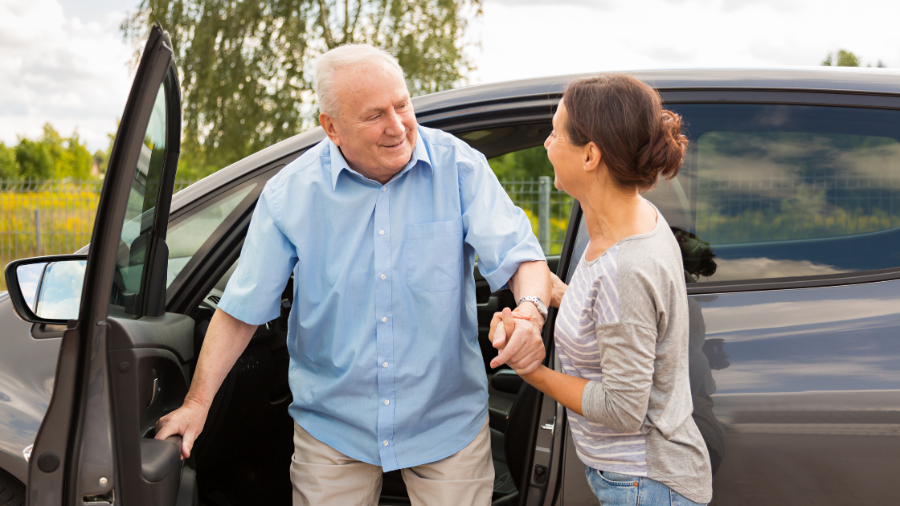
How to Have the Conversation
There is no version of this conversation that is easy. But there are approaches that are far more likely to succeed than others and approaches that are almost guaranteed to create conflict and resistance.
What Doesn't Work
Leading with a conclusion "We've decided you should not be driving anymore" almost always fails. It removes agency from the person whose life is most affected, triggers defensiveness, and positions the family as adversaries rather than allies. Even when the conclusion is correct, this approach creates resistance that can persist for months.Similarly, having the conversation in the heat of the moment immediately after a concerning incident, while emotions are high on both sides rarely produces a productive outcome. Urgency is understandable, but reactivity is counterproductive.
What Works
Start from love, not logistics. Begin the conversation as what it actually is: an expression of care. "I've been thinking about you a lot lately, and there are some things I want to talk about because I love you and I want you to be safe." This framing is not manipulative. It is true and it is the right foundation for a conversation that is going to be hard regardless of how it starts.Be specific, not general. Vague concerns "We just worry about you driving" are easy to dismiss. Specific observations are harder to argue with. "I noticed last week when we were coming home from dinner that you ran the red light at Bell Road. That scared me, and I don't think you saw it." Specific, calm, non-accusatory observations give the conversation traction.
Acknowledge what's at stake for them. Do not minimize the loss. Name it directly. "I know how much driving means to you. I know it's how you get to your appointments, to the grocery store, to your friends. I'm not trying to take that away from you I'm trying to figure out how we make sure you can still do all of those things safely." Acknowledging the loss before proposing solutions changes the entire emotional tone of the conversation.
Make it collaborative, not conclusive. Frame the goal of the first conversation as gathering information and exploring options not arriving at a final decision. "Can we talk about what this might look like? I don't have all the answers, but I want us to figure this out together." This approach respects the senior's autonomy and gives them time to process before a decision is required.
Bring in a trusted third party. Sometimes the family member raising the concern is not the right messenger particularly if there is existing tension or if the senior perceives the conversation as coming from a controlling place rather than a caring one. A physician is often the most effective third party: a formal driving evaluation or a physician's recommendation to stop driving carries clinical authority that a family conversation sometimes cannot. In Arizona, physicians can report unsafe drivers to the Motor Vehicle Division, which can trigger a reassessment. This is worth knowing not as a threat, but as a legitimate pathway when the family conversation has not been sufficient.
When the Conversation Cannot Wait
There are situations where the gradual, collaborative approach must give way to immediate action: a serious accident, a citation for reckless or impaired driving, a senior who has become lost on a routine route, or a physician's explicit determination that driving is no longer safe.In these cases, it is appropriate to be direct. "I love you, and I'm not able to let this continue. We need to find another way for you to get where you need to go and I'm committed to helping make that work."
If a senior with dementia continues to drive against the advice of their physician and family, practical steps may be necessary removing the keys, disabling the vehicle, or contacting the Arizona Motor Vehicle Division for a driver re-examination. These feel like drastic measures, but they are sometimes necessary to prevent a preventable tragedy.
Call us Today Visit Our Website
What Comes After: Replacing What Driving Provided
This is the part that families often underplan and it matters enormously. Telling a senior they can no longer drive without a concrete plan for how they will get where they need to go is not a solution. It is a problem with a different name.The goal is not just to move them from one place to another. It is to preserve the independence, spontaneity, and connection that driving made possible. In Sun City, Surprise, and Glendale communities built around the car, where distances are long and options are fewer than in denser urban areas this requires intentional planning.
Professional caregiver transportation is one of the most reliable and dignified solutions available. A caregiver who provides transportation is not just a driver, they are a familiar, trusted companion who accompanies the senior to appointments, errands, social activities, and anywhere else they want to go. For seniors who have given up driving, having a consistent person who knows them and their routines, and who treats the ride as an enjoyable part of the day rather than a service transaction, preserves far more of the emotional value of independence than a rideshare app can.
At BrightStar Care of Glendale / Sun City / Surprise, transportation is a standard part of our non-medical caregiving services. Our caregivers accompany clients to medical appointments throughout the West Valley including Banner Health, Dignity Health, and the many specialist offices concentrated along the Bell Road and Grand Avenue corridors as well as to grocery stores, hair salons, places of worship, social clubs, and anywhere else that matters to the client's quality of life.
Rideshare services Uber and Lyft are an option for seniors who are comfortable with smartphones and who do not need a companion during the ride. For many older adults, however, the technology barrier is real, and the experience of being alone in a car with a stranger is not the independence replacement they were hoping for. GoGoGrandparent, a service that allows seniors to request rideshares via a regular phone call without a smartphone, is worth knowing about for families in this situation.
Community and senior-specific transportation in the West Valley includes Dial-a-Ride through Valley Metro and various programs through the Area Agency on Aging. These are useful for medical appointments and scheduled trips, though they typically require advance scheduling and are not suited for spontaneous outings.
Family transportation schedules coordinating among adult children and other family members to cover regular needs can work in the short term but are rarely sustainable as the only solution. Building professional transportation into the plan from the beginning prevents the burnout and resentment that an entirely family-dependent system creates over time.
How BrightStar Care of Glendale / Sun City / Surprise Can Help
The transition away from driving is one of the most significant turning points in a senior's life and it is often the moment when families first realize that a broader conversation about in-home support is overdue.At BrightStar Care of Glendale / Sun City / Surprise, we provide both skilled nursing and non-medical home care for seniors and adults across the West Valley. For seniors who have recently stopped driving, our caregivers provide transportation as part of a broader caregiving relationship that also addresses the companionship, household support, personal care, and safety oversight that sustain independence at home.
For seniors whose driving cessation coincides with other emerging needs early cognitive decline, a recent health event, or simply the accumulated demands of aging we can conduct a care assessment to help families understand what level of support is appropriate and how to build a plan that grows with their loved one's needs.
We serve families throughout Glendale, Sun City, Sun City West, Surprise, Peoria, El Mirage, and surrounding West Valley communities.
Contact Us Today for a Free Consultation:
- Phone: 480-302-5139
- Address: 18001 N 79TH Ave A4, Glendale, AZ 85308
- Visit Us Online: BrightStar Care of Glendale / Sun City / Surprise
Frequently Asked Questions
Q: How do I know when it's time to talk to my aging parent about stopping driving?
Warning signs that warrant a conversation include new unexplained vehicle damage, difficulty staying in lanes, running stop signs or red lights, getting confused on familiar routes, a recent accident or traffic citation, or a physician raising driving safety concerns. If you observe multiple warning signs, the conversation is overdue. It is far better to have it early when the issue can be explored collaboratively than to wait until a serious incident forces an immediate decision.Q: What do I do if my aging parent refuses to stop driving even though it is not safe?
If a direct family conversation has not been effective, bring in the person's physician a medical recommendation to stop driving carries weight that a family conversation sometimes cannot. In Arizona, the Motor Vehicle Division can be contacted to request a driver re-examination if there are serious safety concerns. If a senior with dementia is driving against medical advice, practical measures such as removing keys or disabling the vehicle may become necessary to prevent harm. These are difficult steps, but preserving safety is the priority.Q: What transportation options are available for seniors in Sun City and Surprise who can no longer drive?
Seniors in the West Valley who no longer drive have several options: professional caregiver transportation through a home care agency, rideshare services like Uber or Lyft (or phone-based services like GoGoGrandparent for those without smartphones), Valley Metro's Dial-a-Ride paratransit service, and community transportation programs through the Area Agency on Aging. For most seniors, the most reliable and emotionally supportive option is a consistent caregiver who provides transportation as part of an ongoing caregiving relationship preserving the companionship and personal connection that makes the transition feel less like a loss.BrightStar Care of Glendale / Sun City / Surprise provides skilled nursing and non-medical home care services — including transportation — for seniors and adults throughout Glendale, Sun City, Sun City West, Surprise, Peoria, El Mirage, and surrounding West Valley communities. To speak with a care coordinator about transportation and in-home support options, contact our office today.
Call us Today Visit Our Website