
Most families reach the point where 24-hour care becomes necessary when their loved one with dementia can no longer be safely left alone, even briefly. Late-stage dementia, the phase where cognitive decline has progressed to the point where a person cannot perform daily tasks independently, typically brings nighttime wandering, fall risks, swallowing difficulties, and the inability to manage personal hygiene. If you find yourself staying awake at night wondering whether your loved one is safe, that is a strong signal that continuous, professional care is needed.
For many families in Northern Ocean County, keeping a loved one at home with 24-hour support is not only possible, it is often the better choice.
What Does Late-Stage Dementia Look Like?
Late-stage dementia affects every part of daily life. Common changes include:
- Wandering and disorientation, especially at night, creating a constant safety concern
- Incontinence requiring hands-on assistance with toileting and hygiene
- Swallowing difficulties that raise aspiration risk (the danger of food or liquid entering the lungs) at every meal
- Loss of verbal communication, making it harder for the person to express pain or needs
- Inability to initiate daily tasks like dressing, eating, or moving safely through the home
These changes do not happen all at once. They typically escalate over weeks or months, which is why ongoing clinical oversight matters more than a static care plan.
Is It Safe to Keep Someone With Late-Stage Dementia at Home?
In many cases, yes, but only with the right level of support. A home environment becomes unsafe when:
- The person wanders and there is no one awake to redirect them
- Fall hazards are present and no one is monitoring mobility
- Meals are unsupervised and swallowing has become difficult
- A single family caregiver is providing all care and is physically or emotionally burned out
When these risks are addressed through professional 24-hour home care, meaning continuous caregiver coverage through rotating shifts so someone is actively on-duty at all times, home often remains the safest and most familiar setting. BrightStar Care of Northern Ocean County provides RN-supervised dementia care designed to keep your loved one safe while preserving the comfort of home.
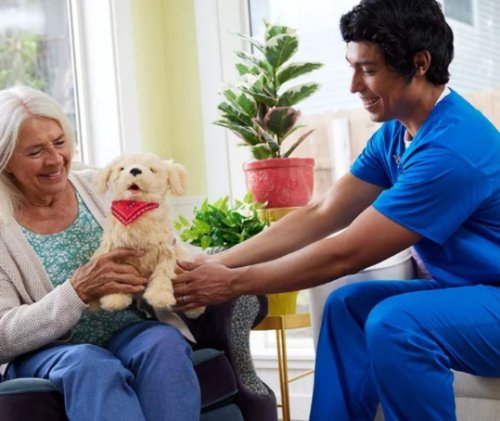
What Does 24-Hour Dementia Care at Home Include?
A comprehensive 24-hour dementia care plan typically includes:
- Personal care assistance with bathing, dressing, grooming, and incontinence management
- Overnight coverage with a caregiver awake and present through the night
- Fall prevention protocols including environmental modifications and supervised mobility
- Safer mealtime routines developed in coordination with the family and physician to reduce aspiration risk
- Skin integrity monitoring to prevent pressure injuries in less mobile individuals
- RN-supervised care, meaning a Registered Nurse oversees the entire plan and adjusts it whenever the clinical picture changes, not on a fixed calendar
Skilled nursing (medical care provided by a licensed Registered Nurse or Licensed Practical Nurse) may also be needed for medication management, wound care, or other clinical needs. BrightStar Care provides both personal care and skilled nursing under a single coordinated care plan.
How Is Home Care Different From a Memory Care Facility?
|
|
|
|
|
|
|
|
|
|
|
|
|
|
|
|
|
|
|
|
|
|
|
|
There is no universal right answer. But people with dementia who remain in a familiar environment often retain orientation and a sense of self for longer. For many families, keeping their loved one home with the right support is not just a preference, it is a meaningful part of maintaining quality of life.
Does Insurance Cover 24-Hour Dementia Home Care in Northern Ocean County?
Coverage varies, but families in Northern Ocean County have several options worth exploring:
- Cigna: BrightStar Care of Northern Ocean County is in-network with Cigna, which is an important distinction as not all local home care providers accept Cigna. If your loved one is covered by Cigna, this can significantly reduce out-of-pocket costs for ongoing dementia care.
- Long-term care insurance: Many policies cover in-home care services, including 24-hour coverage. Check your policy for daily or monthly benefit limits.
- VA benefits: For eligible veterans and surviving military spouses, programs like the Community Care Network, VA Aid and Attendance, and VA Health Care may cover part or all of in-home care costs. BrightStar Care is credentialed with the VA through TriWest Healthcare Alliance and Optum Serve.
- Medicaid: New Jersey Medicaid programs may provide coverage for qualifying individuals. Ask about eligibility during your initial assessment.
Understanding your coverage before care begins helps avoid surprises. BrightStar Care's team can help walk you through your options.
Frequently Asked Questions
Q: How do I know when my loved one needs more than part-time home care?
A: If your loved one cannot be safely left alone for any period of time, including overnight, it may be time to explore 24-hour care. Frequent falls, wandering, and caregiver burnout are the most common tipping points.
Q: Can someone with late-stage dementia stay at home instead of moving to a facility?
A: Yes, in many cases. With the right clinical support and 24-hour coverage, home care can match or exceed the level of supervision a facility provides while keeping your loved one in a familiar environment.
Q: Is BrightStar Care in-network with Cigna in Northern Ocean County?
A: Yes. BrightStar Care of Northern Ocean County accepts Cigna, and not all local home care providers offer this option, making it an important consideration for Cigna-covered families.
Q: What is the difference between a caregiver and a skilled nurse for dementia care?
A: A caregiver assists with daily tasks like bathing, meals, and companionship. Skilled nursing is medical care provided by a licensed Registered Nurse or Licensed Practical Nurse, covering medication management, wound care, and clinical assessments. BrightStar Care provides both under one care plan.
Start the Conversation About Care Before a Crisis
If your family is asking whether it is still safe to keep your loved one with dementia at home, you do not have to figure it out alone. BrightStar Care of Northern Ocean County provides RN-supervised, 24-hour in-home dementia care for families across Toms River, Brick, Manchester, Jackson, Berkeley Township, Point Pleasant, and surrounding communities.
Every care plan starts with a complimentary in-home assessment conducted by our Director of Nursing, so you get a clear, honest picture of what your loved one needs. Call us today or contact us online to learn more.
BrightStar Care of Northern Ocean County is independently owned and operated.
This content was produced by a human author with the assistance of AI. Similar to humans, AI can make mistakes too. We have done our best to ensure the accuracy of the information presented.