
Fresh air does more than boost mood. For many older adults, spending time outdoors can offer gentle sensory stimulation, purposeful movement, and natural light, all of which support healthy brain function. When outdoor time becomes a simple routine, it can also encourage better sleep and more consistent daily structure, which are especially important for seniors experiencing memory changes.
Below is an easy, low-pressure outdoor routine you can try with a loved one, along with practical safety tips. We will also share how BrightStar Care Orland Park/Will County caregivers help seniors enjoy the benefits of being outside with greater confidence and support.
Why outdoor time can be so beneficial for cognitive health
The brain thrives on input and rhythm. Outdoors, seniors naturally receive both:
- Sensory engagement: Smells, textures, sounds, and visual variety help keep the brain active and present.
- Movement with purpose: Gentle walking and light activity support circulation and overall wellness.
- Vitamin D and light exposure: Sunlight helps regulate circadian rhythms, which can improve sleep quality. Sleep disruptions are common for seniors with dementia and other cognitive conditions, so supporting sleep is a meaningful part of brain health.
Outdoor routines do not need to be long or intense. Consistency matters more than complexity.
A simple brain-healthy outdoor routine (20 to 40 minutes)
This routine works in a backyard, patio, garden, or quiet park. Adjust the pace and duration based on energy level, mobility, and weather.
1) Start with 5 to 10 minutes of sensory gardening
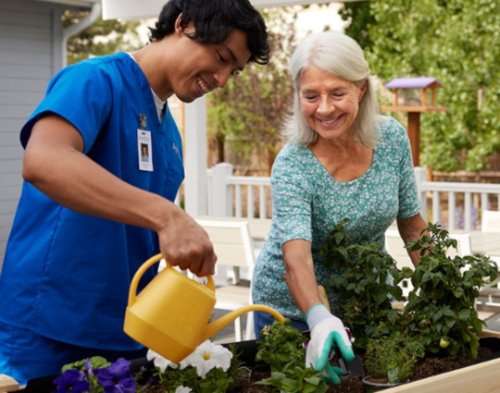
Gardening is a powerful way to engage multiple senses at once. Touching soil, noticing textures, and smelling herbs can feel calming and grounding, and it can prompt “sensory memory” through familiar scents.
Easy ideas to try:
- Water potted plants or a small garden bed
- Pull a few weeds together (gloves optional, depending on comfort)
- Gently rub and smell herbs like rosemary or lavender
- Talk about what you notice: “This smells strong,” “This feels soft,” “This is smooth”
If gardening is not possible: Use a small planter on a porch, balcony, or even a sunny windowsill, then step outside for the next part of the routine.
2) Take a short observation walk (with a mini scavenger hunt)
Walking is great on its own, but adding a purpose turns it into active brain engagement. Observation walks support attention, visual tracking, and conversation, all of which can be helpful for cognitive wellness.
Try a simple scavenger hunt:
- Spot three birds
- Identify two tree types (even “evergreen vs. leafy” works)
- Find one thing that is red, one thing that is round, and one thing that moves
- Pause and listen for three sounds (wind, cars, people talking, birds)
Keep it light and encouraging. The goal is engagement, not perfection.
3) Finish with 15 minutes of gentle morning sunlight
When possible, aim for about 15 minutes of morning sunlight. Morning light can help regulate circadian rhythms, which supports more consistent sleep and daily alertness.
Tips to make it comfortable:
- Choose morning hours when the sun is gentler
- Bring water and consider a hat or sunglasses
- Sit on a bench or porch if walking feels like too much that day
Even sitting outside quietly still provides meaningful benefits.
How caregivers help keep seniors safe outdoors
For many families, the biggest barrier to outdoor time is not motivation. It is safe. Uneven sidewalks, curbs, soft grass, fatigue, and balance concerns can make outings feel stressful.
A caregiver can help reduce risk while making outdoor time more enjoyable through:
- Steady mobility support: Helping with balance and safe pacing
- Fall prevention: Watching for trip hazards like cracks, curbs, loose gravel, and wet ground
- Confidence and reassurance: Reducing anxiety so seniors can focus on the outing instead of fear of falling
- Hydration and rest breaks: Preventing overexertion, especially in warm weather
- Routine-building: Helping seniors get outside consistently, not just once in a while
At BrightStar Care Orland Park/Will County, our caregivers support seniors with daily routines that promote well-being, including safe outdoor engagement. Whether your loved one needs a steady arm on a short walk, help navigating mobility devices, or companionship to make outings more enjoyable, our team can help create a plan that fits their needs and comfort level.
FAQ: Outdoor time, cognitive health, and senior safety
Q: How often should seniors do this outdoor routine?
A: Even 2 to 4 times per week can be a great start. If your loved one enjoys it and tolerates it well, short daily outings can be beneficial. Consistency is more important than length.
Q: What time of day is best for outdoor brain health activities?
A: Morning is often ideal because it is cooler, less crowded, and provides gentle sunlight that may support circadian rhythm and sleep. If mornings are not realistic, choose the time when your loved one typically has the best energy and focus.
Q: What if my loved one has dementia and gets anxious outside?
A: Start small and predictable. Try sitting on a porch for 5 to 10 minutes, or walking to the mailbox and back. Keep the route familiar, avoid busy areas, and bring one calming focus (like smelling lavender or holding a warm drink). A caregiver can also provide reassurance and structure.
Q: Is sunlight safe for seniors?
A: In moderation, sunlight can be beneficial. Aim for short periods and avoid peak heat. Use practical precautions like shade, hydration, and protective clothing. If your loved one has a medical condition or takes medications that increase sun sensitivity, ask their healthcare provider what is appropriate.
Q: What if my loved one uses a cane, walker, or wheelchair?
A: This routine can still work. Choose smooth, even surfaces (paved paths, flat sidewalks, indoor-outdoor park loops). Shorten the walk and focus more on observation and sensory engagement. Caregivers can also help with safe transfers and pacing.
Q: What are the biggest outdoor safety risks for older adults?
A: Common risks include uneven terrain, curbs, fatigue, poor footwear, dehydration, and distractions (like pets or crowds). Planning the route and having support close by can significantly reduce fall risk.
Q: How can BrightStar Care Orland Park/Will County help with outdoor routines?
A: Our caregivers can provide mobility support, companionship, and safety oversight during walks, gardening, and other outdoor activities. We help seniors stay active while reducing fall concerns, and we tailor outings to the person’s needs and comfort level.
Ready to make outdoor time safer and more rewarding?
If you want support building a simple routine that encourages movement, sensory engagement, and healthy sleep patterns, we are here for you.