
September is Alzheimer's and Dementia Awareness Month, and this year we want to spend time on one of the most frustrating, exhausting, and emotionally charged challenges that dementia caregiving produces: refusal of care.
You have arranged help. You have explained why it is necessary. You have tried every reasonable approach you can think of. And your loved one, the person you are doing all of this for, will not accept it. They refuse the home caregiver. They refuse to bathe. They refuse medications. They refuse to let anyone into the house. They insist they are fine, that they do not need help, that you are overreacting, and sometimes that you are interfering in their life.
This scenario plays out in homes across Racine, Kenosha, Burlington, Mount Pleasant, and throughout southeastern Wisconsin every day. It is one of the most common reasons families contact us at BrightStar Care of Racine, and it is one of the most important things we can help families think through.
Alzheimer's In-home Care Services Call 262-637-7767
Understanding why refusal happens is the first step toward responding to it effectively. The reasons are multiple and often overlapping, and they differ between individuals and across stages of the disease.
Loss of insight. Many people with dementia, particularly in the early and middle stages, have limited or no awareness of the degree of their cognitive impairment. This is not denial in the psychological sense. It is a neurological phenomenon called anosognosia, a direct result of the brain damage that dementia causes, in which the person genuinely cannot perceive their own deficits. When a person with dementia says they are fine and do not need help, they often mean it completely. From their perspective, the help being offered is unwanted interference from people who are being overprotective or controlling.
Fear and anxiety. Accepting help means acknowledging, at some level, that things have changed. For many older adults, particularly those who have been fiercely independent throughout their lives, that acknowledgment carries a weight that can feel unbearable. Refusing care is sometimes the only way a person can assert the identity and autonomy they feel slipping away. The refusal is not really about the caregiver or the bath. It is about not being someone who needs a caregiver or a bath.
Distrust of strangers. For people with significant short-term memory impairment, a caregiver who visits three times a week may never feel familiar, because the visits do not consolidate into a stable memory of that person. Each arrival can feel like a stranger coming into their home. The refusal of care is a reasonable response to a stranger appearing at the door, from the perspective of someone who does not remember having agreed to have them there.
The experience of the care task itself. Some care refusals are specific to particular tasks, and those refusals often have a concrete cause: the water is too cold during bathing, the caregiver's approach feels rushed or rough, the task is painful because of an unacknowledged physical issue, or the person feels exposed and humiliated by what is being done to them. Asking why this specific task is refused, and listening carefully, can sometimes reveal a solvable problem.
Depression and apathy. Withdrawal from care and from engagement generally is sometimes less about active refusal and more about the depression and apathy that are common neuropsychiatric features of dementia. The person does not refuse so much as disengage. They are not fighting the caregiver. They simply do not see the point.
Communication breakdown. Sometimes refusal is the only available response because the person cannot communicate the actual problem. Pain, discomfort, a need to use the bathroom, fear about what is happening, these things cannot always be put into words by a person with advanced dementia. Refusal is the message, even if the family cannot yet decode what it is saying.
Before covering what helps, it is worth being direct about what does not, because families often exhaust themselves on approaches that are likely to fail.
Logical explanation and reasoning rarely work. The impulse to explain to a person with dementia why they need a caregiver, why they need to bathe, why the medication is important is entirely natural and almost entirely ineffective. The brain systems that would allow a person to receive new information, weigh it against their existing understanding, and update their position accordingly are precisely the systems that dementia damages. You can make the most logical argument in the world and it will not move the needle, because the capacity to be moved by logic is compromised.
Confrontation and pressure escalate things. When a person with dementia feels cornered, argued with, or forced, the likely result is agitation, distress, and a hardened refusal. What felt like a ten percent refusal can become a hundred percent refusal after a confrontation. The goal in any care-refusal situation is to reduce the emotional temperature, not increase it.
Guilt and appeals to reason for other people's sake do not penetrate. Telling someone that their refusal is hurting you, that the family is worried, that the doctor says they must do this, appeals to emotional reasoning and to a capacity for sustained perspective-taking that may be significantly impaired. These approaches can produce momentary compliance but rarely sustained acceptance.
Take a break and come back. When a person refuses in the moment, pushing through is almost never the right call. Stepping away, giving it thirty minutes or an hour, and returning with a fresh approach and a calmer energy frequently produces a different outcome. The person may have forgotten the earlier refusal. The emotional temperature has dropped. A new attempt under different conditions is genuinely a different situation.
Change the framing of what is being offered. A caregiver who is introduced as help coming to assist because the person needs help will often be refused. The same caregiver introduced as a friend coming to visit, a helper sent by the doctor, a companion the family arranged as a favor, or simply someone who is here to chat and happens to help with a few things, is far more likely to be accepted. The framing is not deception. It is meeting the person where their understanding is.
Lead with relationship, not task. The most successful caregivers for people with dementia are those who invest in relationship before task. A caregiver who spends the first several visits primarily sitting, talking, looking at photographs, listening to music, and building genuine rapport before attempting any personal care task is building the trust that makes eventual care acceptance possible. Arriving and immediately attempting the task that has been refused is starting at the hardest point.
Offer choice within the goal. The goal is nonnegotiable. The method can be flexible. Offering a person with dementia genuine choice within the care task, what they wear, which direction they walk, whether music plays, which arm gets the sleeve first, reduces the feeling of being done to and increases the sense of agency. Preserving agency wherever possible is the most powerful tool available.
Try a different person. Sometimes the refusal is specific to the person offering care, not to the care itself. A family member who has been in a difficult dynamic with the person, or a caregiver who has not yet built trust, may trigger refusal that another person would not. Trying a different family member, a neighbor the person trusts, or a professional caregiver with a different approach and personality often produces a different result. This is one of the most important reasons professional caregiving support can help in refusal situations: not because the professionals are better than the family, but because they are different, and different is sometimes exactly what is needed.
Time the approach to the person's best window. Most people with dementia have times of day when they are more alert, more calm, and more receptive than others. Morning is often better than afternoon or evening. Immediately after a meal, when they are comfortable and not agitated, is often better than when they are hungry or tired. Scheduling the most challenging care tasks for the person's best window, and avoiding the worst one, is a practical and often effective strategy.
Address the physical dimension first. If a particular care task is consistently refused, investigate whether there is a physical reason. Pain during bathing can come from arthritis, skin sensitivity, or an undiagnosed injury. Resistance to dressing can come from a shoulder that hurts when the arm is lifted. Resistance to a particular caregiver's touch can come from pain that the person cannot otherwise communicate. Solving the physical problem often resolves the refusal.
Use therapeutic fiblets when appropriate. A therapeutic fiblet is a compassionate, small untruth that helps accomplish something necessary without triggering the defensive response that the full truth would produce. Telling a person with dementia that the doctor specifically asked for this, or that the insurance requires the visit, or that this is something everyone does now, is not deception in the harmful sense. It is meeting the person in their current reality and using that reality to help them accept something they need. Many dementia care specialists and ethicists support the judicious use of therapeutic fiblets when the alternative is genuine harm from care refusal.
Work with the physician on the refusal itself. Persistent refusal of care, particularly medication refusal, is worth discussing with the treating physician. There may be medication adjustments that can address the anxiety or agitation driving refusal. The physician may be able to speak directly with the person in a way that carries authority the family does not have. And for cases where the person is at serious risk, the physician can provide guidance on what options exist.
Alzheimer's In-home Care Services Call 262-637-7767
There is a meaningful difference between a person who refuses a bath and prefers to wash at the sink, and a person whose refusal of care is creating genuine safety risk. When refusal of medications is causing health deterioration, when refusal of food or water is creating a nutrition or hydration risk, when a person is refusing care while also being unsafe to live alone, the family is in different territory that requires a different level of response.
In these situations, the family should be in close contact with the treating physician, and a consultation with a geriatric care manager or social worker who specializes in dementia can be invaluable. The question of when a person with dementia lacks the capacity to refuse care, and what options exist at that point, is one that requires professional guidance and is different in every situation.

Professional caregivers who are specifically trained and experienced in dementia care bring a different set of tools to refusal situations. They are not carrying the emotional history and the grief and the frustration that family members, understandably and inevitably, bring to these interactions. They are practiced in the relationship-building approaches that make trust possible. They know how to lead with presence before task, how to reframe what they are offering, how to read the person's signals and adjust in the moment.
BrightStar Care of Racine provides non-medical caregiving services for individuals with dementia and their families throughout Racine, Kenosha, Burlington, Mount Pleasant, Sturtevant, and surrounding Racine and Kenosha County communities. Our caregivers are trained in dementia-specific approaches and matched carefully with clients for consistency, because consistency is one of the most powerful tools available in building the trust that makes care acceptance possible.
We offer flexible scheduling, starting with shorter, more frequent visits that prioritize relationship-building before task completion, and expanding as trust develops and the person becomes more comfortable with the caregiving relationship.
If you have a loved one who is refusing care, we would welcome the conversation. Sometimes a fresh approach from a different person with the right training makes all the difference.
Alzheimer's In-home Care Services Call 262-637-7767
BrightStar Care of Racine provides professional non-medical caregiving services for seniors and adults with dementia throughout Racine, Kenosha, Burlington, Mount Pleasant, Sturtevant, and surrounding Racine and Kenosha County communities. Our caregivers are trained in dementia care and available for part-time, full-time, and around-the-clock shifts. To speak with a care coordinator about support for your family this September, contact our office today.
Contact Us Today:
You have arranged help. You have explained why it is necessary. You have tried every reasonable approach you can think of. And your loved one, the person you are doing all of this for, will not accept it. They refuse the home caregiver. They refuse to bathe. They refuse medications. They refuse to let anyone into the house. They insist they are fine, that they do not need help, that you are overreacting, and sometimes that you are interfering in their life.
This scenario plays out in homes across Racine, Kenosha, Burlington, Mount Pleasant, and throughout southeastern Wisconsin every day. It is one of the most common reasons families contact us at BrightStar Care of Racine, and it is one of the most important things we can help families think through.
Alzheimer's In-home Care Services Call 262-637-7767
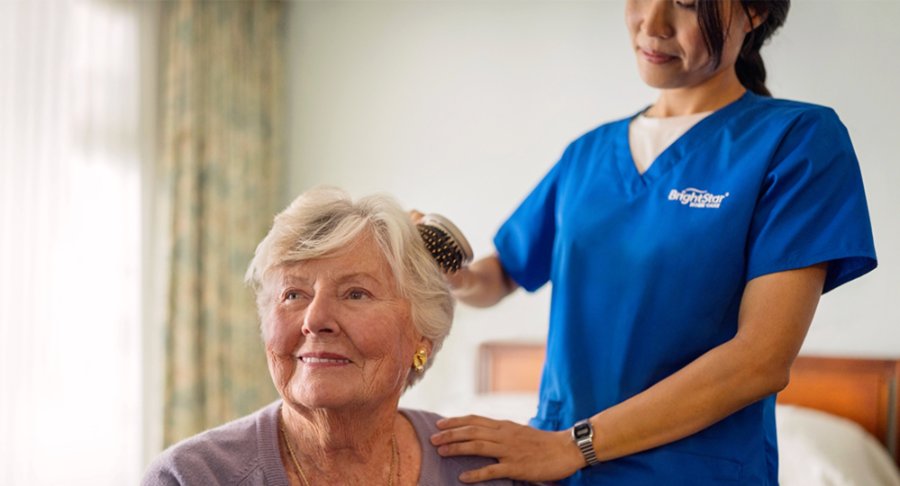
Why People With Dementia Refuse Care
Understanding why refusal happens is the first step toward responding to it effectively. The reasons are multiple and often overlapping, and they differ between individuals and across stages of the disease.Loss of insight. Many people with dementia, particularly in the early and middle stages, have limited or no awareness of the degree of their cognitive impairment. This is not denial in the psychological sense. It is a neurological phenomenon called anosognosia, a direct result of the brain damage that dementia causes, in which the person genuinely cannot perceive their own deficits. When a person with dementia says they are fine and do not need help, they often mean it completely. From their perspective, the help being offered is unwanted interference from people who are being overprotective or controlling.
Fear and anxiety. Accepting help means acknowledging, at some level, that things have changed. For many older adults, particularly those who have been fiercely independent throughout their lives, that acknowledgment carries a weight that can feel unbearable. Refusing care is sometimes the only way a person can assert the identity and autonomy they feel slipping away. The refusal is not really about the caregiver or the bath. It is about not being someone who needs a caregiver or a bath.
Distrust of strangers. For people with significant short-term memory impairment, a caregiver who visits three times a week may never feel familiar, because the visits do not consolidate into a stable memory of that person. Each arrival can feel like a stranger coming into their home. The refusal of care is a reasonable response to a stranger appearing at the door, from the perspective of someone who does not remember having agreed to have them there.
The experience of the care task itself. Some care refusals are specific to particular tasks, and those refusals often have a concrete cause: the water is too cold during bathing, the caregiver's approach feels rushed or rough, the task is painful because of an unacknowledged physical issue, or the person feels exposed and humiliated by what is being done to them. Asking why this specific task is refused, and listening carefully, can sometimes reveal a solvable problem.
Depression and apathy. Withdrawal from care and from engagement generally is sometimes less about active refusal and more about the depression and apathy that are common neuropsychiatric features of dementia. The person does not refuse so much as disengage. They are not fighting the caregiver. They simply do not see the point.
Communication breakdown. Sometimes refusal is the only available response because the person cannot communicate the actual problem. Pain, discomfort, a need to use the bathroom, fear about what is happening, these things cannot always be put into words by a person with advanced dementia. Refusal is the message, even if the family cannot yet decode what it is saying.
What Does Not Work
Before covering what helps, it is worth being direct about what does not, because families often exhaust themselves on approaches that are likely to fail.Logical explanation and reasoning rarely work. The impulse to explain to a person with dementia why they need a caregiver, why they need to bathe, why the medication is important is entirely natural and almost entirely ineffective. The brain systems that would allow a person to receive new information, weigh it against their existing understanding, and update their position accordingly are precisely the systems that dementia damages. You can make the most logical argument in the world and it will not move the needle, because the capacity to be moved by logic is compromised.
Confrontation and pressure escalate things. When a person with dementia feels cornered, argued with, or forced, the likely result is agitation, distress, and a hardened refusal. What felt like a ten percent refusal can become a hundred percent refusal after a confrontation. The goal in any care-refusal situation is to reduce the emotional temperature, not increase it.
Guilt and appeals to reason for other people's sake do not penetrate. Telling someone that their refusal is hurting you, that the family is worried, that the doctor says they must do this, appeals to emotional reasoning and to a capacity for sustained perspective-taking that may be significantly impaired. These approaches can produce momentary compliance but rarely sustained acceptance.
What Actually Works
Take a break and come back. When a person refuses in the moment, pushing through is almost never the right call. Stepping away, giving it thirty minutes or an hour, and returning with a fresh approach and a calmer energy frequently produces a different outcome. The person may have forgotten the earlier refusal. The emotional temperature has dropped. A new attempt under different conditions is genuinely a different situation.Change the framing of what is being offered. A caregiver who is introduced as help coming to assist because the person needs help will often be refused. The same caregiver introduced as a friend coming to visit, a helper sent by the doctor, a companion the family arranged as a favor, or simply someone who is here to chat and happens to help with a few things, is far more likely to be accepted. The framing is not deception. It is meeting the person where their understanding is.
Lead with relationship, not task. The most successful caregivers for people with dementia are those who invest in relationship before task. A caregiver who spends the first several visits primarily sitting, talking, looking at photographs, listening to music, and building genuine rapport before attempting any personal care task is building the trust that makes eventual care acceptance possible. Arriving and immediately attempting the task that has been refused is starting at the hardest point.
Offer choice within the goal. The goal is nonnegotiable. The method can be flexible. Offering a person with dementia genuine choice within the care task, what they wear, which direction they walk, whether music plays, which arm gets the sleeve first, reduces the feeling of being done to and increases the sense of agency. Preserving agency wherever possible is the most powerful tool available.
Try a different person. Sometimes the refusal is specific to the person offering care, not to the care itself. A family member who has been in a difficult dynamic with the person, or a caregiver who has not yet built trust, may trigger refusal that another person would not. Trying a different family member, a neighbor the person trusts, or a professional caregiver with a different approach and personality often produces a different result. This is one of the most important reasons professional caregiving support can help in refusal situations: not because the professionals are better than the family, but because they are different, and different is sometimes exactly what is needed.
Time the approach to the person's best window. Most people with dementia have times of day when they are more alert, more calm, and more receptive than others. Morning is often better than afternoon or evening. Immediately after a meal, when they are comfortable and not agitated, is often better than when they are hungry or tired. Scheduling the most challenging care tasks for the person's best window, and avoiding the worst one, is a practical and often effective strategy.
Address the physical dimension first. If a particular care task is consistently refused, investigate whether there is a physical reason. Pain during bathing can come from arthritis, skin sensitivity, or an undiagnosed injury. Resistance to dressing can come from a shoulder that hurts when the arm is lifted. Resistance to a particular caregiver's touch can come from pain that the person cannot otherwise communicate. Solving the physical problem often resolves the refusal.
Use therapeutic fiblets when appropriate. A therapeutic fiblet is a compassionate, small untruth that helps accomplish something necessary without triggering the defensive response that the full truth would produce. Telling a person with dementia that the doctor specifically asked for this, or that the insurance requires the visit, or that this is something everyone does now, is not deception in the harmful sense. It is meeting the person in their current reality and using that reality to help them accept something they need. Many dementia care specialists and ethicists support the judicious use of therapeutic fiblets when the alternative is genuine harm from care refusal.
Work with the physician on the refusal itself. Persistent refusal of care, particularly medication refusal, is worth discussing with the treating physician. There may be medication adjustments that can address the anxiety or agitation driving refusal. The physician may be able to speak directly with the person in a way that carries authority the family does not have. And for cases where the person is at serious risk, the physician can provide guidance on what options exist.
Alzheimer's In-home Care Services Call 262-637-7767
When Refusal Becomes a Safety Issue
There is a meaningful difference between a person who refuses a bath and prefers to wash at the sink, and a person whose refusal of care is creating genuine safety risk. When refusal of medications is causing health deterioration, when refusal of food or water is creating a nutrition or hydration risk, when a person is refusing care while also being unsafe to live alone, the family is in different territory that requires a different level of response.In these situations, the family should be in close contact with the treating physician, and a consultation with a geriatric care manager or social worker who specializes in dementia can be invaluable. The question of when a person with dementia lacks the capacity to refuse care, and what options exist at that point, is one that requires professional guidance and is different in every situation.
How BrightStar Care of Racine Helps With Care Refusal
One of the most common things families tell us when they first call is that they have tried everything and their loved one simply will not accept a caregiver. We hear this regularly, and our response is always the same: let us try.Professional caregivers who are specifically trained and experienced in dementia care bring a different set of tools to refusal situations. They are not carrying the emotional history and the grief and the frustration that family members, understandably and inevitably, bring to these interactions. They are practiced in the relationship-building approaches that make trust possible. They know how to lead with presence before task, how to reframe what they are offering, how to read the person's signals and adjust in the moment.
BrightStar Care of Racine provides non-medical caregiving services for individuals with dementia and their families throughout Racine, Kenosha, Burlington, Mount Pleasant, Sturtevant, and surrounding Racine and Kenosha County communities. Our caregivers are trained in dementia-specific approaches and matched carefully with clients for consistency, because consistency is one of the most powerful tools available in building the trust that makes care acceptance possible.
We offer flexible scheduling, starting with shorter, more frequent visits that prioritize relationship-building before task completion, and expanding as trust develops and the person becomes more comfortable with the caregiving relationship.
If you have a loved one who is refusing care, we would welcome the conversation. Sometimes a fresh approach from a different person with the right training makes all the difference.
Alzheimer's In-home Care Services Call 262-637-7767
Frequently Asked Questions
Q: My parent accepts care from me sometimes but refuses the professional caregiver consistently. Why?
Several factors could be at play. The professional caregiver may not yet have built enough relationship with your parent for trust to exist. The caregiver may have a different style or approach than what your parent responds to. Or your parent may be more comfortable with family in some moments and less comfortable in others, which is not unusual in dementia. The most productive response is to ask BrightStar to try a different caregiver, to ask whether the introductory visits can be shorter and more relationship-focused before any care tasks are attempted, and to consider being present for the first several visits to smooth the introduction. Caregiver consistency and time are the most reliable solutions.Q: My parent refuses medications every single day. This is becoming a health crisis. What can we do?
Medication refusal is a medical issue as much as a behavioral one and warrants a direct conversation with the prescribing physician. First, ask whether the medication is essential and whether the form can be changed: some medications can be crushed and mixed with food, compounded into a liquid or transdermal patch, or otherwise administered in a form that reduces refusal. Second, ask whether the timing or the approach to medication administration can be changed. Third, discuss whether there is anxiety or agitation driving the refusal that could be addressed pharmacologically. And fourth, ask for a referral to a geriatric psychiatrist or behavioral neurologist if the situation is not improving, as they have specific expertise in this area.Q: At what point is it acceptable to insist on care even when the person refuses?
This is one of the genuinely hard ethical questions in dementia caregiving and there is no universal answer. Generally, families and care teams balance the person's right to autonomy against the duty to protect them from harm. When refusal creates serious safety risk, such as malnutrition, dangerous medication noncompliance, or unsafe living conditions, the balance shifts toward protective intervention. A geriatric care manager, social worker, or the treating physician can help the family think through the specific situation, the person's level of decision-making capacity, and what options are available. This is not a decision families should be making alone.BrightStar Care of Racine provides professional non-medical caregiving services for seniors and adults with dementia throughout Racine, Kenosha, Burlington, Mount Pleasant, Sturtevant, and surrounding Racine and Kenosha County communities. Our caregivers are trained in dementia care and available for part-time, full-time, and around-the-clock shifts. To speak with a care coordinator about support for your family this September, contact our office today.
Contact Us Today:
- Phone: 262-637-7767
- Address: 5220 Washington Avenue, Suite 102, Racine, WI 53406
- Visit Us Online: BrightStar Care of Racine