
October is Spina Bifida Awareness Month. There is a version of this conversation that starts with clinical terms — neurogenic bladder, myelomeningocele, catheterization schedules, pressure injury staging. That version is important. It belongs in conversations with physicians, with skilled nurses, with clinical care coordinators.
But there is another version of this conversation that belongs to the people who show up on a Tuesday morning. The ones who help someone get dressed, who notice that something looks off on the skin near the hip and make a call, who know that this person likes their bowel program done before breakfast and not after, who help navigate a parking lot with ice on the ground and make it look easy. The ones who are not nurses, but whose presence and consistency and genuine care are what make independence possible for a lot of people with Spina Bifida living at home in Racine, Kenosha, Mount Pleasant, Caledonia, and throughout Racine County.
This post is about that version of the conversation. Personal in-home caregiving — non-medical, non-clinical, but not incidental — and what it actually means for someone with Spina Bifida.
For a person with Spina Bifida, the picture is different. The tasks that personal caregiving covers in this population carry a level of consequence that most personal care work does not. When a caregiver assists with dressing for someone with Spina Bifida, they are part of a process that, if done incorrectly, can result in a pressure injury from a wrinkled sock under a brace within a few hours. When a caregiver assists with a bathing routine, they are working around skin that cannot feel temperature or friction the way intact sensation allows. When a caregiver helps with the morning routine, they are participating in a sequence that has been built and refined over years — and that works because of its consistency and precision.
Personal caregiving for Spina Bifida is still personal caregiving. It does not require a nursing license. But it requires knowledge, training, attentiveness, and a specific kind of respect for the person's established routines that elevates it above general household help.
Morning routine support. For most adults with Spina Bifida, the morning routine is the foundation of the entire day. It takes time, it follows a sequence, and it cannot be rushed without consequences. A personal caregiver who understands this — who arrives when they are expected, who follows the established sequence rather than improvising, who brings calm and consistency to a routine that the person with Spina Bifida has built their day around — provides something that is genuinely irreplaceable.
The morning routine for someone with myelomeningocele typically involves bowel program management, personal hygiene and bathing, skin inspection, dressing with or without orthotic assistance, and positioning in a wheelchair or preparing for ambulatory mobility. Each of these tasks has a correct approach for the specific individual. Each carries real consequences if it goes wrong.
Bathing and hygiene assistance. Bathing safely with Spina Bifida requires specific knowledge. Water temperature must be tested carefully — what feels comfortable to the caregiver may be too hot for skin with impaired sensation. Friction during drying must be gentle, particularly in skin folds and in areas where orthotic equipment or seating creates ongoing pressure. Accessible bathing setups vary widely, and in Racine County's older housing stock, a caregiver who can adapt safely to the available setup — a tub bench, a roll-in shower, a handheld showerhead — is providing practical value that matters.
A thorough bathing routine also creates a natural opportunity for skin observation. A personal caregiver is not performing a clinical skin assessment. But they can see the difference between skin that looks normal and skin that looks red or different, and they can call it in to the family or to the supervising nurse in agencies that provide nurse oversight. That observation, made reliably, is part of what prevents a minor concern from becoming a serious wound.
Dressing and orthotic assistance. For ambulatory individuals who use leg braces or ankle-foot orthoses, the process of donning orthotics is a daily task with direct skin consequences. Socks must be smooth and wrinkle-free before the orthotic goes on. The orthotic must be correctly aligned. After removal, the skin underneath needs to be checked. A personal caregiver who understands these steps because they have been trained on them and who follows them consistently, every day, is protecting that person's skin in a way that compounds positively over time.
For wheelchair users, dressing assistance requires knowing the specific transfer approach and positioning that works for that individual — not a generic technique, but the actual approach that the person has developed for their own body and equipment.
Bowel program assistance. The bowel program is the most sensitive and most consequence-laden of the personal care tasks that non-medical caregivers assist with. It is also the one most dependent on consistency, correct sequencing, and adherence to the established routine.
A personal caregiver assisting with the bowel program needs training specific to the individual's program. They need to understand why the program exists — not to be a clinician, but to understand that consistency is the difference between a routine that works and one that does not. They need to follow the sequence, adhere to the timing, and report changes in the bowel pattern to the family or supervising nurse, because changes in bowel function can signal neurological changes that need clinical attention.
In agencies with registered nurse oversight, like BrightStar Care of Racine, the nurse trains the caregiver on the specific bowel program, monitors for reported changes, and communicates with the family and treating physician when concerns arise. The caregiver does not make clinical judgments. They implement the program correctly and report what they observe.
Skin observation and reporting. Personal caregivers are not wound care specialists. They do not assess, stage, or treat pressure injuries. What they do is observe — and in this population, observation is a front-line safety function.
A caregiver who checks the skin at the sacrum, the heels, the hips, and any area under orthotic equipment during dressing and bathing, who knows what that person's skin normally looks like, and who reports anything that looks different — redness, a color change, a texture change, a small mark that was not there yesterday — is providing meaningful protection. Pressure injuries in people with Spina Bifida can progress rapidly on skin that cannot signal pain. A caregiver who observes and reports creates the opportunity for the family or clinical team to intervene before a minor finding becomes a serious complication.
Call 262-637-7767 Visit Our Website
Transfers and mobility assistance. Safe transfers are the highest-stakes physical task in personal caregiving for Spina Bifida. A fall during a transfer creates injury risk for the person — and on skin with impaired sensation, that injury may not be noticed right away. Incorrect technique creates injury risk for the caregiver as well.
The specific transfer approach for each person with Spina Bifida depends on their physical presentation, their equipment, their own established technique, and the layout of the spaces in their home. A caregiver learns the individual's approach and follows it. They do not substitute a generic technique from general caregiver training. They learn this person's system because this person's system is what is safe.
For ambulatory individuals, mobility assistance includes steadying support, awareness of fall risk particularly during fatigue or on outdoor surfaces, and attentiveness to the changes in gait or stamina that warrant a mention to the family. Racine County in October and beyond means wet leaves, uneven sidewalks, and the beginning of ice season — all of which affect outdoor mobility for ambulatory people with Spina Bifida in ways that require a caregiver who is attentive and positioned correctly.
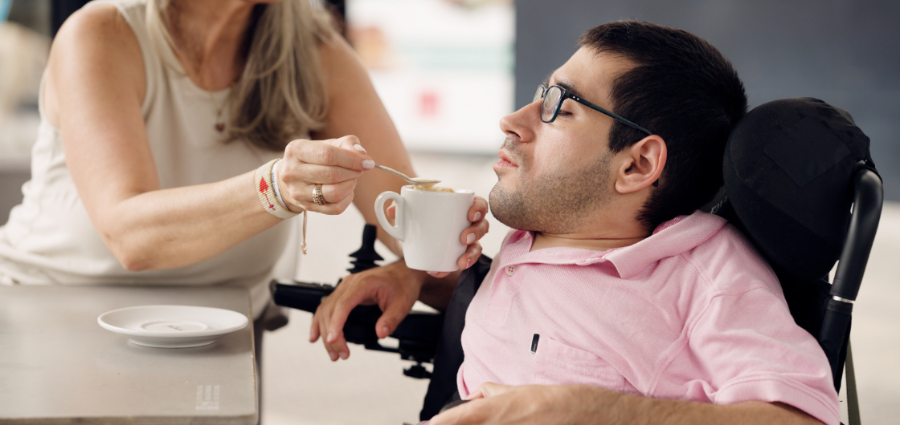
Meal preparation and hydration. Adequate hydration is not a soft recommendation for someone with Spina Bifida. It is a kidney protection strategy. Concentrated urine is more irritating to the neurogenic bladder and more hospitable to bacterial growth. A caregiver who ensures that the person drinks adequately throughout the day is contributing to the bladder management program and to kidney health in a way that matters clinically even though the task itself is not clinical.
Nutrition also affects bowel function, skin integrity, and the energy level that makes the rest of daily life manageable. A caregiver who prepares meals with adequate fiber, who notices when appetite has decreased, and who flags significant changes in eating patterns to the family is providing more than cooking assistance.
Household management and daily structure. For adults with Spina Bifida, the energy budget of daily life is genuinely constrained. The physical effort of mobility and the cognitive and logistical demands of managing a complex condition leave less reserve for household tasks than most people without this experience would expect. A caregiver who takes on laundry, light cleaning, supply management, and similar household tasks is freeing the person's limited energy for the parts of their life that matter most to them.
Daily structure also has therapeutic value that is easy to underestimate. The morning routine works because it is a routine. The bowel program works because it follows a consistent schedule. A caregiver who shows up reliably, who brings the same face and the same approach to the same sequence every visit, is providing a form of stability that the person with Spina Bifida builds their day around.
Everything above can be learned. Good training covers the mechanics of bathing assistance and dressing support and bowel program implementation. It covers skin observation and reporting protocols and transfer technique.
What training cannot fully teach — but what the best caregivers bring — is genuine attentiveness. The quality of noticing. Not performing the tasks while mentally elsewhere, but actually being present during each visit in a way that registers the small things. The change in the person's energy level. The slight redness that was not there last week. The way they wince slightly during a transfer that usually goes smoothly. The comment they make in passing about not sleeping well.
These observations, made by a caregiver who genuinely knows the person because they have been showing up consistently for months, are what translate personal caregiving from task completion into something that actually protects the person. They are also what make the caregiver relationship feel like a relationship rather than a service transaction — which matters enormously for people with Spina Bifida who are allowing someone they did not choose into some of the most intimate dimensions of their daily life.
The registered nurse does not provide direct clinical care in our non-medical care relationships. But they develop the care plan based on a thorough assessment of the individual's specific needs, routines, and established practices. They train the caregiver on the individual's specific bowel program, skin observation protocols, orthotic management approach, and transfer technique. They remain the clinical point of contact for observations and concerns that the caregiver reports. And they communicate with the family and treating clinician when something warrants it.
What we prioritize above almost everything else in Spina Bifida care is caregiver consistency. The knowledge that a consistent caregiver accumulates — about how this person's skin normally looks, what their usual energy level is, how their bowel program typically goes, what a good day looks and feels like for them — is not replaceable by any amount of documentation. It is built through relationship and repeated presence, and it is the foundation of safe personal caregiving in this population.
Every time a caregiver changes, that knowledge has to be rebuilt. We treat caregiver continuity as a clinical priority, not a scheduling convenience.
Call 262-637-7767 Visit Our Website
Starting with meal preparation, household support, or transportation — tasks that are helpful but not intimate — gives the relationship time to develop before more sensitive care is introduced. A trial period rather than an open-ended commitment reduces the sense of permanence. Framing the support as something that protects the person's energy and independence for the things that matter most to them, rather than something that replaces their independence, is often the reframe that makes acceptance possible.
Personal caregivers assist with the daily living tasks that Spina Bifida management involves — bathing, dressing, bowel program assistance, skin observation, transfers, meal preparation, and household support. They work under nursing oversight but do not perform clinical procedures.
Skilled nurses provide clinical services — catheterization, wound care, medication management, shunt monitoring, and care coordination with the treating physician. For individuals who need catheterization assistance, active wound care, or clinical monitoring beyond observation and reporting, skilled nursing is appropriate.
Many adults with Spina Bifida need both. If your loved one currently receives skilled nursing care from another provider, personal caregiving from BrightStar Care of Racine can complement that care and fill the daily support hours that skilled nursing visits do not cover. Contact our office and we can help you think through what level and type of support makes sense for your loved one's specific situation.
All of our non-medical caregivers operate under the oversight of a registered nurse who develops the care plan and remains the clinical point of contact for the care relationship. When a caregiver observes something worth noting — a skin change, a change in the person's condition, a deviation from the normal pattern in the bowel program — they report it to the supervising nurse, who evaluates the concern, communicates with the family, and determines whether communication with the treating physician is warranted. The caregiver does not make clinical decisions, but they are not working in isolation. The reporting pathway is built into the care structure.
BrightStar Care of Racine provides professional personal caregiving services for individuals with Spina Bifida and their families throughout Racine, Kenosha, Mount Pleasant, Caledonia, Burlington, and surrounding Racine County communities. To speak with a care coordinator about personal in-home care support for your loved one this October, contact our office today.
But there is another version of this conversation that belongs to the people who show up on a Tuesday morning. The ones who help someone get dressed, who notice that something looks off on the skin near the hip and make a call, who know that this person likes their bowel program done before breakfast and not after, who help navigate a parking lot with ice on the ground and make it look easy. The ones who are not nurses, but whose presence and consistency and genuine care are what make independence possible for a lot of people with Spina Bifida living at home in Racine, Kenosha, Mount Pleasant, Caledonia, and throughout Racine County.
This post is about that version of the conversation. Personal in-home caregiving — non-medical, non-clinical, but not incidental — and what it actually means for someone with Spina Bifida.
Call 262-637-7767 Visit Our Website
Why Personal Care Is Not "Just Help Around the House"
When people hear the words personal care or companion care, they often picture someone doing dishes and keeping an elderly person company. For seniors with mobility limitations or early cognitive changes, that is often an accurate picture.For a person with Spina Bifida, the picture is different. The tasks that personal caregiving covers in this population carry a level of consequence that most personal care work does not. When a caregiver assists with dressing for someone with Spina Bifida, they are part of a process that, if done incorrectly, can result in a pressure injury from a wrinkled sock under a brace within a few hours. When a caregiver assists with a bathing routine, they are working around skin that cannot feel temperature or friction the way intact sensation allows. When a caregiver helps with the morning routine, they are participating in a sequence that has been built and refined over years — and that works because of its consistency and precision.
Personal caregiving for Spina Bifida is still personal caregiving. It does not require a nursing license. But it requires knowledge, training, attentiveness, and a specific kind of respect for the person's established routines that elevates it above general household help.
What Personal Caregivers Do — and Why Each Task Matters
Morning routine support. For most adults with Spina Bifida, the morning routine is the foundation of the entire day. It takes time, it follows a sequence, and it cannot be rushed without consequences. A personal caregiver who understands this — who arrives when they are expected, who follows the established sequence rather than improvising, who brings calm and consistency to a routine that the person with Spina Bifida has built their day around — provides something that is genuinely irreplaceable.The morning routine for someone with myelomeningocele typically involves bowel program management, personal hygiene and bathing, skin inspection, dressing with or without orthotic assistance, and positioning in a wheelchair or preparing for ambulatory mobility. Each of these tasks has a correct approach for the specific individual. Each carries real consequences if it goes wrong.
Bathing and hygiene assistance. Bathing safely with Spina Bifida requires specific knowledge. Water temperature must be tested carefully — what feels comfortable to the caregiver may be too hot for skin with impaired sensation. Friction during drying must be gentle, particularly in skin folds and in areas where orthotic equipment or seating creates ongoing pressure. Accessible bathing setups vary widely, and in Racine County's older housing stock, a caregiver who can adapt safely to the available setup — a tub bench, a roll-in shower, a handheld showerhead — is providing practical value that matters.
A thorough bathing routine also creates a natural opportunity for skin observation. A personal caregiver is not performing a clinical skin assessment. But they can see the difference between skin that looks normal and skin that looks red or different, and they can call it in to the family or to the supervising nurse in agencies that provide nurse oversight. That observation, made reliably, is part of what prevents a minor concern from becoming a serious wound.
Dressing and orthotic assistance. For ambulatory individuals who use leg braces or ankle-foot orthoses, the process of donning orthotics is a daily task with direct skin consequences. Socks must be smooth and wrinkle-free before the orthotic goes on. The orthotic must be correctly aligned. After removal, the skin underneath needs to be checked. A personal caregiver who understands these steps because they have been trained on them and who follows them consistently, every day, is protecting that person's skin in a way that compounds positively over time.
For wheelchair users, dressing assistance requires knowing the specific transfer approach and positioning that works for that individual — not a generic technique, but the actual approach that the person has developed for their own body and equipment.
Bowel program assistance. The bowel program is the most sensitive and most consequence-laden of the personal care tasks that non-medical caregivers assist with. It is also the one most dependent on consistency, correct sequencing, and adherence to the established routine.
A personal caregiver assisting with the bowel program needs training specific to the individual's program. They need to understand why the program exists — not to be a clinician, but to understand that consistency is the difference between a routine that works and one that does not. They need to follow the sequence, adhere to the timing, and report changes in the bowel pattern to the family or supervising nurse, because changes in bowel function can signal neurological changes that need clinical attention.
In agencies with registered nurse oversight, like BrightStar Care of Racine, the nurse trains the caregiver on the specific bowel program, monitors for reported changes, and communicates with the family and treating physician when concerns arise. The caregiver does not make clinical judgments. They implement the program correctly and report what they observe.
Skin observation and reporting. Personal caregivers are not wound care specialists. They do not assess, stage, or treat pressure injuries. What they do is observe — and in this population, observation is a front-line safety function.
A caregiver who checks the skin at the sacrum, the heels, the hips, and any area under orthotic equipment during dressing and bathing, who knows what that person's skin normally looks like, and who reports anything that looks different — redness, a color change, a texture change, a small mark that was not there yesterday — is providing meaningful protection. Pressure injuries in people with Spina Bifida can progress rapidly on skin that cannot signal pain. A caregiver who observes and reports creates the opportunity for the family or clinical team to intervene before a minor finding becomes a serious complication.
Call 262-637-7767 Visit Our Website
Transfers and mobility assistance. Safe transfers are the highest-stakes physical task in personal caregiving for Spina Bifida. A fall during a transfer creates injury risk for the person — and on skin with impaired sensation, that injury may not be noticed right away. Incorrect technique creates injury risk for the caregiver as well.
The specific transfer approach for each person with Spina Bifida depends on their physical presentation, their equipment, their own established technique, and the layout of the spaces in their home. A caregiver learns the individual's approach and follows it. They do not substitute a generic technique from general caregiver training. They learn this person's system because this person's system is what is safe.
For ambulatory individuals, mobility assistance includes steadying support, awareness of fall risk particularly during fatigue or on outdoor surfaces, and attentiveness to the changes in gait or stamina that warrant a mention to the family. Racine County in October and beyond means wet leaves, uneven sidewalks, and the beginning of ice season — all of which affect outdoor mobility for ambulatory people with Spina Bifida in ways that require a caregiver who is attentive and positioned correctly.
Meal preparation and hydration. Adequate hydration is not a soft recommendation for someone with Spina Bifida. It is a kidney protection strategy. Concentrated urine is more irritating to the neurogenic bladder and more hospitable to bacterial growth. A caregiver who ensures that the person drinks adequately throughout the day is contributing to the bladder management program and to kidney health in a way that matters clinically even though the task itself is not clinical.
Nutrition also affects bowel function, skin integrity, and the energy level that makes the rest of daily life manageable. A caregiver who prepares meals with adequate fiber, who notices when appetite has decreased, and who flags significant changes in eating patterns to the family is providing more than cooking assistance.
Household management and daily structure. For adults with Spina Bifida, the energy budget of daily life is genuinely constrained. The physical effort of mobility and the cognitive and logistical demands of managing a complex condition leave less reserve for household tasks than most people without this experience would expect. A caregiver who takes on laundry, light cleaning, supply management, and similar household tasks is freeing the person's limited energy for the parts of their life that matter most to them.
Daily structure also has therapeutic value that is easy to underestimate. The morning routine works because it is a routine. The bowel program works because it follows a consistent schedule. A caregiver who shows up reliably, who brings the same face and the same approach to the same sequence every visit, is providing a form of stability that the person with Spina Bifida builds their day around.
The Thing That Training Cannot Fully Teach
Everything above can be learned. Good training covers the mechanics of bathing assistance and dressing support and bowel program implementation. It covers skin observation and reporting protocols and transfer technique.What training cannot fully teach — but what the best caregivers bring — is genuine attentiveness. The quality of noticing. Not performing the tasks while mentally elsewhere, but actually being present during each visit in a way that registers the small things. The change in the person's energy level. The slight redness that was not there last week. The way they wince slightly during a transfer that usually goes smoothly. The comment they make in passing about not sleeping well.
These observations, made by a caregiver who genuinely knows the person because they have been showing up consistently for months, are what translate personal caregiving from task completion into something that actually protects the person. They are also what make the caregiver relationship feel like a relationship rather than a service transaction — which matters enormously for people with Spina Bifida who are allowing someone they did not choose into some of the most intimate dimensions of their daily life.
Why Consistency Is the Most Important Thing We Provide
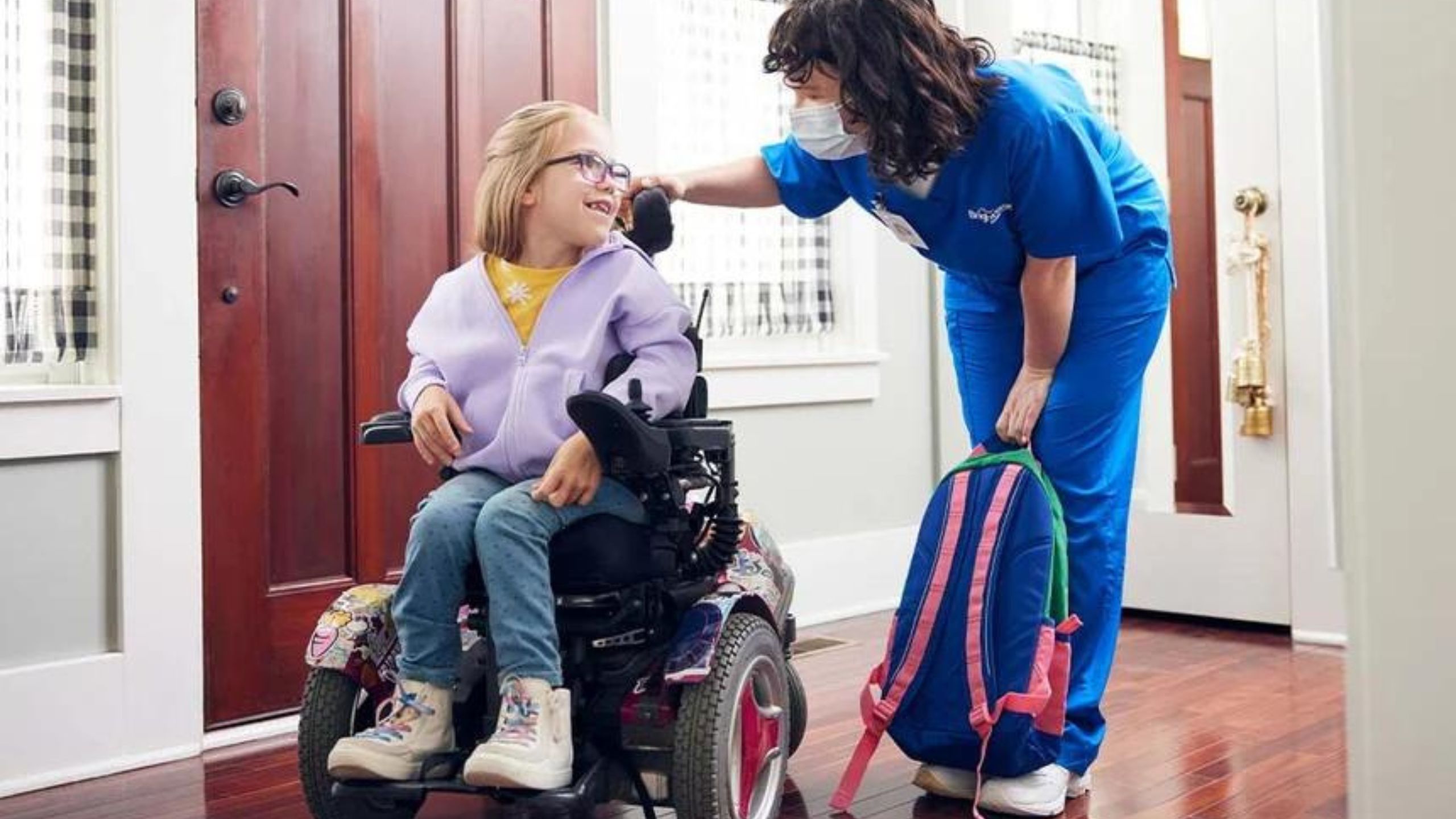
At BrightStar Care of Racine, we serve clients throughout Racine, Kenosha, Mount Pleasant, Caledonia, Burlington, and surrounding Racine County communities. We provide non-medical personal caregiving for individuals with Spina Bifida and other complex conditions, with registered nurse oversight on every care plan.The registered nurse does not provide direct clinical care in our non-medical care relationships. But they develop the care plan based on a thorough assessment of the individual's specific needs, routines, and established practices. They train the caregiver on the individual's specific bowel program, skin observation protocols, orthotic management approach, and transfer technique. They remain the clinical point of contact for observations and concerns that the caregiver reports. And they communicate with the family and treating clinician when something warrants it.
What we prioritize above almost everything else in Spina Bifida care is caregiver consistency. The knowledge that a consistent caregiver accumulates — about how this person's skin normally looks, what their usual energy level is, how their bowel program typically goes, what a good day looks and feels like for them — is not replaceable by any amount of documentation. It is built through relationship and repeated presence, and it is the foundation of safe personal caregiving in this population.
Every time a caregiver changes, that knowledge has to be rebuilt. We treat caregiver continuity as a clinical priority, not a scheduling convenience.
Call 262-637-7767 Visit Our Website
Frequently Asked Questions
Q: My loved one with Spina Bifida is resistant to having someone help with personal care. How do we approach this?
Start somewhere other than the most intimate tasks. Resistance to personal care from a stranger is almost always rooted in the value of independence that people with lifelong disability develop as a matter of survival. Asking someone with Spina Bifida to accept help with bathing and bowel care from a person they have just met asks them to trust completely before trust has been built.Starting with meal preparation, household support, or transportation — tasks that are helpful but not intimate — gives the relationship time to develop before more sensitive care is introduced. A trial period rather than an open-ended commitment reduces the sense of permanence. Framing the support as something that protects the person's energy and independence for the things that matter most to them, rather than something that replaces their independence, is often the reframe that makes acceptance possible.
Q: How do I know if we need a personal caregiver, a skilled nurse, or both?
Personal caregivers assist with the daily living tasks that Spina Bifida management involves — bathing, dressing, bowel program assistance, skin observation, transfers, meal preparation, and household support. They work under nursing oversight but do not perform clinical procedures.Skilled nurses provide clinical services — catheterization, wound care, medication management, shunt monitoring, and care coordination with the treating physician. For individuals who need catheterization assistance, active wound care, or clinical monitoring beyond observation and reporting, skilled nursing is appropriate.
Many adults with Spina Bifida need both. If your loved one currently receives skilled nursing care from another provider, personal caregiving from BrightStar Care of Racine can complement that care and fill the daily support hours that skilled nursing visits do not cover. Contact our office and we can help you think through what level and type of support makes sense for your loved one's specific situation.
Q: What happens if our caregiver notices something concerning during a visit?
All of our non-medical caregivers operate under the oversight of a registered nurse who develops the care plan and remains the clinical point of contact for the care relationship. When a caregiver observes something worth noting — a skin change, a change in the person's condition, a deviation from the normal pattern in the bowel program — they report it to the supervising nurse, who evaluates the concern, communicates with the family, and determines whether communication with the treating physician is warranted. The caregiver does not make clinical decisions, but they are not working in isolation. The reporting pathway is built into the care structure.BrightStar Care of Racine provides professional personal caregiving services for individuals with Spina Bifida and their families throughout Racine, Kenosha, Mount Pleasant, Caledonia, Burlington, and surrounding Racine County communities. To speak with a care coordinator about personal in-home care support for your loved one this October, contact our office today.
Contact Us Today:
- Phone: 262-637-7767
- Address: 5220 Washington Avenue, Suite 102, Racine, WI 53406
- Visit Us Online: BrightStar Care of Racine