
There was a time when grocery shopping was just grocery shopping.
You grabbed your keys, got in the car, walked the aisles, stood in line, loaded the bags into the trunk, brought everything home and put it away.
Done.
Except somewhere along the way, "just grabbing a few things" became a two-hour production.
The parking lot is crowded. The cart feels awkward to push. The bags seem heavier than they used to. And by the time you get everything into the house, you've spent more energy grocery shopping than you probably wanted to spend.
That's where technology gets interesting.
Because now, you can sit at your kitchen table, open your phone and have your groceries delivered right to your front door.
At first, it sounds like a convenience.
For an older adult who wants to continue living independently at home, it can be something more.
Let's say you're Margaret.
Margaret has lived in the same house for 35 years. She knows exactly where everything is, has her favorite grocery store, her favorite coffee and a very strong opinion about which brand of bread is worth buying.
She also doesn't need someone telling her what to eat.
She just doesn't love going to the grocery store anymore.
Her daughter suggests ordering groceries online. Margaret isn't convinced. She doesn't want someone else picking out her food, and she certainly doesn't think she needs help managing a grocery list.
So her daughter sits down with her one afternoon and shows her how it works.
They add bananas, milk, her favorite cereal and the coffee she always buys. Margaret starts getting the hang of it.
And then something funny happens.
She actually likes it.
She can take her time. She can look in the refrigerator while she's making her list. She can see what she already has, add things she forgot and order everything without having to navigate a crowded store.
Most importantly, she's still making the decisions.
She didn't give up control over her groceries.
She just changed how she gets them.
But then the groceries arrive.
And this is where things get interesting.
The grocery app solved one problem. It didn't solve everything.
Someone still has to bring the bags inside. The milk needs to go in the refrigerator. The heavier items need to be put away. Eventually, someone still has to turn those groceries into lunch.
For some older adults, that's no problem at all.
For others, those are the things that make grocery shopping difficult in the first place.
And that's where in-home care can fit into the picture.
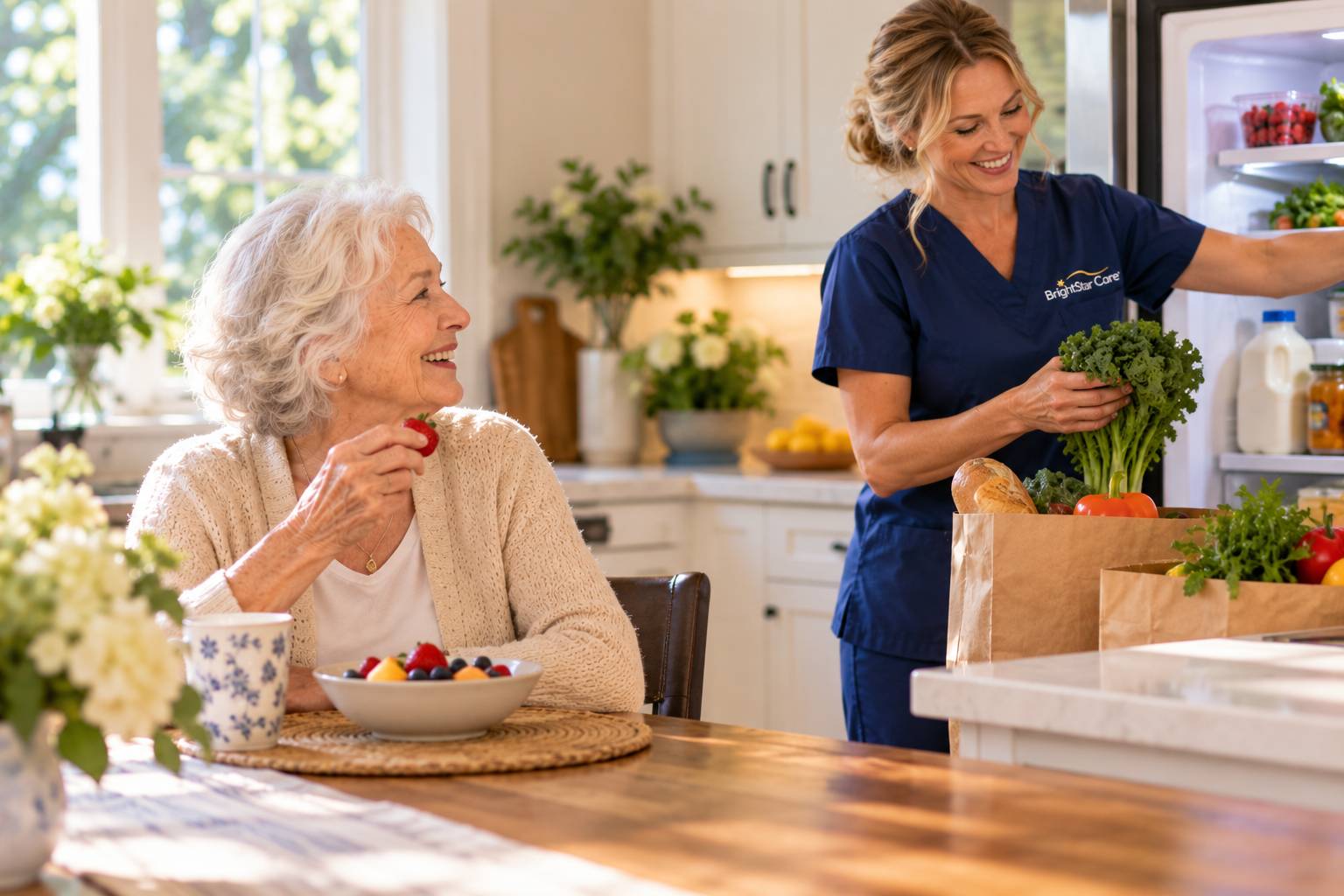
An in-home caregiver can help with grocery assistance, meal preparation, errands and other daily living activities. They can help bring groceries inside and put them away, prepare a meal, organize the refrigerator or accompany someone to the store when they still enjoy shopping in person but don't want to do it alone.
And sometimes, they don't need to do any of those things.
Sometimes they just sit down and have lunch afterward.
Because companionship is part of care, too.
Technology doesn't have to replace independence.
In fact, sometimes it helps protect it.
Mom can still decide what she wants for dinner. Dad can still choose his favorite cereal. They can still decide what they want to eat and how they want their day to look.
The caregiver is simply helping with the parts that have become harder.
That's one reason something as simple as mobile grocery ordering can be so useful for seniors aging in place. It removes some of the physical and logistical work without taking away the person's choices.And sometimes the grocery order can tell a family something, too.
Maybe Mom used to order fresh vegetables every week and now she's mostly buying frozen meals. Maybe she's ordering the same few things over and over. Maybe the refrigerator is full, but she's not actually preparing meals.
None of those things automatically means something is wrong.
But they can be little clues that someone's needs are changing.
A caregiver who spends time in the home may notice those changes, too. Maybe Mom isn't eating as much. Maybe standing in the kitchen has become difficult. Maybe preparing a meal has become frustrating.
Sometimes the little things tell you more than you realize.
Home care doesn't have to mean giving up your independence.
This is one of the biggest misconceptions about senior home care.
You don't have to wait until someone needs help with everything.
Maybe your loved one is still capable of managing most of their day. They just don't want to drive to the grocery store anymore.
Maybe they can prepare breakfast but have trouble making dinner. Maybe they can order everything online but need help carrying it inside.
Maybe they simply want someone around for companionship a few afternoons a week.
Home care can be built around the person, not the other way around.
Maybe independence doesn't mean doing everything exactly the way you've always done it.
Maybe it means finding new ways to keep doing the things that matter.
Ordering groceries from the kitchen table. Choosing your own meals. Having someone help put everything away. Making your favorite lunch. Sitting at your own kitchen table.
Still your groceries. Still your home. Still your choices. Just a little less work getting there.
How BrightStar Care Can Help
At BrightStar Care of Roseville and Sacramento, our caregivers provide personalized in-home care based on each person's needs and routines. That can include meal preparation, grocery assistance, errands, transportation, companionship, personal care and support with everyday activities.
Our goal isn't to take over someone's life. It's to help make the life they already have a little easier.
Because sometimes independence doesn't mean doing everything alone.
Sometimes it means having the right person there to help with the things that have become harder, while you continue making the choices that are yours.
And if that means ordering your groceries from the couch?
We think that's pretty smart.
If you or someone you love could use a little extra support at home, call BrightStar Care of Roseville and Sacramento at 916-781-6500.
