
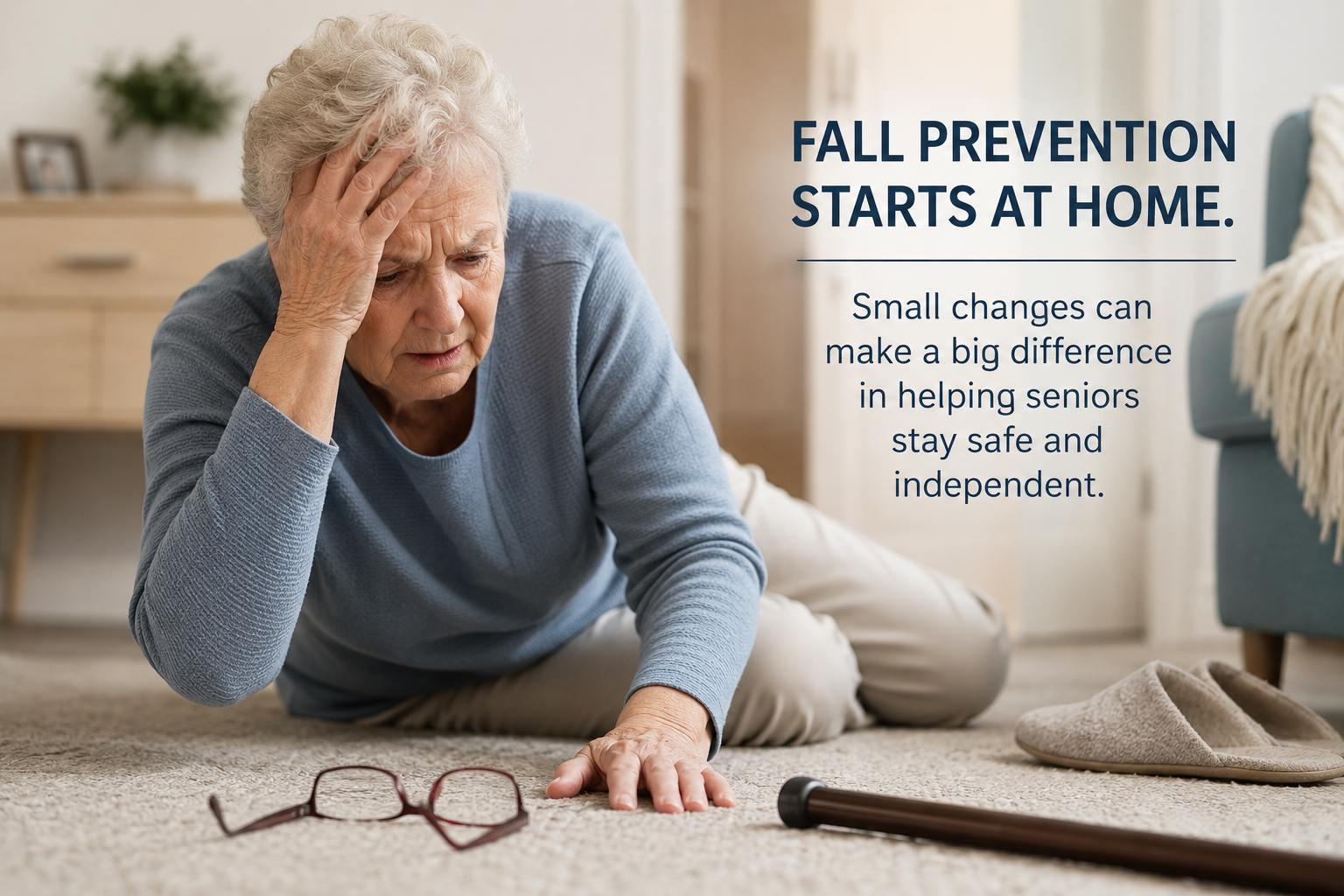
A fall can be scary for everyone involved, especially when it happens to an aging parent or loved one. Even if they seem fine afterward, a fall can be a sign that something has changed. Maybe their balance isnot what it used to be, they are having trouble getting around the house, or everyday activities arebecoming more difficult.
After a fall, it is important to look beyond the fall itself and think about what caused it and how to prevent another one.
What should you do after a senior falls?
First, make sure your loved one is okay. If they are injured, experiencing significant pain, have hit their head, or seem confused or unusually weak, seek medical attention right away.
Even when there does not appear to be a serious injury, it is worth paying attention to how your loved oneis moving afterward. Are they having trouble standing up? Are they more hesitant to walk? Are they holding onto furniture to get around? These can all be signs that they need additional support.
A fall can also affect a senior's confidence. Someone who was comfortable walking around their homemight suddenly become afraid of falling again. That fear can lead to less activity, which can make staying mobile even more difficult.
Does one fall mean a senior needs in-home care?
Not necessarily. But it is a good reason to take a closer look at how safely your loved one is managing at home.
Think about what was happening right before the fall. Were they getting out of the shower? Walking down the stairs? Getting up from a chair? Reaching for something? If a senior is having difficulty with these everyday activities, having some additional help at home can make a big difference.
In-home care for seniors can provide assistance with personal care, mobility, meals, household routines,and other daily activities while allowing your loved one to remain at home.
What are some common fall risks at home?
Many senior falls happen during everyday activities. A loose rug, cluttered walkway, poor lighting, or slippery bathroom floor can become a serious fall risk.
Take a walk through the home and look at it from your loved one's perspective. Are the hallways well lit?Can they easily get in and out of the shower? Are frequently used items within easy reach? Are there cords, rugs, or furniture blocking walking paths?
The bathroom deserves special attention. Wet floors, tubs, showers, and toilets can all create challenges for seniors with mobility or balance concerns. Grab bars, non-slip surfaces, and appropriate shower equipment can make the bathroom safer.
It is also important to keep stairs and hallways clear and make sure your loved one has adequate lighting throughout the home, especially at night.
How can families help prevent another fall?
Fall prevention does not always require major changes to the home. Sometimes small adjustments can make everyday activities safer.
Make sure your loved one has appropriate, supportive footwear and that commonly used items are easy to reach. Keep walkways clear and remove anything that could cause someone to trip. Nightlights can also be helpful, especially for seniors who get up during the night.
It is also important to stay aware of changes in mobility. If your loved one is suddenly struggling to walk,getting tired more easily, or needing to hold onto furniture, talk with their healthcare provider.
When is it time to get more help at home?
Sometimes the biggest sign is not another fall. It is noticing that everyday tasks are becoming harder.
If your loved one is having trouble bathing, dressing, preparing meals, getting around the house, managing daily routines, or staying safe on their own, it may be time to bring in additional support.
In-home care allows seniors to receive personalized assistance without having to leave the home theyknow and love. A professional caregiver can provide support with daily activities, personal care, mobility, companionship, and household routines.
This can also give family members peace of mind. Instead of worrying about whether their loved one is safe at home while they are away, families have additional support available.
How can in-home care help after a fall?
After a fall, families often become more aware of the challenges their loved one is facing. In-home care can provide an extra layer of support while helping seniors maintain their independence.
A caregiver can assist with everyday activities, provide companionship, help with personal care, and support a senior's daily routine. Most importantly, care can take place in the familiar environment of home.
Preventing falls is about more than removing a rug or installing a grab bar. It is about looking at the wholepicture and making sure seniors have the support they need to feel safe and confident at home. If your loved one has experienced a fall or you are beginning to notice changes in their mobility and daily routine, BrightStar Care of Roseville provides personalized in-home care for seniors. Call 916-781-6500 to learn more about how in-home care can support your loved one at home.
