
You know that feeling when you've finally made a decision you've been putting off for months?
You make the call.
You schedule the assessment.
You agree that, yes, Mom probably could use some help around the house.
And then you hang up the phone and think...
Okay. Now what?
Because deciding to start in-home care is one thing.
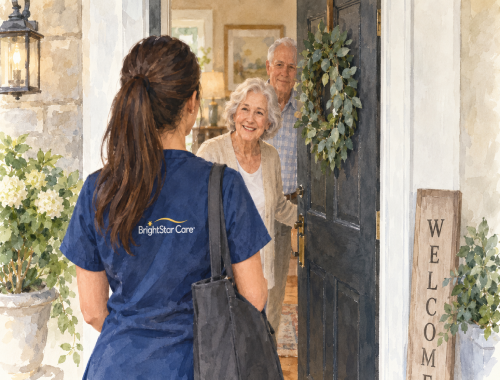
Actually having a caregiver walk through your front door for the first time?
That's a whole different thing.
Maybe Mom isn't thrilled about it.
Maybe Dad keeps saying, "I don't need a babysitter."
Maybe you're the daughter who has been doing everything yourself for the last six months and you're relieved to finally have some help, but also a little nervous about handing part of Mom's care over to someone else.
All of that is normal.
The first few days of home care aren't really about having everything figured out.
They're about getting to know each other.
The caregiver is learning how your loved one does things.
Your loved one is learning who this new person is.
And the family is figuring out how care fits into real life.
Because here's something people don't always realize about in-home care:
The goal isn't to take over someone's life.
It's to make their life a little easier.
The first visit might feel a little awkward. That's okay. Think about it.
A stranger is walking into someone's home and saying, essentially, "Hi, I'm here to help."
Even when that help is desperately needed, it can take a minute to get comfortable.
That's why the little things matter.
What does Mom like to eat for breakfast?
Does Dad like his coffee strong?
Does she prefer a shower in the morning or afternoon?
Does he want help getting dressed, or does he want to do as much as he can himself?
Which things does your loved one want help with?
And which things do they absolutely want to keep doing on their own?
Those details are important.
Good home care isn't just about completing a list of tasks.
It's about understanding the person behind the tasks.
Then the routine starts to take shape.
Maybe the caregiver helps with bathing and getting dressed.
Maybe they prepare lunch and make sure Mom actually eats it.
Maybe they help with errands, light housekeeping, or getting to an appointment.
Maybe they provide companionship while the family member who has been doing everything finally gets a few hours to work, run errands, or simply breathe.
And sometimes the most valuable thing the caregiver does isn't even something that was written down when care started.
They notice something.
Mom isn't getting around the kitchen as easily as she used to.
Dad seems more unsteady getting out of his chair.
The laundry is becoming harder to keep up with.
The afternoon seems to be when everything gets difficult.
Those observations matter.
Because home care isn't supposed to be frozen in place while someone's needs change.
And yes, your loved one's needs might change.
This is probably the biggest thing families should know when starting senior home care.
The schedule you start with today might not be the schedule you need six months from now.
That's not a failure.
It's life.
Maybe you start with a few hours of in-home care each week because that's all Mom needs right now.
Then winter comes.
Or mobility changes.
Or a spouse who was doing most of the caregiving can no longer keep up.
Or the daughter who was coming over every evening gets a new job.
Suddenly those few hours aren't enough.
That's when communication becomes really important.
If something changes, say something.
If something isn't working, say something.
If you're wondering whether your loved one needs more support, ask.
You don't have to wait until there's a crisis.
What should the family do during the first week? Honestly?
Pay attention.
Watch how your loved one responds to the caregiver.
Listen to what they're saying.
Notice what's getting easier.
Notice what's still difficult.
And talk to the caregiver.
They are spending time in the home. They're seeing things you might not see because you're only there for an hour after work or on Sunday afternoon.
That doesn't mean every observation is an emergency.
It just means you suddenly have another set of eyes looking out for someone you love.
And that's a pretty valuable thing.
The goal isn't for your family to disappear from the picture. This is another misconception about hiring a caregiver.
Some families worry that once they bring in professional home care services, they're somehow stepping away from their responsibility.
It's actually the opposite.
Having support can allow family members to spend more time being daughters, sons, spouses, grandchildren and siblings instead of constantly being the person responsible for every meal, shower, errand and appointment.
Caregiving and being family don't have to be the same job.
Sometimes the best thing you can do for someone you love is recognize that you don't have to do everything yourself.
And eventually, something interesting happens.
The caregiver stops feeling like a stranger.
They know how Dad likes his coffee.
They know Mom wants the curtains open in the morning.
They know which TV channel Grandpa watches.
They know that getting dressed takes a little longer on Tuesdays because that's shower day.
They know the little routines that make the day feel normal.
And your loved one starts to know them, too.
That's when home care stops feeling like something new and starts feeling like part of the routine.
And honestly, that's the whole point.
Not to change someone's life.
Not to take away their independence.
To help them keep living it.
How BrightStar Care Can Help
At BrightStar Care of Roseville and Sacramento, we understand that bringing an in-home caregiver into your home is a big decision. Our caregivers provide personalized support based on each person's individual needs, from personal care and daily living assistance to companionship, meals, errands and more.
We work with families to understand what support is needed now and stay attentive as those needs change.
If you're considering in-home care for a loved one, we're here to answer your questions, talk through your options and help you determine what level of support makes sense.
Call BrightStar Care of Roseville and Sacramento at 916-781-6500 to get started.
