
Every child deserves to grow up at home. Not in a facility. Not in a hospital. At home, where their room is their room, their family is close, and life looks as close to ordinary as possible.
For families of children with spina bifida in Salem, Keizer, and the surrounding Willamette Valley, making that happen takes more than hope. It takes skilled, consistent, in-home care from professionals who understand both the medical complexity and the human side of childhood.
Children with spina bifida may experience partial or full paralysis of the lower limbs, bladder and bowel dysfunction, and in many cases, hydrocephalus, a buildup of cerebrospinal fluid in the brain that requires surgical placement of a shunt to manage. The condition is lifelong, and while treatment and therapy can dramatically improve quality of life, the need for daily medical management doesn't go away.
For families, that means the hospital may discharge your child, but the clinical demands come home with them.
Parents stop living in clinical mode. The constant mental checklist, the midnight worry, the fear of missing something critical: those ease when a trained professional shares the load. Many parents find they can return to work, sleep through the night, or simply be present with their other children in ways they haven't been able to for months or years.
Siblings benefit too. When a brother or sister has complex medical needs, the rest of the family often revolves around those demands. Skilled nursing redistributes that weight, giving parents the bandwidth to show up more fully for every child in the home.
And for the child with spina bifida, the impact is just as meaningful. A child who has already navigated more than most adults ever will gets the chance to just be a kid for the parts of the day that belong to them. That's not a small thing. That's the whole point.
In-home skilled nursing brings the clinical precision of a medical facility into the comfort, warmth, and normalcy of your child's own home. It's the best of both worlds, and for many families, it's the difference between surviving and actually thriving.
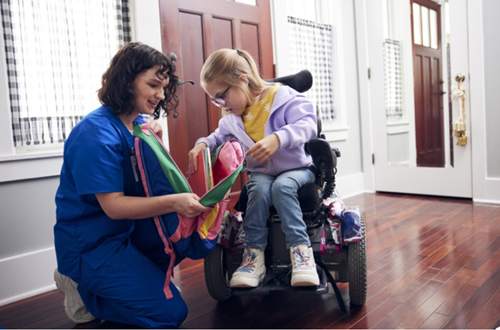
Care schedules are fully customizable. Some families need a few hours of skilled nursing per day for catheterization and monitoring support, while others require extended shifts or overnight care. BrightStar Care of Salem is available 24 hours a day, 7 days a week.
Q: Will your nurses coordinate with my child's doctors?
Yes. Our nurses communicate directly with your child's specialist team, including neurosurgeons, urologists, and rehabilitation therapists, to ensure every part of the care plan stays aligned and up to date.
Q: Does BrightStar Care of Salem provide respite for parents and family caregivers?
Absolutely! In addition to skilled nursing, we understand that parents need time to rest, work, and recharge. Our nurses provide dependable coverage so caregivers can step away knowing their child is in expert hands.
Q: What areas does BrightStar Care of Salem serve?
We serve families throughout Salem, Keizer, Woodburn, Silverton, McMinnville, Independence, and surrounding communities across the Willamette Valley.
Call BrightStar Care of Salem at (503) 620-6011 to speak with a caring member of our local team. Learn more and request care online at www.brightstarcare.com/locations/salem/.
We hope to hear from you soon!
This content was created with AI assistance.
For families of children with spina bifida in Salem, Keizer, and the surrounding Willamette Valley, making that happen takes more than hope. It takes skilled, consistent, in-home care from professionals who understand both the medical complexity and the human side of childhood.
What Is Spina Bifida?
Spina bifida is a neural tube defect that occurs when the spine and spinal cord don't form properly during early pregnancy. It's one of the most common permanently disabling birth defects in the United States, and its effects vary widely depending on the type and severity.Children with spina bifida may experience partial or full paralysis of the lower limbs, bladder and bowel dysfunction, and in many cases, hydrocephalus, a buildup of cerebrospinal fluid in the brain that requires surgical placement of a shunt to manage. The condition is lifelong, and while treatment and therapy can dramatically improve quality of life, the need for daily medical management doesn't go away.
For families, that means the hospital may discharge your child, but the clinical demands come home with them.
What Does Daily Care Look Like at Home?
Managing spina bifida at home involves a level of medical routine that most families never anticipated. On any given day, a parent or caregiver may need to manage:- Timed catheterization programs to support bladder function, often multiple times per day on a strict schedule
- Bowel management protocols that require consistency and careful monitoring
- Skin and pressure injury prevention and assessment, especially for children with limited mobility who spend time in wheelchairs or adaptive seating
- Shunt monitoring to watch for signs of malfunction, including headaches, vomiting, irritability, changes in vision, or unusual drowsiness
- Medication management across multiple prescriptions and specialist recommendations
- Coordination with a broad care team, including neurologists, neurosurgeons, urologists, orthopedic specialists, and rehabilitation therapists
How BrightStar Care of Salem Supports Children with Spina Bifida
We provide skilled in-home pediatric nursing for children living with spina bifida. Our care teams include Registered Nurses (RNs) and Licensed Practical Nurses (LPNs) who are trained specifically in complex pediatric conditions and who bring clinical confidence into the home setting.Catheterization and Bowel Program Support
Our nurses manage intermittent catheterization on the schedules your child's urologist has prescribed, maintaining sterile techniques and careful documentation. We also support bowel management programs, ensuring protocols are followed consistently so your child stays comfortable and healthy.Shunt Monitoring and Neurological Awareness
For children with hydrocephalus, shunt malfunction is one of the most serious ongoing risks. Our nurses are trained to recognize the subtle early warning signs that parents are told to watch for but may not feel confident identifying on their own. Having a skilled professional in the home provides an additional layer of safety that gives families real peace of mind.Skin Integrity and Pressure Injury Prevention
Children with limited lower-body mobility are at elevated risk for pressure injuries, especially as they grow. Our team conducts regular skin assessments, monitors high-risk areas, and works with families to adjust positioning and equipment to reduce risk before problems develop.Medication Management
When a child is seeing multiple specialists, medication schedules can become complex quickly. Our nurses help manage administration times, track dosages, watch for side effects, and ensure that every provider's recommendations are aligned and followed accurately.Specialist Coordination
We don't work in a silo. We coordinate directly with your child's neurosurgeon, urologist, orthopedist, and rehab team so that every aspect of your child's care plan stays current. When something changes, whether it's a new medication, an adjusted therapy protocol, or a post-surgical recovery plan, our nurses adapt immediately.What Changes for the Whole Family
When skilled nursing is in place, something shifts for everyone in the household.Parents stop living in clinical mode. The constant mental checklist, the midnight worry, the fear of missing something critical: those ease when a trained professional shares the load. Many parents find they can return to work, sleep through the night, or simply be present with their other children in ways they haven't been able to for months or years.
Siblings benefit too. When a brother or sister has complex medical needs, the rest of the family often revolves around those demands. Skilled nursing redistributes that weight, giving parents the bandwidth to show up more fully for every child in the home.
And for the child with spina bifida, the impact is just as meaningful. A child who has already navigated more than most adults ever will gets the chance to just be a kid for the parts of the day that belong to them. That's not a small thing. That's the whole point.
Why Choose In-Home Nursing Over Facility-Based Care?
For children with spina bifida, home is almost always the best environment for long-term wellbeing. Familiar surroundings reduce anxiety and promote emotional development. Consistent routines are easier to maintain in a home setting. And family involvement, which is critical for a child's social and psychological growth, happens naturally when care is provided where the family already lives.In-home skilled nursing brings the clinical precision of a medical facility into the comfort, warmth, and normalcy of your child's own home. It's the best of both worlds, and for many families, it's the difference between surviving and actually thriving.
Frequently Asked Questions
Q: How often can a nurse come to our home?Care schedules are fully customizable. Some families need a few hours of skilled nursing per day for catheterization and monitoring support, while others require extended shifts or overnight care. BrightStar Care of Salem is available 24 hours a day, 7 days a week.
Q: Will your nurses coordinate with my child's doctors?
Yes. Our nurses communicate directly with your child's specialist team, including neurosurgeons, urologists, and rehabilitation therapists, to ensure every part of the care plan stays aligned and up to date.
Q: Does BrightStar Care of Salem provide respite for parents and family caregivers?
Absolutely! In addition to skilled nursing, we understand that parents need time to rest, work, and recharge. Our nurses provide dependable coverage so caregivers can step away knowing their child is in expert hands.
Q: What areas does BrightStar Care of Salem serve?
We serve families throughout Salem, Keizer, Woodburn, Silverton, McMinnville, Independence, and surrounding communities across the Willamette Valley.
Take the Next Step
If your child has spina bifida and your family could benefit from skilled in-home pediatric nursing, BrightStar Care of Salem is ready to help.Call BrightStar Care of Salem at (503) 620-6011 to speak with a caring member of our local team. Learn more and request care online at www.brightstarcare.com/locations/salem/.
We hope to hear from you soon!
This content was created with AI assistance.