
Most families come to home care through a familiar door: an aging parent who needs help with meals and bathing, a spouse recovering from a knee replacement, a loved one who can no longer safely live alone. That kind of support for personal care, companionship, and light household help is what people typically picture when they hear "home care."
But there is another category of home care that looks quite different. It is more clinical, more intensive, and more medically involved. It serves patients with serious, complex, or multiple health conditions who need skilled nursing oversight as a consistent part of daily life not just following a surgery or during a short-term recovery, but on an ongoing basis. This is high-acuity home care, and for the families who need it, understanding what it means and who provides it well is one of the most important decisions they will make.
For families in Gilbert, Mesa, Chandler, Tempe, and across the East Valley, this guide explains what high-acuity home care actually is, who it serves, and what to look for when the need arises.
Acuity is a clinical term that refers to the severity and complexity of a patient's medical condition and the level of care required to manage it safely. In a hospital or nursing facility, acuity determines staffing ratios, monitoring frequency, and the type of interventions required. In a home care context, it determines whether a patient's needs can be met by a companion or personal care aide, a home health aide, a licensed practical nurse, a registered nurse, or some combination of all of the above.
Low-acuity home care addresses needs that are real and meaningful bathing assistance, medication reminders, meal preparation, companionship but do not require ongoing clinical judgment or skilled nursing intervention. High-acuity home care addresses needs that do. The patient's condition is more serious, less stable, or more medically complex, and the care required goes beyond what a non-medical caregiver is trained or licensed to provide.
The line between the two is not always sharp, and many patients need elements of both. But understanding where your loved one falls on that spectrum is essential to making sure the care they receive is actually appropriate for what they need.
High-acuity home care is appropriate for patients whose medical conditions require skilled, clinically informed support as a regular part of their daily life at home. This includes a broader range of patients than many families initially realize.
A patient managing heart failure, Type 2 diabetes, and chronic kidney disease simultaneously is dealing with conditions that interact with each other in clinically significant ways. Medications for one condition can affect another. Fluid management for heart failure has implications for kidney function. Blood sugar control affects healing, circulation, and energy. Managing this complexity safely at home requires a skilled nurse who understands the full picture not just individual conditions in isolation.
For many East Valley families caring for an aging parent with a long list of diagnoses, high-acuity home care is not a dramatic escalation. It is simply the right level of support for the complexity that already exists.
Some patients leave the hospital or a rehabilitation facility with clinical needs that go beyond what standard home health visits can adequately address. Surgical wounds require skilled wound care and assessment. IV therapy or infusion needs. Drains, catheters, or feeding tubes that require skilled management. Patients who are frail, elderly, or medically complex may need more intensive skilled nursing oversight during recovery than the standard post-acute model provides.
In the Phoenix metropolitan area where hospital discharge timelines are short and rehabilitation facility stays are often briefer than families expect the gap between what the facility provided and what the patient still needs when they arrive home can be significant. High-acuity home care fills that gap.
Conditions like ALS, multiple sclerosis, Parkinson's disease in advanced stages, or the effects of a significant stroke can create complex, evolving care needs that require skilled nursing alongside personal care support. Respiratory management, swallowing safety, medication administration, and the monitoring of condition progression all require clinical expertise that goes beyond non-medical caregiving.
Some patients live at home with medical equipment that requires skilled oversight ventilators, CPAP and BiPAP systems in medically complex settings, feeding tubes, ostomy care, wound VAC systems, and PICC lines or other vascular access devices for ongoing infusion therapy. Managing this equipment safely, troubleshooting complications, and ensuring the patient and family understand proper use requires a skilled nurse, not a caregiver.
Many patients on hospice receive excellent clinical coordination from their hospice team, but hospice nursing visits are typically intermittent a few times per week. The hours between visits, and the non-medical support the patient and family need around the clock, often require additional caregiving and sometimes skilled nursing beyond what the hospice program alone provides. BrightStar Care of Gilbert / Mesa works alongside hospice teams as a complement to, and never a replacement for, the hospice provider, filling the daily support gaps that families cannot manage alone.
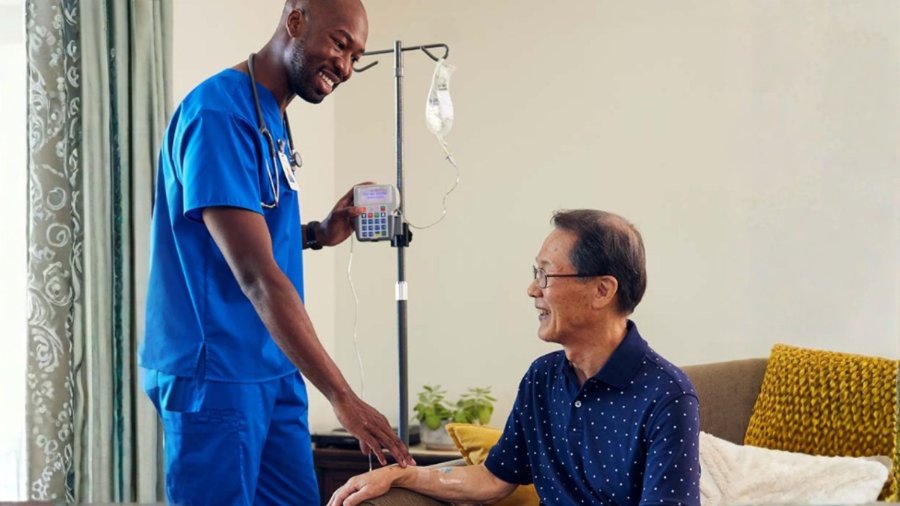
High-acuity home care is not a single service. It is a coordinated combination of skilled and non-skilled support, built around the specific needs of a patient whose condition requires more than standard home care.
At BrightStar Care of Gilbert / Mesa, our skilled nursing services in a high-acuity context include:
Complex wound care. Assessment, debridement, dressing changes, and management of wounds that require clinical skill and judgment surgical wounds, diabetic ulcers, pressure injuries, and wounds requiring specialized dressings or negative pressure wound therapy.
Medication administration and management. Administering medications that cannot safely be self-administered including injections, IV medications, and complex multi-drug regimens requiring skilled monitoring for interactions and side effects. For patients on insulin, anticoagulants, or pain management protocols, skilled nursing oversight is a clinical necessity.
Infusion therapy. IV antibiotics, hydration, pain management, and other infusion therapies that allow patients to receive hospital-level treatment at home rather than remaining in an acute care setting.
Respiratory monitoring and management. Assessment of respiratory status, management of oxygen therapy, and support for patients with ventilator or tracheostomy needs in coordination with the patient's pulmonologist and primary care team.
Vital sign and condition monitoring. Frequent, documented assessment of blood pressure, heart rate, oxygen saturation, weight, and neurological status providing the clinical baseline that allows early changes to be caught before they become emergencies.
Care team coordination. In high-acuity cases, the number of providers involved is often significant specialists, primary care physicians, therapists, pharmacists, equipment suppliers, and hospice teams. Our nurses serve as the clinical connector, ensuring that everyone who needs information has it and that nothing falls through the gaps between providers.
Our Skilled Nursing Services
Skilled nursing handles the clinical layer. Non-medical caregivers provide the consistent daily support that makes complex care at home actually sustainable for the patient and for the family.
For high-acuity patients, this includes personal care assistance adapted to the patient's specific physical limitations and medical equipment, safe mobility support and fall prevention, meal preparation aligned with clinical dietary requirements, medication reminders for self-administered medications, and the emotional steadiness of a consistent, familiar presence in a situation that is often frightening and exhausting.
For family caregivers who in many high-acuity situations are also serving as the patient's primary support professional caregiving provides relief, respite, and the knowledge that their loved one is safe and monitored in the hours between their own visits and the nurse's.
Our In-home Care Services
For patients with serious chronic conditions living in Gilbert, Mesa, and the broader East Valley, Arizona's extreme summer heat is a genuine clinical consideration that deserves mention.
Heat significantly worsens heart failure, kidney disease, and conditions that affect the body's ability to regulate temperature. Patients on diuretics are at heightened risk of dehydration and electrolyte imbalance. Patients with neurological conditions may be particularly heat sensitive. Outdoor activity during summer months requires careful management, and even indoor environments must be monitored for adequate cooling.
High-acuity caregiving in the Arizona context means understanding these risks, building them into the care plan, and monitoring for heat-related changes in condition particularly during the June through September period when temperatures in the East Valley regularly exceed 110°F.
Not every home care agency is equipped to handle high-acuity cases. Families in Gilbert and Mesa who are navigating serious or complex care situations should look for several things when evaluating providers.
Joint Commission accreditation. BrightStar Care of Gilbert / Mesa holds Joint Commission accreditation the gold standard in home care quality, held by fewer than five percent of home care agencies nationally. This accreditation reflects our commitment to clinical standards, staff training, and care quality that goes beyond what state licensing alone requires.
Registered nurses on staff. High-acuity care requires RNs not just home health aides or LPNs alone. Confirm that an agency employs registered nurses who are directly involved in care planning and clinical oversight.
Experience with medically complex cases. Ask specifically about the agency's experience with conditions like yours whether that's ALS, complex wound care, infusion therapy, or multi-condition management. Experience matters in high-acuity care in ways it does not in standard caregiving.
Coordination with your existing care team. A high-acuity home care agency should be able to communicate directly and regularly with your loved one's physicians, specialists, and other providers. Ask how they handle care team communication and what documentation systems they use.
Ability to scale care up or down. A patient's acuity can change sometimes quickly. An agency that can adjust the level and frequency of skilled nursing visits in response to the patient's evolving condition is essential for truly responsive high-acuity care.
BrightStar Care is a private pay agency. Medicare may cover a limited number of skilled nursing visits at home when specific eligibility criteria are met: homebound status, physician certification, and an active skilled care need. For patients whose high-acuity needs are ongoing rather than post-acute, Medicare's episodic model often does not cover the full scope of what is required.
Long-term care insurance, when a policy is in place, can be a significant resource for ongoing high-acuity home care. VA benefits may apply for eligible veterans. For most high-acuity patients and their families, care is funded primarily through private pay which is why early, transparent conversations about cost and care planning are a priority for our team.
Our care coordinators are experienced in helping families understand what level of care is clinically appropriate, what that care realistically costs, and how to structure a funding plan that makes it sustainable over time.
Contact BrightStar Care of Gilbert/Mesa:

BrightStar Care of Gilbert / Mesa provides skilled nursing and non-medical home care services including high-acuity and complex care for patients and families throughout Gilbert, Mesa, Chandler, Tempe, Queen Creek, and surrounding East Valley communities. BrightStar Care is proud to hold Joint Commission accreditation. To speak with a care coordinator about your loved one's needs, contact our Gilbert / Mesa office today at 480-898-0880.
Call us Today Visit Our Website
But there is another category of home care that looks quite different. It is more clinical, more intensive, and more medically involved. It serves patients with serious, complex, or multiple health conditions who need skilled nursing oversight as a consistent part of daily life not just following a surgery or during a short-term recovery, but on an ongoing basis. This is high-acuity home care, and for the families who need it, understanding what it means and who provides it well is one of the most important decisions they will make.
For families in Gilbert, Mesa, Chandler, Tempe, and across the East Valley, this guide explains what high-acuity home care actually is, who it serves, and what to look for when the need arises.
What "Acuity" Means in a Home Care Context
Acuity is a clinical term that refers to the severity and complexity of a patient's medical condition and the level of care required to manage it safely. In a hospital or nursing facility, acuity determines staffing ratios, monitoring frequency, and the type of interventions required. In a home care context, it determines whether a patient's needs can be met by a companion or personal care aide, a home health aide, a licensed practical nurse, a registered nurse, or some combination of all of the above.Low-acuity home care addresses needs that are real and meaningful bathing assistance, medication reminders, meal preparation, companionship but do not require ongoing clinical judgment or skilled nursing intervention. High-acuity home care addresses needs that do. The patient's condition is more serious, less stable, or more medically complex, and the care required goes beyond what a non-medical caregiver is trained or licensed to provide.
The line between the two is not always sharp, and many patients need elements of both. But understanding where your loved one falls on that spectrum is essential to making sure the care they receive is actually appropriate for what they need.
Who Needs High-Acuity Home Care?
High-acuity home care is appropriate for patients whose medical conditions require skilled, clinically informed support as a regular part of their daily life at home. This includes a broader range of patients than many families initially realize.
Patients With Multiple or Complex Chronic Conditions
A patient managing heart failure, Type 2 diabetes, and chronic kidney disease simultaneously is dealing with conditions that interact with each other in clinically significant ways. Medications for one condition can affect another. Fluid management for heart failure has implications for kidney function. Blood sugar control affects healing, circulation, and energy. Managing this complexity safely at home requires a skilled nurse who understands the full picture not just individual conditions in isolation.For many East Valley families caring for an aging parent with a long list of diagnoses, high-acuity home care is not a dramatic escalation. It is simply the right level of support for the complexity that already exists.
Post-Acute and Post-Surgical Patients With Significant Recovery Needs
Some patients leave the hospital or a rehabilitation facility with clinical needs that go beyond what standard home health visits can adequately address. Surgical wounds require skilled wound care and assessment. IV therapy or infusion needs. Drains, catheters, or feeding tubes that require skilled management. Patients who are frail, elderly, or medically complex may need more intensive skilled nursing oversight during recovery than the standard post-acute model provides.In the Phoenix metropolitan area where hospital discharge timelines are short and rehabilitation facility stays are often briefer than families expect the gap between what the facility provided and what the patient still needs when they arrive home can be significant. High-acuity home care fills that gap.
Patients With Neurological Conditions
Conditions like ALS, multiple sclerosis, Parkinson's disease in advanced stages, or the effects of a significant stroke can create complex, evolving care needs that require skilled nursing alongside personal care support. Respiratory management, swallowing safety, medication administration, and the monitoring of condition progression all require clinical expertise that goes beyond non-medical caregiving.
Patients Requiring Medical Equipment Management
Some patients live at home with medical equipment that requires skilled oversight ventilators, CPAP and BiPAP systems in medically complex settings, feeding tubes, ostomy care, wound VAC systems, and PICC lines or other vascular access devices for ongoing infusion therapy. Managing this equipment safely, troubleshooting complications, and ensuring the patient and family understand proper use requires a skilled nurse, not a caregiver.
Patients on Hospice Who Need Additional Support
Many patients on hospice receive excellent clinical coordination from their hospice team, but hospice nursing visits are typically intermittent a few times per week. The hours between visits, and the non-medical support the patient and family need around the clock, often require additional caregiving and sometimes skilled nursing beyond what the hospice program alone provides. BrightStar Care of Gilbert / Mesa works alongside hospice teams as a complement to, and never a replacement for, the hospice provider, filling the daily support gaps that families cannot manage alone.
What High-Acuity Home Care Actually Looks Like
High-acuity home care is not a single service. It is a coordinated combination of skilled and non-skilled support, built around the specific needs of a patient whose condition requires more than standard home care.
Skilled Nursing at the Center
Registered nurses and licensed practical nurses are the clinical backbone of high-acuity home care. In a high-acuity context, skilled nursing visits may occur daily or multiple times per week sometimes multiple times per day rather than the episodic visits that characterize standard home health. The nurse is not simply checking in. They are assessing, managing, monitoring, intervening, and communicating with the full care team on a regular basis.At BrightStar Care of Gilbert / Mesa, our skilled nursing services in a high-acuity context include:
Complex wound care. Assessment, debridement, dressing changes, and management of wounds that require clinical skill and judgment surgical wounds, diabetic ulcers, pressure injuries, and wounds requiring specialized dressings or negative pressure wound therapy.
Medication administration and management. Administering medications that cannot safely be self-administered including injections, IV medications, and complex multi-drug regimens requiring skilled monitoring for interactions and side effects. For patients on insulin, anticoagulants, or pain management protocols, skilled nursing oversight is a clinical necessity.
Infusion therapy. IV antibiotics, hydration, pain management, and other infusion therapies that allow patients to receive hospital-level treatment at home rather than remaining in an acute care setting.
Respiratory monitoring and management. Assessment of respiratory status, management of oxygen therapy, and support for patients with ventilator or tracheostomy needs in coordination with the patient's pulmonologist and primary care team.
Vital sign and condition monitoring. Frequent, documented assessment of blood pressure, heart rate, oxygen saturation, weight, and neurological status providing the clinical baseline that allows early changes to be caught before they become emergencies.
Care team coordination. In high-acuity cases, the number of providers involved is often significant specialists, primary care physicians, therapists, pharmacists, equipment suppliers, and hospice teams. Our nurses serve as the clinical connector, ensuring that everyone who needs information has it and that nothing falls through the gaps between providers.
Our Skilled Nursing Services
Non-Medical Caregiving as the Daily Foundation
Skilled nursing handles the clinical layer. Non-medical caregivers provide the consistent daily support that makes complex care at home actually sustainable for the patient and for the family.For high-acuity patients, this includes personal care assistance adapted to the patient's specific physical limitations and medical equipment, safe mobility support and fall prevention, meal preparation aligned with clinical dietary requirements, medication reminders for self-administered medications, and the emotional steadiness of a consistent, familiar presence in a situation that is often frightening and exhausting.
For family caregivers who in many high-acuity situations are also serving as the patient's primary support professional caregiving provides relief, respite, and the knowledge that their loved one is safe and monitored in the hours between their own visits and the nurse's.
Our In-home Care Services

High-Acuity Care in the Arizona Climate: A Practical Consideration
For patients with serious chronic conditions living in Gilbert, Mesa, and the broader East Valley, Arizona's extreme summer heat is a genuine clinical consideration that deserves mention.Heat significantly worsens heart failure, kidney disease, and conditions that affect the body's ability to regulate temperature. Patients on diuretics are at heightened risk of dehydration and electrolyte imbalance. Patients with neurological conditions may be particularly heat sensitive. Outdoor activity during summer months requires careful management, and even indoor environments must be monitored for adequate cooling.
High-acuity caregiving in the Arizona context means understanding these risks, building them into the care plan, and monitoring for heat-related changes in condition particularly during the June through September period when temperatures in the East Valley regularly exceed 110°F.
What to Look for in a High-Acuity Home Care Agency
Not every home care agency is equipped to handle high-acuity cases. Families in Gilbert and Mesa who are navigating serious or complex care situations should look for several things when evaluating providers.Joint Commission accreditation. BrightStar Care of Gilbert / Mesa holds Joint Commission accreditation the gold standard in home care quality, held by fewer than five percent of home care agencies nationally. This accreditation reflects our commitment to clinical standards, staff training, and care quality that goes beyond what state licensing alone requires.
Registered nurses on staff. High-acuity care requires RNs not just home health aides or LPNs alone. Confirm that an agency employs registered nurses who are directly involved in care planning and clinical oversight.
Experience with medically complex cases. Ask specifically about the agency's experience with conditions like yours whether that's ALS, complex wound care, infusion therapy, or multi-condition management. Experience matters in high-acuity care in ways it does not in standard caregiving.
Coordination with your existing care team. A high-acuity home care agency should be able to communicate directly and regularly with your loved one's physicians, specialists, and other providers. Ask how they handle care team communication and what documentation systems they use.
Ability to scale care up or down. A patient's acuity can change sometimes quickly. An agency that can adjust the level and frequency of skilled nursing visits in response to the patient's evolving condition is essential for truly responsive high-acuity care.
Paying for High-Acuity Home Care
BrightStar Care is a private pay agency. Medicare may cover a limited number of skilled nursing visits at home when specific eligibility criteria are met: homebound status, physician certification, and an active skilled care need. For patients whose high-acuity needs are ongoing rather than post-acute, Medicare's episodic model often does not cover the full scope of what is required.Long-term care insurance, when a policy is in place, can be a significant resource for ongoing high-acuity home care. VA benefits may apply for eligible veterans. For most high-acuity patients and their families, care is funded primarily through private pay which is why early, transparent conversations about cost and care planning are a priority for our team.
Our care coordinators are experienced in helping families understand what level of care is clinically appropriate, what that care realistically costs, and how to structure a funding plan that makes it sustainable over time.
Contact BrightStar Care of Gilbert/Mesa:
- Phone: 480-898-0880
- Address: 1223 South Clearview Avenue, Suite 110, Mesa, AZ, 85209
- Visit Us Online: BrightStar Care of Mesa / Gilbert
Frequently Asked Questions
Q: What is the difference between high-acuity home care and standard home health care?
Standard home health care typically involves intermittent skilled nursing or therapy visits a few times per week, tied to a specific recovery episode or skilled care need, and is often covered by Medicare for qualifying patients. High-acuity home care is more intensive and ongoing, designed for patients with serious, complex, or multiple medical conditions that require frequent skilled nursing oversight as a regular part of daily life at home. It often combines daily or near-daily skilled nursing with consistent non-medical caregiving, and is typically funded through private pay or long-term care insurance.Q: How do I know if my loved one needs high-acuity home care versus standard home care?
The key indicators are the complexity and severity of the medical condition, the frequency of skilled nursing intervention required, and whether the patient's needs can be safely managed by a non-medical caregiver alone. Patients managing multiple serious chronic conditions, patients who require skilled wound care, medication administration, or medical equipment management, and patients who have frequent hospitalizations or emergency visits are strong candidates for high-acuity home care. A care coordinator and the patient's physician can help assess the appropriate level.Q: Can high-acuity home care prevent hospitalizations?
Consistent, skilled in-home monitoring and management is one of the most effective tools for preventing avoidable hospitalizations in medically complex patients. Regular nursing assessment catches clinical changes early before a symptom becomes a crisis. Medication management reduces errors that drive emergency visits. Coordination with the care team ensures that nothing falls through the gap between appointments. For families navigating serious chronic illness, high-acuity home care is often not just a quality-of-life choice. It is a strategy for keeping a loved one out of the hospital and in the home where they want to be.BrightStar Care of Gilbert / Mesa provides skilled nursing and non-medical home care services including high-acuity and complex care for patients and families throughout Gilbert, Mesa, Chandler, Tempe, Queen Creek, and surrounding East Valley communities. BrightStar Care is proud to hold Joint Commission accreditation. To speak with a care coordinator about your loved one's needs, contact our Gilbert / Mesa office today at 480-898-0880.
Call us Today Visit Our Website