
September is Alzheimer's and Dementia Awareness Month. Most of what families know about Alzheimer's disease comes from watching it in older relatives, grandparents and aging parents in their seventies and eighties. The picture is familiar: gradual memory loss in later life, a slow decline through the later decades.
What most families do not know is that Alzheimer's disease can begin significantly earlier. Younger-onset Alzheimer's, defined as a diagnosis before age 65, affects an estimated 200,000 Americans. The people living with it are in their fifties. Their forties. Sometimes younger. They are still working. They are raising children. They are in the middle of the lives they built, when the disease begins to take hold.
For families in Mobile, Daphne, Fairhope, Foley, Gulf Shores, and throughout Mobile and Baldwin County, this post is an introduction to a diagnosis that is still widely misunderstood, frequently delayed, and profoundly disruptive in ways that older-onset Alzheimer's is not.
Our In-home Alzheimer's Care Call 251-405-6451
The first is familial Alzheimer's disease, which is caused by rare genetic mutations and tends to run directly in families. It can produce symptoms in people in their thirties and forties and is inherited in a clearly traceable pattern. It is relatively rare, accounting for a small minority of younger-onset cases.
The second, and far more common, is sporadic younger-onset Alzheimer's, which shares the same underlying biology as late-onset Alzheimer's but develops earlier in life. The reasons why some people develop the disease earlier are not fully understood, though genetic risk factors including the APOE e4 gene variant, cardiovascular risk factors, traumatic brain injury history, and lifestyle factors all appear to play a role.
The disease itself progresses through the same stages as late-onset Alzheimer's, but the context in which it unfolds is profoundly different.
Diagnosis is frequently delayed. When a 55-year-old begins forgetting things, struggling to complete familiar tasks at work, or experiencing personality changes, the people around them, including their physicians, are unlikely to think of Alzheimer's disease first. The symptoms get attributed to stress, burnout, depression, perimenopause, thyroid problems, or simply the pressures of a demanding life. The average time from symptom onset to diagnosis in younger-onset Alzheimer's is significantly longer than in older-onset cases, sometimes by several years. That delay has real consequences for planning, for accessing support, and for the person's opportunity to participate in decisions about their own care while they still have capacity to do so.
Career and financial impact is immediate and severe. A 57-year-old with Alzheimer's is likely still working. The early symptoms often manifest first at work: difficulty with complex tasks, problems with organization and multistep projects, errors in judgment that would not have occurred before. The path from first symptoms to inability to work is often shorter than families expect, and the financial implications are significant. Medicare eligibility typically begins at 65, which means a person diagnosed at 55 faces a decade of private insurance coverage for an expensive disease, often at the point when their income has been reduced or eliminated by the illness itself.
Family structure is different. A person with younger-onset Alzheimer's may have a spouse who is also in the middle of their working life, children who are teenagers or young adults, aging parents who may also need care. The caregiving burden lands on a family that is typically not in the same life stage as families managing late-onset dementia. The spouse may be managing a career, children, a mortgage, and a parent with dementia simultaneously.
The person with dementia often has more insight. People with younger-onset Alzheimer's, particularly in early stages, are often more cognitively intact and more aware of what is happening to them than those diagnosed in their eighties. This can be both a gift and a profound source of suffering. The person knows what they are losing. They can articulate their fear and grief. They can participate in their own care planning if the family and medical team make space for it. And they experience the disease with a clarity that is in some ways more painful than the confusion of later stages.
Social isolation is a significant risk. Younger-onset Alzheimer's is rare enough that most support systems, peer groups, and community resources are designed for older adults. A 52-year-old with Alzheimer's does not fit the demographics of the senior center or the memory care support group. The disease is isolating enough on its own. The lack of peers who understand the specific experience of younger-onset diagnosis compounds that isolation considerably.
Signs worth taking seriously include persistent difficulty remembering recent events or newly learned information that does not improve with reminders. Problems with complex work tasks, financial management, or planning that represent a clear change from previous functioning. Word-finding difficulty is noticeably worse than before. Getting lost in familiar places or on familiar routes. Changes in judgment, personality, or social behavior. Apathy, withdrawal, or increased anxiety that does not respond to treatment for depression.
The key question, as with all dementia diagnosis, is not whether any of these things have occurred but whether they represent a departure from the person's own established baseline, and whether they are progressive rather than stable.
If a family member under 65 is showing signs of cognitive decline that have persisted for several months and are affecting their ability to function at work or at home, a referral to a neurologist or geriatric specialist for cognitive evaluation is warranted regardless of age.
Our In-home Alzheimer's Care Call 251-405-6451
A younger-onset Alzheimer's diagnosis requires planning on several fronts simultaneously, and doing it while the person still has the cognitive capacity to participate is one of the most important things a family can do.
Legal and financial planning should happen as early as possible after diagnosis. This includes establishing power of attorney for finances and healthcare, reviewing or establishing a will, and working with a financial advisor to understand the insurance and income picture. The Social Security Administration offers expedited disability review for people with early-onset Alzheimer's through its Compassionate Allowances program.
Workplace planning involves understanding the person's rights under the Americans with Disabilities Act, options for accommodation, and the timeline for when work will no longer be safe or feasible.
Care planning is an ongoing process that changes as the disease progresses. In early stages, many people with younger-onset Alzheimer's can continue living at home with relatively modest support. As the disease advances, in-home care becomes increasingly important for both safety and quality of life.
Family and emotional support is not a secondary concern. The spouse and children of a person with younger-onset Alzheimer's are navigating their own grief and adjustment alongside the caregiving demands. Support groups specifically for younger-onset families, individual therapy, and peer connection with others in similar situations are not optional extras. They are clinical necessities for sustainable caregiving.
The Alzheimer's Association's Early-Stage Social Engagement programs and its national helpline at 800-272-3900 are good starting points for families seeking resources specific to younger-onset diagnoses.
BrightStar Care of Greater Mobile/Baldwin County provides skilled nursing and non-medical caregiving for individuals with dementia and their families throughout Mobile, Daphne, Fairhope, Foley, Gulf Shores, Orange Beach, and surrounding Mobile and Baldwin County communities.
For younger-onset families, our services can provide the in-home support that allows a spouse to continue working, gives adult children relief from the full weight of caregiving, and maintains the person with dementia's safety and quality of life at home for as long as possible.
Skilled nursing oversight is particularly important in younger-onset cases where the person may have fewer concurrent medical issues than older patients but where the disease course is still progressive and requires clinical monitoring and care coordination.
If your family is navigating a younger-onset diagnosis and you are not sure where to start with care planning, we are glad to be a resource.
Our In-home Alzheimer's Care Call 251-405-6451
BrightStar Care of Greater Mobile/Baldwin County provides skilled nursing and non-medical home care services for seniors and adults throughout Mobile, Daphne, Fairhope, Foley, Gulf Shores, Orange Beach, and surrounding Mobile and Baldwin County communities. To speak with a care coordinator about dementia care support for your family this September, contact our office today.
Contact Us for a Free Consultation:
What most families do not know is that Alzheimer's disease can begin significantly earlier. Younger-onset Alzheimer's, defined as a diagnosis before age 65, affects an estimated 200,000 Americans. The people living with it are in their fifties. Their forties. Sometimes younger. They are still working. They are raising children. They are in the middle of the lives they built, when the disease begins to take hold.
For families in Mobile, Daphne, Fairhope, Foley, Gulf Shores, and throughout Mobile and Baldwin County, this post is an introduction to a diagnosis that is still widely misunderstood, frequently delayed, and profoundly disruptive in ways that older-onset Alzheimer's is not.
Our In-home Alzheimer's Care Call 251-405-6451
What Younger-Onset Alzheimer's Is
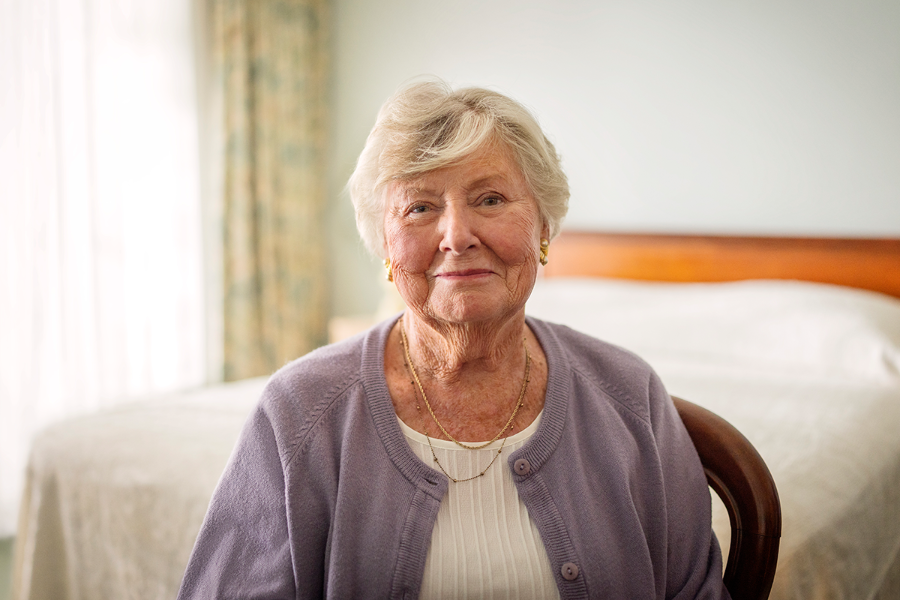
Younger-onset Alzheimer's, also called early-onset Alzheimer's, refers to Alzheimer's disease that develops in people under 65. Within this category, there are two distinct groups.The first is familial Alzheimer's disease, which is caused by rare genetic mutations and tends to run directly in families. It can produce symptoms in people in their thirties and forties and is inherited in a clearly traceable pattern. It is relatively rare, accounting for a small minority of younger-onset cases.
The second, and far more common, is sporadic younger-onset Alzheimer's, which shares the same underlying biology as late-onset Alzheimer's but develops earlier in life. The reasons why some people develop the disease earlier are not fully understood, though genetic risk factors including the APOE e4 gene variant, cardiovascular risk factors, traumatic brain injury history, and lifestyle factors all appear to play a role.
The disease itself progresses through the same stages as late-onset Alzheimer's, but the context in which it unfolds is profoundly different.
Why Younger-Onset Is Different: The Unique Challenges
Diagnosis is frequently delayed. When a 55-year-old begins forgetting things, struggling to complete familiar tasks at work, or experiencing personality changes, the people around them, including their physicians, are unlikely to think of Alzheimer's disease first. The symptoms get attributed to stress, burnout, depression, perimenopause, thyroid problems, or simply the pressures of a demanding life. The average time from symptom onset to diagnosis in younger-onset Alzheimer's is significantly longer than in older-onset cases, sometimes by several years. That delay has real consequences for planning, for accessing support, and for the person's opportunity to participate in decisions about their own care while they still have capacity to do so.Career and financial impact is immediate and severe. A 57-year-old with Alzheimer's is likely still working. The early symptoms often manifest first at work: difficulty with complex tasks, problems with organization and multistep projects, errors in judgment that would not have occurred before. The path from first symptoms to inability to work is often shorter than families expect, and the financial implications are significant. Medicare eligibility typically begins at 65, which means a person diagnosed at 55 faces a decade of private insurance coverage for an expensive disease, often at the point when their income has been reduced or eliminated by the illness itself.
Family structure is different. A person with younger-onset Alzheimer's may have a spouse who is also in the middle of their working life, children who are teenagers or young adults, aging parents who may also need care. The caregiving burden lands on a family that is typically not in the same life stage as families managing late-onset dementia. The spouse may be managing a career, children, a mortgage, and a parent with dementia simultaneously.
The person with dementia often has more insight. People with younger-onset Alzheimer's, particularly in early stages, are often more cognitively intact and more aware of what is happening to them than those diagnosed in their eighties. This can be both a gift and a profound source of suffering. The person knows what they are losing. They can articulate their fear and grief. They can participate in their own care planning if the family and medical team make space for it. And they experience the disease with a clarity that is in some ways more painful than the confusion of later stages.
Social isolation is a significant risk. Younger-onset Alzheimer's is rare enough that most support systems, peer groups, and community resources are designed for older adults. A 52-year-old with Alzheimer's does not fit the demographics of the senior center or the memory care support group. The disease is isolating enough on its own. The lack of peers who understand the specific experience of younger-onset diagnosis compounds that isolation considerably.

Early Signs Families Often Miss or Misattribute
The early symptoms of younger-onset Alzheimer's overlap significantly with stress, depression, and other conditions common in midlife. Families and physicians alike often miss the dementia picture because other explanations seem more plausible.Signs worth taking seriously include persistent difficulty remembering recent events or newly learned information that does not improve with reminders. Problems with complex work tasks, financial management, or planning that represent a clear change from previous functioning. Word-finding difficulty is noticeably worse than before. Getting lost in familiar places or on familiar routes. Changes in judgment, personality, or social behavior. Apathy, withdrawal, or increased anxiety that does not respond to treatment for depression.
The key question, as with all dementia diagnosis, is not whether any of these things have occurred but whether they represent a departure from the person's own established baseline, and whether they are progressive rather than stable.
If a family member under 65 is showing signs of cognitive decline that have persisted for several months and are affecting their ability to function at work or at home, a referral to a neurologist or geriatric specialist for cognitive evaluation is warranted regardless of age.
Our In-home Alzheimer's Care Call 251-405-6451
What the Path Forward Looks Like
A younger-onset Alzheimer's diagnosis requires planning on several fronts simultaneously, and doing it while the person still has the cognitive capacity to participate is one of the most important things a family can do.Legal and financial planning should happen as early as possible after diagnosis. This includes establishing power of attorney for finances and healthcare, reviewing or establishing a will, and working with a financial advisor to understand the insurance and income picture. The Social Security Administration offers expedited disability review for people with early-onset Alzheimer's through its Compassionate Allowances program.
Workplace planning involves understanding the person's rights under the Americans with Disabilities Act, options for accommodation, and the timeline for when work will no longer be safe or feasible.
Care planning is an ongoing process that changes as the disease progresses. In early stages, many people with younger-onset Alzheimer's can continue living at home with relatively modest support. As the disease advances, in-home care becomes increasingly important for both safety and quality of life.
Family and emotional support is not a secondary concern. The spouse and children of a person with younger-onset Alzheimer's are navigating their own grief and adjustment alongside the caregiving demands. Support groups specifically for younger-onset families, individual therapy, and peer connection with others in similar situations are not optional extras. They are clinical necessities for sustainable caregiving.
The Alzheimer's Association's Early-Stage Social Engagement programs and its national helpline at 800-272-3900 are good starting points for families seeking resources specific to younger-onset diagnoses.
How BrightStar Care of Greater Mobile/Baldwin County Supports Younger-Onset Families
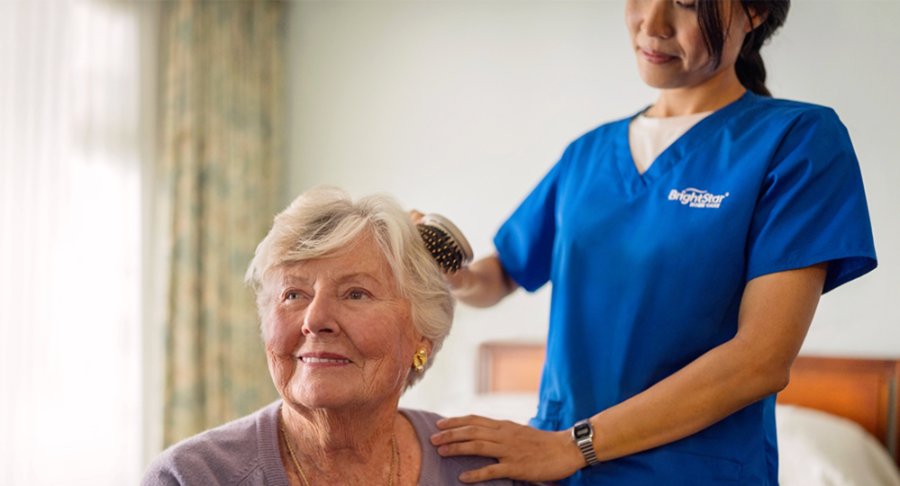
The families of people with younger-onset Alzheimer's often need in-home care support at an earlier stage of the disease than older-onset families, precisely because the care demands often fall on a spouse who is still working or on adult children who are managing their own households and careers.BrightStar Care of Greater Mobile/Baldwin County provides skilled nursing and non-medical caregiving for individuals with dementia and their families throughout Mobile, Daphne, Fairhope, Foley, Gulf Shores, Orange Beach, and surrounding Mobile and Baldwin County communities.
For younger-onset families, our services can provide the in-home support that allows a spouse to continue working, gives adult children relief from the full weight of caregiving, and maintains the person with dementia's safety and quality of life at home for as long as possible.
Skilled nursing oversight is particularly important in younger-onset cases where the person may have fewer concurrent medical issues than older patients but where the disease course is still progressive and requires clinical monitoring and care coordination.
If your family is navigating a younger-onset diagnosis and you are not sure where to start with care planning, we are glad to be a resource.
Our In-home Alzheimer's Care Call 251-405-6451
Frequently Asked Questions
Q: My spouse was diagnosed with Alzheimer's at 58. Are we entitled to Medicare coverage?
Standard Medicare eligibility begins at 65. However, individuals with Alzheimer's disease who are under 65 may qualify for Medicare through Social Security Disability Insurance after a 24-month waiting period from the date their disability was established. The Alzheimer's Association advocates for elimination of this waiting period, but it currently remains in place. In the interim, private insurance, COBRA coverage if the person has recently left employment, and Medicaid for those who qualify are the primary coverage options. A social worker or benefits counselor familiar with younger-onset dementia can help the family navigate the specific options available to them.Q: My parent was diagnosed at 61. Does that mean my siblings and I are at higher risk?
It depends on the type of younger-onset Alzheimer's. Familial Alzheimer's disease, caused by specific genetic mutations, does carry a direct inheritance risk and genetic counseling is recommended for family members. Sporadic younger-onset Alzheimer's, which is more common, does not follow the same direct inheritance pattern, though genetic risk factors like the APOE e4 variant may be present and can be tested for. Genetic counseling before testing is strongly recommended, as a positive result for a risk variant carries significant psychological, insurance, and life-planning implications. The Alzheimer's Association can provide referrals to genetic counseling resources.Q: My parent still seems relatively functional. Do they really need in-home care yet?
Possibly not yet in terms of personal care, but a care assessment is still valuable at this stage. Understanding the current level of functioning, identifying areas where support would help, connecting with local resources, and establishing a care plan that can adapt as the disease progresses are all worth doing early rather than waiting for a crisis to force the issue. Many families find that starting with lower-intensity support, companionship, transportation, meal preparation, and household help, creates a caregiving infrastructure that can scale as needs increase without requiring an abrupt transition later.BrightStar Care of Greater Mobile/Baldwin County provides skilled nursing and non-medical home care services for seniors and adults throughout Mobile, Daphne, Fairhope, Foley, Gulf Shores, Orange Beach, and surrounding Mobile and Baldwin County communities. To speak with a care coordinator about dementia care support for your family this September, contact our office today.
Contact Us for a Free Consultation:
- Phone: 251-405-6451
- Address: 8531 Spanish Fort Blvd Building 1, Spanish Fort, AL 36527
- Visit Us Online: BrightStar Care of Greater Mobile / Baldwin County