
There is a moment that many families in Henderson, Boulder City, and the surrounding communities know well, even if they've never put it into words. It's the moment when caring for a loved one with dementia stops being about reminders and routines and starts being about safety.
At some point in late-stage dementia, the question is not whether your loved one needs more support. The question is whether home is still possible, and whether it is still safe.
For many families, the answer is yes, but only with the right care in place.
For families at home, this means the daily reality can include nighttime wandering, incontinence management, swallowing difficulties at every meal, and a person who can no longer initiate their own daily tasks. Verbal communication is often reduced, and the loved one needs not just companionship, but also skilled clinical oversight.
And the toll on family caregivers is real. According to the 2026 Alzheimer's Disease Facts and Figures report, more than 12 million Americans provide unpaid care for people with Alzheimer's or other dementias, and 59% of dementia caregivers report high to very high emotional stress. Families handling this alone are at serious risk of burnout, and their loved one is at risk of declining faster than necessary.
BrightStar Care of Henderson provides RN-supervised care for late-stage dementia that includes:
There is no universal answer. But research and experience consistently show what can happen when someone with dementia loses their home, familiar objects, and the smells and sounds they know. The disruption of a move can accelerate confusion and distress, particularly in the late stage.
For many people, staying home with the right support is not just a preference. It's the reason they remain themselves for longer. Home is where the familiar walls, the light through a certain window, and the smell of a family recipe still reach a person whose verbal world has gone quiet. Even during late-stage dementia, some core of the person's self often remains, and connection is still possible through touch, sound, sight, taste, and smell.
That said, this decision is still deeply personal. What matters most is that your loved one receives the level of care they need, wherever that care takes place.
Summerlin groups meet at Golden Hearts Senior Care (9320 Sun City Blvd., Ste. 103) on the 2nd Wednesday at 11:00 a.m., and at Desert Vista Community Center (10360 Sun City Blvd.) on the 1st Wednesday at 10:00 a.m.
Henderson support groups meet at the Women's Care Center Green Valley (2651 Paseo Verde, Ste. 180) on the 4th Wednesday at 4:30 p.m., and at New Song Church (1291 Cornet St.) on the 2nd and 4th Monday at 10:00 a.m.
The Association also operates a free 24/7 Helpline at (800) 272-3900, offering confidential emotional support, crisis assistance, and local referrals in over 200 languages.
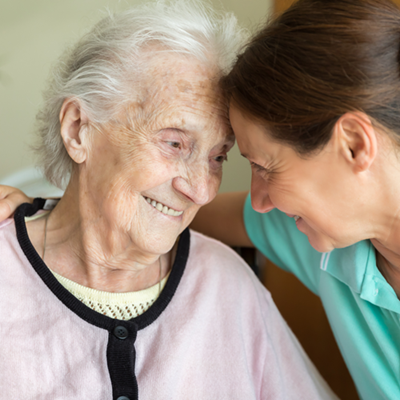
Late-stage dementia typically begins when a person loses the ability to respond to their environment, carry on a conversation, or control movement. Signs include needing help with all activities of daily living, losing the ability to sit or hold their head up without support, difficulty swallowing, and becoming largely nonverbal. A physician can confirm the stage, but families often recognize the shift when the level of care needed becomes constant rather than periodic.
Q: Can hospice and in-home care work together during late-stage dementia?
Yes. Hospice focuses on comfort, pain management, and emotional support for the person and family, while our in-home skilled nursing handles the day-to-day care and household needs that hospice typically does not cover around-the-clock. Many Henderson families use both services simultaneously so that clinical care and hands-on daily support are each covered thoroughly.
Q: How can I communicate with a loved one who can no longer speak?
Even when verbal communication fades, connection is still possible. Gentle touch, familiar music, a calm tone of voice, and favorite scents or textures can reach a person in the late stage. Maintain eye contact, speak slowly, and narrate what you are doing before and during personal care. Many families find that reading aloud, playing music from their loved one's younger years, or simply holding their hand provides comfort to both the person and the caregiver.
BrightStar Care of Henderson serves families across Henderson, Anthem, Boulder City, and the surrounding communities with in-home caregiving, skilled nursing, and 24/7 care. Every plan is supervised by a registered nurse and built around the individual, not a template.
To start a care conversation, call BrightStar Care of Henderson at (702) 982-2273 to speak with a care specialist about how our team can make home safe and comforting for your loved one with late-stage dementia.
At some point in late-stage dementia, the question is not whether your loved one needs more support. The question is whether home is still possible, and whether it is still safe.
For many families, the answer is yes, but only with the right care in place.
What Late-Stage Dementia Actually Looks Like
Late-stage dementia changes the equation significantly. A person with late-stage Alzheimer's typically has difficulty with daily activities like:- Eating and swallowing
- Walking, eventually losing the ability to walk entirely
- Personal care, including bathing, grooming, and toileting
- Maintaining health, due to vulnerability to infections, especially pneumonia
For families at home, this means the daily reality can include nighttime wandering, incontinence management, swallowing difficulties at every meal, and a person who can no longer initiate their own daily tasks. Verbal communication is often reduced, and the loved one needs not just companionship, but also skilled clinical oversight.
And the toll on family caregivers is real. According to the 2026 Alzheimer's Disease Facts and Figures report, more than 12 million Americans provide unpaid care for people with Alzheimer's or other dementias, and 59% of dementia caregivers report high to very high emotional stress. Families handling this alone are at serious risk of burnout, and their loved one is at risk of declining faster than necessary.
How Structured, RN-Supervised Home Care Works
Late-stage dementia care at home requires more than a compassionate presence. It requires structure, clinical oversight, and the flexibility to adapt when the situation changes, which it will.BrightStar Care of Henderson provides RN-supervised care for late-stage dementia that includes:
- Personal care assistance: Dignified help with bathing, dressing, grooming, and incontinence management, delivered by trained caregivers who understand the physical and emotional sensitivity these tasks require.
- Overnight and 24/7 coverage: A caregiver present throughout the night, available without being intrusive. For families who have been sleeping with one eye open, this changes everything.
- Fall prevention protocols: Environmental strategies and supervision routines that reduce wandering and fall risk without restraint.
- Pressure injury prevention: Proactive skin care, repositioning, and attention to areas at risk help prevent pressure sores and protect skin integrity as mobility declines.
- Safer mealtimes: For clients with swallowing difficulties, our nurses coordinate with the family and physicians to reduce aspiration risk.
The Real Question: Home or Memory Care?
Families ask our team all the time: is it better to keep our loved one home, or move them to a memory care facility?There is no universal answer. But research and experience consistently show what can happen when someone with dementia loses their home, familiar objects, and the smells and sounds they know. The disruption of a move can accelerate confusion and distress, particularly in the late stage.
For many people, staying home with the right support is not just a preference. It's the reason they remain themselves for longer. Home is where the familiar walls, the light through a certain window, and the smell of a family recipe still reach a person whose verbal world has gone quiet. Even during late-stage dementia, some core of the person's self often remains, and connection is still possible through touch, sound, sight, taste, and smell.
That said, this decision is still deeply personal. What matters most is that your loved one receives the level of care they need, wherever that care takes place.
Local Resources for Families in Henderson
As a family caregiver, you don’t have to navigate late-stage dementia alone. Southern Nevada has several organizations that provide free education, support, and guidance for families and caregivers:Alzheimer's Association Nevada Chapter
The Nevada chapter runs free caregiver support groups throughout the Las Vegas Valley. Henderson families can attend at the Centennial Hills Library (6711 N. Buffalo Dr.) on the 1st and 3rd Mondays at 1:00 p.m.Summerlin groups meet at Golden Hearts Senior Care (9320 Sun City Blvd., Ste. 103) on the 2nd Wednesday at 11:00 a.m., and at Desert Vista Community Center (10360 Sun City Blvd.) on the 1st Wednesday at 10:00 a.m.
Henderson support groups meet at the Women's Care Center Green Valley (2651 Paseo Verde, Ste. 180) on the 4th Wednesday at 4:30 p.m., and at New Song Church (1291 Cornet St.) on the 2nd and 4th Monday at 10:00 a.m.
The Association also operates a free 24/7 Helpline at (800) 272-3900, offering confidential emotional support, crisis assistance, and local referrals in over 200 languages.
Cleveland Clinic Lou Ruvo Center for Brain Health
Located at 888 W. Bonneville Ave. in Las Vegas, the Lou Ruvo Center specializes in neurological conditions including Alzheimer's, dementia, and Parkinson's. It is also home to the Nevada Exploratory Alzheimer's Disease Research Center, the first NIA-funded ADRC in the state. Reach them at (702) 483-6000.
Frequently Asked Questions About Late-Stage Dementia Care
Q: How do I know when my loved one has entered the late stage of dementia?Late-stage dementia typically begins when a person loses the ability to respond to their environment, carry on a conversation, or control movement. Signs include needing help with all activities of daily living, losing the ability to sit or hold their head up without support, difficulty swallowing, and becoming largely nonverbal. A physician can confirm the stage, but families often recognize the shift when the level of care needed becomes constant rather than periodic.
Q: Can hospice and in-home care work together during late-stage dementia?
Yes. Hospice focuses on comfort, pain management, and emotional support for the person and family, while our in-home skilled nursing handles the day-to-day care and household needs that hospice typically does not cover around-the-clock. Many Henderson families use both services simultaneously so that clinical care and hands-on daily support are each covered thoroughly.
Q: How can I communicate with a loved one who can no longer speak?
Even when verbal communication fades, connection is still possible. Gentle touch, familiar music, a calm tone of voice, and favorite scents or textures can reach a person in the late stage. Maintain eye contact, speak slowly, and narrate what you are doing before and during personal care. Many families find that reading aloud, playing music from their loved one's younger years, or simply holding their hand provides comfort to both the person and the caregiver.
A Safer Way to Stay Home
Late-stage dementia care is not something any family should try to manage without support. The physical demands, the emotional weight, and the clinical complexity of this stage require a team.BrightStar Care of Henderson serves families across Henderson, Anthem, Boulder City, and the surrounding communities with in-home caregiving, skilled nursing, and 24/7 care. Every plan is supervised by a registered nurse and built around the individual, not a template.
To start a care conversation, call BrightStar Care of Henderson at (702) 982-2273 to speak with a care specialist about how our team can make home safe and comforting for your loved one with late-stage dementia.
References
- Alzheimer's Association — Late-Stage Caregiving — Overview of late-stage symptoms, care needs, and caregiver guidance.
- Alzheimer's Association — Wandering — Wandering prevalence and safety strategies.
- 2026 Alzheimer's Disease Facts and Figures (PMC) — National prevalence, caregiver burden, and clinical progression data.
- Navigating Late-Stage Dementia: A Perspective from the Alzheimer's Association (PMC, 2024) — Clinical overview of late-stage care considerations including nutrition, swallowing, and advance directives.
- Alzheimer's Association Nevada Chapter — Support Groups — Southern Nevada support group locations and schedules.
- Cleveland Clinic Lou Ruvo Center for Brain Health — Las Vegas-based neurological care and dementia research center.
- Nevada Care Connection — Statewide caregiver and senior services resource hub.