
October is Spina Bifida Awareness Month. For families in Madison, Middleton, Sun Prairie, Fitchburg, Verona, and throughout Dane County who are supporting someone with Spina Bifida, awareness means something concrete: understanding what daily support actually looks like, why consistency matters, and how professional in-home care fits into the picture at every stage of life.
Spina Bifida is a lifelong condition. The medical management it requires — the catheterization schedules, the bowel programs, the skin inspections, the mobility support, the specialist coordination — does not pause, does not simplify, and does not become less demanding as a person moves through adulthood. What changes over time is the capacity of the informal support network around that person: families age, circumstances shift, and the daily caregiving that was manageable at one life stage becomes more than the people providing it can sustain alone.
Personal in-home care is not a last resort for people with Spina Bifida. It is a proactive, practical investment in independence, safety, and quality of life. This post explains what it involves, why it matters, and what families in Madison should look for when building a home care support team.
Call Us 608-441-8620 Visit Our Website
Personal in-home care — also called non-medical or companion caregiving — covers the daily living support that allows a person to function safely and comfortably at home. For most people, this sounds like help with bathing, dressing, and meals. For someone with Spina Bifida, it means something more specific, more structured, and more clinically adjacent than that general description suggests.
The daily support needs of a person with myelomeningocele, the most significant form of Spina Bifida, are not interchangeable with the support needs of a senior who has become frail or a person recovering from surgery. They are the needs of someone managing a complex, lifelong condition with its own specific routines, its own equipment, its own risks, and its own deeply personal preferences about how that management happens.
A caregiver who does not understand Spina Bifida cannot provide effective personal care for someone with the condition. This is not a judgment on the caregiver's capability. It is simply a recognition that the condition requires knowledge — of neurogenic bladder and bowel, of pressure injury risk and how to monitor for it, of mobility equipment and transfer technique, of the specific daily routines the person has developed over a lifetime — that is not general knowledge. It has to be learned, and ideally it has to be learned from someone with experience caring for this population.
Personal hygiene and bathing. Bathing for a person with Spina Bifida requires attention to skin that cannot feel heat, pressure, or friction the way intact sensation allows. Water temperature that seems comfortable to the caregiver may be damaging to skin with impaired sensation. Friction during drying, particularly in skin folds and areas in contact with orthotics or positioning equipment, can cause abrasion that leads to breakdown. A caregiver who understands these risks approaches bathing differently — more carefully, more attentively — than one who does not.
Accessible bathrooms matter. In Madison's housing stock, which includes a mix of older homes and newer accessible construction, the bathroom setup varies enormously. A caregiver who can adapt to the environment — a roll-in shower, a tub transfer bench, a handheld showerhead — and who assists with technique rather than simply completing the task while the person is passive, supports the person's dignity and their continued involvement in their own care.
Dressing and orthotic management. For ambulatory individuals who use leg braces, the process of donning and doffing orthotics is a daily task that requires correct technique to avoid the skin pressure points that lead to breakdown. Caregivers need to know how to check that orthotics are correctly fitted before the person wears them, how to inspect the skin after removal, and when to flag a fit concern to the supervising nurse or treating clinician.
For wheelchair users, dressing requires transfer skills and positioning knowledge that are specific to the individual's equipment and physical presentation. What works for one person does not work for another, and a caregiver who takes the time to learn the specific approach that works for the person they are supporting — rather than applying a generic method — provides meaningfully better care.
Transfers and mobility assistance. Safe transfers are one of the highest-stakes personal care tasks for people with Spina Bifida. An incorrect transfer technique creates fall risk for the person and injury risk for the caregiver. Transfers from bed to wheelchair, from wheelchair to toilet or shower chair, from wheelchair to car — each has its own technique, its own equipment requirements, and its own potential for error if the caregiver is not properly trained.
For people who are ambulatory with assistive devices, mobility assistance involves steadying support, assistance with uneven terrain or stairs, and the awareness to recognize when fatigue is affecting gait stability in ways that increase fall risk. The middle of a Wisconsin winter, with ice and snow on Madison sidewalks and parking lots, creates mobility challenges for ambulatory people with Spina Bifida that require a caregiver who is attentive and appropriately positioned.
Bowel program assistance. The bowel program is a structured, scheduled routine that is the cornerstone of neurogenic bowel management. It is also one of the most intimate personal care tasks a caregiver assists with, and the one that requires the most specific knowledge of the individual's program, timing, and technique.
A caregiver who understands the purpose of the bowel program — preventing the unplanned episodes and complications that unmanaged neurogenic bowel produces — approaches it with appropriate seriousness. They know the schedule and adhere to it. They know the specific steps the individual's program involves. They recognize and report changes in bowel function that might signal a change in neurological status or a need to adjust the program. And they approach this intimate task with the dignity and matter-of-fact professionalism that the person receiving care deserves.
Skin inspection and pressure injury monitoring. Daily skin inspection is a personal care task with direct clinical consequences. For people with reduced or absent sensation below the level of their spinal lesion, a pressure injury can develop from stage one to a serious wound in a matter of days without ever producing pain as a warning signal.
A caregiver who performs a thorough skin inspection at each visit — checking the sacrum, coccyx, heels, hips, and any area in contact with equipment or positioning surfaces — and who knows what to look for and how to report it is providing clinical value that goes beyond what most people think of as personal care. The skin inspection is not a box to be checked. It is a safety function.
Meal preparation and nutrition support. Nutrition matters for everyone with a chronic condition, and for people with Spina Bifida it has specific relevance: adequate hydration supports kidney health and bladder management, fiber intake affects bowel function, and weight management becomes increasingly important as mobility limitations make maintaining a healthy weight more challenging with age.
A caregiver who prepares meals with these considerations in mind, who ensures that the person is adequately hydrated throughout the day, and who supports the nutritional aspects of the management program as deliberately as the physical care tasks is providing support that the clinical team will value.
Household support and daily structure. For many adults with Spina Bifida, household tasks — laundry, cleaning, grocery shopping, managing medications and supplies — represent a significant physical and logistical demand that, added to the demands of daily condition management, creates a cumulative burden that affects fatigue, mood, and functional capacity. A caregiver who takes on appropriate household tasks frees the person's energy for the activities that matter most to them.
Daily structure also matters. The routines that effective Spina Bifida management requires are most sustainable when they are embedded in a consistent daily schedule rather than approached as a series of separate decisions. A caregiver who shows up at a consistent time, who follows a predictable routine, and who brings reliability to the caregiving relationship provides something that has genuine therapeutic value beyond any individual task.
For people with Spina Bifida, caregiver consistency is not a preference. It is a clinical requirement.
The daily care routines for Spina Bifida are specific, detailed, and highly individual. The bowel program that works for one person is different from the program that works for another. The transfer technique that is safe for one person's equipment and physical presentation is not transferable to someone else. The skin inspection that catches early pressure injury requires knowing what this person's skin normally looks like so that a change can be recognized.
A caregiver who is new to the person cannot provide this level of individualized care from day one. It takes time, relationship, and consistent presence to develop the knowledge that makes personal care for Spina Bifida genuinely safe and effective. Every time the caregiver changes, that knowledge is lost and has to be rebuilt.
High caregiver turnover, or a rotating pool of unfamiliar caregivers, creates real risk for people with Spina Bifida. It increases the likelihood of a missed skin change, an incorrectly performed transfer, a bowel program that is slightly off in ways that compound over days, an early UTI symptom that an unfamiliar caregiver does not recognize as unusual because they do not know what usual looks like for this person.
BrightStar Care of Madison prioritizes caregiver consistency for exactly this reason. We match caregivers thoughtfully to clients, we provide thorough orientation to the individual's specific care needs and routines, and we work to maintain continuity in the caregiving relationship over time.
At BrightStar Care of Madison, every personal care client — including those receiving non-medical caregiving only — benefits from registered nurse oversight. This means a nurse develops the care plan, orients the caregiver to the client's specific needs, supervises care quality over time, and serves as the clinical point of contact when something changes or a concern arises.
For people with Spina Bifida, this oversight is particularly valuable. The line between personal care and clinical concern is thin in this population. A skin change noticed during bathing is a clinical concern that needs to reach a nurse. A change in bowel function observed during the bowel program is a clinical concern. A new complaint of upper extremity pain or fatigue is a clinical concern. A caregiver working without nursing oversight has no clear pathway for these observations to reach someone who can act on them clinically. A caregiver working under nurse oversight has that pathway built into the care structure.
Our skilled nursing team is available to provide direct clinical services — catheterization support, wound care, medication management, shunt monitoring, and specialist coordination — for clients whose needs include those clinical elements alongside personal care. For many adults with Spina Bifida, both personal care and skilled nursing services are part of the same integrated care plan.
Families in Madison sometimes reach a point where they wonder whether assisted living might be simpler than managing complex care at home. It is a fair question, and it deserves a direct answer.
For most adults with Spina Bifida, home care is the clinically and practically superior option — not because assisted living is never appropriate, but because assisted living was not designed for the specific management demands that Spina Bifida creates.
Assisted living facilities serve residents with varied and often less intensive needs. Staff rotate across multiple residents and cannot provide the level of individualized, routine-specific care that Spina Bifida requires. The catheterization schedule that must happen every three to four hours, the bowel program that depends on a precise sequence established over years, the skin inspection that requires knowing this person's baseline — these are not compatible with the staffing models of most assisted living settings.
Adults with Spina Bifida who transition to assisted living frequently experience a decline in the quality of their condition-specific management. Urinary tract infections become more frequent. Pressure injuries develop. Bowel programs that worked at home stop working in a shared facility environment where timing and privacy cannot be guaranteed.
Home care in Madison keeps the person in the environment where their routines were built, with the equipment they know, and with a caregiver who learns their system and implements it consistently. That is not simply a comfort preference. It is a clinical advantage.
The right time to consider assisted living is when the home truly cannot be made safe for the person's needs — not when the care needs become more complex. Most Dane County homes can be adapted with appropriate modifications, and most Spina Bifida care needs can be met at home by a skilled, consistent professional caregiving team.
Call Us 608-441-8620 Visit Our Website
Choosing the right home care agency for a loved one with Spina Bifida matters more than most families realize at the start of the process. The agencies that do this well are differentiated by specific things worth asking about directly.
Is a registered nurse involved in every care plan? Many Madison-area home care agencies provide non-medical personal care only. For Spina Bifida, that is not sufficient. Catheterization, wound care, skin assessment, bowel program oversight, and medication management are all skilled nursing functions. Any agency that cannot provide nursing oversight for these tasks cannot safely manage the clinical dimensions of Spina Bifida care.
What is the agency's approach to caregiver consistency? Ask the agency directly what their average caregiver tenure is and how they handle scheduling to maintain the same caregiver over time. For a person with Spina Bifida, a consistent caregiving relationship is a clinical necessity — the knowledge that builds within a consistent relationship is not replaceable by documentation. Agencies that rely on rotating pools of caregivers are not appropriate for this population.
How is the caregiver oriented to a new client with Spina Bifida? Ask specifically what training or orientation a new caregiver receives before the first visit with a Spina Bifida client. The right answer includes review of the individual's specific routines, a nurse-led introduction to the clinical considerations of the condition, and clear protocols for reporting observations. A generic home care orientation is not adequate preparation for this population.
What is the escalation pathway when something changes? Pressure injury warning signs, UTI indicators, bowel program changes, and new neurological symptoms all require a clear clinical pathway to someone who can act on them. Ask how that pathway works. A well-structured agency has a named nurse who is reachable and who is the point of contact for clinical concerns arising during caregiver visits.
The most effective home care plans for people with Spina Bifida are built collaboratively — with the person at the center, not as the subject of decisions made around them.
Adults with Spina Bifida have typically spent their entire lives developing expertise about their own bodies, their own management routines, and what works and does not work for them. A home care plan that ignores or overrides that expertise will fail. One that starts by genuinely listening to it has a meaningful chance of being both effective and sustainable.
The starting questions are practical: What time does the bowel program need to happen, and what does it involve? What is the catheterization schedule and what supplies are used? What are the transfer points in the day — bed to chair, chair to shower, chair to car — and what technique and equipment are involved? What does the daily skin inspection cover and what has been a concern in the past? What household and daily living tasks are most burdensome, and which are most important to preserve independently?
From those answers, a care plan emerges that is specific to the person rather than generic to the condition.
BrightStar Care of Madison serves clients throughout Madison, Middleton, Sun Prairie, Fitchburg, Verona, Stoughton, and surrounding Dane County communities. We would welcome the opportunity to speak with your family about what a personal care plan for Spina Bifida could look like, and what the right level and type of support might be at this stage of your loved one's life.
Call Us 608-441-8620 Visit Our Website
Starting small is usually more effective than presenting a comprehensive care plan. One or two hours of support for a specific task that has become physically demanding — grocery shopping, household cleaning — rather than intimate personal care, creates an opportunity for a relationship to develop before the more sensitive tasks are introduced. A trial period rather than an open-ended commitment reduces the sense that this is permanent. And framing the support as something that protects independence rather than replacing it — the caregiver handles what is physically costly so the person can preserve energy for what matters most to them — is often the reframe that makes acceptance possible.
BrightStar Care of Madison provides skilled nursing and non-medical home care services for individuals with Spina Bifida and their families throughout Madison, Middleton, Sun Prairie, Fitchburg, Verona, Stoughton, and surrounding Dane County communities. To speak with a care coordinator about personal in-home care for your loved one this October, contact our office today.
Spina Bifida is a lifelong condition. The medical management it requires — the catheterization schedules, the bowel programs, the skin inspections, the mobility support, the specialist coordination — does not pause, does not simplify, and does not become less demanding as a person moves through adulthood. What changes over time is the capacity of the informal support network around that person: families age, circumstances shift, and the daily caregiving that was manageable at one life stage becomes more than the people providing it can sustain alone.
Personal in-home care is not a last resort for people with Spina Bifida. It is a proactive, practical investment in independence, safety, and quality of life. This post explains what it involves, why it matters, and what families in Madison should look for when building a home care support team.
Call Us 608-441-8620 Visit Our Website
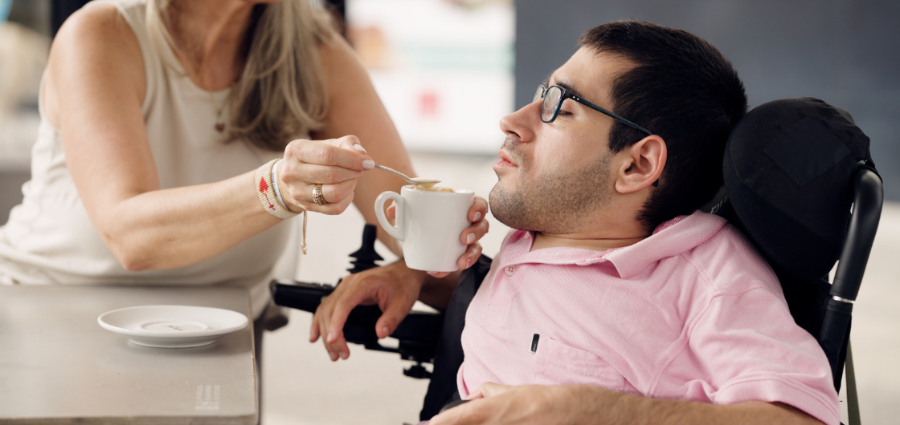
What Personal In-Home Care Means for Someone With Spina Bifida
Personal in-home care — also called non-medical or companion caregiving — covers the daily living support that allows a person to function safely and comfortably at home. For most people, this sounds like help with bathing, dressing, and meals. For someone with Spina Bifida, it means something more specific, more structured, and more clinically adjacent than that general description suggests.The daily support needs of a person with myelomeningocele, the most significant form of Spina Bifida, are not interchangeable with the support needs of a senior who has become frail or a person recovering from surgery. They are the needs of someone managing a complex, lifelong condition with its own specific routines, its own equipment, its own risks, and its own deeply personal preferences about how that management happens.
A caregiver who does not understand Spina Bifida cannot provide effective personal care for someone with the condition. This is not a judgment on the caregiver's capability. It is simply a recognition that the condition requires knowledge — of neurogenic bladder and bowel, of pressure injury risk and how to monitor for it, of mobility equipment and transfer technique, of the specific daily routines the person has developed over a lifetime — that is not general knowledge. It has to be learned, and ideally it has to be learned from someone with experience caring for this population.
The Core Personal Care Tasks That Matter Most
Personal hygiene and bathing. Bathing for a person with Spina Bifida requires attention to skin that cannot feel heat, pressure, or friction the way intact sensation allows. Water temperature that seems comfortable to the caregiver may be damaging to skin with impaired sensation. Friction during drying, particularly in skin folds and areas in contact with orthotics or positioning equipment, can cause abrasion that leads to breakdown. A caregiver who understands these risks approaches bathing differently — more carefully, more attentively — than one who does not.Accessible bathrooms matter. In Madison's housing stock, which includes a mix of older homes and newer accessible construction, the bathroom setup varies enormously. A caregiver who can adapt to the environment — a roll-in shower, a tub transfer bench, a handheld showerhead — and who assists with technique rather than simply completing the task while the person is passive, supports the person's dignity and their continued involvement in their own care.
Dressing and orthotic management. For ambulatory individuals who use leg braces, the process of donning and doffing orthotics is a daily task that requires correct technique to avoid the skin pressure points that lead to breakdown. Caregivers need to know how to check that orthotics are correctly fitted before the person wears them, how to inspect the skin after removal, and when to flag a fit concern to the supervising nurse or treating clinician.
For wheelchair users, dressing requires transfer skills and positioning knowledge that are specific to the individual's equipment and physical presentation. What works for one person does not work for another, and a caregiver who takes the time to learn the specific approach that works for the person they are supporting — rather than applying a generic method — provides meaningfully better care.
Transfers and mobility assistance. Safe transfers are one of the highest-stakes personal care tasks for people with Spina Bifida. An incorrect transfer technique creates fall risk for the person and injury risk for the caregiver. Transfers from bed to wheelchair, from wheelchair to toilet or shower chair, from wheelchair to car — each has its own technique, its own equipment requirements, and its own potential for error if the caregiver is not properly trained.
For people who are ambulatory with assistive devices, mobility assistance involves steadying support, assistance with uneven terrain or stairs, and the awareness to recognize when fatigue is affecting gait stability in ways that increase fall risk. The middle of a Wisconsin winter, with ice and snow on Madison sidewalks and parking lots, creates mobility challenges for ambulatory people with Spina Bifida that require a caregiver who is attentive and appropriately positioned.
Bowel program assistance. The bowel program is a structured, scheduled routine that is the cornerstone of neurogenic bowel management. It is also one of the most intimate personal care tasks a caregiver assists with, and the one that requires the most specific knowledge of the individual's program, timing, and technique.
A caregiver who understands the purpose of the bowel program — preventing the unplanned episodes and complications that unmanaged neurogenic bowel produces — approaches it with appropriate seriousness. They know the schedule and adhere to it. They know the specific steps the individual's program involves. They recognize and report changes in bowel function that might signal a change in neurological status or a need to adjust the program. And they approach this intimate task with the dignity and matter-of-fact professionalism that the person receiving care deserves.
Skin inspection and pressure injury monitoring. Daily skin inspection is a personal care task with direct clinical consequences. For people with reduced or absent sensation below the level of their spinal lesion, a pressure injury can develop from stage one to a serious wound in a matter of days without ever producing pain as a warning signal.
A caregiver who performs a thorough skin inspection at each visit — checking the sacrum, coccyx, heels, hips, and any area in contact with equipment or positioning surfaces — and who knows what to look for and how to report it is providing clinical value that goes beyond what most people think of as personal care. The skin inspection is not a box to be checked. It is a safety function.
Meal preparation and nutrition support. Nutrition matters for everyone with a chronic condition, and for people with Spina Bifida it has specific relevance: adequate hydration supports kidney health and bladder management, fiber intake affects bowel function, and weight management becomes increasingly important as mobility limitations make maintaining a healthy weight more challenging with age.
A caregiver who prepares meals with these considerations in mind, who ensures that the person is adequately hydrated throughout the day, and who supports the nutritional aspects of the management program as deliberately as the physical care tasks is providing support that the clinical team will value.
Household support and daily structure. For many adults with Spina Bifida, household tasks — laundry, cleaning, grocery shopping, managing medications and supplies — represent a significant physical and logistical demand that, added to the demands of daily condition management, creates a cumulative burden that affects fatigue, mood, and functional capacity. A caregiver who takes on appropriate household tasks frees the person's energy for the activities that matter most to them.
Daily structure also matters. The routines that effective Spina Bifida management requires are most sustainable when they are embedded in a consistent daily schedule rather than approached as a series of separate decisions. A caregiver who shows up at a consistent time, who follows a predictable routine, and who brings reliability to the caregiving relationship provides something that has genuine therapeutic value beyond any individual task.
Call Us 608-441-8620 Visit Our Website

Why Caregiver Consistency Is Not Optional
For people with Spina Bifida, caregiver consistency is not a preference. It is a clinical requirement.The daily care routines for Spina Bifida are specific, detailed, and highly individual. The bowel program that works for one person is different from the program that works for another. The transfer technique that is safe for one person's equipment and physical presentation is not transferable to someone else. The skin inspection that catches early pressure injury requires knowing what this person's skin normally looks like so that a change can be recognized.
A caregiver who is new to the person cannot provide this level of individualized care from day one. It takes time, relationship, and consistent presence to develop the knowledge that makes personal care for Spina Bifida genuinely safe and effective. Every time the caregiver changes, that knowledge is lost and has to be rebuilt.
High caregiver turnover, or a rotating pool of unfamiliar caregivers, creates real risk for people with Spina Bifida. It increases the likelihood of a missed skin change, an incorrectly performed transfer, a bowel program that is slightly off in ways that compound over days, an early UTI symptom that an unfamiliar caregiver does not recognize as unusual because they do not know what usual looks like for this person.
BrightStar Care of Madison prioritizes caregiver consistency for exactly this reason. We match caregivers thoughtfully to clients, we provide thorough orientation to the individual's specific care needs and routines, and we work to maintain continuity in the caregiving relationship over time.
The Role of Nurse Oversight in Personal Care for Spina Bifida
At BrightStar Care of Madison, every personal care client — including those receiving non-medical caregiving only — benefits from registered nurse oversight. This means a nurse develops the care plan, orients the caregiver to the client's specific needs, supervises care quality over time, and serves as the clinical point of contact when something changes or a concern arises.For people with Spina Bifida, this oversight is particularly valuable. The line between personal care and clinical concern is thin in this population. A skin change noticed during bathing is a clinical concern that needs to reach a nurse. A change in bowel function observed during the bowel program is a clinical concern. A new complaint of upper extremity pain or fatigue is a clinical concern. A caregiver working without nursing oversight has no clear pathway for these observations to reach someone who can act on them clinically. A caregiver working under nurse oversight has that pathway built into the care structure.
Our skilled nursing team is available to provide direct clinical services — catheterization support, wound care, medication management, shunt monitoring, and specialist coordination — for clients whose needs include those clinical elements alongside personal care. For many adults with Spina Bifida, both personal care and skilled nursing services are part of the same integrated care plan.
Home Care vs. Assisted Living for Adults With Spina Bifida
Families in Madison sometimes reach a point where they wonder whether assisted living might be simpler than managing complex care at home. It is a fair question, and it deserves a direct answer.For most adults with Spina Bifida, home care is the clinically and practically superior option — not because assisted living is never appropriate, but because assisted living was not designed for the specific management demands that Spina Bifida creates.
Assisted living facilities serve residents with varied and often less intensive needs. Staff rotate across multiple residents and cannot provide the level of individualized, routine-specific care that Spina Bifida requires. The catheterization schedule that must happen every three to four hours, the bowel program that depends on a precise sequence established over years, the skin inspection that requires knowing this person's baseline — these are not compatible with the staffing models of most assisted living settings.
Adults with Spina Bifida who transition to assisted living frequently experience a decline in the quality of their condition-specific management. Urinary tract infections become more frequent. Pressure injuries develop. Bowel programs that worked at home stop working in a shared facility environment where timing and privacy cannot be guaranteed.
Home care in Madison keeps the person in the environment where their routines were built, with the equipment they know, and with a caregiver who learns their system and implements it consistently. That is not simply a comfort preference. It is a clinical advantage.
The right time to consider assisted living is when the home truly cannot be made safe for the person's needs — not when the care needs become more complex. Most Dane County homes can be adapted with appropriate modifications, and most Spina Bifida care needs can be met at home by a skilled, consistent professional caregiving team.
Call Us 608-441-8620 Visit Our Website
How to Choose a Home Care Agency for Spina Bifida in Madison
Choosing the right home care agency for a loved one with Spina Bifida matters more than most families realize at the start of the process. The agencies that do this well are differentiated by specific things worth asking about directly.Is a registered nurse involved in every care plan? Many Madison-area home care agencies provide non-medical personal care only. For Spina Bifida, that is not sufficient. Catheterization, wound care, skin assessment, bowel program oversight, and medication management are all skilled nursing functions. Any agency that cannot provide nursing oversight for these tasks cannot safely manage the clinical dimensions of Spina Bifida care.
What is the agency's approach to caregiver consistency? Ask the agency directly what their average caregiver tenure is and how they handle scheduling to maintain the same caregiver over time. For a person with Spina Bifida, a consistent caregiving relationship is a clinical necessity — the knowledge that builds within a consistent relationship is not replaceable by documentation. Agencies that rely on rotating pools of caregivers are not appropriate for this population.
How is the caregiver oriented to a new client with Spina Bifida? Ask specifically what training or orientation a new caregiver receives before the first visit with a Spina Bifida client. The right answer includes review of the individual's specific routines, a nurse-led introduction to the clinical considerations of the condition, and clear protocols for reporting observations. A generic home care orientation is not adequate preparation for this population.
What is the escalation pathway when something changes? Pressure injury warning signs, UTI indicators, bowel program changes, and new neurological symptoms all require a clear clinical pathway to someone who can act on them. Ask how that pathway works. A well-structured agency has a named nurse who is reachable and who is the point of contact for clinical concerns arising during caregiver visits.

Building a Home Care Plan That Actually Works
The most effective home care plans for people with Spina Bifida are built collaboratively — with the person at the center, not as the subject of decisions made around them.Adults with Spina Bifida have typically spent their entire lives developing expertise about their own bodies, their own management routines, and what works and does not work for them. A home care plan that ignores or overrides that expertise will fail. One that starts by genuinely listening to it has a meaningful chance of being both effective and sustainable.
The starting questions are practical: What time does the bowel program need to happen, and what does it involve? What is the catheterization schedule and what supplies are used? What are the transfer points in the day — bed to chair, chair to shower, chair to car — and what technique and equipment are involved? What does the daily skin inspection cover and what has been a concern in the past? What household and daily living tasks are most burdensome, and which are most important to preserve independently?
From those answers, a care plan emerges that is specific to the person rather than generic to the condition.
BrightStar Care of Madison serves clients throughout Madison, Middleton, Sun Prairie, Fitchburg, Verona, Stoughton, and surrounding Dane County communities. We would welcome the opportunity to speak with your family about what a personal care plan for Spina Bifida could look like, and what the right level and type of support might be at this stage of your loved one's life.
Call Us 608-441-8620 Visit Our Website
Frequently Asked Questions
Q: My family member with Spina Bifida is resistant to accepting help from a professional caregiver. How do we approach this?
Resistance to professional caregiving is extremely common in adults with Spina Bifida, and it is worth understanding where it comes from before trying to overcome it. Independence is not just a practical preference for most adults with lifelong disability — it is a hard-won identity built across a lifetime of navigating a world that often underestimated them. Accepting help from a stranger can feel like a concession of that identity, a step toward the dependence they have worked their whole lives to avoid.Starting small is usually more effective than presenting a comprehensive care plan. One or two hours of support for a specific task that has become physically demanding — grocery shopping, household cleaning — rather than intimate personal care, creates an opportunity for a relationship to develop before the more sensitive tasks are introduced. A trial period rather than an open-ended commitment reduces the sense that this is permanent. And framing the support as something that protects independence rather than replacing it — the caregiver handles what is physically costly so the person can preserve energy for what matters most to them — is often the reframe that makes acceptance possible.
Q: How do we find a caregiver who actually understands Spina Bifida, rather than one who has to be taught everything from scratch?
This is the right question to ask, and it is worth asking it directly of any agency you are considering. At BrightStar Care of Madison, our registered nurse conducts a thorough assessment before care begins, develops an individualized care plan that reflects the specific needs and routines of the person with Spina Bifida, and orients the caregiver to that plan before the first visit. The caregiver does not need to arrive with Spina Bifida expertise — they need to arrive with the training, attentiveness, and genuine care that allows them to learn and implement the individual's specific program correctly. The nurse oversight structure ensures that questions and concerns have a clear clinical pathway.Q: At what point should we consider adding skilled nursing services alongside personal care?
For many adults with Spina Bifida, skilled nursing services alongside personal care is the right starting point rather than a later addition. Catheterization support, skin assessment, wound care, shunt monitoring, and medication management are all skilled nursing functions that personal care aides are not authorized or trained to provide. If your family member requires assistance with catheterization, has had a pressure injury or is at high risk for one, has had recent changes in bladder or bowel function, or takes medications that require clinical monitoring, a conversation about adding skilled nursing to the care plan is worthwhile. Contact our Madison office and we can help your family assess what combination of services would best meet your loved one's needs.BrightStar Care of Madison provides skilled nursing and non-medical home care services for individuals with Spina Bifida and their families throughout Madison, Middleton, Sun Prairie, Fitchburg, Verona, Stoughton, and surrounding Dane County communities. To speak with a care coordinator about personal in-home care for your loved one this October, contact our office today.
Contact BrightStar Care of Madison:
- Phone: 608-441-8620
- Address: 3240 University Ave, Suite 3A, Madison, WI 53705
- Visit Us Online: BrightStar Care of Madison