
November is a time when we think about veterans more deliberately, but for the families in Evanston, Northbrook, Glenview, and across the North Shore who are caring for a veteran with PTSD every single day, there is no designated month. It just is life. And for many of these families, the veteran they're caring for has been managing PTSD quietly for 40 or 50 years, sometimes without ever receiving a formal diagnosis.
That's the reality for a significant number of Vietnam-era and Korean War veterans. PTSD as a clinical framework wasn't widely applied until the 1980s. Many of the men and women who came home from those wars were told to move on, or learned quickly that no one wanted to hear it, and they did what they had to do. They built careers. They raised families. They kept it together. Decades later, those same veterans are aging, facing health challenges, and often finding that the coping strategies they used for 50 years aren't working as well anymore.
If your family is here, this post is for you.
Call 847-510-5750 Our Website
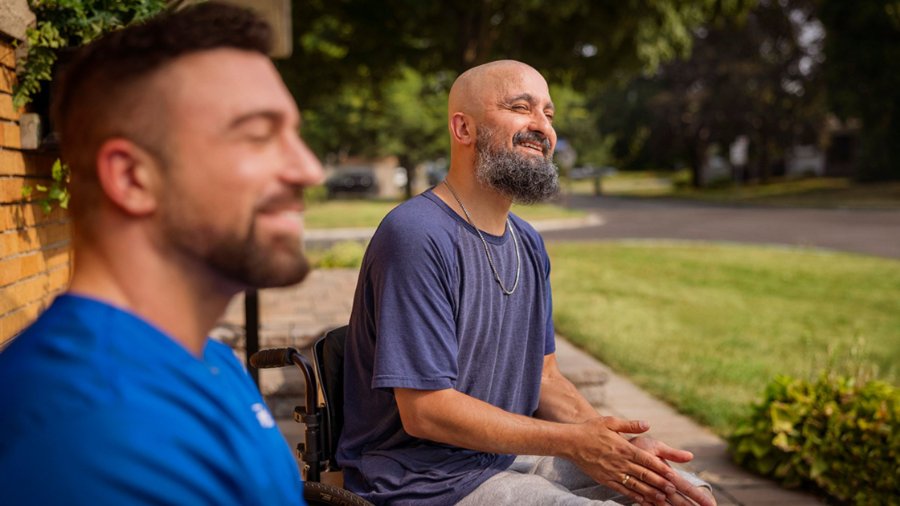
Hypervigilance matters enormously in a caregiving context because it means that a stranger in the home isn't just awkward or inconvenient. It can feel like a genuine threat. The sound of someone entering a room, an unfamiliar voice, a schedule that changes without warning: these are the kinds of things that can spike a veteran's stress response in ways that look, from the outside, like anger or stubbornness.
Sleep disruption adds another layer. Nighttime agitation, nightmares, and irregular sleep patterns are common, and a caregiver or family member who is up through the night eventually hits a wall. The exhaustion that builds around this isn't just physical.
Avoidance, meanwhile, tends to compound over time. Missed medical appointments, reluctance to let people in, resistance to anything that feels like loss of control: these are symptoms, not personality defects. But they do complicate care, and when avoidance intersects with cognitive decline or chronic pain (both common in this age group), the picture gets more complex fast.
For many veterans with PTSD, the idea of a stranger coming into their home to help them is not just uncomfortable. It can feel like a direct challenge to everything they've held onto: their autonomy, their privacy, their sense of being in control of their own environment.
This matters. Families who try to introduce home care the way they might for a parent without PTSD, with a quick introduction and a start date, often hit resistance that looks like refusal. And it might be refusal. But underneath it is usually something more specific: the veteran doesn't know this person, they didn't choose them, and they don't feel safe yet.
The most effective approach is slow. A first visit that's low-stakes and brief. Framing that gives the veteran agency wherever possible: "I want you to meet someone, and you can tell me what you think." Consistency from the start, because every time you change caregivers or show up with someone new, you're starting the trust-building process over from zero.
If the veteran has a VA mental health provider or therapist, looping them in before home care starts can help. They may be able to prepare the veteran for what to expect, or at least flag what to avoid.
Veterans with PTSD are frequently managing complex medication regimens. Sleep medications, antidepressants, antipsychotics, medications for chronic pain or cardiac conditions: it's not unusual for a veteran in this age group to be on eight or ten medications, and the interactions matter. A skilled nurse can do medication reconciliation, monitor for side effects that the veteran might not report on their own, and stay in communication with the prescribing team.
For veterans who are connected to the VA, that coordination often means liaising with Edward Hines Jr. VA Hospital in Hines, IL, or Jesse Brown VA Medical Center in Chicago, depending on where the veteran receives care. Skilled nursing that communicates with a VA mental health team, rather than operating in parallel to it, is a meaningfully better care experience.
Safety monitoring is another core function. For veterans with PTSD who also have cognitive changes, or who are managing chronic pain with opioids or other medications, the combination of impaired judgment and emotional volatility creates real risk. Regular skilled visits create a check-in rhythm that can catch problems before they escalate.
Call 847-510-5750 Our Website
The non-skilled side of home care matters just as much, and in some ways it's where the PTSD-specific work really happens.
Consistency is the most important thing a home care agency can offer a veteran with PTSD. That means the same caregiver, on the same days, ideally at the same time. A familiar face becomes a neutral presence over time. A rotating roster of new people never gets there.
Beyond the relationship itself, personal care support helps with the daily tasks that avoidance or fatigue have made hard: keeping up with hygiene, preparing meals, getting to appointments that the veteran has been skipping for months. A companion caregiver who is calm, predictable, and genuinely easy to be around provides something that's harder to quantify but very real: a reduction in ambient stress.
Spouses and adult children of veterans with PTSD often carry what clinicians call secondary traumatic stress. You're not diagnosable with PTSD because of what you've absorbed living with someone who has it, but you have been managing hypervigilance, emotional volatility, nighttime disruption, and walking on eggshells for years. That has a cost.
Home care is relief for the family member too. Having a skilled nurse or caregiver take on part of the load means the spouse or adult child can step back from being the primary person responsible for everything. That distance, even a few hours a week of it, is not abandonment. It's what makes it possible to keep going.
If a VA provider determines that home care is clinically appropriate for the veteran, it may be possible to have services authorized and covered through the VA's Community Care Network at no cost to the veteran. For veterans in Illinois, this authorization runs through a network contractor (currently managed through a VA CCN partner in this region), and it requires a referral from the VA care team.
The relevant VA facilities for veterans in this area are Edward Hines Jr. VA Hospital in Hines, IL, and Jesse Brown VA Medical Center in Chicago. If you're not sure whether your family member qualifies, the best starting point is the veteran's VA primary care or mental health provider. Families can also call the VA's Community Care line directly, or work with a Veterans Service Organization (VSO) to navigate the process.
For most home care conditions, caregiver consistency is nice to have. For PTSD, it is functionally necessary.
Trust with a veteran with PTSD is built slowly and lost quickly. Every time a new caregiver is introduced, the veteran has to go through the same initial wariness again: Who is this person? Are they safe? Can I be caught off guard in my own home? If an agency has high caregiver turnover or frequently sends substitutes when the regular aide is unavailable, that is a clinical problem, not just an inconvenience.
Before starting home care for a veteran with PTSD, families should ask an agency directly: How do you assign caregivers? What is your caregiver retention rate? What happens when the assigned caregiver is sick or unavailable? The answers will tell you a lot about whether the agency actually understands what consistency means in practice.
For veterans with PTSD, especially those who have spent decades in the same home, a move to assisted living or memory care would often be actively harmful. Unfamiliar people, unfamiliar routines, no control over who enters the room or what the environment looks like: these are not just inconveniences. They are the exact conditions that keep a PTSD-affected nervous system on high alert.
The case for keeping a veteran at home isn't just about preference or comfort. It's about the environment that gives them the best chance of remaining stable. Home is the known quantity. It's where the cues are familiar, where routines can be preserved, where the veteran still has some degree of authority over what happens in their space.
That's what home care is actually providing in these situations. Not just help with medications and daily tasks, but the conditions that make the veteran's life actually manageable.
Call 847-510-5750 Our Website
BrightStar Care of Evanston/Northbrook provides skilled nursing, personal care, and companion care services to veterans and their families across the North Shore and North Cook County, including Evanston, Northbrook, Glenview, Skokie, Wilmette, Winnetka, Glencoe, and Highland Park. If you're caring for a veteran with PTSD and aren't sure where to start, we're glad to talk through what support might look like for your family's situation.
Contact BrightStar Care of Evanston & Northbrook:
That's the reality for a significant number of Vietnam-era and Korean War veterans. PTSD as a clinical framework wasn't widely applied until the 1980s. Many of the men and women who came home from those wars were told to move on, or learned quickly that no one wanted to hear it, and they did what they had to do. They built careers. They raised families. They kept it together. Decades later, those same veterans are aging, facing health challenges, and often finding that the coping strategies they used for 50 years aren't working as well anymore.
If your family is here, this post is for you.
Call 847-510-5750 Our Website
How PTSD Changes the Experience of Being Cared For at Home
PTSD doesn't present the same way in every person, and in older veterans it can look very different from what people expect. What families are often managing includes hypervigilance, sleep disruption and nighttime agitation, emotional reactivity, and a range of avoidance behaviors that, over time, can quietly shrink a person's world.Hypervigilance matters enormously in a caregiving context because it means that a stranger in the home isn't just awkward or inconvenient. It can feel like a genuine threat. The sound of someone entering a room, an unfamiliar voice, a schedule that changes without warning: these are the kinds of things that can spike a veteran's stress response in ways that look, from the outside, like anger or stubbornness.
Sleep disruption adds another layer. Nighttime agitation, nightmares, and irregular sleep patterns are common, and a caregiver or family member who is up through the night eventually hits a wall. The exhaustion that builds around this isn't just physical.
Avoidance, meanwhile, tends to compound over time. Missed medical appointments, reluctance to let people in, resistance to anything that feels like loss of control: these are symptoms, not personality defects. But they do complicate care, and when avoidance intersects with cognitive decline or chronic pain (both common in this age group), the picture gets more complex fast.
Why Introducing a Home Care Aide Can Feel Threatening, and How to Do It Anyway
For many veterans with PTSD, the idea of a stranger coming into their home to help them is not just uncomfortable. It can feel like a direct challenge to everything they've held onto: their autonomy, their privacy, their sense of being in control of their own environment.This matters. Families who try to introduce home care the way they might for a parent without PTSD, with a quick introduction and a start date, often hit resistance that looks like refusal. And it might be refusal. But underneath it is usually something more specific: the veteran doesn't know this person, they didn't choose them, and they don't feel safe yet.
The most effective approach is slow. A first visit that's low-stakes and brief. Framing that gives the veteran agency wherever possible: "I want you to meet someone, and you can tell me what you think." Consistency from the start, because every time you change caregivers or show up with someone new, you're starting the trust-building process over from zero.
If the veteran has a VA mental health provider or therapist, looping them in before home care starts can help. They may be able to prepare the veteran for what to expect, or at least flag what to avoid.
What Skilled Nursing Brings to This Situation
Veterans with PTSD are frequently managing complex medication regimens. Sleep medications, antidepressants, antipsychotics, medications for chronic pain or cardiac conditions: it's not unusual for a veteran in this age group to be on eight or ten medications, and the interactions matter. A skilled nurse can do medication reconciliation, monitor for side effects that the veteran might not report on their own, and stay in communication with the prescribing team.For veterans who are connected to the VA, that coordination often means liaising with Edward Hines Jr. VA Hospital in Hines, IL, or Jesse Brown VA Medical Center in Chicago, depending on where the veteran receives care. Skilled nursing that communicates with a VA mental health team, rather than operating in parallel to it, is a meaningfully better care experience.
Safety monitoring is another core function. For veterans with PTSD who also have cognitive changes, or who are managing chronic pain with opioids or other medications, the combination of impaired judgment and emotional volatility creates real risk. Regular skilled visits create a check-in rhythm that can catch problems before they escalate.
Call 847-510-5750 Our Website
What Personal and Companion Care Actually Looks Like
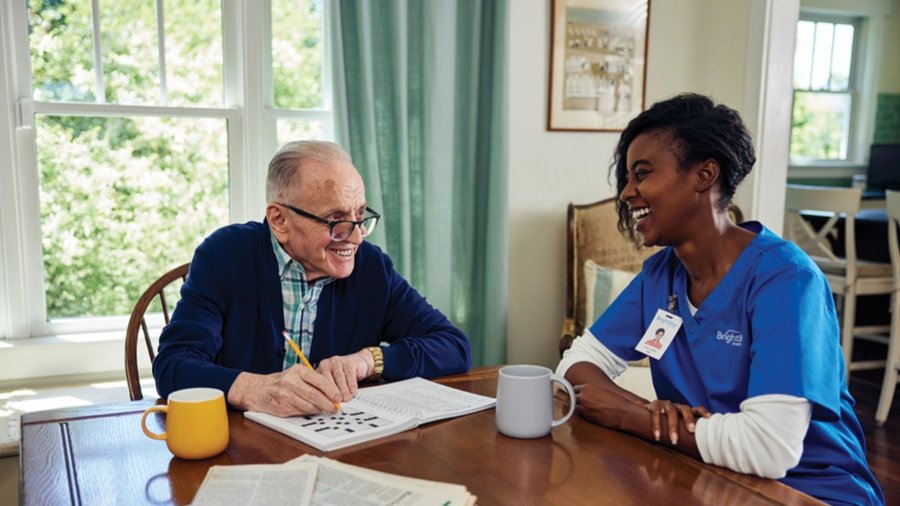
The non-skilled side of home care matters just as much, and in some ways it's where the PTSD-specific work really happens.Consistency is the most important thing a home care agency can offer a veteran with PTSD. That means the same caregiver, on the same days, ideally at the same time. A familiar face becomes a neutral presence over time. A rotating roster of new people never gets there.
Beyond the relationship itself, personal care support helps with the daily tasks that avoidance or fatigue have made hard: keeping up with hygiene, preparing meals, getting to appointments that the veteran has been skipping for months. A companion caregiver who is calm, predictable, and genuinely easy to be around provides something that's harder to quantify but very real: a reduction in ambient stress.
The Family Caregiver Is Part of This Picture Too
Spouses and adult children of veterans with PTSD often carry what clinicians call secondary traumatic stress. You're not diagnosable with PTSD because of what you've absorbed living with someone who has it, but you have been managing hypervigilance, emotional volatility, nighttime disruption, and walking on eggshells for years. That has a cost.Home care is relief for the family member too. Having a skilled nurse or caregiver take on part of the load means the spouse or adult child can step back from being the primary person responsible for everything. That distance, even a few hours a week of it, is not abandonment. It's what makes it possible to keep going.
VA Community Care Network: A Potential Path to Covered Home Care
If a VA provider determines that home care is clinically appropriate for the veteran, it may be possible to have services authorized and covered through the VA's Community Care Network at no cost to the veteran. For veterans in Illinois, this authorization runs through a network contractor (currently managed through a VA CCN partner in this region), and it requires a referral from the VA care team.The relevant VA facilities for veterans in this area are Edward Hines Jr. VA Hospital in Hines, IL, and Jesse Brown VA Medical Center in Chicago. If you're not sure whether your family member qualifies, the best starting point is the veteran's VA primary care or mental health provider. Families can also call the VA's Community Care line directly, or work with a Veterans Service Organization (VSO) to navigate the process.
Why Consistency of Caregiver Is a Clinical Issue, Not a Preference
For most home care conditions, caregiver consistency is nice to have. For PTSD, it is functionally necessary.Trust with a veteran with PTSD is built slowly and lost quickly. Every time a new caregiver is introduced, the veteran has to go through the same initial wariness again: Who is this person? Are they safe? Can I be caught off guard in my own home? If an agency has high caregiver turnover or frequently sends substitutes when the regular aide is unavailable, that is a clinical problem, not just an inconvenience.
Before starting home care for a veteran with PTSD, families should ask an agency directly: How do you assign caregivers? What is your caregiver retention rate? What happens when the assigned caregiver is sick or unavailable? The answers will tell you a lot about whether the agency actually understands what consistency means in practice.
Why Staying Home Is Often the Right Clinical Choice
For veterans with PTSD, especially those who have spent decades in the same home, a move to assisted living or memory care would often be actively harmful. Unfamiliar people, unfamiliar routines, no control over who enters the room or what the environment looks like: these are not just inconveniences. They are the exact conditions that keep a PTSD-affected nervous system on high alert.The case for keeping a veteran at home isn't just about preference or comfort. It's about the environment that gives them the best chance of remaining stable. Home is the known quantity. It's where the cues are familiar, where routines can be preserved, where the veteran still has some degree of authority over what happens in their space.
That's what home care is actually providing in these situations. Not just help with medications and daily tasks, but the conditions that make the veteran's life actually manageable.
Call 847-510-5750 Our Website
Frequently Asked Questions
Q: Can a home care aide help a veteran who refuses to leave the home or see a doctor?
A: Yes. Home care is specifically designed to meet people where they are. A skilled nurse can come to the veteran for medication management, wound care, and chronic condition monitoring, removing the need for clinic visits that the veteran may be avoiding. Over time, a consistent caregiver relationship can also help reduce the avoidance patterns that are keeping the veteran isolated, though that usually happens gradually rather than all at once.Q: My dad's PTSD was never officially diagnosed. Does that affect whether he can get VA-covered home care?
A: Not necessarily. VA benefits and Community Care Network eligibility are based on the veteran's service record and their current health needs, not solely on a pre-existing PTSD diagnosis. If a VA provider assesses the veteran and determines that home care is clinically warranted, a referral can be made regardless of whether PTSD was formally diagnosed years ago. A Veterans Service Organization can help you navigate what documentation is needed.Q: How do we introduce a home care caregiver to a veteran with PTSD who is resistant to having anyone in the home?
A: Slowly, and with as much control given to the veteran as possible. Start with a brief, low-stakes introduction, not a full care visit. Frame it around the veteran's input: "I want to know what you think of this person." Keep the schedule consistent from the start. If there's a VA therapist or counselor involved, include them in the conversation before home care begins. Resistance is almost always about trust, not logistics, and trust takes time to build.BrightStar Care of Evanston/Northbrook provides skilled nursing, personal care, and companion care services to veterans and their families across the North Shore and North Cook County, including Evanston, Northbrook, Glenview, Skokie, Wilmette, Winnetka, Glencoe, and Highland Park. If you're caring for a veteran with PTSD and aren't sure where to start, we're glad to talk through what support might look like for your family's situation.
Contact BrightStar Care of Evanston & Northbrook:
- Phone: 847-510-5750
- Address: 950 Skokie Blvd, Ste 301, Northbrook, IL 60062
- Visit Us Online: https://www.brightstarcare.com/locations/northbrook-evanston/