
There is a particular kind of exhaustion that family caregivers carry. It is not the tiredness that comes from a hard day of work that ends when you leave the office. It is the tiredness that follows you home, sits with you through dinner, wakes you at 3 a.m. with worry, and is still there in the morning when you get up and do it all again.
Most family caregivers do not call it burden. They call it love. They call it what you do for family. They call it what anyone would do in this situation. And most of them keep going past the point of fatigue, past the point of resentment they feel guilty about, past the point where their own health is beginning to show the cost because stopping feels like abandonment, and because no one has told them that what they are experiencing has a name, is clinically recognized, and is something that can be addressed without failing the person they are caring for.
Caregiver burden is that name. And for families in Evanston, Northbrook, Glenview, Wilmette, Deerfield, and throughout the North Shore who are quietly managing one of the hardest things a person can do, understanding it is the first step toward managing it in a way that is sustainable for the caregiver and for the person they love.
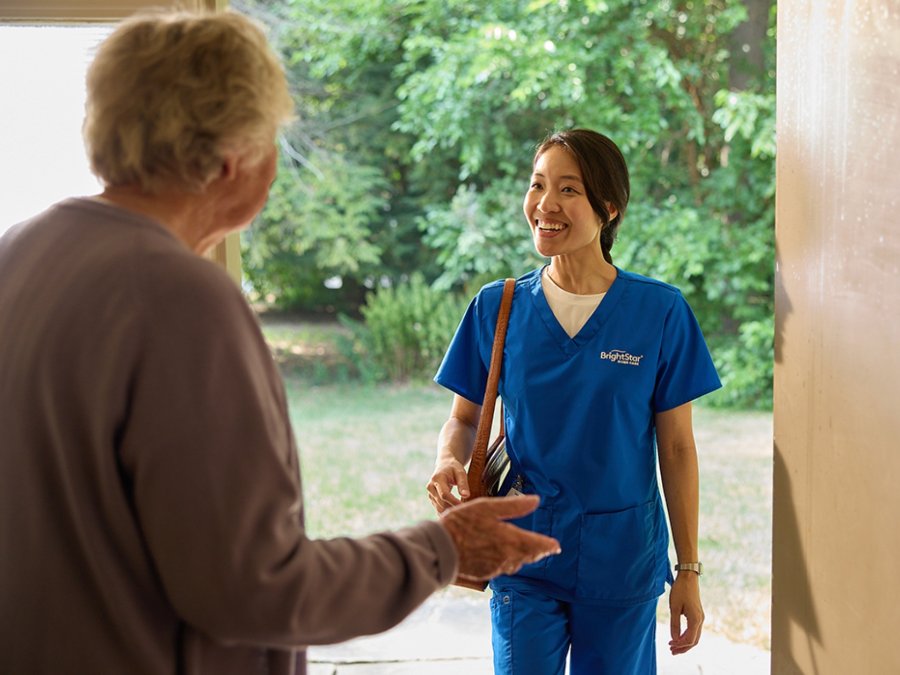
Caregiver burden is the term used in healthcare and social science research to describe the physical, emotional, social, and financial strain experienced by people who provide ongoing care for a family member or loved one with a chronic condition, disability, or age-related decline.
It is not a sign of weakness. It is not a sign that the caregiver is doing something wrong. It is a predictable and well-documented response to a situation that most people were not prepared for, that rarely has a clear endpoint, and that asks more of a person over a longer period of time than most people can sustain without support.
The research on caregiver burden is extensive and consistent. Family caregivers have higher rates of depression and anxiety than non-caregivers. They report poorer physical health, more sleep disruption, and higher rates of chronic illness. They are more likely to delay their own medical care, more likely to experience social isolation, and more likely to report that their own needs consistently come last. The longer the caregiving situation continues without adequate support, the more pronounced these effects become.
What the research also consistently shows is that caregiver burden does not just harm the caregiver. It harms the care recipient as well. A caregiver who is depleted, resentful, or unwell provides care that is objectively less attentive, less patient, and less safe than a caregiver who is adequately supported. Taking care of the caregiver is not separate from taking care of the loved one. It is the same project.
Caregiver burden rarely arrives all at once. It accumulates so gradually, and with so little fanfare, that many caregivers do not recognize it until they are significantly depleted.
It often begins with a specific event: a parent's fall, a diagnosis, a hospitalization that makes clear the person can no longer manage alone. The family member who steps in, usually the one who lives closest, or the one who has historically been the most involved, or simply the one who was there when the need became obvious does so out of love and urgency. The initial intensity of the situation makes the personal cost feel temporary. This will stabilize. Things will get easier.
Sometimes they do. More often, they stabilize at a level of demand that is still very high and then, over months and years, they increase. The condition progresses. The cognitive decline worsens. The physical care needs intensify. The caregiver's own life, their job, their relationships, their health, their sense of who they are outside this role contracts around the growing demands of caregiving.
By the time many caregivers acknowledge they are struggling, they have been in distress for longer than they realize.
Our In-home Care Services
Because caregiver burden develops gradually and because most caregivers have a significant investment in not seeing themselves as struggling, the signs are often easier for others to observe than for the caregiver themselves. The following are among the most consistent indicators that burden has reached a point requiring intervention.
Persistent exhaustion that does not improve with rest. When sleep no longer restores energy when a caregiver wakes tired regardless of how much they slept this is a signal that the physiological cost of chronic stress has accumulated beyond what rest alone can address.
Emotional withdrawal or numbness. Some caregivers reach a point where they feel nothing about the caregiving situation, not love, not resentment, not sadness. This emotional blunting is often a protective response to sustained overwhelm and is a meaningful signal that something needs to change.
Increasing resentment. Resentment toward the care recipient's feelings that are immediately followed by guilt is almost universal in caregivers who are not receiving adequate support. The resentment is not a character flaw. It is a signal that the caregiver's needs are consistently unmet and that the imbalance has become unsustainable.
Neglecting personal health. Missed doctor's appointments, skipped medications, symptoms ignored caregivers who have deprioritized their own health to the point of neglect are at significant risk, both for their own wellbeing and for their ability to continue providing care.
Social withdrawal. The caregiver who has stopped seeing friends, who has declined invitations so many times that people have stopped asking, who feels that no one outside the caregiving situation could possibly understand what their life is like this isolation compounds the emotional cost of caregiving significantly.
Feeling that there is no one else who can do this. The belief that the caregiver is the only person who can manage their loved one's care and that any help offered by others is inadequate or introduces more problems than it solves is a cognitive pattern associated with advanced caregiver burden. It feels like love and responsibility. It is also a trap that keeps caregivers from accessing the support that would actually help.
Before getting to what does help, it is worth acknowledging the gap between what caregivers are often told and what actually makes a difference.
Being told to practice self-care to exercise more, meditate, take a bath, journal is not useful advice for a caregiver whose schedule does not contain a free hour. It places the burden of solving a structural problem on the individual, and it implies that the problem is one of inadequate coping strategies rather than an objective overload of demand.
What most caregivers actually need is not a coping strategy. It is a reduction in the amount they are being asked to carry alone.
The resistance to accepting that reduction is real and deeply understandable. Caregivers resist help for many reasons: they feel that no one can provide care the way they can; they worry about the loved one's reaction to a new person; they feel guilty about stepping back even briefly; they have tried to get help before and found the process complicated or the results disappointing. Some have internalized the idea that needing help means they have failed.
None of these feelings are irrational. All of them make caregivers harder to reach with support that would genuinely benefit them. Which is why the most effective support is often concrete, practical, and introduced incrementally not presented as a solution to the whole problem, but as a specific form of relief for a specific, named burden.
For families in Evanston, Northbrook, Glenview, and the surrounding North Shore, professional in-home care provides exactly this. A trained, reliable caregiver from BrightStar Care of Evanston & Northbrook comes to the home, takes responsibility for the loved one's care during that time, and gives the family caregiver the ability to leave to sleep, to see a friend, to attend a medical appointment of their own, to simply be a person without a caregiving role for a few hours.
Even a few hours of genuine respite per week has been shown to meaningfully reduce caregiver burden over time. It is not a complete solution, but it is a real one and it is available.
Many caregivers find it easier to accept professional support when it is framed not as a replacement for what they are doing, but as an addition to it. A professional caregiver does not come in because the family caregiver is inadequate; they come in so that the family caregiver can be more fully present in the relationship that actually matters. More patient. More loving. Less depleted. More able to be the spouse, the adult child, the sibling that their loved one needs them to be, rather than simply the person who manages all the logistics.
This reframing is not spin. It reflects what actually happens when caregivers receive meaningful support. The quality of the relationship between the family caregiver and the care recipient typically improves because the caregiver has the reserves to bring to it.
For many family caregivers, the most important step is a conversation they have been avoiding with themselves, with other family members, with the person they are caring for, or with a professional who can help assess the situation objectively.
What is the caregiver actually providing? What is sustainable long-term? Where are the gaps? What would change if additional support were introduced? These questions feel confrontational to caregivers who are deeply identified with their role, but they are the questions that make it possible to build a plan that is genuinely sustainable rather than one that continues until the caregiver collapses.
Our In-home Care Services Call Us Today
At BrightStar Care of Evanston & Northbrook, we provide non-medical home care for older adults and their families throughout Evanston, Northbrook, Glenview, Wilmette, Deerfield, Glencoe, and surrounding North Shore communities.
We work regularly with family caregivers who come to us having carried more than they should have, for longer than they realized. Our role is not to take over, it is to provide consistent, reliable support that reduces the caregiver's load to something sustainable, and that allows the care recipient to remain at home with the people who love them.
If you are a family caregiver who recognizes yourself in any part of what this post describes, we would welcome the opportunity to talk with you about what support could look like for your family. That conversation does not commit you to anything. It might just be the thing that changes how the next chapter feels.
Contact BrightStar Care of Evanston & Northbrook:
BrightStar Care of Evanston & Northbrook provides non-medical home care services for older adults and their families throughout Evanston, Northbrook, Glenview, Wilmette, Deerfield, Glencoe, and surrounding North Shore communities. If you are a family caregiver managing more than you should be carrying alone, we are here to help. Contact our office today.
Our In-home Care Services Call Us Today
Most family caregivers do not call it burden. They call it love. They call it what you do for family. They call it what anyone would do in this situation. And most of them keep going past the point of fatigue, past the point of resentment they feel guilty about, past the point where their own health is beginning to show the cost because stopping feels like abandonment, and because no one has told them that what they are experiencing has a name, is clinically recognized, and is something that can be addressed without failing the person they are caring for.
Caregiver burden is that name. And for families in Evanston, Northbrook, Glenview, Wilmette, Deerfield, and throughout the North Shore who are quietly managing one of the hardest things a person can do, understanding it is the first step toward managing it in a way that is sustainable for the caregiver and for the person they love.
What Caregiver Burden Actually Is
Caregiver burden is the term used in healthcare and social science research to describe the physical, emotional, social, and financial strain experienced by people who provide ongoing care for a family member or loved one with a chronic condition, disability, or age-related decline.It is not a sign of weakness. It is not a sign that the caregiver is doing something wrong. It is a predictable and well-documented response to a situation that most people were not prepared for, that rarely has a clear endpoint, and that asks more of a person over a longer period of time than most people can sustain without support.
The research on caregiver burden is extensive and consistent. Family caregivers have higher rates of depression and anxiety than non-caregivers. They report poorer physical health, more sleep disruption, and higher rates of chronic illness. They are more likely to delay their own medical care, more likely to experience social isolation, and more likely to report that their own needs consistently come last. The longer the caregiving situation continues without adequate support, the more pronounced these effects become.
What the research also consistently shows is that caregiver burden does not just harm the caregiver. It harms the care recipient as well. A caregiver who is depleted, resentful, or unwell provides care that is objectively less attentive, less patient, and less safe than a caregiver who is adequately supported. Taking care of the caregiver is not separate from taking care of the loved one. It is the same project.
How Caregiver Burden Develops
Caregiver burden rarely arrives all at once. It accumulates so gradually, and with so little fanfare, that many caregivers do not recognize it until they are significantly depleted.It often begins with a specific event: a parent's fall, a diagnosis, a hospitalization that makes clear the person can no longer manage alone. The family member who steps in, usually the one who lives closest, or the one who has historically been the most involved, or simply the one who was there when the need became obvious does so out of love and urgency. The initial intensity of the situation makes the personal cost feel temporary. This will stabilize. Things will get easier.
Sometimes they do. More often, they stabilize at a level of demand that is still very high and then, over months and years, they increase. The condition progresses. The cognitive decline worsens. The physical care needs intensify. The caregiver's own life, their job, their relationships, their health, their sense of who they are outside this role contracts around the growing demands of caregiving.
By the time many caregivers acknowledge they are struggling, they have been in distress for longer than they realize.
Our In-home Care Services
The Signs That Burden Has Become Unsustainable
Because caregiver burden develops gradually and because most caregivers have a significant investment in not seeing themselves as struggling, the signs are often easier for others to observe than for the caregiver themselves. The following are among the most consistent indicators that burden has reached a point requiring intervention.Persistent exhaustion that does not improve with rest. When sleep no longer restores energy when a caregiver wakes tired regardless of how much they slept this is a signal that the physiological cost of chronic stress has accumulated beyond what rest alone can address.
Emotional withdrawal or numbness. Some caregivers reach a point where they feel nothing about the caregiving situation, not love, not resentment, not sadness. This emotional blunting is often a protective response to sustained overwhelm and is a meaningful signal that something needs to change.
Increasing resentment. Resentment toward the care recipient's feelings that are immediately followed by guilt is almost universal in caregivers who are not receiving adequate support. The resentment is not a character flaw. It is a signal that the caregiver's needs are consistently unmet and that the imbalance has become unsustainable.
Neglecting personal health. Missed doctor's appointments, skipped medications, symptoms ignored caregivers who have deprioritized their own health to the point of neglect are at significant risk, both for their own wellbeing and for their ability to continue providing care.
Social withdrawal. The caregiver who has stopped seeing friends, who has declined invitations so many times that people have stopped asking, who feels that no one outside the caregiving situation could possibly understand what their life is like this isolation compounds the emotional cost of caregiving significantly.
Feeling that there is no one else who can do this. The belief that the caregiver is the only person who can manage their loved one's care and that any help offered by others is inadequate or introduces more problems than it solves is a cognitive pattern associated with advanced caregiver burden. It feels like love and responsibility. It is also a trap that keeps caregivers from accessing the support that would actually help.
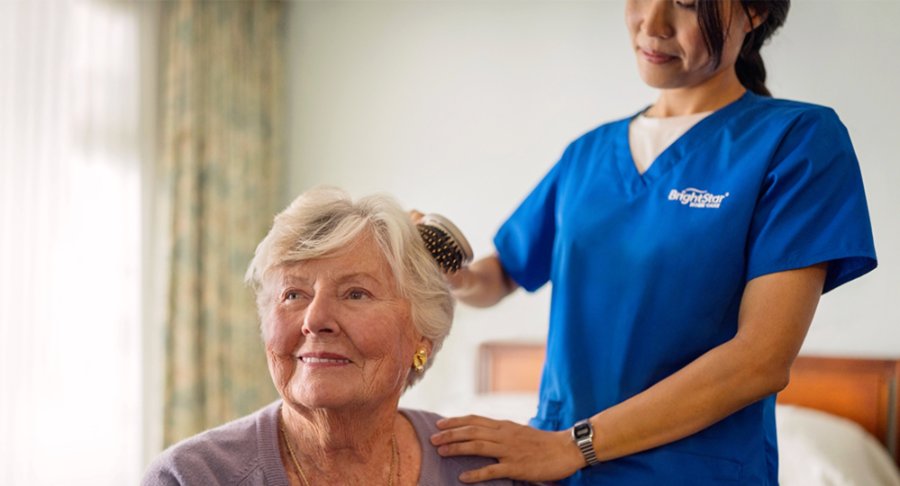
What Does Not Help and Why Caregivers Resist Support
Before getting to what does help, it is worth acknowledging the gap between what caregivers are often told and what actually makes a difference.Being told to practice self-care to exercise more, meditate, take a bath, journal is not useful advice for a caregiver whose schedule does not contain a free hour. It places the burden of solving a structural problem on the individual, and it implies that the problem is one of inadequate coping strategies rather than an objective overload of demand.
What most caregivers actually need is not a coping strategy. It is a reduction in the amount they are being asked to carry alone.
The resistance to accepting that reduction is real and deeply understandable. Caregivers resist help for many reasons: they feel that no one can provide care the way they can; they worry about the loved one's reaction to a new person; they feel guilty about stepping back even briefly; they have tried to get help before and found the process complicated or the results disappointing. Some have internalized the idea that needing help means they have failed.
None of these feelings are irrational. All of them make caregivers harder to reach with support that would genuinely benefit them. Which is why the most effective support is often concrete, practical, and introduced incrementally not presented as a solution to the whole problem, but as a specific form of relief for a specific, named burden.
What Actually Helps
Respite Real Respite, Not Just Time Away
Respite means time when the caregiver is genuinely relieved of caregiving responsibility, not time when they are in the next room listening for sounds, or time when they have stepped out but left their phone on in case something happens. Real respite requires someone else to be accountable for the care, so that the caregiver can be fully absent from the role.For families in Evanston, Northbrook, Glenview, and the surrounding North Shore, professional in-home care provides exactly this. A trained, reliable caregiver from BrightStar Care of Evanston & Northbrook comes to the home, takes responsibility for the loved one's care during that time, and gives the family caregiver the ability to leave to sleep, to see a friend, to attend a medical appointment of their own, to simply be a person without a caregiving role for a few hours.
Even a few hours of genuine respite per week has been shown to meaningfully reduce caregiver burden over time. It is not a complete solution, but it is a real one and it is available.
Reframing What Help Actually Means
Many caregivers find it easier to accept professional support when it is framed not as a replacement for what they are doing, but as an addition to it. A professional caregiver does not come in because the family caregiver is inadequate; they come in so that the family caregiver can be more fully present in the relationship that actually matters. More patient. More loving. Less depleted. More able to be the spouse, the adult child, the sibling that their loved one needs them to be, rather than simply the person who manages all the logistics.This reframing is not spin. It reflects what actually happens when caregivers receive meaningful support. The quality of the relationship between the family caregiver and the care recipient typically improves because the caregiver has the reserves to bring to it.
Having an Honest Conversation About What Is Sustainable
For many family caregivers, the most important step is a conversation they have been avoiding with themselves, with other family members, with the person they are caring for, or with a professional who can help assess the situation objectively.What is the caregiver actually providing? What is sustainable long-term? Where are the gaps? What would change if additional support were introduced? These questions feel confrontational to caregivers who are deeply identified with their role, but they are the questions that make it possible to build a plan that is genuinely sustainable rather than one that continues until the caregiver collapses.
Our In-home Care Services Call Us Today

How BrightStar Care of Evanston & Northbrook Supports Family Caregivers
At BrightStar Care of Evanston & Northbrook, we provide non-medical home care for older adults and their families throughout Evanston, Northbrook, Glenview, Wilmette, Deerfield, Glencoe, and surrounding North Shore communities.We work regularly with family caregivers who come to us having carried more than they should have, for longer than they realized. Our role is not to take over, it is to provide consistent, reliable support that reduces the caregiver's load to something sustainable, and that allows the care recipient to remain at home with the people who love them.
If you are a family caregiver who recognizes yourself in any part of what this post describes, we would welcome the opportunity to talk with you about what support could look like for your family. That conversation does not commit you to anything. It might just be the thing that changes how the next chapter feels.
Contact BrightStar Care of Evanston & Northbrook:
- Phone: 847-510-5750
- Address: 950 Skokie Blvd, Ste 301, Northbrook, IL 60062
- Visit Us Online: BrightStar Care Northbrook/Evanston
Frequently Asked Questions
Q: What is caregiver burden and how is it different from normal caregiving stress?
Caregiver burden refers to the cumulative physical, emotional, social, and financial strain that develops when a person provides ongoing care for a loved one without adequate support. It is distinguished from normal caregiving stress by its persistence, its multidimensional impact affecting health, relationships, work, and identity simultaneously and its tendency to worsen over time rather than resolve. Caregiver burden is clinically recognized and extensively researched, and it is associated with significantly elevated rates of depression, anxiety, physical illness, and social isolation in family caregivers.Q: How do I know if I am experiencing caregiver burden rather than just a difficult period?
Some useful questions to ask: Has your own health suffered in ways you have not attended to because caregiving takes priority? Have you withdrawn from friendships or activities that used to matter to you? Do you feel resentful of the person you are caring for, followed immediately by guilt? Do you feel that no one else could possibly manage your loved one's care the way you can? Does the idea of taking a full day away from caregiving feel impossible or anxiety-producing rather than relieving? If several of these resonate, what you are experiencing is likely caregiver burden and it warrants attention, not continued pushing through.Q: What is the most effective thing a family caregiver can do to reduce caregiver burden?
The most consistently effective intervention for caregiver burden is genuine respite time when another person is accountable for the care recipient's wellbeing, allowing the caregiver to be fully absent from the caregiving role. Professional in-home care that provides scheduled, reliable respite reduces caregiver burden more meaningfully than coping strategies alone, because it addresses the structural source of the problem rather than managing its symptoms. Starting with a modest number of hours per week and increasing as the arrangement builds trust is often the most effective approach for caregivers who are resistant to asking for help.BrightStar Care of Evanston & Northbrook provides non-medical home care services for older adults and their families throughout Evanston, Northbrook, Glenview, Wilmette, Deerfield, Glencoe, and surrounding North Shore communities. If you are a family caregiver managing more than you should be carrying alone, we are here to help. Contact our office today.
Our In-home Care Services Call Us Today