
.png "1-(1).png")
High blood pressure is so common that it is easy to underestimate. Nearly half of American adults have it, and the number climbs steadily with age, so the majority of older adults are living with hypertension whether they realize it or not. It rarely causes symptoms, which is exactly what makes it dangerous: left uncontrolled, it quietly raises the risk of stroke, heart attack, heart failure, and kidney disease. The reassuring side of that story is that high blood pressure is highly manageable, and much of the work happens at home.
For families in Phoenix, Arcadia, and Tempe, managing a loved one’s blood pressure can feel like a lot to juggle: daily medications, regular readings, diet changes, and watching for problems, all on top of everything else life demands. This is where in-home nursing support makes a real difference. A registered nurse and a trained caregiver can turn a doctor’s plan into consistent daily habits and catch concerning trends before they become emergencies.
This guide explains how high blood pressure is managed at home, what the latest guidelines emphasize, and how the nurse-led private duty care that BrightStar Care provides helps older adults in the Valley keep their numbers in a healthy range.
Understanding High Blood Pressure in Older Adults
Blood pressure is the force of blood pushing against the walls of the arteries, recorded as two numbers: the top (systolic) when the heart beats and the bottom (diastolic) when it rests. The 2025 national hypertension guidelines from the American Heart Association and American College of Cardiology maintain a treatment threshold of 130/80 mmHg, reflecting evidence that earlier, steadier control prevents strokes and heart problems. For older or more frail adults, however, the guidelines emphasize individualized targets, set by the person’s physician, to balance the benefits of lower pressure against risks like dizziness and falls.
As people age, arteries stiffen and blood pressure tends to rise, and many older adults also manage other conditions and medications that interact with blood pressure. That complexity is precisely why consistent monitoring and a coordinated plan matter so much. The aim is not a single good reading at the doctor’s office but stable, healthy numbers day after day at home.
The Role of Home Blood Pressure Monitoring
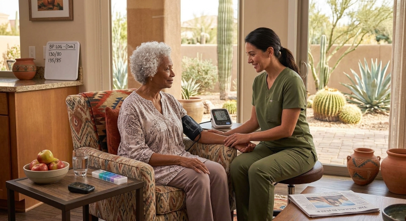
One of the strongest themes in current guidelines is the value of measuring blood pressure at home. Readings taken in familiar surroundings, away from the anxiety of a clinic, give a truer picture and can reveal patterns a single office visit would miss, such as pressure that spikes overnight or stays high despite treatment. Home monitoring, paired with regular contact with the care team, is one of the most effective tools for getting blood pressure under control.
Accurate readings depend on good technique, and this is where many people go wrong. A nurse or trained caregiver ensures readings are reliable by following the basics:
- Sit quietly for five minutes first, with back supported, feet flat on the floor, and legs uncrossed.
- Rest the arm on a table at heart level and place the cuff on bare skin, correctly sized.
- Avoid caffeine, exercise, and smoking for 30 minutes beforehand, and empty the bladder first.
- Take two readings a minute apart at the same times each day, and record them.
- Use a validated upper-arm monitor; guidelines caution against relying on cuffless devices and smartwatches, which are not yet accurate enough.
A consistent log of these readings gives the physician the information needed to adjust treatment, and gives the family early warning when something changes.
Lifestyle and Medication Support at Home
Medication and daily habits work together to control blood pressure, and both are easier to sustain with help. On the lifestyle side, that means supporting a lower-sodium, heart-healthy diet rich in vegetables, fruits, and whole grains; encouraging regular gentle physical activity as approved by the doctor; supporting healthy weight and limited alcohol; and helping a person quit smoking. A caregiver who shops, prepares meals, and shares walks turns these recommendations into a daily routine rather than good intentions.
Medication adherence is just as important. Blood pressure pills only work when taken consistently, yet missed and doubled doses are common, especially for someone managing several prescriptions. Caregivers provide medication reminders and help track doses, while a registered nurse reviews the regimen, watches for side effects such as dizziness that can lead to falls, and communicates with the physician about any concerns. This coordinated oversight is the heart of nurse-led home care.
A note on terminology: BrightStar Care provides private duty nursing and personal care, paid privately or through long-term care insurance and similar arrangements.
This is not the Medicare-certified home health benefit. It is flexible, nurse-supervised support that families arrange directly to fit their needs.
How Skilled Nursing Makes a Difference
The "skilled" part of nurse-led home care is the clinical judgment a registered nurse brings to everyday management. At BrightStar Care of Phoenix NW/NE and Tempe, a registered nurse oversees every case from the first in-home assessment through ongoing care. That nurse can monitor blood pressure trends rather than isolated readings, recognize warning signs, reinforce the doctor’s plan, educate the family, and serve as a knowledgeable point of contact when questions arise between appointments.
This continuity matters for a condition that is managed over years, not days. When the same care team knows a person’s normal range, their medications, and their habits, they notice meaningful changes quickly, whether that is a creeping upward trend, new dizziness, or a medication that needs review. For families, that translates into fewer surprises and greater peace of mind.
Phoenix-Specific Context: Heat and Blood Pressure
Arizona’s climate adds a wrinkle to blood pressure management that families here should understand. Extreme heat causes blood vessels to dilate and can lower blood pressure, while heavy sweating and the dry desert air promote dehydration, all of which can leave an older adult lightheaded, especially when standing up. For someone taking blood pressure or diuretic medications, summer and the late-June monsoon season are times to pay close attention to hydration and to watch for dizziness that raises fall risk.
Heat can also interact with certain medications, so the physician may review the regimen seasonally. A home caregiver helps by keeping fluids steady, scheduling activity for the cooler early morning, keeping the home comfortable, and reporting symptoms promptly. With Greater Phoenix home to a large and growing senior population spread across Phoenix, Arcadia, and Tempe, this kind of attentive, climate-aware support is increasingly important for keeping older adults healthy at home.
Want help keeping a loved one’s blood pressure in check? Call BrightStar Care of Phoenix NW/NE and Tempe at 480-897-1166 for nurse-supervised in-home care across Phoenix, Arcadia, and Tempe, with flexible hours and no minimum requirement.
Local Resources
- American Heart Association – Phoenix / Arizona, education on blood pressure, heart health, and home monitoring: heart.org
- Area Agency on Aging, Region One – 24-Hour Senior HELP LINE, guidance on in-home services and caregiver support: 602-264-4357 (toll-free 888-264-2258), aaaphx.org
- Arizona Department of Health Services – Heart Disease and Stroke Prevention, statewide health information: azdhs.gov
- Arizona Caregiver Coalition, statewide Caregiver Resource Line: 888-737-7494, azcaregiver.org
- 2-1-1 Arizona, connections to community health resources, transportation, and assistance: dial 2-1-1, 211arizona.org
Frequently Asked Questions
What blood pressure is considered high for an older adult?
The 2025 national guidelines use a treatment threshold of 130/80 mmHg, but for older or frail adults, doctors often set an individualized target to balance benefits against risks like dizziness and falls. Your physician is the right person to set the right goal for your loved one. Consistent home readings help them make that call.
How often should blood pressure be checked at home?
Many doctors recommend taking two readings a minute apart, at the same times each day, often morning and evening, and recording them. Sit quietly for five minutes first, keep your arm supported at heart level, and use a validated upper-arm monitor. A nurse or caregiver can help ensure the technique is correct so the numbers are reliable.
Can high blood pressure be managed without medication?
Lifestyle changes, a lower-sodium diet, regular activity, healthy weight, limited alcohol, and not smoking, can meaningfully lower blood pressure, and some people manage with lifestyle alone. Many older adults, however, also need medication. Never start or stop a blood pressure medication without talking to the doctor.
Does Arizona heat affect blood pressure?
Yes. Extreme heat can dilate blood vessels and lower blood pressure, and dehydration from heat and dry air can cause lightheadedness, especially for people on blood pressure or diuretic medications. During Phoenix summers and monsoon season, steady hydration and watching for dizziness are important. A caregiver can help manage these risks day to day.
How does in-home nursing help with high blood pressure?
A registered nurse oversees the care plan, monitors blood pressure trends, watches for side effects, and coordinates with the doctor, while caregivers provide medication reminders, heart-healthy meals, and consistent readings. BrightStar Care offers this nurse-supervised support with no minimum hours. Call 480-897-1166 to learn more.
Sources
American Heart Association / American College of Cardiology – 2025 High Blood Pressure Guideline, https://professional.heart.org/en/science-news/2025-high-blood-pressure-guideline
National Institutes of Health – Updates in the 2025 AHA/ACC Hypertension Guideline, https://pmc.ncbi.nlm.nih.gov/articles/PMC12995957/
National Institutes of Health – Community Pharmacist-Led Program Promoting Home Blood Pressure Monitoring, https://www.ncbi.nlm.nih.gov/pmc/articles/PMC12823383/
Area Agency on Aging, Region One – 24-Hour Senior HELP LINE, https://www.aaaphx.org/area-agency-on-aging-programs/24-hour-senior-help-line/