
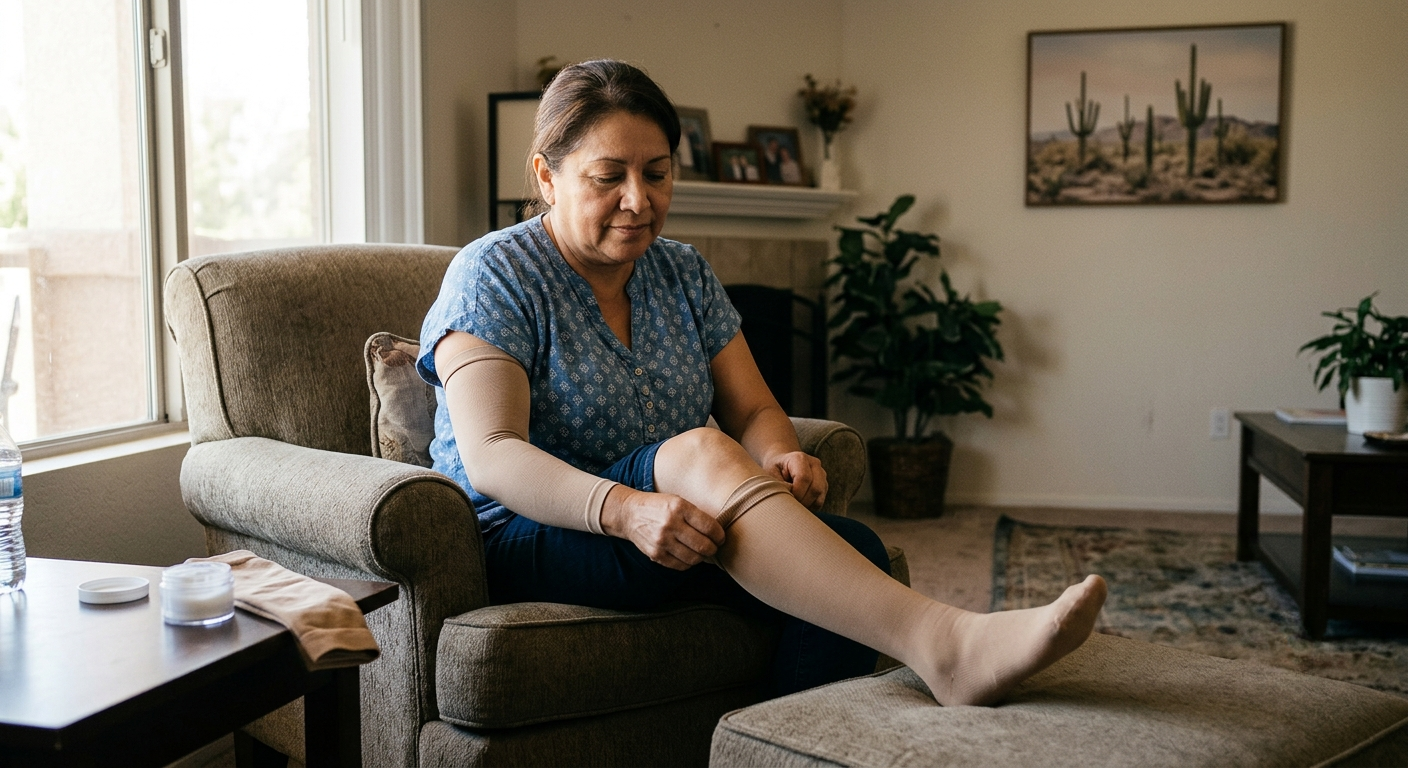
Lymphedema is a chronic swelling, most often in an arm or leg, that happens when the body's lymphatic system cannot move fluid the way it should. For many Phoenix-area families, it shows up after cancer surgery or radiation, after a vein problem, or as a long-term condition that simply needs steady, day-to-day attention. It is not curable, but with the right routine it is very manageable, and most people are able to keep swelling, discomfort, and infection risk under control at home.
Why does this matter so much here? Lymphedema care is built on daily habits: putting on compression correctly, protecting fragile skin, staying active, and watching for early warning signs. Those habits are easy to talk about and hard to keep up alone, especially for an older adult managing other conditions at the same time. Families across Phoenix, Arcadia, and Tempe often tell us the swelling itself is only part of the challenge; the real struggle is staying consistent week after week.
This guide explains how lymphedema is managed at home, what good compression and skin care look like, and how registered-nurse-supervised home care can take the daily pressure off families while keeping the routine safe and on track.
What Is Lymphedema and Why Daily Management Matters
The lymphatic system is a network of vessels and nodes that drains excess fluid, waste, and proteins out of the body's tissues. When that drainage is blocked or damaged, fluid builds up and the limb swells. Over time, untreated swelling can become firmer, heavier, and more prone to skin breakdown and infection.
The most important thing for families to understand is that lymphedema responds to consistency, not intensity. There is no single treatment that fixes it; instead, a set of daily practices keeps it stable. Health organizations describe the standard approach as complete decongestive therapy, which combines four pieces that work together:
- Compression, graduated garments or bandaging that support the limb and help move fluid
- Skin care, meticulous cleaning and moisturizing to prevent cracks and infection
- Movement and exercise, gentle activity that uses the muscles to pump fluid
- Manual lymphatic drainage, a light, specialized massage technique, often taught for self-care
After an initial intensive phase guided by a therapist, most management shifts to the home, where the patient and family take over the daily routine. That maintenance phase is exactly where home care support makes the biggest difference.
Compression Therapy: The Cornerstone of Control
Compression is widely considered the foundation of lymphedema management. A correctly fitted, graduated garment is tighter at the end of the limb and looser toward the body, which encourages fluid to move in the right direction. Many people wear daytime garments such as sleeves or stockings and switch to softer bandaging or specialized nighttime wraps while they sleep.
The details matter more than people expect. A garment that is too loose does little; one that is too tight or bunched can cut into the skin or restrict circulation. Garments also wear out and lose their stretch over months of use, so they need to be replaced on a schedule. For an older adult with arthritis or limited hand strength, simply getting a snug compression sleeve on and off can be the single hardest part of the day.
This is one of the clearest places where trained help pays off. A caregiver can make sure garments go on smoothly and correctly each morning, watch for skin marks or pinching, and flag when a garment has stretched out and needs reordering. When a registered nurse oversees the case, that nurse can recognize early signs that compression is no longer doing its job and coordinate next steps.
Skin Care: Preventing Infection and Cellulitis
Skin care is not a minor add-on; it is essential. A limb with lymphedema is more vulnerable to a skin infection called cellulitis, which can spread quickly, cause fever and pain, and sometimes lead to a hospital stay. Preventing these infections is one of the main goals of good day-to-day care.
A simple, reliable skin routine includes washing the limb gently with a mild cleanser, drying carefully (including between fingers or toes), and applying a fragrance-free moisturizer to keep skin supple and crack-free. Small cuts, insect bites, and dry, splitting skin are all entry points for bacteria, so they should be cleaned and watched closely.
Families should learn the warning signs that need prompt attention: a new area of redness or warmth, skin that feels hot, increasing pain, or a sudden jump in swelling. Reporting these early, rather than waiting, is what keeps a manageable problem from becoming an emergency.
Movement, Exercise, and Weight Management
Gentle movement helps the muscles act as a natural pump for lymph fluid, so staying active is part of treatment rather than a risk. Walking, light range-of-motion exercises, and simple stretching all support drainage, and many people do these while wearing their compression garment for added benefit.
Current management guidance also highlights weight management and overall wellness as factors that influence how well lymphedema is controlled, alongside the physical routine. The right plan is individual, which is why activity should be matched to the person's overall health, balance, and other conditions. A care team can help build a routine that is safe and realistic, especially for someone who is also recovering from surgery or managing heart, joint, or mobility issues.
How RN-Supervised Home Care Keeps the Routine on Track
Lymphedema management lives or dies by consistency, and that is hard to sustain alone. This is where a locally owned home care provider can help families turn a complicated set of instructions into a dependable daily rhythm.
At BrightStar Care of Phoenix, a registered nurse oversees every case from the first in-home assessment through ongoing care. That nurse builds a personalized plan, trains caregivers on the specific compression and skin-care routine, and keeps watch for changes that need a clinician's eye. Day to day, fingerprint-cleared caregivers can help with garment application, skin checks, gentle activity, and the kind of steady encouragement that keeps a routine going. Because there is no minimum number of hours required, families can start with as little or as much help as they actually need and adjust over time.
Lymphedema and the Phoenix Climate: What Local Families Should Know
Arizona's environment adds a few wrinkles to lymphedema care. The extreme summer heat can worsen swelling for some people, because heat causes blood vessels to dilate and can make a limb feel heavier and more uncomfortable. During the hottest months, staying in cooled indoor spaces during peak afternoon hours and keeping hydrated become part of good lymphedema management, not just general comfort.
The famously dry desert air is the other factor. Low humidity pulls moisture out of the skin, and dry, cracking skin is exactly what raises infection risk in a lymphedema limb. That makes consistent, fragrance-free moisturizing especially important for residents of Phoenix, Arcadia, and Tempe. Sun protection matters too, since sunburn is another form of skin injury. With a large and growing senior population across Maricopa County, many of whom are managing the after-effects of cancer treatment or vascular conditions, these small daily adjustments make a real difference over an Arizona summer.
Local Resources for Phoenix, Arcadia, and Tempe Families
These Arizona organizations can help local families find services, verify providers, and stay safe during the summer. Always confirm current hours and details when you call.
- Area Agency on Aging, Region One (Maricopa County), Runs a 24-Hour Senior HELP LINE for caregivers and older adults seeking in-home services, benefits screening, and care navigation across Maricopa County.https://www.aaaphx.org/| Phone: 602-264-4357 or 888-264-2258
- 2-1-1 Arizona, A free, statewide information and referral line connecting families to home care, transportation, utility assistance, and health resources in Phoenix, Tempe, and surrounding Maricopa County communities.https://211arizona.org/| Phone: Dial 2-1-1
- Arizona Department of Health Services (ADHS), Licenses home care and home health agencies in Arizona and publishes consumer guidance on choosing and verifying licensed providers.https://www.azdhs.gov/| Phone: 602-542-1025
- American Cancer Society (Arizona), Offers information on lymphedema after cancer treatment, support programs, and a 24/7 helpline for patients and caregivers.https://www.cancer.org/| Phone: 1-800-227-2345
- Maricopa County Department of Public Health, Publishes local health data, heat-safety guidance, and chronic-disease resources for residents of Phoenix, Tempe, and Arcadia.https://www.maricopa.gov/1858/Public-Health| Phone: 602-506-6900
How BrightStar Care of Phoenix Can Help
If your loved one in Phoenix, Arcadia, or Tempe is managing lymphedema at home, you do not have to keep the routine going on your own. BrightStar Care of Phoenix provides registered-nurse oversight, trained and fingerprint-cleared caregivers, and flexible scheduling with no minimum hours, so support fits your family's needs.
To talk through your situation and arrange a free in-home assessment, call BrightStar Care of Phoenix at 480-897-1166. We are locally owned and operated, state licensed, and have been Joint Commission Accredited.
Frequently Asked Questions
How do I help my mom put on her compression sleeve if she has arthritis?
Getting a snug garment on can be the hardest part of the day. Rubber gloves can improve grip, special donning aids can help, and applying the garment first thing in the morning before swelling increases makes it easier. A trained caregiver can also handle this step. If you'd like hands-on help, call BrightStar Care of Phoenix at 480-897-1166 to arrange support.
Is lymphedema swelling dangerous, or just uncomfortable?
The swelling itself is usually not an emergency, but it raises the risk of skin infection (cellulitis), which can become serious quickly. Watch for new redness, warmth, increasing pain, or fever, and report those signs right away.
Can my dad still exercise with lymphedema in his leg?
Yes, and gentle movement is actually part of treatment because muscle activity helps pump fluid. Walking and light range-of-motion exercises are commonly recommended, often while wearing compression. The right plan should be matched to his overall health, so check with his care team.
Does the Arizona heat make lymphedema worse?
It can. Heat can increase swelling and discomfort for some people, and the dry air raises the risk of skin cracking. Staying cool during peak afternoon hours, hydrating, and moisturizing daily all help during Phoenix summers.
How often do compression garments need to be replaced?
Garments lose their stretch and effectiveness over months of regular wear and typically need replacing on a schedule recommended by your provider. A caregiver or nurse can help you notice when a garment has stretched out so you can reorder before it stops working.
Sources
- Management of peripheral lymphedema, UpToDate –https://www.uptodate.com/contents/management-of-peripheral-lymphedema
- The effect of compression therapies on lymphedema secondary to cancer (review), NIH/PMC –https://pmc.ncbi.nlm.nih.gov/articles/PMC11486789/
- October 2025 Position Papers: Updated Guidance for Practice, Lymphoedema Education Solutions –https://lymphoedemaeducation.com.au/2025/11/october-2025-position-papers/
- At-home advanced pneumatic compression for lower-extremity lymphedema, NIH/PMC –https://www.ncbi.nlm.nih.gov/pmc/articles/PMC11523358/
- Area Agency on Aging, Region One, 24-Hour Senior HELP LINE –https://www.aaaphx.org/area-agency-on-aging-programs/24-hour-senior-help-line/