
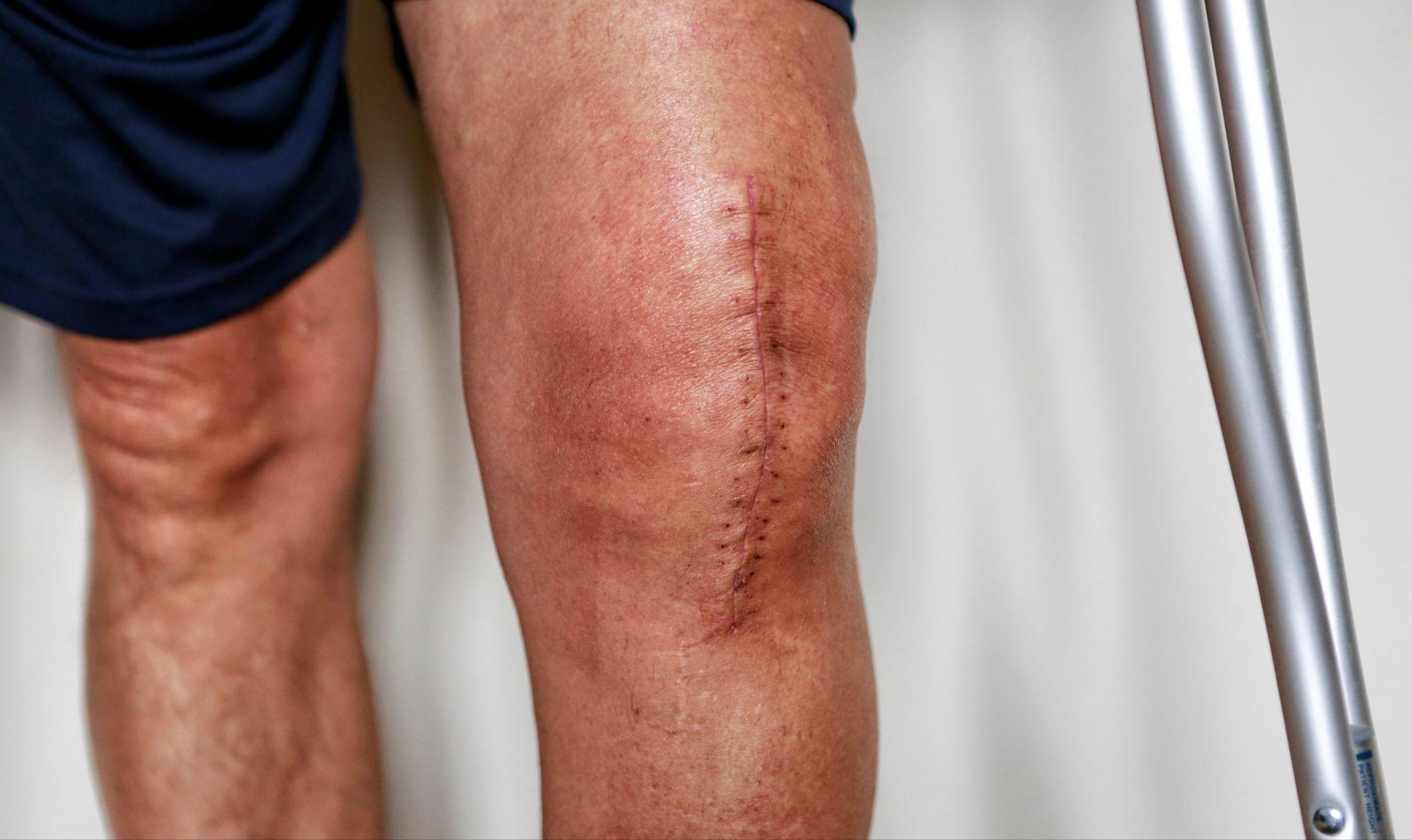
Total knee replacement is one of the most common and successful orthopedic surgeries performed today. Roughly 1.5% of the U.S. population already lives with a replaced knee, and the number is climbing as the baby-boom generation ages. For Phoenix-area families, that statistic translates into a very practical question: once Mom or Dad comes home from the hospital or surgery center, who is going to manage the incision, the medications, the swelling, the therapy, and the long, careful climb back to walking without pain?
The first six weeks after a knee replacement are the most important and fragile. Wound complications, blood clots, falls, and uncontrolled pain are the leading reasons people end up back in the emergency room during this window. The good news is that nearly all of these complications can be reduced or caught early when a Registered Nurse and a trained caregiving team are involved at home.
BrightStar Care of Phoenix NW/NE and Tempe provides Registered Nurse-supervised home care for patients recovering from total knee replacement across Phoenix, Arcadia, Ahwatukee, and Tempe. This guide walks families through what to expect, what skilled nursing actually does at home, the recovery milestones to watch for, and the local Arizona resources that can help.
What Total Knee Replacement Recovery Really Looks Like at Home
More than 90% of knee replacements are now performed as outpatient or short-stay procedures, meaning many Phoenix-area patients are home within hours. That speed is medically appropriate for most adults, but it shifts a great deal of clinical responsibility onto the patient and the family in the first 72 hours. Pain spikes around day three, swelling peaks during the first two weeks, and the incision needs careful watching for the entire first month.
Most patients move through a fairly predictable arc. Weeks one and two focus on wound healing, controlled pain management, and protecting the joint while learning to use a walker safely. By weeks two and three, the goal is to bend the new knee to roughly 90 degrees and straighten it fully. Between weeks three and six, many patients transition from a walker to a cane and begin returning to light daily activities. By three months, most are walking unassisted, and full recovery typically continues out to six to twelve months as strength and endurance return.
These are averages, not promises. People with diabetes, heart conditions, prior joint surgery, or limited support at home tend to move more slowly and benefit most from professional in-home oversight
What Skilled Nursing Provides in the First Six Weeks
Skilled home nursing after a knee replacement is much more than a friendly check-in. A Registered Nurse evaluates the surgical wound, monitors for early signs of infection, manages medications including blood thinners, coordinates with the orthopedic surgeon's office, and adjusts the home plan as the patient progresses. At BrightStar Care, an RN oversees every case from the first assessment through ongoing care, not just on paper, but with hands-on visits and direct communication with the family.
Wound and Incision Care
Modern surgical incisions are typically closed with sutures, staples, or surgical glue and covered with a waterproof dressing. A skilled nurse confirms the dressing is intact, checks for drainage, redness spreading beyond the incision line, warmth, or unusual odor, and removes staples or sutures when the surgeon orders it. Catching an infection in week two rather than week four can be the difference between a course of oral antibiotics and a return trip to the operating room.
Blood Clot Prevention
Knee replacement carries a real risk of deep vein thrombosis (DVT) and pulmonary embolism during the first several weeks. Surgeons almost always prescribe a blood thinner such as aspirin, apixaban, or enoxaparin. An RN confirms the patient is taking the correct dose at the correct time, watches for bruising or bleeding that signals the dose is too high, and screens daily for swelling, calf pain, or shortness of breath that could indicate a clot.
Pain Management Without Over-Sedation
Pain control after a knee replacement is a balancing act. Too little medication and the patient cannot do their physical therapy. Too much and they risk falls, constipation, confusion, and dependence. A skilled nurse helps the family use a structured pain plan, scheduled non-opioid medications, ice and elevation, and opioid pain medication only as needed and tapered as quickly as safely possible.
Working Alongside Physical Therapy
Physical therapy is the engine of knee recovery. BrightStar Care does not replace the physical therapist; the caregiving team reinforces the exercises between sessions, helps the patient get to outpatient PT safely, and reports progress (or setbacks) back to the RN and the surgeon.
Recovery Milestones to Watch For
Families often ask, “How will I know if recovery is on track?” A skilled nurse uses concrete milestones rather than guesswork.
- By the end of week one: walking short distances with a walker, taking pain medication on a predictable schedule, sleeping in stretches of three to four hours, and keeping the incision dry and intact.
- By the end of week two: bending the knee to roughly 70 to 90 degrees, beginning to fully straighten the leg, transitioning some pain control off opioids, and managing the home routine with caregiver support.
- By the end of week three: bending to 90 to 100 degrees, often moving from a walker to a cane, climbing a few stairs with supervision, and starting to drive again if cleared by the surgeon (and never while on opioid pain medication).
- By weeks four through six: walking around the house without an assistive device, attending outpatient physical therapy independently when appropriate, and returning to light desk work or hobbies.
- By three months: bending to 110 to 120 degrees, regaining most daily strength, and resuming low-impact activities like walking, swimming, and stationary cycling.
Phoenix-Specific Context: Recovery in Arizona's Climate
Recovering from major surgery in the desert is not the same as recovering in a temperate climate. Three Arizona realities shape the home plan.
First, summer heat. From May through September, outdoor temperatures across Phoenix, Arcadia, Ahwatukee, and Tempe routinely exceed 105°F. That dry heat speeds dehydration, which thickens the blood and raises clot risk in already-vulnerable post-surgical patients. A skilled nurse builds a hydration plan into the daily routine, typically 64 to 80 ounces of fluid per day unless the cardiologist has restricted intake.
Second, monsoon season storms in July and August can cause power outages that knock out air conditioning. For a patient who cannot easily move to a cooler room or evacuate, that is a real medical risk. The home care plan should include a heat-emergency backup: typically a relative, neighbor, or community cooling center identified in advance.
Third, Maricopa County's older-adult population is large and still growing. With roughly 16% of county residents over age 65, hospital systems and orthopedic practices in Phoenix and Tempe perform a very high volume of knee replacements every year, which means experienced support is available locally, but families need to know how to access it.
Choosing the Right In-Home Support After a Knee Replacement
Not all home care is the same. Families recovering from a knee replacement should look for an agency that offers Registered Nurse oversight, caregivers who are Level 1 fingerprint cleared by the State of Arizona, no minimum-hour requirement (a key advantage when needs change week to week), state licensure, and Joint Commission accreditation.
BrightStar Care of Phoenix NW/NE and Tempe is locally owned and operated, state licensed, and has held Joint Commission accreditation for 11 consecutive years. Every patient is assessed and supervised by a Registered Nurse from the first visit through discharge, and care plans flex as the patient moves from acute recovery into the strengthening phase. There is no minimum number of hours, so a family that needs eight hours a day in week one and three visits a week by week four is not locked into a rigid contract.
BrightStar provides private duty nursing and personal care; it is not a Medicare-certified skilled benefit. That distinction matters when comparing options and discussing payment with the family.
Talk to BrightStar Care About Your Loved One's Knee Surgery Recovery
If a knee replacement is coming up (or if a loved one is already home and the family is struggling) a free assessment with an RN can clarify what is needed and what is not. Call BrightStar Care of Phoenix NW/NE and Tempe at 480-897-1166 to speak with a registered nurse and schedule an in-home evaluation across Phoenix, Arcadia, Ahwatukee, and Tempe.
Local Phoenix-Area Resources for Knee Replacement Recovery
- Area Agency on Aging, Region One: Serves Maricopa County seniors and family caregivers. Senior HELP LINE: 602-264-4357. Website: aaaphx.org
- Banner – University Medical Center Phoenix Orthopedic Surgery: One of the highest-volume joint replacement programs in Arizona, including revision surgery. Main line: 602-839-2000. Website: bannerhealth.com
- Mayo Clinic in Phoenix – Orthopedic Surgery: Outpatient total knee and hip replacement program with a same-day rehabilitation pathway. Appointments: 480-301-8484. Website: mayoclinic.org
- Arizona Department of Economic Security – Older Adult Services: Statewide programs including in-home services, caregiver support, and the Long-Term Care Ombudsman. Website: des.az.gov/services/older-adults
- Maricopa County Healthy Aging Program: Local prevention programs and aging-related health resources. Website: maricopa.gov/4396/Healthy-Aging
Frequently Asked Questions
How long will my mom need help at home after a total knee replacement?
Most patients need meaningful in-home support for the first two to four weeks, and lighter help for an additional two to four weeks after that. The first 72 hours are the most intensive. By weeks five and six, many patients are walking with a cane and only need help with errands, transportation to therapy, and reminders about exercises and medications. A Registered Nurse from BrightStar Care can do a free assessment and recommend a realistic plan: call 480-897-1166.
What are the warning signs of infection after a knee replacement?
Call the surgeon if you see increasing redness spreading beyond the incision, drainage that turns yellow, green, or foul-smelling, the area becomes hot to the touch, fever above 101°F, or pain that gets worse rather than better after the first week. A skilled nurse is trained to spot these signs early, which is one of the main reasons RN oversight reduces hospital readmissions.
Does Medicare pay for home care after a knee replacement?
Medicare may pay for short-term skilled home health when ordered by a physician and provided by a Medicare-certified agency. BrightStar Care of Phoenix NW/NE and Tempe is not a Medicare-certified home health benefit; it provides private duty nursing and personal care paid privately, through long-term care insurance, or through certain VA benefits. Many families combine a brief Medicare home health visit with private duty hours to fill the gaps.
Is it safe to recover from a knee replacement in Phoenix during the summer?
Yes, with planning. The two real risks are dehydration (which raises blood clot risk) and loss of air conditioning during a monsoon power outage. Build a hydration plan with your nurse, keep the home cool, identify a backup cool location in advance, and avoid outdoor activity during midday heat. Patients in Phoenix, Arcadia, Ahwatukee, and Tempe recover successfully in summer every year.
How quickly can BrightStar Care start services?
In most cases BrightStar Care of Phoenix NW/NE and Tempe can complete a free RN assessment within 24 to 48 hours and start care immediately afterward, often the same day. Because there is no minimum-hour requirement, the plan is sized to what the family actually needs. Call 480-897-1166 to schedule an assessment.
Sources
- Centers for Disease Control and Prevention – Arthritis and Joint Replacement Data
- National Institutes of Health, PubMed Central – Prevalence of Total Hip and Knee Replacement in the United States
- National Institutes of Health, PubMed Central – Trends in Complications and Outcomes Following Total Knee Arthroplasty
- Mayo Clinic – Knee Replacement: Care at Mayo Clinic and Outpatient Total Joint Arthroplasty
- Cleveland Clinic – Knee Replacement (Arthroplasty): What It Is and Recovery Time
- American Academy of Orthopaedic Surgeons – Total Knee Replacement Patient Education
- U.S. Census Bureau QuickFacts – Maricopa County, Arizona (population and age demographics)
- Area Agency on Aging, Region One – Phoenix Senior Resources
- Arizona Department of Economic Security – Older Adult Services