
Navigating in-home care for a child with complex medical needs can feel overwhelming from the first phone call. The terminology is unfamiliar, the insurance questions are layered, and the stakes are high. Families in Tampa, Brandon, Riverview, and throughout Hillsborough County often don't realize how much skilled nursing support is available in the home until they're well into the process or until a discharge planner at Tampa General, Johns Hopkins All Children's, or AdventHealth Tampa points them in the right direction.
This guide is meant to make that first step easier. It covers what pediatric skilled nursing actually is, which diagnoses and care needs qualify, how families in the Tampa Bay area access and pay for it, and what to look for when choosing a provider.
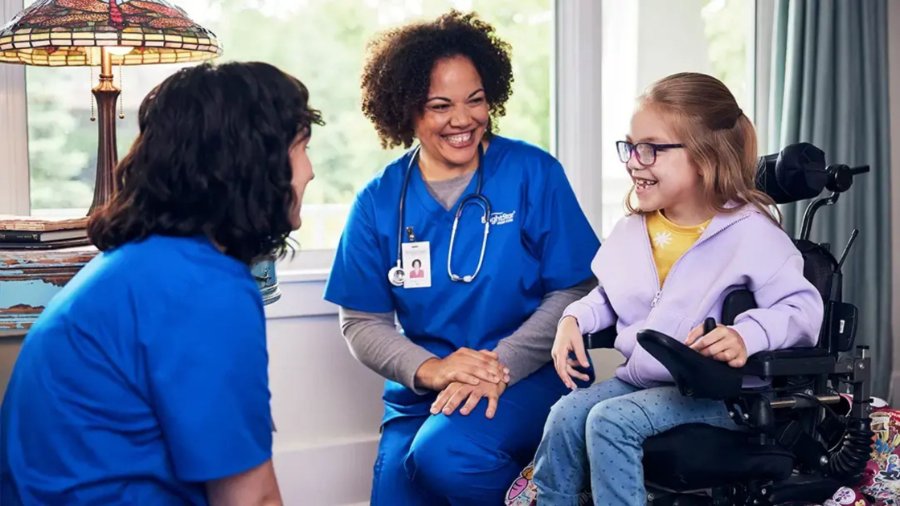
The home care industry includes two distinct categories of service, and the difference matters enormously when a child has complex medical needs.
Non-skilled home care, sometimes called personal care or companion care, includes assistance with daily activities: bathing, dressing, feeding, mobility support, and companionship. These services are valuable and appropriate for many families, but they do not include clinical care. A non-skilled caregiver cannot administer medications through a feeding tube, manage a tracheostomy, monitor a ventilator, or perform wound care. These tasks require a licensed nurse.
Pediatric skilled nursing is clinical care delivered in the home by a registered nurse or licensed practical nurse. It covers the full range of nursing services a child might receive in a hospital or medical facility, applied within the context of the child's home and daily life. The nurse works from a physician-authorized care plan, coordinates with the child's medical team, and provides the ongoing clinical monitoring that medically complex children require outside of hospital settings.
The practical significance: approximately 90 percent of home care agencies in the Tampa Bay market provide non-skilled services only. When a family calls for help with a child on a ventilator or a child with a central line, most agencies cannot legally or clinically provide that care. Finding a provider who employs licensed nursing staff and has genuine experience with pediatric medical complexity is the first and most important step.
BrightStar Care of Tampa Bay employs registered nurses who develop and oversee every client's care plan. That clinical infrastructure is what makes pediatric skilled nursing possible in the home.
813-870-6700 Visit Our Website
Pediatric skilled nursing in the home is appropriate for children whose care needs go beyond what non-medical caregivers can safely manage. The following conditions and clinical situations commonly qualify.
Tracheostomy care. Children with tracheostomies require daily care, suctioning, and monitoring that is beyond the scope of personal care. Skilled nurses manage the tracheostomy, respond to complications, and train family members to participate in care safely.
Ventilator dependence. Children on home ventilators require nursing oversight to monitor settings, respond to alarms, troubleshoot equipment, and coordinate with the pulmonologist and respiratory therapist. Ventilator-dependent children are among the highest-acuity pediatric home nursing patients, and appropriate staffing hours are critical.
Feeding tubes and enteral nutrition. G-tubes, NG tubes, and J-tubes require skilled nursing management, including formula administration, tube checks, site care, and monitoring for complications. Many children with feeding tubes also have complex swallowing or nutritional needs that nursing oversight helps coordinate.
Seizure disorders. Children with frequent or difficult-to-control seizures benefit from skilled nursing presence that includes seizure monitoring, rescue medication administration, documentation, and communication with the neurology team about seizure frequency and character.
Post-surgical recovery and complex wound care. Children recovering from major surgeries or managing chronic wounds require skilled wound assessment, dressing changes, and monitoring for infection or healing complications.
Medically fragile infants. Premature infants and newborns with cardiac, pulmonary, or neurological conditions discharged from the NICU often require skilled nursing support at home during the period when their medical status is still evolving and family caregivers are learning complex care tasks.
IV therapy and medication management. Some children require intravenous medications, hydration, or nutritional support at home. Skilled nursing is required to access, manage, and monitor central lines and PICC lines and to administer IV medications safely.
Chronic conditions requiring clinical monitoring. Children with conditions such as cerebral palsy, spina bifida, muscular dystrophy, or complex congenital conditions often benefit from nursing oversight that monitors for secondary complications, coordinates the multi-specialty care team, and ensures that changes in status are communicated promptly.
813-870-6700 Visit Our Website
The payer landscape for pediatric skilled nursing in Florida is more navigable than most families expect once someone explains it clearly. Here is how the main coverage pathways work.
Florida Medicaid and managed care organizations. Florida Medicaid covers home nursing services for eligible children through managed care plans. Most children enrolled in Florida Medicaid are assigned to a managed care organization (MCO) such as Sunshine Health, Molina Healthcare of Florida, Florida Complete Health, or another contracted plan. Home nursing services require physician orders and a care plan authorization from the MCO, with the hours and duration determined through a prior authorization process.
Families working with Medicaid managed care plans should expect the authorization process to take time, and should begin the referral as early as possible, ideally before a planned hospital discharge rather than after.
Medicaid waiver programs. Florida offers Medicaid waiver programs specifically designed for children with complex medical needs who would otherwise require institutional care. The Medically Needy Waiver and other programs can extend home nursing coverage to children who meet medical and functional eligibility criteria. Families who have been told their child does not qualify for Medicaid home nursing under standard coverage may have additional options through these waiver pathways, and it is worth asking specifically about waiver eligibility.
Private health insurance. Commercial health insurance plans sold through employers or the individual market vary considerably in their home nursing coverage. Most plans cover skilled nursing services when medically necessary and physician-ordered, though the number of authorized hours and the documentation requirements differ by plan. Families with private insurance should request a benefits verification specific to home nursing and ask the provider to assist with the prior authorization submission.
Private pay. Some families choose to fund home nursing privately, either because they do not have coverage, because they need more hours than insurance authorizes, or because they want to begin care immediately while the authorization process is underway. Private pay pediatric nursing is available without prior authorization and can begin quickly once the care plan and staffing are in place.
BrightStar Care of Tampa Bay works with families across all of these payer types and can assist with the insurance verification and authorization process.
813-870-6700 Visit Our Website
Not all agencies that say they provide pediatric home nursing have equivalent capability or experience. Families evaluating providers should ask the following:
Do you have licensed nursing staff on your clinical team, not just in a supervisory role? Some agencies have a single RN on staff who signs off on care plans but does not regularly interact with patients. Ask specifically whether the nurses who will be in your home are employees of the agency or are contracted through a registry, and whether the agency has clinical supervisors available to the nursing staff during shifts.
What is your experience with my child's specific diagnosis? Tracheostomy care, ventilator management, and pediatric IV therapy each require specific training and experience. An agency that primarily serves elderly adults may not have nursing staff who are comfortable or trained in pediatric-specific clinical scenarios. Ask for specifics about how many pediatric clients the agency currently serves and what diagnoses they commonly manage.
How is caregiver continuity handled? For medically complex children, caregiver consistency is a clinical priority, not just a preference. Frequent staff changes mean repeated relearning of the child's baseline, communication style, behavioral cues, and family routines. Ask about average caregiver tenure and how the agency handles scheduling to ensure consistency.
How does your nursing oversight work? A strong pediatric home nursing program includes regular supervisory visits, clear protocols for communicating clinical changes to the family and physician, and a named RN who coordinates the child's care. Ask how often a supervising nurse visits and how communication with the medical team is handled.
What happens when something changes? Ask specifically how the agency responds if a child's condition changes during a shift, if equipment malfunctions, or if the assigned nurse calls out. Having a clear answer to these questions before care begins matters.
813-870-6700 Visit Our Website
For families who are just beginning to explore pediatric skilled nursing options in Tampa Bay, the first step is usually a conversation with a care coordinator who can review the child's diagnosis, current care needs, and insurance coverage.
At BrightStar Care of Tampa Bay, that conversation includes a clinical review by a registered nurse who can speak to whether the child's needs align with what skilled nursing in the home can provide, what the authorization process looks like for your specific payer, and what a realistic timeline for beginning care looks like.
Families who are preparing for a hospital discharge, working with a discharge planner, or navigating a change in their child's condition are encouraged to reach out early. The earlier a conversation begins, the more time there is to complete the authorization and staffing steps before they become urgent.
To speak with a care coordinator, contact BrightStar Care of Tampa Bay or visit our Tampa location page.
BrightStar Care of Tampa Bay provides pediatric skilled nursing and in-home care services for children and families throughout Tampa, Brandon, Riverview, Plant City, and surrounding Hillsborough County communities. To speak with a care coordinator about pediatric home nursing options, contact our Tampa location today.
This guide is meant to make that first step easier. It covers what pediatric skilled nursing actually is, which diagnoses and care needs qualify, how families in the Tampa Bay area access and pay for it, and what to look for when choosing a provider.
What Is Pediatric Skilled Nursing and How Is It Different From Standard Home Care?
The home care industry includes two distinct categories of service, and the difference matters enormously when a child has complex medical needs.Non-skilled home care, sometimes called personal care or companion care, includes assistance with daily activities: bathing, dressing, feeding, mobility support, and companionship. These services are valuable and appropriate for many families, but they do not include clinical care. A non-skilled caregiver cannot administer medications through a feeding tube, manage a tracheostomy, monitor a ventilator, or perform wound care. These tasks require a licensed nurse.
Pediatric skilled nursing is clinical care delivered in the home by a registered nurse or licensed practical nurse. It covers the full range of nursing services a child might receive in a hospital or medical facility, applied within the context of the child's home and daily life. The nurse works from a physician-authorized care plan, coordinates with the child's medical team, and provides the ongoing clinical monitoring that medically complex children require outside of hospital settings.
The practical significance: approximately 90 percent of home care agencies in the Tampa Bay market provide non-skilled services only. When a family calls for help with a child on a ventilator or a child with a central line, most agencies cannot legally or clinically provide that care. Finding a provider who employs licensed nursing staff and has genuine experience with pediatric medical complexity is the first and most important step.
BrightStar Care of Tampa Bay employs registered nurses who develop and oversee every client's care plan. That clinical infrastructure is what makes pediatric skilled nursing possible in the home.
813-870-6700 Visit Our Website
Conditions and Care Needs That Qualify for In-Home Pediatric Skilled Nursing
Pediatric skilled nursing in the home is appropriate for children whose care needs go beyond what non-medical caregivers can safely manage. The following conditions and clinical situations commonly qualify.Tracheostomy care. Children with tracheostomies require daily care, suctioning, and monitoring that is beyond the scope of personal care. Skilled nurses manage the tracheostomy, respond to complications, and train family members to participate in care safely.
Ventilator dependence. Children on home ventilators require nursing oversight to monitor settings, respond to alarms, troubleshoot equipment, and coordinate with the pulmonologist and respiratory therapist. Ventilator-dependent children are among the highest-acuity pediatric home nursing patients, and appropriate staffing hours are critical.
Feeding tubes and enteral nutrition. G-tubes, NG tubes, and J-tubes require skilled nursing management, including formula administration, tube checks, site care, and monitoring for complications. Many children with feeding tubes also have complex swallowing or nutritional needs that nursing oversight helps coordinate.
Seizure disorders. Children with frequent or difficult-to-control seizures benefit from skilled nursing presence that includes seizure monitoring, rescue medication administration, documentation, and communication with the neurology team about seizure frequency and character.
Post-surgical recovery and complex wound care. Children recovering from major surgeries or managing chronic wounds require skilled wound assessment, dressing changes, and monitoring for infection or healing complications.
Medically fragile infants. Premature infants and newborns with cardiac, pulmonary, or neurological conditions discharged from the NICU often require skilled nursing support at home during the period when their medical status is still evolving and family caregivers are learning complex care tasks.
IV therapy and medication management. Some children require intravenous medications, hydration, or nutritional support at home. Skilled nursing is required to access, manage, and monitor central lines and PICC lines and to administer IV medications safely.
Chronic conditions requiring clinical monitoring. Children with conditions such as cerebral palsy, spina bifida, muscular dystrophy, or complex congenital conditions often benefit from nursing oversight that monitors for secondary complications, coordinates the multi-specialty care team, and ensures that changes in status are communicated promptly.
813-870-6700 Visit Our Website
How Families in Tampa Bay Access Pediatric Skilled Nursing
The payer landscape for pediatric skilled nursing in Florida is more navigable than most families expect once someone explains it clearly. Here is how the main coverage pathways work.Florida Medicaid and managed care organizations. Florida Medicaid covers home nursing services for eligible children through managed care plans. Most children enrolled in Florida Medicaid are assigned to a managed care organization (MCO) such as Sunshine Health, Molina Healthcare of Florida, Florida Complete Health, or another contracted plan. Home nursing services require physician orders and a care plan authorization from the MCO, with the hours and duration determined through a prior authorization process.
Families working with Medicaid managed care plans should expect the authorization process to take time, and should begin the referral as early as possible, ideally before a planned hospital discharge rather than after.
Medicaid waiver programs. Florida offers Medicaid waiver programs specifically designed for children with complex medical needs who would otherwise require institutional care. The Medically Needy Waiver and other programs can extend home nursing coverage to children who meet medical and functional eligibility criteria. Families who have been told their child does not qualify for Medicaid home nursing under standard coverage may have additional options through these waiver pathways, and it is worth asking specifically about waiver eligibility.
Private health insurance. Commercial health insurance plans sold through employers or the individual market vary considerably in their home nursing coverage. Most plans cover skilled nursing services when medically necessary and physician-ordered, though the number of authorized hours and the documentation requirements differ by plan. Families with private insurance should request a benefits verification specific to home nursing and ask the provider to assist with the prior authorization submission.
Private pay. Some families choose to fund home nursing privately, either because they do not have coverage, because they need more hours than insurance authorizes, or because they want to begin care immediately while the authorization process is underway. Private pay pediatric nursing is available without prior authorization and can begin quickly once the care plan and staffing are in place.
BrightStar Care of Tampa Bay works with families across all of these payer types and can assist with the insurance verification and authorization process.
813-870-6700 Visit Our Website

What to Look For When Choosing a Pediatric Nursing Provider
Not all agencies that say they provide pediatric home nursing have equivalent capability or experience. Families evaluating providers should ask the following:Do you have licensed nursing staff on your clinical team, not just in a supervisory role? Some agencies have a single RN on staff who signs off on care plans but does not regularly interact with patients. Ask specifically whether the nurses who will be in your home are employees of the agency or are contracted through a registry, and whether the agency has clinical supervisors available to the nursing staff during shifts.
What is your experience with my child's specific diagnosis? Tracheostomy care, ventilator management, and pediatric IV therapy each require specific training and experience. An agency that primarily serves elderly adults may not have nursing staff who are comfortable or trained in pediatric-specific clinical scenarios. Ask for specifics about how many pediatric clients the agency currently serves and what diagnoses they commonly manage.
How is caregiver continuity handled? For medically complex children, caregiver consistency is a clinical priority, not just a preference. Frequent staff changes mean repeated relearning of the child's baseline, communication style, behavioral cues, and family routines. Ask about average caregiver tenure and how the agency handles scheduling to ensure consistency.
How does your nursing oversight work? A strong pediatric home nursing program includes regular supervisory visits, clear protocols for communicating clinical changes to the family and physician, and a named RN who coordinates the child's care. Ask how often a supervising nurse visits and how communication with the medical team is handled.
What happens when something changes? Ask specifically how the agency responds if a child's condition changes during a shift, if equipment malfunctions, or if the assigned nurse calls out. Having a clear answer to these questions before care begins matters.
813-870-6700 Visit Our Website
Planning the First Step
For families who are just beginning to explore pediatric skilled nursing options in Tampa Bay, the first step is usually a conversation with a care coordinator who can review the child's diagnosis, current care needs, and insurance coverage.At BrightStar Care of Tampa Bay, that conversation includes a clinical review by a registered nurse who can speak to whether the child's needs align with what skilled nursing in the home can provide, what the authorization process looks like for your specific payer, and what a realistic timeline for beginning care looks like.
Families who are preparing for a hospital discharge, working with a discharge planner, or navigating a change in their child's condition are encouraged to reach out early. The earlier a conversation begins, the more time there is to complete the authorization and staffing steps before they become urgent.
To speak with a care coordinator, contact BrightStar Care of Tampa Bay or visit our Tampa location page.
Frequently Asked Questions
Q: Does my child need a physician's order to start home skilled nursing, or can I request it directly?
Physician orders are required to begin skilled nursing services in the home. This is true regardless of how the care is being paid for. The physician's order, along with a care plan that specifies the services and hours needed, is the clinical and administrative foundation for home nursing. In most cases, the hospital discharge team or the child's specialist can initiate the order. BrightStar Care of Tampa Bay can work with families to coordinate the order if you are not sure where to begin.Q: How many hours of skilled nursing can my child receive at home, and who decides that?
The number of authorized hours depends on the payer and the child's assessed medical needs. For Medicaid managed care plans, the MCO conducts a prior authorization review based on the physician's documentation and the care plan. The hours authorized reflect the number of nursing hours per day or week that the plan determines are medically necessary. Families can request a specific number of hours in the physician's order and supporting documentation, and can appeal if the authorized amount is lower than what the physician recommended. For private pay, there is no authorization ceiling and families work with the agency to build a schedule that fits their needs.Q: We already have a home nursing provider but the staffing has been unreliable. Can we switch?
Yes. Families have the right to change their home nursing provider if the current agency is not meeting their needs. If care is authorized through Medicaid or a managed care plan, switching providers typically requires notifying the MCO and requesting a transfer of authorization to the new provider. The new provider can assist with that process. BrightStar Care of Tampa Bay regularly supports families who are transitioning from another agency, and we prioritize continuity of care during that transition to avoid gaps in coverage.BrightStar Care of Tampa Bay provides pediatric skilled nursing and in-home care services for children and families throughout Tampa, Brandon, Riverview, Plant City, and surrounding Hillsborough County communities. To speak with a care coordinator about pediatric home nursing options, contact our Tampa location today.
Contact BrightStar Care of Tampa Bay
- Website: BrightStar Care Tampa Bay
- Phone: 813-870-6700
- Address: 324 N Dale Mabry Hwy, Tampa, FL 33609