
November is a good time to say out loud what military families in Tampa Bay carry quietly all year: caring for a veteran with a traumatic brain injury at home is one of the hardest things a family can do. It is not just the medical complexity. It is the grief of watching someone you love struggle with things that used to be effortless, the exhaustion of managing appointments and medications and moods, and the weight of not knowing if you are doing enough.
This post is for those families. It is also for veterans themselves who are trying to make sense of what happened to them and what kind of support actually helps.
Call 813-870-6700 Our Website
Traumatic brain injury is called the "signature wound" of the wars in Iraq and Afghanistan for a specific reason: improvised explosive devices. IEDs expose service members to a kind of blast pressure that older battlefield medicine was not built to address. The blast wave passes through the skull and disrupts the brain at a cellular level, often without any visible external injury. A veteran can walk away from an explosion looking physically intact and still have sustained significant neurological damage.
Many post-9/11 veterans experienced multiple blast exposures over repeated deployments, which compounds the injury. The Department of Veterans Affairs estimates that between 10 and 20 percent of veterans who served in Iraq and Afghanistan have experienced a TBI. In the Tampa Bay area, James A. Haley Veterans' Hospital in Tampa and Bay Pines VA Healthcare System serve a substantial portion of this population, and TBI care is a stated clinical priority for both systems.
The clinical definition of traumatic brain injury does not tell a family much about what a Tuesday morning looks like. Here is what it often looks like.
Cognitive effects. Memory problems are common, particularly short-term memory. A veteran may not remember that he took his medication an hour ago, or may lose the thread of a conversation mid-sentence. Processing speed slows down, meaning it takes longer to respond to questions or follow a series of steps. Executive function deficits make planning and organizing difficult: paying bills, scheduling appointments, managing a weekly routine can all become genuinely hard.
Behavioral and emotional changes. Irritability is one of the most reported symptoms by both veterans and their family members. It can come on quickly and feel disproportionate to the situation. Impulsivity and poor judgment are also common, as are depression, anxiety, and emotional dysregulation. Families often describe a person who is still fundamentally themselves but who cycles through moods in ways that feel unpredictable.
Physical symptoms. Chronic headaches, fatigue that does not improve with rest, and vestibular problems (balance, dizziness, sensitivity to motion) are all typical. Sleep disruption is nearly universal. Veterans with TBI often have trouble falling asleep, staying asleep, or waking feeling rested, which compounds every other symptom.
Sensory sensitivities. Loud environments, bright lights, and crowded spaces can be genuinely painful or disorienting. This matters enormously for how a home is managed and how care is provided.
Most of what drives TBI recovery, or at least stability, is consistency. Routine reduces the cognitive load on a brain that is already working harder than it should to process everyday information. Familiar environments reduce confusion and agitation. Predictable caregivers, predictable schedules, and low-stimulation environments are not just quality-of-life considerations: they are clinically relevant.
This is a meaningful difference from other home care populations. For someone recovering from a hip replacement, a new caregiver filling in occasionally is an inconvenience. For a veteran with a TBI, it can genuinely set back progress. The same goes for changes in routine, unexpected noise, or an environment that is visually chaotic.
Good home care for a TBI veteran is built around this reality from the start.
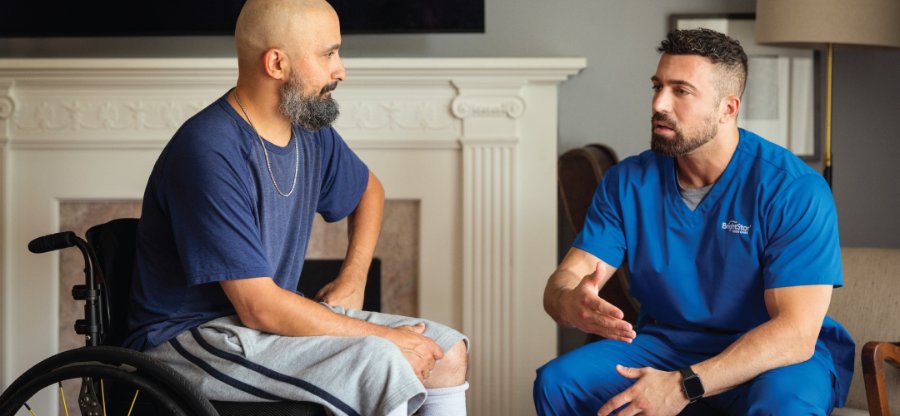
Many TBI veterans are managing complex medication regimens: medications for headache prevention, mood stabilization, sleep, pain, and sometimes co-occurring conditions like PTSD or musculoskeletal injuries. Managing this correctly requires more than a pill organizer. Skilled nurses can provide medication management, reconcile regimens, flag interactions, and communicate directly with the veteran's VA care team when something needs attention.
Fall risk is significant for veterans with vestibular symptoms or fatigue-related unsteadiness. A skilled nurse can assess the home environment, monitor changes in balance or gait, and intervene before a fall happens.
Neurological status checks matter, too. Skilled nursing can identify subtle changes in cognition, speech, or physical function that might signal a complication or a need for care plan adjustment, and can report those findings to the VA provider or community specialist in a way that keeps everyone aligned.
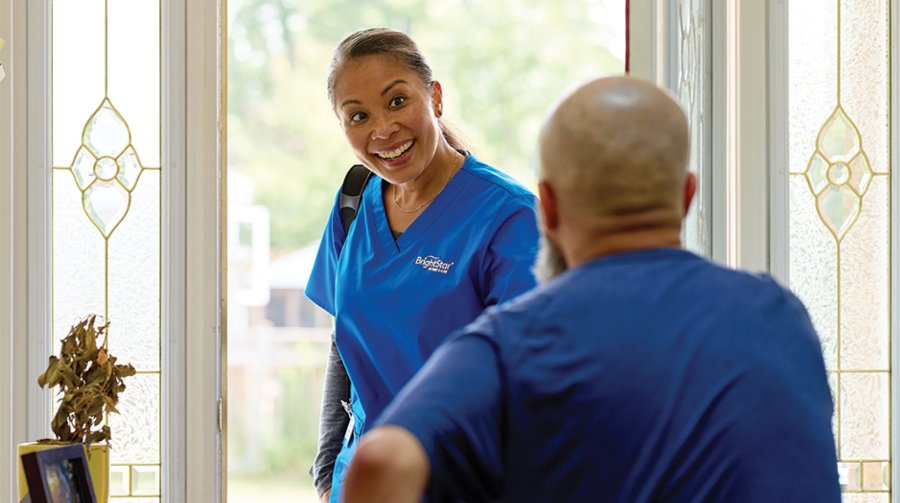
On the non-skilled side, home care for a TBI veteran focuses on activities of daily living that fatigue, motor deficits, or cognitive symptoms make difficult: bathing, dressing, grooming, meal preparation, transportation to appointments.
Equally important is the consistency that companion care creates. A familiar caregiver who shows up at the same time, follows the same routine, and communicates in a calm and predictable way becomes a stabilizing presence in the veteran's day. That is not a soft benefit. For a brain that struggles with novelty and unpredictability, a consistent caregiver is a clinical asset.
Companionship also reduces isolation, which is a real risk for veterans with TBI. Many have pulled away from social relationships because sensory environments are too much, or because they feel embarrassed about their symptoms. A companion caregiver provides connection without the overwhelm of a crowded social situation.
Call 813-870-6700 Our Website
Spouses and adult children of veterans with TBI frequently become de facto case managers without any training or support to do that job. They coordinate between the VA, community specialists, and whoever else is in the care circle. They manage medications, de-escalate behavioral episodes, absorb emotional dysregulation, and still have to run a household.
This is not sustainable indefinitely, and it does not have to be done alone. Professional home care provides reliable backup so that family caregivers can take breaks without the veteran's routine falling apart. It also creates a communication layer: a skilled home care team that is observing the veteran daily can give family members and VA providers a clearer picture of how the veteran is actually doing between appointments.
If a VA provider determines that home care is clinically appropriate, veterans enrolled in VA care may be able to access community-based home health services through the VA Community Care Network, administered locally through TriWest Healthcare Alliance.
Under this pathway, CCN-authorized home care is provided at no cost to the veteran. Families of veterans who receive care through James A. Haley or Bay Pines should ask the VA care team whether a CCN referral is appropriate. BrightStar Care of Tampa Bay works with families navigating this process.
There is a clinical case for keeping TBI veterans at home rather than moving to a residential facility, beyond the obvious preference most people have for their own environment. Unfamiliar environments increase confusion and agitation for people with TBI. The brain is working to process novel sensory input, novel spatial layouts, novel faces, on top of everything else it is already struggling with.
The familiarity of home, the furniture in the same place, the same smells, the same sounds, actually reduces cognitive load and supports stability. For veterans who do not require 24-hour inpatient medical supervision, home is not just a preference. It is the clinically appropriate setting.
Not every home care agency is equipped to serve this population well. When evaluating agencies, families should ask specifically about:
Call 813-870-6700 Our Website
BrightStar Care of Tampa Bay serves veterans and families across Hillsborough County, including Tampa, Brandon, Riverview, Valrico, Gibsonton, Ruskin, Apollo Beach, and surrounding communities. If you have a veteran in your family who could benefit from skilled nursing or personal care at home, we would be glad to talk through your situation and explain what we can offer. You do not have to figure this out alone.
Contact BrightStar Care Tampa Bay for a Free Consultation:
This post is for those families. It is also for veterans themselves who are trying to make sense of what happened to them and what kind of support actually helps.
Call 813-870-6700 Our Website
Why TBI Became the Signature Wound of Post-9/11 Conflicts
Traumatic brain injury is called the "signature wound" of the wars in Iraq and Afghanistan for a specific reason: improvised explosive devices. IEDs expose service members to a kind of blast pressure that older battlefield medicine was not built to address. The blast wave passes through the skull and disrupts the brain at a cellular level, often without any visible external injury. A veteran can walk away from an explosion looking physically intact and still have sustained significant neurological damage.Many post-9/11 veterans experienced multiple blast exposures over repeated deployments, which compounds the injury. The Department of Veterans Affairs estimates that between 10 and 20 percent of veterans who served in Iraq and Afghanistan have experienced a TBI. In the Tampa Bay area, James A. Haley Veterans' Hospital in Tampa and Bay Pines VA Healthcare System serve a substantial portion of this population, and TBI care is a stated clinical priority for both systems.
What TBI Actually Looks Like at Home
The clinical definition of traumatic brain injury does not tell a family much about what a Tuesday morning looks like. Here is what it often looks like.Cognitive effects. Memory problems are common, particularly short-term memory. A veteran may not remember that he took his medication an hour ago, or may lose the thread of a conversation mid-sentence. Processing speed slows down, meaning it takes longer to respond to questions or follow a series of steps. Executive function deficits make planning and organizing difficult: paying bills, scheduling appointments, managing a weekly routine can all become genuinely hard.
Behavioral and emotional changes. Irritability is one of the most reported symptoms by both veterans and their family members. It can come on quickly and feel disproportionate to the situation. Impulsivity and poor judgment are also common, as are depression, anxiety, and emotional dysregulation. Families often describe a person who is still fundamentally themselves but who cycles through moods in ways that feel unpredictable.
Physical symptoms. Chronic headaches, fatigue that does not improve with rest, and vestibular problems (balance, dizziness, sensitivity to motion) are all typical. Sleep disruption is nearly universal. Veterans with TBI often have trouble falling asleep, staying asleep, or waking feeling rested, which compounds every other symptom.
Sensory sensitivities. Loud environments, bright lights, and crowded spaces can be genuinely painful or disorienting. This matters enormously for how a home is managed and how care is provided.
Why Home Care for TBI Veterans Is Different
Most of what drives TBI recovery, or at least stability, is consistency. Routine reduces the cognitive load on a brain that is already working harder than it should to process everyday information. Familiar environments reduce confusion and agitation. Predictable caregivers, predictable schedules, and low-stimulation environments are not just quality-of-life considerations: they are clinically relevant.This is a meaningful difference from other home care populations. For someone recovering from a hip replacement, a new caregiver filling in occasionally is an inconvenience. For a veteran with a TBI, it can genuinely set back progress. The same goes for changes in routine, unexpected noise, or an environment that is visually chaotic.
Good home care for a TBI veteran is built around this reality from the start.
What Skilled Nursing Provides for Veterans With TBI at Home
Many TBI veterans are managing complex medication regimens: medications for headache prevention, mood stabilization, sleep, pain, and sometimes co-occurring conditions like PTSD or musculoskeletal injuries. Managing this correctly requires more than a pill organizer. Skilled nurses can provide medication management, reconcile regimens, flag interactions, and communicate directly with the veteran's VA care team when something needs attention.Fall risk is significant for veterans with vestibular symptoms or fatigue-related unsteadiness. A skilled nurse can assess the home environment, monitor changes in balance or gait, and intervene before a fall happens.
Neurological status checks matter, too. Skilled nursing can identify subtle changes in cognition, speech, or physical function that might signal a complication or a need for care plan adjustment, and can report those findings to the VA provider or community specialist in a way that keeps everyone aligned.
What Personal Care and Companion Care Provide
On the non-skilled side, home care for a TBI veteran focuses on activities of daily living that fatigue, motor deficits, or cognitive symptoms make difficult: bathing, dressing, grooming, meal preparation, transportation to appointments.Equally important is the consistency that companion care creates. A familiar caregiver who shows up at the same time, follows the same routine, and communicates in a calm and predictable way becomes a stabilizing presence in the veteran's day. That is not a soft benefit. For a brain that struggles with novelty and unpredictability, a consistent caregiver is a clinical asset.
Companionship also reduces isolation, which is a real risk for veterans with TBI. Many have pulled away from social relationships because sensory environments are too much, or because they feel embarrassed about their symptoms. A companion caregiver provides connection without the overwhelm of a crowded social situation.
Call 813-870-6700 Our Website
The Family Caregiver Reality
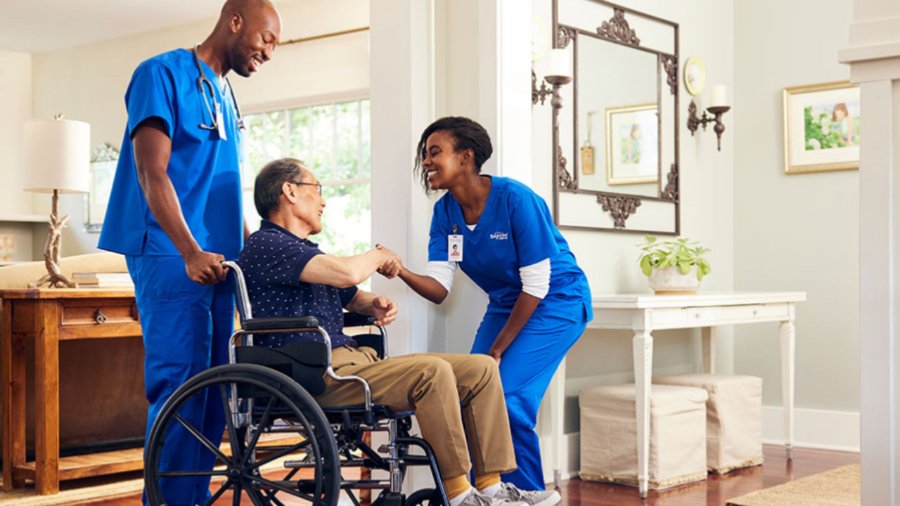
Spouses and adult children of veterans with TBI frequently become de facto case managers without any training or support to do that job. They coordinate between the VA, community specialists, and whoever else is in the care circle. They manage medications, de-escalate behavioral episodes, absorb emotional dysregulation, and still have to run a household.This is not sustainable indefinitely, and it does not have to be done alone. Professional home care provides reliable backup so that family caregivers can take breaks without the veteran's routine falling apart. It also creates a communication layer: a skilled home care team that is observing the veteran daily can give family members and VA providers a clearer picture of how the veteran is actually doing between appointments.
The VA CCN Connection: What Tampa Bay Veterans Should Know
If a VA provider determines that home care is clinically appropriate, veterans enrolled in VA care may be able to access community-based home health services through the VA Community Care Network, administered locally through TriWest Healthcare Alliance.Under this pathway, CCN-authorized home care is provided at no cost to the veteran. Families of veterans who receive care through James A. Haley or Bay Pines should ask the VA care team whether a CCN referral is appropriate. BrightStar Care of Tampa Bay works with families navigating this process.
Why Home Is the Right Setting for Most TBI Veterans
There is a clinical case for keeping TBI veterans at home rather than moving to a residential facility, beyond the obvious preference most people have for their own environment. Unfamiliar environments increase confusion and agitation for people with TBI. The brain is working to process novel sensory input, novel spatial layouts, novel faces, on top of everything else it is already struggling with.The familiarity of home, the furniture in the same place, the same smells, the same sounds, actually reduces cognitive load and supports stability. For veterans who do not require 24-hour inpatient medical supervision, home is not just a preference. It is the clinically appropriate setting.
How to Choose a Home Care Agency for a Veteran With TBI
Not every home care agency is equipped to serve this population well. When evaluating agencies, families should ask specifically about:
- Caregiver consistency. Does the agency commit to consistent caregiver assignment, or will there be frequent staff changes? For a TBI veteran, this is a non-negotiable.
- Skilled nursing capability. Can the agency provide skilled nursing in the home, or only non-skilled personal care? Complex medication management and neurological monitoring require a licensed nurse.
- Experience with neurological conditions. Has the agency served clients with TBI, stroke, or other neurological conditions? The care approach for these clients differs meaningfully from general elder care.
- Communication with the VA care team. Is the agency willing and able to coordinate with a VA provider, share care notes, and flag changes in the veteran's status?
Call 813-870-6700 Our Website
Frequently Asked Questions
Q: Can a veteran with TBI receive home care through the VA at no cost?
A: Yes, in many cases. If a VA provider determines that home care is clinically appropriate, the veteran may qualify for a referral through the VA Community Care Network, administered through TriWest Healthcare Alliance. Under a CCN authorization, community-based home care services are covered at no cost to the veteran. Veterans receiving care through James A. Haley Veterans' Hospital in Tampa or Bay Pines VA Healthcare System should ask their care team whether a CCN referral is an option.Q: What makes home care for a TBI veteran different from standard home care?
A: The biggest difference is the emphasis on consistency and low-stimulation environments. Veterans with TBI benefit significantly from predictable routines, familiar caregivers, and a calm home environment. Frequent caregiver changes or disruptions to routine can increase confusion and agitation, which is not the case to the same degree with other home care populations. Skilled nursing for TBI veterans also involves medication management and neurological monitoring that require specific training and communication with the VA care team.Q: My spouse with TBI gets overwhelmed easily. How do I know if home care will make that worse?
A: This is a real and common concern. The key is finding an agency that assigns consistent caregivers, builds the care around your spouse's existing routine rather than imposing a new one, and introduces the caregiver gradually. A good home care agency will spend time understanding your spouse's sensory sensitivities and behavioral patterns before the first shift. The goal is for the caregiver to become a stable, familiar presence, not another source of novelty or stimulation.BrightStar Care of Tampa Bay serves veterans and families across Hillsborough County, including Tampa, Brandon, Riverview, Valrico, Gibsonton, Ruskin, Apollo Beach, and surrounding communities. If you have a veteran in your family who could benefit from skilled nursing or personal care at home, we would be glad to talk through your situation and explain what we can offer. You do not have to figure this out alone.
Contact BrightStar Care Tampa Bay for a Free Consultation: