
.png "1-(1).png")
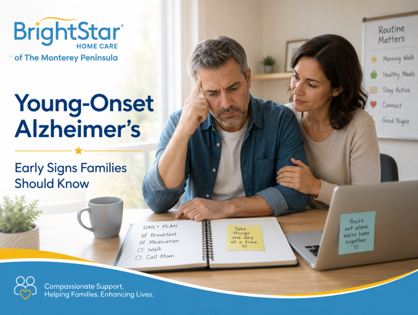
Alzheimer’s disease is often thought of as something that happens later in life, but symptoms can begin much earlier—sometimes when a person is still in their 40s or 50s. This is called young-onset Alzheimer’s, also known as early-onset Alzheimer’s, and it can affect adults who are still working, raising children, managing households, and balancing busy daily responsibilities.
For families across Monterey, Carmel, Pacific Grove, Pebble Beach, Marina, Seaside, Salinas, Soledad, King City, and the surrounding Monterey Peninsula, recognizing the signs early can make a meaningful difference. Early support, medical evaluation, and a personalized care plan can help families better understand what is happening and prepare for the road ahead.
Young-Onset Alzheimer’s Is Not Just Forgetfulness
In younger adults, Alzheimer’s symptoms may not always begin with obvious memory loss. Early changes may look more like difficulty managing complex tasks, changes in personality, trouble communicating, or getting lost more easily.
Because these symptoms often appear during high-pressure years of work and family life, they can be mistaken for stress, burnout, depression, or anxiety. While those conditions can certainly affect memory and focus, ongoing changes that are new, frequent, and interfering with daily life should not be ignored.
Early Signs of Young-Onset Alzheimer’s at Work or Home
Work is often one of the first places where young-onset Alzheimer’s becomes noticeable because jobs rely heavily on planning, memory, communication, and problem-solving.
Some early red flags may include:
- Struggling to complete tasks that used to be routine
- Missing deadlines or making unusual mistakes
- Difficulty following multi-step processes, workflows, recipes, or projects
- Confusion with time, dates, appointments, or familiar routes
- Trouble finding words, following conversations, or repeating questions
- Increased frustration, withdrawal, or changes in personality
- New concerns with driving, judgment, or navigation
At home, families may notice difficulty managing bills, schedules, medications, household responsibilities, or important dates. Loved ones may also begin withdrawing from hobbies, social activities, or family routines they previously enjoyed.
The key question is whether these changes are new, happening more often, and starting to affect work, relationships, safety, or independence.
Is It Stress, Burnout, or Something More?
Because young-onset Alzheimer’s can appear during busy working-age years, it is natural to wonder whether symptoms are simply related to stress. However, families may want to look closer when changes continue even after rest, time off, or support.
Consider these questions:
- Did this person previously manage similar stress well but is now struggling in new ways?
- Are changes showing up in more than one area, such as work, home, driving, mood, or social life?
- Do difficulties continue even after rest, reduced stress, or counseling?
- Are coworkers, family members, or friends noticing that something seems different?
- Are the changes affecting safety, independence, or daily responsibilities?
If several answers are “yes,” it may be time to speak with a healthcare provider and ask specifically about screening for young-onset dementia, Alzheimer’s disease, or other medical conditions that can cause similar symptoms.
How In-Home Memory Care Can Help Working-Age Adults
As symptoms progress, many families want to keep their loved one safe, supported, and comfortable at home for as long as possible. In-home memory care can provide structure, supervision, companionship, and practical help while easing the stress on family caregivers.
At BrightStar Care of The Monterey Peninsula, our in-home care services are designed to support each person’s abilities, routines, and comfort level. Our team can help families create a safer and more consistent home environment while providing compassionate support for daily living.
In-home memory care may include:
- Help with bathing, dressing, grooming, meals, and daily routines
- Support with medication reminders and structured schedules
- Consistent routines to reduce confusion and anxiety
- Supervision for safety concerns such as wandering, falls, or driving changes
- Companionship and meaningful activities that encourage engagement
- Respite support for family caregivers who need time to rest, work, or manage other responsibilities
Families can learn more about our local in-home care services here:
https://www.brightstarcare.com/locations/the-monterey-peninsula/services/in-home-care/
Nurse-Led Home Care on the Monterey Peninsula
BrightStar Care is known for a higher standard of care. At BrightStar Care of The Monterey Peninsula, our care is guided by a nurse-led approach and delivered by trained caregivers who understand the importance of safety, dignity, consistency, and compassion.
For families navigating Alzheimer’s disease or dementia, especially when symptoms begin earlier than expected, having the right support at home can make day-to-day life more manageable. Our goal is to help each person remain as independent and involved in daily life as possible while giving families peace of mind.
FAQs About Young-Onset Alzheimer’s
Can a person with young-onset Alzheimer’s still work?
In the earlier stages, some people may continue working with adjustments such as simplified tasks, written reminders, flexible schedules, or reduced hours. Over time, symptoms may make certain job duties difficult or unsafe, so it is important to plan with a healthcare provider and employer when appropriate.
Is young-onset Alzheimer’s always about memory loss?
Not always. In younger adults, early symptoms may involve planning, organizing, problem-solving, personality changes, communication difficulties, or visual-spatial challenges. Memory changes may appear later or may not be the first symptom families notice.
How is young-onset Alzheimer’s diagnosed?
A healthcare provider may review symptoms, medical history, family history, medications, and daily functioning. Testing may include cognitive screening, blood work, brain imaging, or a referral to a neurologist or memory clinic. A complete evaluation is important because depression, sleep problems, thyroid issues, medication side effects, and other conditions can cause similar symptoms.
When should a person with Alzheimer’s stop driving?
Driving can become more difficult as dementia affects judgment, reaction time, vision, decision-making, and multitasking. If there are episodes of getting lost, close calls, minor accidents, or family concerns, it is important to speak with a healthcare provider about a driving evaluation and begin planning alternative transportation options.
What Families Can Do Next
If you are noticing new and persistent changes in a working-age adult’s memory, thinking, mood, or behavior, you are not overreacting by asking questions. Start by writing down specific examples of what you are seeing, including when the changes began, how often they occur, and how they are affecting work, home life, safety, or relationships.
Then, schedule an appointment with a healthcare provider to review your concerns. Early evaluation can help families understand what is happening and connect with the right support.
When your family is ready to explore care at home, BrightStar Care of The Monterey Peninsula is here to help.
BrightStar Care of The Monterey Peninsula2511 Garden Road, Suite C250
Monterey, CA 93940
Phone: 831.200.4555
Website: https://www.brightstarcare.com/locations/the-monterey-peninsula/
Serving families throughout Monterey, Carmel, Pacific Grove, Pebble Beach, Marina, Seaside, Salinas, Soledad, King City, and the surrounding Monterey Peninsula.