
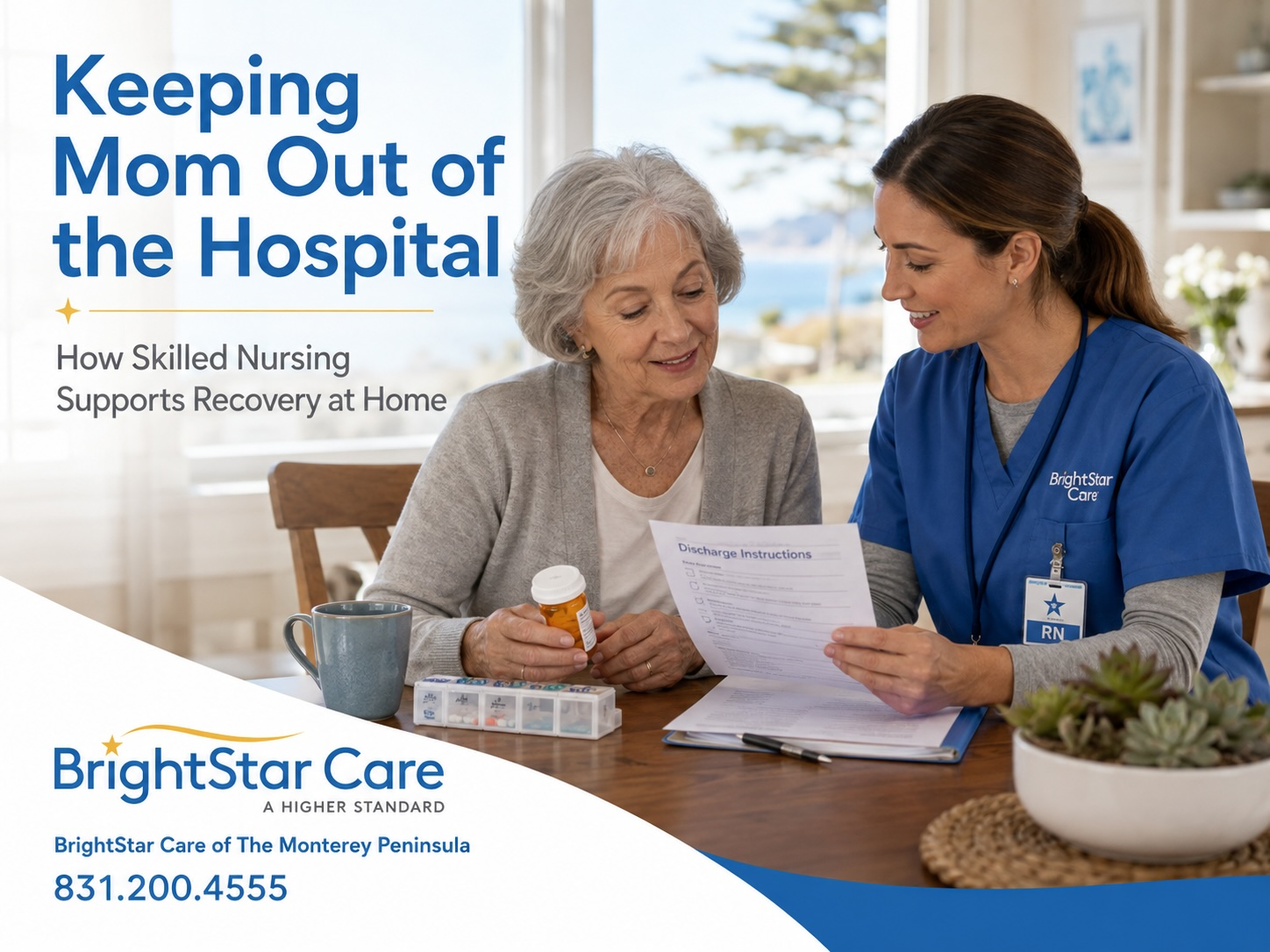
.png "Keeping-Mom-Out-of-the-Hospitals-(1).png")
Your mom just came home from the hospital. You're relieved—she's finally recovering in the comfort of her own home. But that relief can quickly turn into worry.
What if something goes wrong? What if she falls? What if her medications change and she gets confused? How will you know if a new symptom is something minor or an early warning sign of a bigger problem?
These concerns are common for families throughout Monterey, Carmel, Pacific Grove, Pebble Beach, Salinas, and surrounding communities. The transition from the hospital back home can be one of the most vulnerable periods in a senior's recovery.
That's where private duty and skilled nursing care at home can make a meaningful difference.
At BrightStar Care of The Monterey Peninsula, our nurse-led approach helps families navigate the transition home with professional oversight, skilled care, and support designed around each client's individual needs.
The goal is simple: help your loved one recover safely at home while identifying potential complications before they become emergencies.
Why Hospital Readmissions Happen
Hospital readmissions aren't always caused by one major event. Often, several smaller issues begin to add up after a senior returns home.
A loved one may be discharged with new medications, mobility limitations, wound care instructions, follow-up appointments, dietary recommendations, and changes to their normal routine.
Family members naturally want to help, but managing a complicated recovery can be difficult without clinical training.
Common concerns after discharge may include:
- Medication changes or confusion
- Falls or increased weakness
- Changes in blood pressure, blood sugar, or other vital signs
- Wound complications
- Dehydration or poor nutrition
- Increased shortness of breath
- Signs of infection
- Difficulty following discharge instructions
- Changes in mental status or behavior
- Missed follow-up appointments
Seniors living with multiple chronic conditions can be particularly vulnerable during the transition home.
BrightStar Care offers short-term transitional care to help individuals and families manage this important period of recovery.
Why the First Few Weeks at Home Matter
Returning home doesn't necessarily mean recovery is complete.
A senior may still be weak from hospitalization, adjusting to new medications, recovering from surgery, or learning to safely move around the home again. Even routine activities such as bathing, getting dressed, preparing meals, or walking to the bathroom may be more difficult than they were before hospitalization.
The right level of support during this period can help families recognize changes earlier and make the recovery process more manageable.
Depending on your loved one's needs, that support may involve skilled nursing, personal care, or a combination of services.
Medication Management and Skilled Nursing Oversight
Medication changes are common following hospitalization.
A senior who previously took several medications may return home with new prescriptions, discontinued medications, different dosages, or new instructions about when medications should be taken.
That's a lot to manage.
A skilled nurse can provide clinical oversight based on the client's physician orders and individualized plan of care.
Depending on the client's needs and authorized services, skilled nursing support may include:
- Reviewing physician orders and medication instructions
- Administering medications when ordered and appropriate
- Monitoring for potential side effects or changes in condition
- Assessing vital signs and symptoms
- Communicating significant clinical changes to the appropriate healthcare provider
- Educating clients and family members about the plan of care
This professional oversight can help identify concerns early, giving the healthcare team an opportunity to intervene before a situation becomes more serious.
Coordinating Care After Hospital Discharge
Many seniors don't have just one doctor.
They may have a primary care physician along with a cardiologist, endocrinologist, pulmonologist, neurologist, surgeon, or other specialists.
Following hospitalization, there may also be new discharge instructions and medication changes.
Private duty and skilled nurses can serve as an important part of the client's care team by helping families understand the plan of care, documenting changes, and communicating clinically significant information when appropriate.
That continuity can be especially valuable when a client's medical needs are complex.
Fall Prevention: Creating a Safer Recovery at Home
Falls are another significant concern following hospitalization.
Even seniors who were previously independent may temporarily experience:
- Muscle weakness
- Balance problems
- Dizziness
- Fatigue
- Medication-related side effects
- Difficulty using walkers or other mobility devices
The home itself can also create hazards.
Loose rugs, cluttered walkways, poor lighting, stairs, and bathrooms without adequate support can become dangerous when someone is recovering from an illness or procedure.
A thoughtful home care plan can help address these risks.
Depending on the client's needs, caregivers may assist with walking, transfers, bathing, dressing, toileting, and other activities of daily living while helping promote a safer home environment.
Monitoring Chronic Conditions Before Problems Escalate
Many older adults returning home from the hospital are also managing chronic medical conditions such as:
- Diabetes
- Congestive heart failure
- COPD
- Hypertension
- Heart disease
- Neurological conditions
Small changes can sometimes provide early warning that someone's condition is worsening.
A skilled nurse may monitor vital signs, symptoms, wounds, medication response, or other clinical indicators according to the client's plan of care.
For example, changes in breathing, increased swelling, unusual weakness, confusion, fever, blood pressure changes, or blood sugar abnormalities may warrant communication with the client's healthcare provider.
Early recognition can allow concerns to be addressed sooner rather than waiting until they become an emergency.
Staying Connected With Your Healthcare Team
One of the biggest benefits of professional nursing care at home is having a trained clinician who understands what to watch for.
When concerning changes occur, nurses can communicate with physicians and other healthcare professionals as appropriate.
That might result in:
- A medication adjustment
- An earlier physician appointment
- New clinical instructions
- Additional monitoring
- Changes to the plan of care
Instead of the family wondering whether something is serious, they have professional support helping them navigate the situation.
Nutrition and Hydration During Recovery
Nutrition and hydration are easy to overlook during recovery.
Seniors may experience a reduced appetite after hospitalization. Others may be too weak to prepare meals, have difficulty swallowing, or simply forget to eat and drink enough throughout the day.
Poor nutrition and dehydration can contribute to weakness, dizziness, confusion, and delayed recovery.
Depending on the client's care plan, caregivers can assist with meal preparation, hydration reminders, and other daily activities that support recovery.
For clients with specialized medical or dietary needs, the care team can follow instructions provided by the client's healthcare professionals.
Education Gives Families Confidence
One of the most valuable parts of skilled nursing isn't simply what the nurse does—it's what the client and family learn.
Understanding a diagnosis, treatment plan, medications, and warning signs can help families feel more confident about caring for someone after hospitalization.
A nurse can help reinforce important information such as:
- Changes to watch for
- When to contact a physician
- Medication instructions
- Wound care instructions
- Safety precautions
- Follow-up care requirements
The result is a better-informed family working alongside the client's healthcare team.
Private Duty Nursing vs. Home Care: What's the Difference?
Families sometimes use the terms interchangeably, but skilled nursing and non-medical home care serve different purposes.
Private duty or skilled nursing provides clinical care performed by licensed nurses based on the client's medical needs, physician orders, and plan of care.
Home care caregivers primarily assist with non-medical activities of daily living, such as:
- Bathing and personal care
- Dressing and grooming
- Mobility assistance
- Meal preparation
- Companionship
- Transportation
- Light housekeeping
- Medication reminders as permitted within the care plan
For many seniors returning home from the hospital, the strongest plan may involve both skilled nursing and caregiver support.
Learn more about our in-home care services in The Monterey Peninsula.
Frequently Asked Questions About Private Duty Nursing After Hospital Discharge
How soon after hospital discharge should private duty nursing begin?
When skilled nursing is needed, having care coordinated before or immediately following discharge can help create a smoother transition home. Ideally, families should begin discussing post-discharge needs while their loved one is still in the hospital.
Does insurance cover private duty nursing?
Coverage depends on the individual's insurance plan, benefits, medical needs, authorization requirements, and type of service being provided. Families should verify benefits with their insurance carrier and care provider.
Can private duty nursing prevent every hospital readmission?
No service can guarantee that a person will not need to return to the hospital. Some hospitalizations are medically necessary and unavoidable. However, professional nursing oversight can help identify changes in condition, support the prescribed treatment plan, and communicate concerns to the healthcare team before certain issues become more serious.
What's the difference between a private duty nurse and a caregiver?
A licensed nurse provides skilled medical services within their professional scope and the client's plan of care. A caregiver provides non-medical assistance with everyday activities.
BrightStar Care's nurse-led approach allows families to access different levels of support as their loved one's needs change.
How do we know if our loved one may need skilled nursing after discharge?
Our team can help families understand the options available based on their situation.
Helping Seniors Recover Safely at Home in Monterey
Going home after hospitalization should feel like a step forward—not the beginning of another crisis.
Professional support can help bridge the gap between hospital discharge and successful recovery at home.
At BrightStar Care of The Monterey Peninsula, we provide personalized in-home care and skilled nursing services to help seniors and adults remain safe, comfortable, and supported in familiar surroundings.
Our team serves families throughout Monterey and surrounding communities, with care tailored to each client's individual circumstances.
Take the Next Step
If your loved one is preparing to leave the hospital—or has recently returned home—you don't have to navigate the transition alone.
Contact BrightStar Care of The Monterey Peninsula to discuss how skilled nursing, transitional care, or in-home caregiver support may fit into your loved one's recovery plan.
BrightStar Care proudly serves families across the Monterey Peninsula and surrounding communities, including:
Monterey, Carmel, Carmel Valley, Pacific Grove, Pebble Beach, Marina, Seaside, Salinas, Soledad, King City, and Hollister.
2511 Garden Road, Suite C250
Monterey, CA 93940
Call us 24/7: (831) 200-4555
Website: BrightStar Care of The Monterey Peninsula
Skilled Nursing Care: Learn More
Short-Term Transitional Care: Learn More
Contact Our Team: Contact BrightStar Care
Whether your loved one needs short-term help after hospitalization or ongoing support at home, our team is here to help you develop a care plan focused on safety, comfort, independence, and peace of mind.
Call BrightStar Care of The Monterey Peninsula today at (831) 200-4555 to learn more about care options for your family.