
.png "Picture1-(1).png")
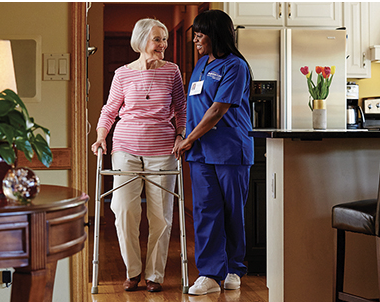
Every year, National Fall Prevention Week is a reminder that most falls are preventable—especially at home. For older adults, a single fall can change everything: confidence, mobility, and independence. As a home care agency, we see what really works day-to-day. Here are practical, field-tested ideas you can put to use now.
Why falls happen (and what to watch for)
- Environment hazards: clutter, throw rugs, cords, poor lighting, slippery tubs, pets underfoot.
- Health factors: dizziness, low blood pressure, medication side effects, vision/hearing changes, neuropathy.
- Strength & balance: deconditioning after illness, limited movement, fear-based inactivity.
- Routines & timing: rushing to the bathroom at night, carrying laundry on stairs, hurrying to answer the door.
A 15-minute home walkthrough
Use this mini-audit the way our caregivers do at the start of care:
Entry & thresholds
- Railings on both sides of steps; non-slip mats inside/outside; motion-sensor lights.
Hallways & living areas
- Keep a 36” clear path; remove/secure throw rugs; bundle cords; add nightlights.
Bathroom
- Non-slip decals; grab bars (shower entry, standing area, toilet); raised toilet seat; shower chair and hand-held wand.
Bedroom
- Bed height = feet flat, knees ~90°; phone/glasses/call button within reach; sturdy dressing chair with arms.
Kitchen
- Store daily items between waist and shoulder height; non-slip mats by sink/stove; transfer water with a measuring cup instead of carrying heavy pots.
Movement is medicine: a simple balance plan
(If safe for you, aim for 5–10 minutes, twice daily.)
- Sit-to-stands from a sturdy chair, 5–10 reps.
- Heel-to-toe stands at the counter, 30 seconds.
- Marching in place holding the sink, 30–60 seconds.
- Ankle pumps & circles before standing to reduce dizziness.
- Short hallway walks every couple of hours.
Caregiver tip: Pair exercises with routines—sit-to-stands during TV ads; heel-to-toe while the kettle boils. Check with your clinician if you’ve had recent surgery, new pain, or dizziness.
Smarter footwear
- Choose: closed-heel/toe, thin non-slip sole, secure fastener (laces/Velcro).
- Avoid: backless slippers, thick squishy soles, socks alone on hard floors.
- Keep two pairs: one indoor-only pair so treads stay clean and grippy.
Tech that helps (and what to skip)
- Motion-activated nightlights on the route to the bathroom.
- Smart plugs/voice assistants to turn on lamps—no reaching.
- Wearable alerts with automatic fall detection for those living alone.
- Cane/walker fit: elbows ~15–20° bend with hands on grips. Use proper glide tips (tennis balls can catch).
Skip gadgets that add steps or require constant charging without a backup plan.
Safer bathroom routine in 4 steps
- Prep: towel within reach; grab bars checked; chair ready.
- Water first: start water before stepping in; use a hand-held wand to reduce twisting.
- Towel-off seated: warm robe nearby to prevent rushing.
- Moisturize feet last and light: lotions can make floors slick.
The “stand-up” checklist we teach: P.L.A.N.
- P—Pause: take a breath; check for dizziness.
- L—Lead with your nose over your toes (don’t push with your back).
- A—Anchor hands on armrests or grab bar (not rolling furniture).
- N—Next step: know where you’re going and what you’re carrying.
Have an emergency plan
- Speed dials: caregiver/family/911 on the first screen of the phone.
- Fall card: near the phone—address, key box code, medications, conditions.
- Practice: rehearse calling for help; keep a lockbox or smart lock for responders.
- No-lift rule: don’t lift from the floor alone. Keep warm with blankets, assess pain, call for help if needed.
For family caregivers: support without taking over
- Coach, don’t carry: guide the hand to the grab bar; let them do the movement.
- Count together: “1-2-3 stand” syncs effort.
- Spotting stance: one foot back, hands ready at a gait belt/hips.
- Celebrate small wins: confidence builds balance as much as muscle.
When to bring in professional help
- Two or more falls in the past year.
- New fear of falling that limits activities.
- Noticeable changes: shuffling, furniture-walking, skipping social events.
- Hospitalization, new meds, or a move to a new home layout.
A home care professional can assess fall risk, tune the environment, create a daily activity plan, and coordinate with your doctor.
BrightStar Care of The Monterey Peninsula Can Help
At BrightStar Care of The Monterey Peninsula, we provide personalized home care to match each client’s needs. With high-quality, compassionate support and deep commitment to our local healthcare community, we help clients live their best lives while strengthening Monterey County.
BrightStar Care of The Monterey Peninsula offers in-home care and support to help you or your loved one age with confidence. We proudly serve Monterey, Carmel, Pacific Grove, Pebble Beach, Marina, Hollister, Seaside, Salinas, Soledad, and King City.
- 2511 Garden Road C250, Monterey, CA 93940
- 831.200.4555
- www.brightstarcare.com/monterey-peninsula