
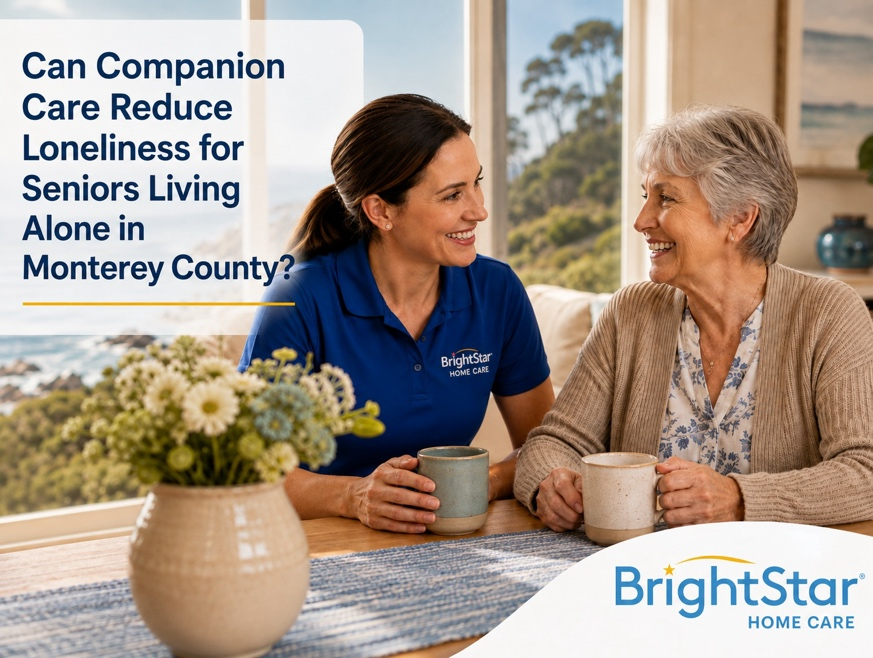
Loneliness among seniors is more than just an emotional struggle—it can also affect overall health and well-being. Research from the National Institute on Aging has linked loneliness and social isolation in older adults with increased risks of depression, heart disease, cognitive decline, and other health concerns.
For families throughout Monterey, Carmel, Carmel Valley, Pacific Grove, Pebble Beach, Marina, Seaside, Salinas, and surrounding Monterey County communities, watching a parent or loved one spend more and more time alone can be difficult.
The good news is that families don't necessarily have to choose between moving a loved one from their home and leaving them without additional support. In-home companion care can provide another option—helping seniors remain in familiar surroundings while bringing regular companionship, activity, and human connection into their daily routines.
What Does Senior Loneliness Actually Look Like?
Loneliness doesn't always look like sadness. The signs can sometimes be subtle and develop gradually.
Families may notice:
- Losing interest in hobbies or activities they once enjoyed
- Spending fewer days outside of the home
- Fewer phone calls or visits with friends and family
- Changes in eating habits or daily routines
- Less attention to personal care or household tasks
- Increased forgetfulness or confusion
- Spending most of the day watching television or sitting alone
- A general loss of motivation or enthusiasm
These changes can be easy to miss because they often happen slowly. One skipped walk can become several weeks of staying inside. A missed social event can gradually turn into rarely leaving the house.
Older adults may also become more vulnerable to isolation because of mobility limitations, transportation challenges, hearing or vision changes, the loss of a spouse or friends, or difficulty getting out of the home independently.
What Is Companion Care?
Companion care is a form of non-medical in-home care focused on companionship, social interaction, maintaining routines, and helping with everyday activities.
Unlike skilled nursing care, companion care does not primarily focus on treating medical conditions. Instead, it helps seniors remain engaged and supported while continuing to live at home.
A companion caregiver may help by:
- Sitting down for conversation over coffee or a meal
- Working on puzzles, crafts, games, or reading together
- Preparing meals and providing companionship during mealtime
- Taking walks together
- Helping with grocery shopping and errands
- Providing transportation to appointments and social activities
- Helping with light housekeeping and laundry
- Encouraging hobbies and favorite activities
- Helping clients stay connected with friends and family
- Providing a reassuring presence during the day
At BrightStar Care of The Monterey Peninsula, companion care is personalized around the individual's personality, routines, interests, and needs.
These activities may seem simple, but they are often the everyday moments that give a person's day structure, purpose, and connection.
How Companion Care Can Help Reduce Loneliness
Consistent Human Connection
Having a familiar caregiver arrive on a regular schedule gives a senior someone to talk with, spend time with, and look forward to seeing.
For someone who may otherwise spend much of the day alone, simply having regular meaningful interaction can make a noticeable difference in their daily routine.
Encouragement to Stay Active
When someone lives alone, it's easy to skip a walk, put off an errand, or spend another day inside.
A companion caregiver can encourage activities such as taking a walk around the neighborhood, visiting a favorite Monterey County destination, completing a puzzle, working in the garden, or getting out for lunch.
The goal isn't to force activities. It's to make participating in everyday life easier and more enjoyable.
Meaningful Interaction, Not Just Someone in the Room
There is an important difference between having the television playing in the background and having someone genuinely listening, responding, laughing, and participating in conversation.
Companion care provides real interaction.
For some seniors, that might mean telling stories over coffee. For others, it might mean playing cards, looking through family photographs, working on a puzzle, reading, cooking together, or taking a drive along the Monterey Peninsula.
The activity matters less than the connection.
Help Staying Connected to the Community
Transportation can become a major barrier to staying socially active as people age.
Companion caregivers can help clients get out of the house for appropriate activities such as:
- Doctor appointments
- Grocery shopping
- Hair appointments
- Lunch with friends
- Religious services
- Senior activities
- Family gatherings
- Community events
- Walks or outings
Sometimes having someone available to accompany a senior is all it takes to make an outing possible.
Reduced Worry for Family Members
Adult children and other family members are often balancing careers, children, appointments, and their own responsibilities while worrying about a parent living alone.
You may find yourself wondering:
Did Mom eat today?
Has Dad talked to anyone since I called?
Has she left the house this week?
Is he becoming more isolated?
Companion care can provide families with additional peace of mind by ensuring that a trusted caregiver is regularly spending time with their loved one, helping maintain routines, and providing meaningful engagement.
Companion Care Can Also Support Independence
One of the biggest misconceptions about home care is that bringing in help means giving up independence.
Often, the opposite is true.
The right amount of support can make it easier for an older adult to continue living safely and comfortably in the home they know.
For example, a senior may still be able to make many of their own decisions but benefit from someone who can:
- Help prepare a meal
- Drive them to an appointment
- Accompany them on errands
- Take a walk with them
- Help maintain a daily routine
- Provide conversation and encouragement
That additional support can help make remaining at home more manageable.
Personalized Companion Care in Monterey County
Every senior is different.
Some people want someone who enjoys conversation. Others would rather work on puzzles, garden, take walks, go shopping, watch a favorite television program together, or simply have another person nearby.
That's why caregiver compatibility matters.
At BrightStar Care of The Monterey Peninsula, we take time to understand the client's personality, history, routines, interests, and care needs when developing their individualized plan of care.
Our companion care services are also supported by Registered Nurse oversight, allowing the care plan to evolve if a client's needs change over time.
When Should a Family Consider Companion Care?
You don't have to wait for an emergency before considering additional support.
It may be worth having a conversation about companion care if your loved one:
- Lives alone and spends most days by themselves
- Rarely leaves the house
- Has stopped participating in activities they once enjoyed
- No longer drives or has limited transportation
- Seems increasingly withdrawn
- Needs encouragement with meals or daily routines
- Would benefit from regular conversation and social activity
- Needs someone to accompany them to appointments or errands
- Has family members who cannot visit as often as they would like
Sometimes a few hours of companionship on a regular basis can provide meaningful additional support.
Frequently Asked Questions About Companion Care
What's the Difference Between Companion Care and Home Health Care?
Companion care focuses primarily on non-medical support such as companionship, meal preparation, errands, transportation, light housekeeping, and helping clients remain engaged in everyday activities.
Skilled home health or nursing care involves clinical services provided by licensed healthcare professionals for individuals who have medical needs.
BrightStar Care of The Monterey Peninsula offers a range of in-home care services, allowing families to explore different levels of support as a loved one's needs change.
Does My Parent Need a Medical Condition to Receive Companion Care?
No. Companion care is non-medical support.
A person may benefit simply because they spend significant amounts of time alone, no longer drive, need help staying active, or would enjoy having regular companionship and assistance with daily activities.
How Are Caregivers Matched With Clients?
Caregiver compatibility is an important part of successful companion care.
BrightStar Care considers the client's needs, routines, personality, interests, and family circumstances when developing care and identifying an appropriate caregiver.
The goal is not simply to fill a shift. It's to create a comfortable and supportive relationship.
Can Companion Care Help With Transportation?
Yes. Transportation and accompaniment can be part of companion care.
Depending on the client's care plan, caregivers may assist with transportation to:
- Medical appointments
- Grocery stores
- Shopping
- Social activities
- Family gatherings
- Community events
- Other appropriate outings
Learn more about our local companion care services.
Can Companion Care Include Meal Preparation?
Yes. Companion caregivers can assist with meal planning and preparation as part of a client's individualized care plan.
Sharing a meal can also provide an important opportunity for conversation and social interaction.
How Do I Know if My Parent Really Needs Companion Care?
Consider how much time your loved one is spending alone and whether their normal routines have changed.
If they rarely leave home, have stopped participating in activities, seem more withdrawn, need help with errands or meals, or you find yourself constantly worrying about them between visits, it may be worthwhile to explore additional support.
You don't have to wait for a crisis.
Taking the First Step
If you've noticed a parent or loved one becoming more isolated, spending more time alone, or simply seeming less engaged with everyday life, starting a conversation about companion care may be worthwhile.
Home care doesn't have to mean giving up independence.
Sometimes it simply means adding the right person to someone's day.
Bring Connection Back Into Your Loved One's Life
BrightStar Care of The Monterey Peninsula provides personalized companion care and other in-home care services for families throughout Monterey County and the surrounding area.
We proudly serve communities including Monterey, Carmel, Carmel Valley, Pacific Grove, Pebble Beach, Marina, Seaside, Salinas, Soledad, King City, and surrounding communities.
Whether your loved one needs companionship a few times a week, help maintaining daily routines, transportation and errands, or more ongoing in-home support, our local team can help you explore options based on their individual needs.
Contact BrightStar Care of The Monterey Peninsula
BrightStar Care of The Monterey Peninsula2511 Garden Road, Suite C250
Monterey, CA 93940
Phone: 831-200-4555
Website: BrightStar Care of The Monterey Peninsula
Companion Care: Learn More About Companion Care
In-Home Care: Explore Our In-Home Care Services
Contact Us: Request More Information
Ready to learn more? Call (831) 200-4555 or contact BrightStar Care of The Monterey Peninsula online to discuss how companion care may help bring more connection, activity, and support into your loved one's daily life.