
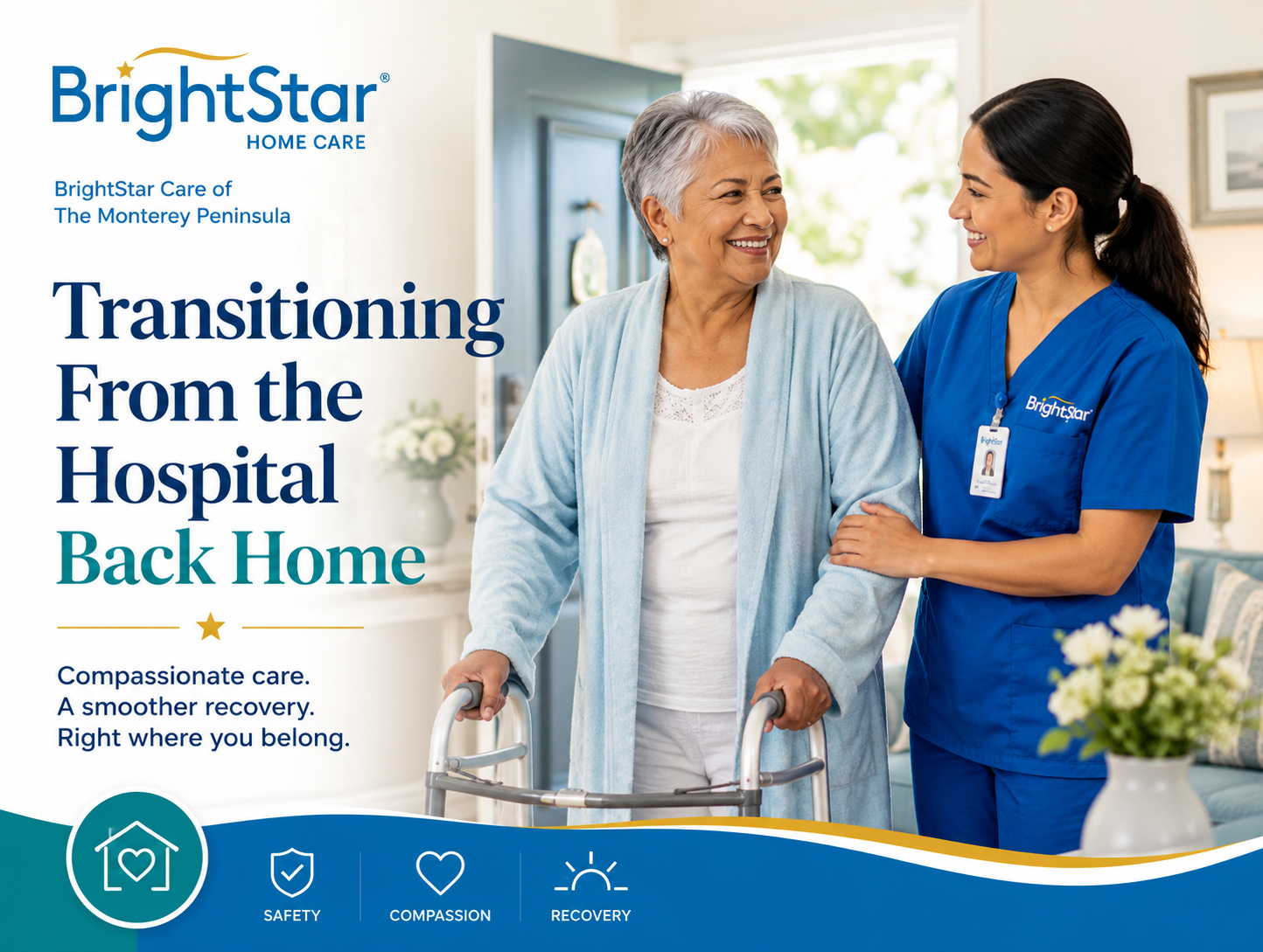
No one likes a long hospital stay, but for many seniors and adults recovering from an illness, injury, surgery, or health event, a hospital stay may be necessary. While returning home is often something families look forward to, the transition from hospital to home can also feel overwhelming.
A successful recovery at home requires planning, safety, communication, and the right level of support. That is where BrightStar Care of The Monterey Peninsula can help. Our team provides compassionate, nurse-led in-home care for families throughout the Monterey Peninsula, including Monterey, Carmel, Pacific Grove, Pebble Beach, Marina, Seaside, Salinas, Soledad, King City, and surrounding communities.
Whether your loved one needs short-term help after a hospitalization, personal care, companion care, or skilled nursing support, BrightStar Care of The Monterey Peninsula is here to help make the transition home safer, smoother, and more comfortable.
Preparing the Home Environment
Before your loved one leaves the hospital, it is important to prepare the home for a safe return. This includes more than just cleaning up the house. Families should consider fall prevention, accessibility, comfort, and emotional readiness.
Here are a few important steps to take before discharge:
Remove potential hazards. Walk through the home and look for anything that could increase the risk of a fall or injury. Loose rugs, cluttered walkways, poor lighting, cords, and sharp furniture edges should be addressed before your loved one returns home.
Install helpful safety devices. Grab bars, handrails, non-slip mats, raised toilet seats, shower chairs, walkers, canes, or wheelchairs may help make daily activities safer and easier. These small changes can make a big difference in helping your loved one feel more secure.
Create a comfortable recovery space. Set up a quiet, well-lit, and relaxing area where your loved one can rest. Keep important items nearby, including water, phone, medications, tissues, reading materials, and any supplies recommended by the discharge team.
Plan for daily support. Some seniors may need help with bathing, dressing, grooming, mobility, meal preparation, light housekeeping, transportation, and reminders throughout the day. BrightStar Care of The Monterey Peninsula offers personal care services and companion care services to help support safety and independence at home.
Beginning the Transition Process
Leaving the hospital is an important milestone, but it is only the beginning of the recovery process. The first few days and weeks at home are often critical. Families should make sure they understand the discharge instructions and feel comfortable with the care plan before leaving the hospital.
Before discharge, ask the healthcare team:
- What medications should be taken and when?
- Are there any medications that should be stopped?
- What side effects or warning signs should we watch for?
- Are there dietary restrictions?
- What level of activity is allowed?
- Are follow-up appointments already scheduled?
- Is physical therapy, occupational therapy, or skilled nursing needed?
- What should we do if symptoms worsen?
Having clear answers can help reduce confusion and prevent unnecessary setbacks. BrightStar Care of The Monterey Peninsula’s in-home care services can help families build a support plan around the client’s needs, routine, and recovery goals.
Managing Medications Properly
Medication management is one of the most important parts of returning home after a hospital stay. New prescriptions, changed dosages, or discontinued medications can be confusing, especially when multiple doctors are involved.
Families can help by taking these steps:
Organize prescriptions. Use a pill organizer, medication chart, calendar, or mobile app to track what needs to be taken and when. Keep an updated medication list available for caregivers, family members, physicians, and emergency responders.
Understand possible side effects. Ask the doctor or pharmacist about common side effects, warning signs, and possible drug interactions. Knowing what to watch for can help families respond quickly if something changes.
Communicate with the pharmacy. Pharmacists can be a helpful resource when reviewing medication instructions, timing, food restrictions, and potential interactions.
Ask for help when needed. BrightStar Care caregivers can assist with medication reminders in accordance with the client’s care plan and applicable care guidelines. For clients who need a higher level of clinical support, BrightStar Care of The Monterey Peninsula also offers skilled nursing care.
Establishing a Routine at Home
A consistent routine can help seniors feel more comfortable, confident, and supported after returning home. Recovery can feel unpredictable, but a daily schedule helps bring structure to each day.
A helpful routine may include:
- Regular wake-up and bedtime schedules
- Meals and hydration
- Medication reminders
- Bathing, dressing, and grooming
- Light activity or therapy exercises, if recommended
- Rest periods
- Follow-up appointments
- Social interaction with family, friends, or caregivers
BrightStar Care of The Monterey Peninsula can help families create a care routine that supports both safety and independence. Our team can assist with personal care, companionship, mobility support, meal preparation, light housekeeping, errands, and transportation, depending on the client’s needs.
Supporting Emotional Well-Being
Returning home after a hospital stay can bring mixed emotions. Your loved one may feel relieved to be home, but they may also feel anxious, frustrated, tired, or discouraged.Recovery is not always a straight path, and emotional support is just as important as physical support.
Families can help by:
Providing encouragement. Celebrate small improvements and remind your loved one that recovery takes time.
Watching for changes. Increased confusion, sadness, withdrawal, agitation, or changes in appetite or sleep should be communicated to the healthcare team.
Encouraging independence. Allow your loved one to do as much as they safely can on their own. Maintaining independence can help preserve confidence and dignity.
Preventing isolation. Regular visits, phone calls, activities, and caregiver companionship can help reduce loneliness during recovery.
BrightStar Care’s companion care services can provide meaningful social support while also helping with daily routines and household tasks.
Adjusting Care as Needs Change
A loved one’s care needs may change during recovery. Some individuals improve quickly and need less support over time, while others may require additional assistance. Families should continue monitoring changes in mobility, appetite, pain, mood, sleep, medication tolerance, and overall safety.
It is important to contact the healthcare provider if you notice:
- Fever or signs of infection
- Increased pain
- Shortness of breath
- Confusion or sudden behavior changes
- Dizziness or falls
- Trouble eating, drinking, or taking medications
- Worsening weakness
- Any symptoms listed in the hospital discharge instructions
As needs change, BrightStar Care of The Monterey Peninsula can help adjust the care plan. Our nurse-led approach means each individualized plan of care can evolve as the client’s needs change.
Here for You During the Transition Home
Transitioning from the hospital back home can be challenging, but families do not have to manage it alone. With the right support in place, your loved one can return home with greater comfort, safety, and peace of mind.
BrightStar Care of The Monterey Peninsula provides a wide range of home care services to support seniors and adults at home, including companion care, personal care, transitional support, Alzheimer’s and dementia care, and skilled nursing services.
If your loved one is preparing to come home from the hospital, our team is here to help. Contact BrightStar Care of The Monterey Peninsula or call 831.200.4555 to learn more about how we can support a safe and comfortable transition home.