
Most people have a general sense of what home care looks like: a caregiver who helps an older adult with bathing, dressing, meals, and getting around the house. That picture is accurate for a significant portion of the people who receive home care, that level of support is exactly what is needed.
But there is another category of home care client whose needs are substantially more involved. People who are managing not one condition but several, simultaneously, in ways that interact and complicate each other. People who depend on medical technology feeding tubes, ventilators, tracheostomies, IV lines to sustain their basic functioning. People whose care requires the ongoing involvement of licensed nurses working from a physician-ordered plan, not just a trained caregiver working from a schedule.
This is what complex care at home means. And for families in the Greater Scottsdale area who are navigating a situation that feels more medical than what standard home care seems designed for, understanding what complex care is and whether it applies to their loved one is the right starting point.
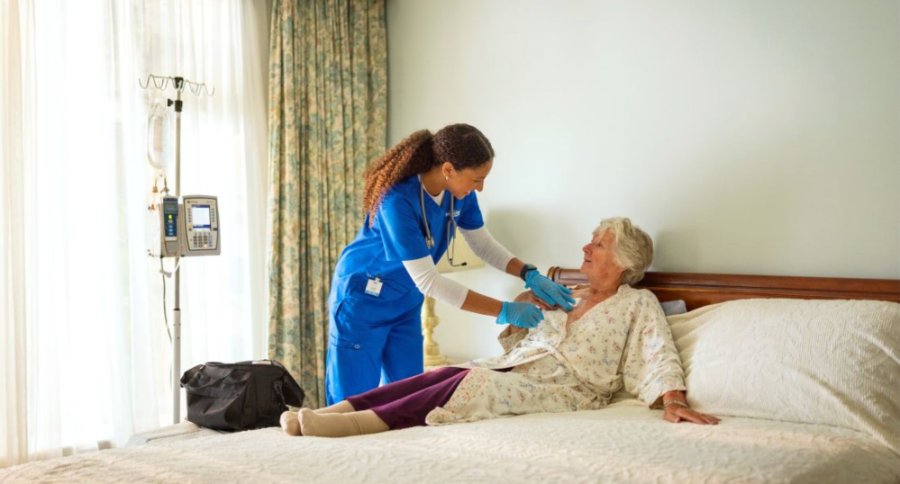
Care becomes complex when one or more of the following is true:
Multiple chronic conditions interact with each other. A person managing heart failure, chronic kidney disease, and diabetes simultaneously is not simply managing three separate conditions each one affects the others in ways that make monitoring and management significantly more challenging. A medication adjustment for one condition can destabilize another. The fluid restrictions appropriate for heart failure conflict with hydration needs during an Arizona summer. Blood sugar management is affected by medications used to treat cardiac conditions. Managing this level of complexity safely requires clinical judgment, not just caregiver support.
Medical technology is involved. Clients who require a tracheostomy, mechanical ventilation, a feeding tube, a central venous access device, a wound VAC, or other medical devices at home have care needs that fall squarely within the skilled nursing scope. Equipment must be maintained, monitored, and managed correctly every day. Complications must be recognized and responded to quickly. This is not care that can be safely delegated to a non-clinical caregiver.
Skilled nursing procedures are required on a regular basis. Complex wound care, IV therapy, medication administration that requires clinical monitoring, injections, catheter care these are skilled nursing functions. When a client requires them regularly, the care is by definition complex, and the level of oversight must reflect that.
The condition is unstable or high-acuity. Some clients have conditions that are well-controlled and predictable. Others have conditions that are inherently unstable, prone to rapid deterioration, requiring frequent reassessment, and demanding a clinical response time that a non-medical caregiver cannot provide. High-acuity home care clients fall into this category.
The client is recovering from a significant acute event. Following a major surgery, a serious hospitalization, or a significant health event such as a stroke or cardiac episode, a client's clinical needs are often at their most complex and their most time-sensitive. The transition period from hospital or rehabilitation facility to home is when complex care is most likely to be needed and most likely to make the difference between a successful recovery and a readmission.
Visit Our Website 480-302-5139

Adults with multiple chronic conditions. Heart failure, COPD, diabetes, chronic kidney disease, Parkinson's disease, stroke sequelae any of these individually can generate significant care needs. In combination, they typically do. For adults managing several serious conditions simultaneously, the level of monitoring and clinical coordination involved goes well beyond what a standard non-medical caregiver can provide.
Technology-dependent clients. Adults and children who require ventilators, tracheostomies, feeding tubes, central venous access devices, or insulin pumps at home are technology-dependent. Their care requires skilled nursing involvement on a regular basis to ensure equipment is functioning correctly and to manage complications as they arise.
Post-surgical and post-hospitalization clients. Following complex surgeries cardiac surgery, orthopedic surgery, major abdominal procedures or following hospitalizations for significant acute events, clients often return home with wound care needs, IV therapy requirements, and clinical monitoring needs that require skilled nursing involvement, sometimes daily in the early recovery period.
Clients with neurological conditions. Amyotrophic lateral sclerosis (ALS), multiple sclerosis, Parkinson's disease, post-stroke deficits, and traumatic brain injury all generate complex care needs combinations of skilled nursing, therapy support, and non-medical caregiving that must be carefully coordinated to maintain the client's safety, function, and quality of life.
Clients receiving infusion therapy at home. IV antibiotics, parenteral nutrition, hydration therapy, biologic medications, and other infusion treatments require skilled nursing for line management, infusion administration, and monitoring for complications. Infusion therapy is inherently a skilled, complex care service.
Children with significant medical needs. Medically complex children those with congenital conditions, technology dependence, or chronic conditions requiring ongoing skilled management require complex care that is specifically adapted to pediatric patients and pediatric families.
For families who have not encountered it before, complex home care may not look like what they expect. It is not a caregiver simply performing clinical-looking tasks. It is a coordinated, physician-directed system of care delivered in the home environment.
At the center of complex home care is a skilled nurse, a registered nurse or licensed practical nurse working from a physician-ordered plan of care that specifies what assessments, procedures, and monitoring are required, how frequently, and what findings should prompt communication with the physician. The nurse conducts thorough clinical assessments at each visit, performs any required skilled procedures, reviews medications, monitors for complications or deterioration, and communicates regularly with the treating physician and care team.
Alongside the skilled nursing layer, many complex care clients also receive non-medical caregiving personal care, companionship, meal preparation, household support from a trained caregiver who provides consistent daily presence and fills the time between nursing visits with safe, reliable support.
For clients with the highest level of need, skilled nursing may be required daily or even multiple times per day. For others, the nursing visits are less frequent weekly or biweekly but remain the clinical backbone of a care plan that also includes non-medical caregiver support.
The care plan is not static. As the client's condition changes, the plan changes with it. This is one of the things that distinguishes complex care from a fixed service arrangement: it requires ongoing clinical judgment and ongoing coordination, not just consistent execution of a predetermined routine.
Visit Our Website 480-302-5139
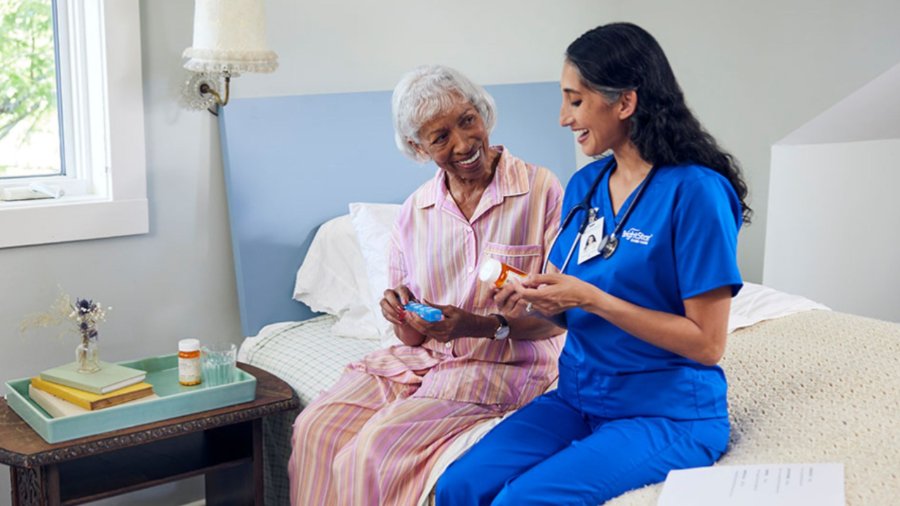
Home eliminates exposure to hospital-acquired infections, which are a serious risk for medically vulnerable clients in institutional settings. Home allows clients to sleep in their own beds, eat food they choose, maintain relationships with family members without visiting hours, and experience the psychological benefits of being in a familiar environment, benefits that are not trivial for people managing serious illness.
Home also allows complex care to be built around the individual. The plan of care reflects this specific person's conditions, preferences, and goals, not a facility's staffing patterns or a standardized clinical protocol applied across a population of residents.
For families in Scottsdale, Paradise Valley, Fountain Hills, and surrounding communities who are considering their options, the question is not simply whether complex care at home is possible. For many clients, it is the best option available.
At BrightStar Care of Greater Scottsdale, we provide both skilled nursing and non-medical home care for clients with complex medical needs throughout Scottsdale, Paradise Valley, Fountain Hills, Cave Creek, Carefree, and surrounding communities.
Our approach to complex care begins with a thorough clinical assessment conducted by a registered nurse that establishes the client's current condition, identifies all skilled nursing needs, and forms the basis of a physician-coordinated plan of care. We maintain communication with the client's treating physicians throughout the care relationship, ensuring that changes in condition are reported promptly and that the plan of care evolves with the client's needs.
For families who are not sure whether their loved one's needs qualify as complex care, or whether BrightStar Care is the right fit, we welcome that conversation. Our care coordinators can help you understand what level of care your situation requires and whether we are equipped to provide it.
Visit Our Website 480-302-5139
BrightStar Care of Greater Scottsdale provides skilled nursing and non-medical home care services for clients with complex medical needs throughout Scottsdale, Paradise Valley, Fountain Hills, Cave Creek, Carefree, and surrounding communities. To speak with a care coordinator about complex care at home, contact our Scottsdale office today.
Contact BrightStar Care of Greater Scottsdale Today:
But there is another category of home care client whose needs are substantially more involved. People who are managing not one condition but several, simultaneously, in ways that interact and complicate each other. People who depend on medical technology feeding tubes, ventilators, tracheostomies, IV lines to sustain their basic functioning. People whose care requires the ongoing involvement of licensed nurses working from a physician-ordered plan, not just a trained caregiver working from a schedule.
This is what complex care at home means. And for families in the Greater Scottsdale area who are navigating a situation that feels more medical than what standard home care seems designed for, understanding what complex care is and whether it applies to their loved one is the right starting point.
What Makes Care "Complex"
The word complex in this context is not about difficulty for its own sake. It refers to a specific set of characteristics that, when present, require a higher level of clinical oversight, more frequent skilled nursing involvement, and a care plan that is more carefully coordinated with the broader medical team.Care becomes complex when one or more of the following is true:
Multiple chronic conditions interact with each other. A person managing heart failure, chronic kidney disease, and diabetes simultaneously is not simply managing three separate conditions each one affects the others in ways that make monitoring and management significantly more challenging. A medication adjustment for one condition can destabilize another. The fluid restrictions appropriate for heart failure conflict with hydration needs during an Arizona summer. Blood sugar management is affected by medications used to treat cardiac conditions. Managing this level of complexity safely requires clinical judgment, not just caregiver support.
Medical technology is involved. Clients who require a tracheostomy, mechanical ventilation, a feeding tube, a central venous access device, a wound VAC, or other medical devices at home have care needs that fall squarely within the skilled nursing scope. Equipment must be maintained, monitored, and managed correctly every day. Complications must be recognized and responded to quickly. This is not care that can be safely delegated to a non-clinical caregiver.
Skilled nursing procedures are required on a regular basis. Complex wound care, IV therapy, medication administration that requires clinical monitoring, injections, catheter care these are skilled nursing functions. When a client requires them regularly, the care is by definition complex, and the level of oversight must reflect that.
The condition is unstable or high-acuity. Some clients have conditions that are well-controlled and predictable. Others have conditions that are inherently unstable, prone to rapid deterioration, requiring frequent reassessment, and demanding a clinical response time that a non-medical caregiver cannot provide. High-acuity home care clients fall into this category.
The client is recovering from a significant acute event. Following a major surgery, a serious hospitalization, or a significant health event such as a stroke or cardiac episode, a client's clinical needs are often at their most complex and their most time-sensitive. The transition period from hospital or rehabilitation facility to home is when complex care is most likely to be needed and most likely to make the difference between a successful recovery and a readmission.
Visit Our Website 480-302-5139
Who Receives Complex Care at Home
Complex care is not defined by age though many complex care clients are older adults. It is defined by clinical need. The following are among the populations most commonly receiving complex home care.Adults with multiple chronic conditions. Heart failure, COPD, diabetes, chronic kidney disease, Parkinson's disease, stroke sequelae any of these individually can generate significant care needs. In combination, they typically do. For adults managing several serious conditions simultaneously, the level of monitoring and clinical coordination involved goes well beyond what a standard non-medical caregiver can provide.
Technology-dependent clients. Adults and children who require ventilators, tracheostomies, feeding tubes, central venous access devices, or insulin pumps at home are technology-dependent. Their care requires skilled nursing involvement on a regular basis to ensure equipment is functioning correctly and to manage complications as they arise.
Post-surgical and post-hospitalization clients. Following complex surgeries cardiac surgery, orthopedic surgery, major abdominal procedures or following hospitalizations for significant acute events, clients often return home with wound care needs, IV therapy requirements, and clinical monitoring needs that require skilled nursing involvement, sometimes daily in the early recovery period.
Clients with neurological conditions. Amyotrophic lateral sclerosis (ALS), multiple sclerosis, Parkinson's disease, post-stroke deficits, and traumatic brain injury all generate complex care needs combinations of skilled nursing, therapy support, and non-medical caregiving that must be carefully coordinated to maintain the client's safety, function, and quality of life.
Clients receiving infusion therapy at home. IV antibiotics, parenteral nutrition, hydration therapy, biologic medications, and other infusion treatments require skilled nursing for line management, infusion administration, and monitoring for complications. Infusion therapy is inherently a skilled, complex care service.
Children with significant medical needs. Medically complex children those with congenital conditions, technology dependence, or chronic conditions requiring ongoing skilled management require complex care that is specifically adapted to pediatric patients and pediatric families.
What Complex Care at Home Actually Looks Like
For families who have not encountered it before, complex home care may not look like what they expect. It is not a caregiver simply performing clinical-looking tasks. It is a coordinated, physician-directed system of care delivered in the home environment.At the center of complex home care is a skilled nurse, a registered nurse or licensed practical nurse working from a physician-ordered plan of care that specifies what assessments, procedures, and monitoring are required, how frequently, and what findings should prompt communication with the physician. The nurse conducts thorough clinical assessments at each visit, performs any required skilled procedures, reviews medications, monitors for complications or deterioration, and communicates regularly with the treating physician and care team.
Alongside the skilled nursing layer, many complex care clients also receive non-medical caregiving personal care, companionship, meal preparation, household support from a trained caregiver who provides consistent daily presence and fills the time between nursing visits with safe, reliable support.
For clients with the highest level of need, skilled nursing may be required daily or even multiple times per day. For others, the nursing visits are less frequent weekly or biweekly but remain the clinical backbone of a care plan that also includes non-medical caregiver support.
The care plan is not static. As the client's condition changes, the plan changes with it. This is one of the things that distinguishes complex care from a fixed service arrangement: it requires ongoing clinical judgment and ongoing coordination, not just consistent execution of a predetermined routine.
Visit Our Website 480-302-5139
Why Home Is Often the Right Setting for Complex Care
It might seem, given the clinical intensity involved, that complex care clients belong in a facility, a skilled nursing facility, a long-term acute care hospital, or a rehabilitation center. For some clients, at certain points in their condition, that may be true. But for many complex care clients, home is not just preferable it is clinically appropriate and often clinically superior.Home eliminates exposure to hospital-acquired infections, which are a serious risk for medically vulnerable clients in institutional settings. Home allows clients to sleep in their own beds, eat food they choose, maintain relationships with family members without visiting hours, and experience the psychological benefits of being in a familiar environment, benefits that are not trivial for people managing serious illness.
Home also allows complex care to be built around the individual. The plan of care reflects this specific person's conditions, preferences, and goals, not a facility's staffing patterns or a standardized clinical protocol applied across a population of residents.
For families in Scottsdale, Paradise Valley, Fountain Hills, and surrounding communities who are considering their options, the question is not simply whether complex care at home is possible. For many clients, it is the best option available.
How BrightStar Care of Greater Scottsdale Approaches Complex Care
At BrightStar Care of Greater Scottsdale, we provide both skilled nursing and non-medical home care for clients with complex medical needs throughout Scottsdale, Paradise Valley, Fountain Hills, Cave Creek, Carefree, and surrounding communities.Our approach to complex care begins with a thorough clinical assessment conducted by a registered nurse that establishes the client's current condition, identifies all skilled nursing needs, and forms the basis of a physician-coordinated plan of care. We maintain communication with the client's treating physicians throughout the care relationship, ensuring that changes in condition are reported promptly and that the plan of care evolves with the client's needs.
For families who are not sure whether their loved one's needs qualify as complex care, or whether BrightStar Care is the right fit, we welcome that conversation. Our care coordinators can help you understand what level of care your situation requires and whether we are equipped to provide it.
Visit Our Website 480-302-5139
Frequently Asked Questions
Q: What is the difference between complex home care and standard home care?
Standard home care sometimes called non-medical or custodial care provides personal care, companionship, and daily support tasks that do not require clinical training or licensure. Complex home care involves skilled nursing services delivered by a licensed nurse, working from a physician-ordered plan of care, for clients whose medical needs require clinical judgment, licensed procedures, and ongoing physician coordination. Many clients who receive complex care also receive non-medical caregiving alongside the skilled nursing layer, and both are part of an integrated plan.Q: What conditions typically qualify someone for complex home care?
Complex home care is appropriate for clients managing multiple interacting chronic conditions, clients who are technology-dependent (tracheostomy, ventilator, feeding tube, IV access), clients recovering from major surgery or significant acute health events, clients with progressive neurological conditions, clients receiving infusion therapy at home, and medically complex children. The common thread is the presence of clinical needs that require licensed nursing oversight, skilled procedures, or a level of clinical monitoring that exceeds what a non-medical caregiver can safely provide.Q: Can a family member provide complex care alongside a professional home care team?
Yes, and in most complex care situations, family involvement is an important part of the overall care plan. Skilled nurses often teach family members specific skills such as how to recognize warning signs, how to assist with certain procedures, how to manage equipment between nursing visits that allow the family to be meaningfully involved in care without taking on responsibilities that require a clinical license. The professional care team and the family caregiver work together rather than as substitutes for each other.BrightStar Care of Greater Scottsdale provides skilled nursing and non-medical home care services for clients with complex medical needs throughout Scottsdale, Paradise Valley, Fountain Hills, Cave Creek, Carefree, and surrounding communities. To speak with a care coordinator about complex care at home, contact our Scottsdale office today.
Contact BrightStar Care of Greater Scottsdale Today:
- Phone: 480-302-5139
- Address: 17015 N Scottsdale Rd, Ste 115, Scottsdale, AZ 85255
- Visit Us Online: BrightStar Care of Greater Scottsdale