
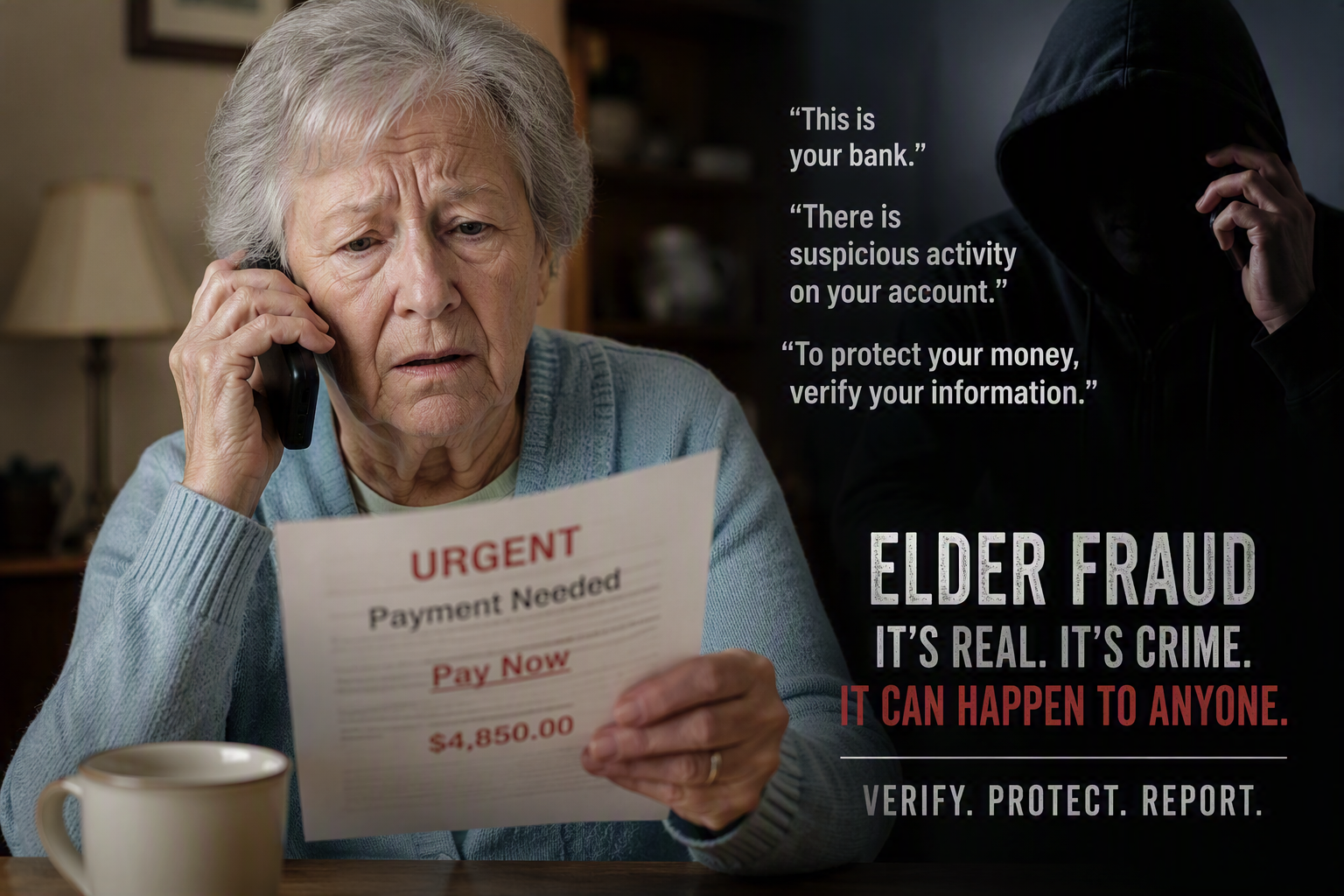
Protecting Seniors from Financial Exploitation
As technology continues to evolve, so do the tactics scammers use to target older adults. Seniors are often targeted because they may have retirement savings, established credit, and a trusting nature that fraudsters seek to exploit. Unfortunately, elder fraud can lead to devastating financial losses, emotional distress, and a loss of independence. Understanding the most common scams and knowing how to recognize the warning signs can help seniors and their families stay protected.
Common Elder Fraud Scams
1. Medicare and Health Insurance Scams
Scammers may pose as Medicare representatives or healthcare providers to obtain personal information such as Medicare numbers, Social Security numbers, or banking details. They may offer "free" medical equipment, services, or prescription benefits that do not actually exist.
How to Avoid It:
- Never provide Medicare or insurance information over the phone unless you initiated the call.
- Review medical statements and Explanation of Benefits (EOBs) regularly.
- Report suspicious billing or unauthorized services immediately.
2. Grandparent Scams
One of the most emotionally manipulative scams involves a fraudster pretending to be a grandchild or other loved one in urgent need of money. The caller may claim they have been arrested, stranded while traveling, or involved in an accident.
How to Avoid It:
- Remain calm and verify the story by contacting the family member directly.
- Be cautious of requests for secrecy.
- Never send money through wire transfers, gift cards, or cryptocurrency without verification.
3. Tech Support Scams
Scammers contact seniors by phone, email, or pop-up messages claiming their computer has a virus or security issue. They often request remote access to the device or payment for unnecessary repairs.
How to Avoid It:
- Do not click on suspicious pop-ups or links.
- Never grant remote access to your computer unless you initiated contact with a trusted provider.
- Install reputable antivirus and security software.
4. Romantic Relationship Scams
Fraudsters create fake online profiles and develop emotional relationships with victims. Once trust is established, they frequently request money for emergencies, travel expenses, or medical bills.
How to Avoid It:
- Be cautious when forming online relationships.
- Never send money to someone you have not met in person.
- Discuss new online relationships with trusted family members or friends.
5. Sweepstakes and Lottery Scams
Victims are informed they have won a prize, lottery, or sweepstakes. The catch is that they must first pay taxes, fees, or processing costs to claim their winnings.
How to Avoid It:
- Remember that legitimate lotteries do not require upfront payments.
- If it sounds too good to be true, it probably is.
- Verify claims through official organizations before taking action.
6. IRS and Government Impersonation Scams
Scammers pose as government employees and threaten arrest, fines, or legal action if immediate payment is not made.
How to Avoid It:
- Government agencies rarely contact individuals by phone demanding immediate payment.
- Hang up and contact the agency directly using publicly listed phone numbers.
- Do not provide personal or financial information.
7. Investment and Financial Scams
Fraudsters promote "guaranteed" investment opportunities with little or no risk. Seniors may be pressured into making quick financial decisions.
How to Avoid It:
- Consult a trusted financial advisor before investing.
- Avoid high-pressure sales tactics.
- Research companies and investment opportunities thoroughly.
Warning Signs That a Senior May Be a Fraud Victim
Family members and caregivers should watch for signs that a loved one may be experiencing financial exploitation, including:
- Unexplained bank withdrawals
- Missing checks or financial documents
- Sudden changes to wills or financial accounts
- Increased secrecy about finances
- Anxiety or fear when discussing money
- Unpaid bills despite sufficient income
Early detection can prevent significant financial losses and help seniors maintain their independence.
General Tips for Preventing Elder Fraud
Stay Connected
Isolation is one of the biggest risk factors for elder fraud. Regular interaction with family, friends, and caregivers can help seniors identify suspicious situations before they become serious problems.
Protect Personal Information
Never share:
- Social Security numbers
- Medicare numbers
- Bank account information
- Passwords
- Credit card details
Unless you are certain of the recipient's identity and purpose.
Slow Down and Verify
Scammers often create a sense of urgency. Encourage seniors to:
- Pause before making financial decisions.
- Consult a trusted family member or advisor.
- Verify requests independently.
Monitor Financial Activity
Regular review of:
- Bank statements
- Credit card accounts
- Insurance claims
- Credit reports
Can help identify unauthorized activity early.
How BrightStar Care of Greenville, NC Can Help
At BrightStar Care of Greenville, NC, protecting the health, safety, and well-being of seniors goes beyond providing exceptional in-home care. Our compassionate caregivers play an important role in helping older adults remain safe from fraud and financial exploitation.
Providing Regular Companionship
Scammers often target isolated seniors. BrightStar Care caregivers provide meaningful companionship and social interaction, helping reduce loneliness and creating opportunities to discuss concerns or suspicious communications.
Observing Changes and Warning Signs
Our caregivers are trained to notice changes in behavior, unusual requests, or signs of financial exploitation. If concerns arise, families can be alerted promptly so appropriate action can be taken.
Encouraging Communication
We help foster open communication between seniors and their loved ones. Maintaining strong family connections can reduce the likelihood of fraud and ensure important financial decisions receive trusted guidance.
Supporting Safety and Independence
Whether assisting with daily activities, medication reminders, transportation, or companionship, our team helps seniors remain safe and independent while reducing opportunities for scammers to take advantage of vulnerable situations.
Offering Peace of Mind for Families
Families gain confidence knowing their loved one has a trusted professional providing support, monitoring for potential concerns, and encouraging safe practices in everyday life.
Final Thoughts
Elder fraud is an unfortunate reality, but education and awareness are powerful tools for prevention. By learning to recognize common scams, protecting personal information, and staying connected with trusted family members and caregivers, seniors can significantly reduce their risk of becoming victims.
At BrightStar Care of Greenville, NC, we are committed to helping older adults live safely, comfortably, and independently at home. Through compassionate care, companionship, and ongoing support, we work alongside families to help protect seniors from fraud while enhancing their quality of life.
For more information about our in-home care and companion services, contact BrightStar Care of Greenville, NC today and learn how we can help your loved one stay safe, connected, and secure.