
September is Alzheimer's and Dementia Awareness Month, a time to shine a light on a disease that affects more than seven million Americans and the families who love them. This year, we want to use that platform to talk about a population whose dementia risk is often overlooked: the men and women who served in our military.
The connection between military service and Alzheimer's disease is not a theory. It is a growing body of research with real implications for hundreds of thousands of veterans and their families including veterans right here in Lake County, the northern suburbs, and throughout the communities BrightStar Care of Gurnee serves.
If you have a veteran in your family, a parent, a spouse, a sibling this post is for you.
Alzheimer's and Dementia Services 847-782-8282
In 2022, an estimated 451,000 veterans were living with Alzheimer's dementia, and more than 130,000 new cases were diagnosed. The U.S. Department of Veterans Affairs has projected that number will increase by 8.4% through 2033 to more than 488,000.
That is nearly half a million veterans living with Alzheimer's today a number that will keep climbing as the Vietnam-era generation ages and as veterans of the post-9/11 conflicts grow older. Behind each of those numbers is a family navigating one of the most demanding caregiving situations there is.
What makes this particularly significant is that veterans are not simply aging into dementia at the same rate as the general population. They are doing so at higher rates, driven by specific exposures and experiences that are unique to military service.
Two factors stand out in the research as the primary drivers of elevated dementia risk in veterans: traumatic brain injury and PTSD. Both are far more common in veterans than in the civilian population, and both have been independently linked to increased dementia risk.
Between 2000 and 2023, active U.S. Department of Defense personnel experienced more than 66,000 moderate or severe cases of TBI, and more than 492,000 cases of any form of TBI were recorded. More than one in five combat wounds from the wars in Afghanistan and Iraq involved brain injuries.
The mechanism connecting TBI to dementia is not fully understood, but research points to several pathways. Brain trauma accelerates the accumulation of the amyloid plaques and tau tangles that are the hallmarks of Alzheimer's disease. It also causes neuroinflammation — a chronic inflammatory response in brain tissue — that appears to contribute to the neurodegenerative process over time. Moderate-to-severe TBI has been found to increase the risk of being diagnosed with Alzheimer's disease specifically.
Critically, the risk is not limited to severe injuries. Even mild TBI, the kind that may not have been formally diagnosed or may have been dismissed as "just getting your bell rung" appears to contribute meaningfully to long-term dementia risk, particularly when exposures are repeated.
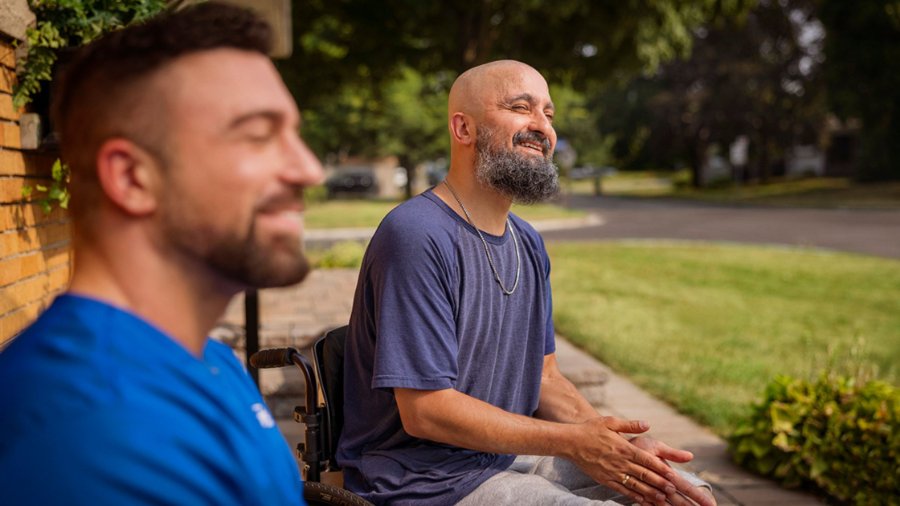
PTSD has also been linked to an increased risk of dementia and is two to five times more common in veterans compared with the general population.
Prior research has shown a relationship between PTSD and dementia risk, with older adults with PTSD showing a two- to fourfold increase in risk of dementia compared to those without PTSD.
A correlation between PTSD and dementia has been established, though whether it represents a causal relationship remains an active area of research. Several mechanisms have been proposed: the chronic stress response associated with PTSD elevates cortisol over long periods, which is toxic to hippocampal neurons — the memory-forming cells that Alzheimer's disease damages first. PTSD is also associated with sleep disruption, social withdrawal, depression, and reduced cognitive engagement, all of which are independent risk factors for dementia.
For veterans who experienced head injuries in combat and also carry a PTSD diagnosis which describes a significant portion of those who served in Iraq and Afghanistan the cumulative risk profile is considerably more serious than either condition alone would suggest.
Many families of veterans are not aware of this connection. They may attribute early cognitive changes in a veteran parent or spouse to normal aging, to the effects of medications, or simply to stress. The research suggests those changes deserve closer clinical attention.
Early signs worth discussing with a physician include:
Changes in memory, particularly for recent events, that go beyond ordinary forgetfulness. Difficulty with familiar tasks — managing finances, following a recipe, navigating a familiar route. Confusion about time, dates, or place. Withdrawal from social activities and interests that were previously important. Changes in mood or personality, including increased anxiety, suspicion, or irritability. Getting lost in familiar environments.
In a veteran with a history of TBI or PTSD, these changes are not simply something to monitor and wait on. They warrant a conversation with a physician who understands the veteran's history and can conduct or refer for appropriate cognitive evaluation.
The VA provides cognitive screening and evaluation services for enrolled veterans. For veterans who are not currently engaged with VA healthcare, re-enrolling is worth considering particularly given the VA's specific experience with the TBI-dementia connection.
Alzheimer's and Dementia Services 847-782-8282
Veterans with dementia are 2.6 times more likely to be hospitalized than other veterans, and hospital stays are on average 2.4 times longer. The average number of outpatient psychiatric visits is three times greater among veterans with dementia than veterans without. More than 60% of the VA's costs of caring for those with Alzheimer's are for nursing home care.
These numbers tell a clear story: dementia in veterans is more medically complex, more resource-intensive, and more burdensome on the healthcare system than dementia in the general aging population. For families, that complexity is lived daily.
Veterans with dementia who also carry PTSD often present caregiving challenges that are distinct from standard dementia care. The hypervigilance, the distrust of strangers, the aversion to being touched or approached from behind, the nightmares and nighttime agitation these are not simply dementia symptoms. They are the intersection of two conditions that compound each other, and caring for someone in that intersection requires both dementia competence and veteran awareness.
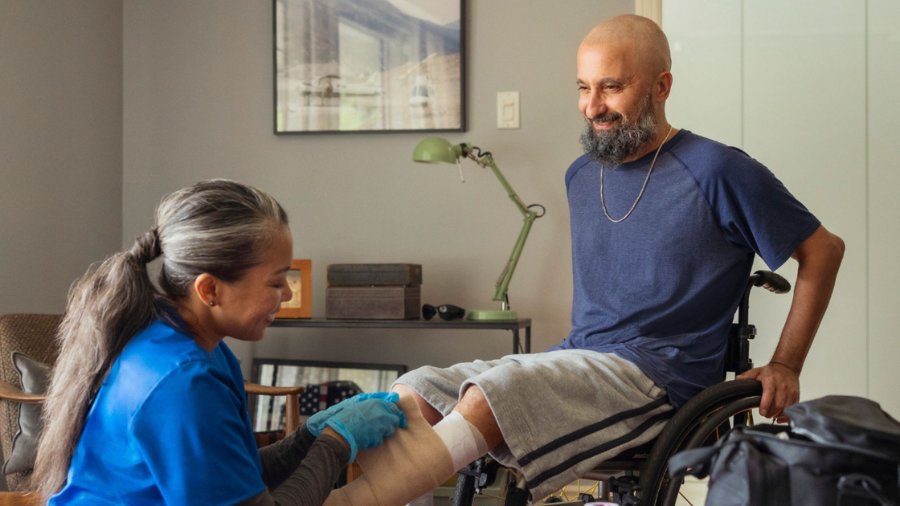
Skilled nursing care addresses the clinical complexity that often accompanies dementia in veterans. Regular nursing assessments track cognitive and functional status over time, monitor medication regimens, coordinate with the treating physician, and provide an early warning system for the hospitalizations that this population is disproportionately prone to. For veterans managing multiple chronic conditions alongside dementia which is the norm rather than the exception — skilled nursing oversight is not optional. It is the infrastructure that keeps home-based care safe and sustainable.
Non-medical caregiving provides the consistent human presence that veteran families need during the long middle stretch of the disease. Our caregivers are trained to work with individuals who have dementia and to navigate the behavioral and emotional dimensions of the condition with patience and skill. For veterans whose PTSD and dementia interact who may resist care from strangers, who may experience nighttime agitation, who may have triggers that family members have learned to work around over decades, caregiver consistency and relationship-building are not nice-to-haves. They are the foundation of effective care.
We understand that many veteran families have strong feelings about privacy, independence, and managing within the family. We approach those values with respect. Our role is to make it possible for your loved one to remain home, safely and with dignity, for as long as that is what the family wants.
Contact Us for a Free Consultation:
Alzheimer's and Dementia Awareness Month is a moment to look at the people in our lives who served who came home carrying things that changed them and to recognize that those experiences may now be shaping their health in ways that deserve attention, conversation, and support.
If you have a veteran family member who has experienced TBI, PTSD, or both, and you have noticed changes in their memory or behavior, this month is a good time to have that conversation with their physician. If you are already navigating a dementia diagnosis in a veteran loved one and you are carrying more than you can hold, BrightStar Care of Gurnee is here to help.
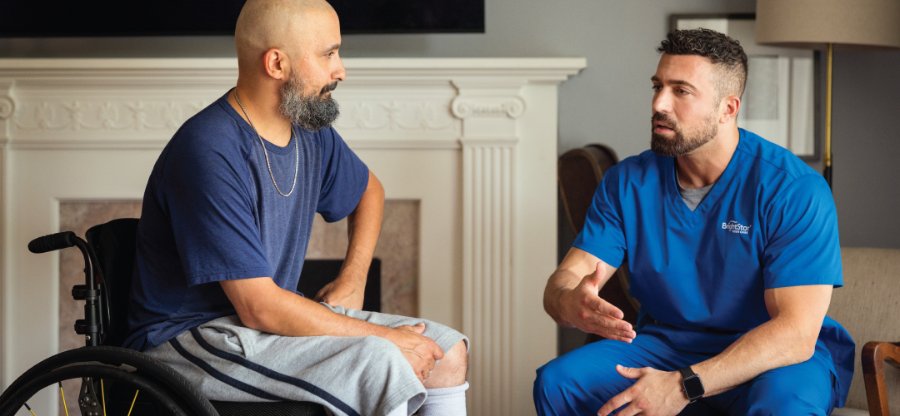
This is one of the most common challenges veteran families face, and it is real. The most effective approach is usually a very gradual introduction starting with brief, low-stakes visits focused entirely on relationship-building rather than task completion, with a caregiver who is patient, consistent, and ideally has some familiarity with veteran culture. Caregiver consistency is especially important for veterans with PTSD: the same face, the same voice, the same approach, visit after visit, builds the predictability and trust that makes care possible. We work with families on this transition carefully and at whatever pace the veteran can manage.
BrightStar Care of Gurnee provides skilled nursing and non-medical home care services for veterans, seniors, and adults throughout Gurnee, Waukegan, Libertyville, Vernon Hills, Mundelein, Barrington, and surrounding Lake County communities. To speak with a care coordinator about support for a veteran in your family, contact our office today.
Alzheimer's and Dementia Services 847-782-8282
The connection between military service and Alzheimer's disease is not a theory. It is a growing body of research with real implications for hundreds of thousands of veterans and their families including veterans right here in Lake County, the northern suburbs, and throughout the communities BrightStar Care of Gurnee serves.
If you have a veteran in your family, a parent, a spouse, a sibling this post is for you.
Alzheimer's and Dementia Services 847-782-8282
The Scale of the Problem
In 2022, an estimated 451,000 veterans were living with Alzheimer's dementia, and more than 130,000 new cases were diagnosed. The U.S. Department of Veterans Affairs has projected that number will increase by 8.4% through 2033 to more than 488,000.That is nearly half a million veterans living with Alzheimer's today a number that will keep climbing as the Vietnam-era generation ages and as veterans of the post-9/11 conflicts grow older. Behind each of those numbers is a family navigating one of the most demanding caregiving situations there is.
What makes this particularly significant is that veterans are not simply aging into dementia at the same rate as the general population. They are doing so at higher rates, driven by specific exposures and experiences that are unique to military service.
Why Military Service Increases Dementia Risk
Two factors stand out in the research as the primary drivers of elevated dementia risk in veterans: traumatic brain injury and PTSD. Both are far more common in veterans than in the civilian population, and both have been independently linked to increased dementia risk.
Traumatic Brain Injury
Evidence indicates that even mild traumatic brain injury increases the risk of developing certain forms of dementia. A recent meta-analysis estimated the increase in dementia risk from any form of TBI was nearly 70%.Between 2000 and 2023, active U.S. Department of Defense personnel experienced more than 66,000 moderate or severe cases of TBI, and more than 492,000 cases of any form of TBI were recorded. More than one in five combat wounds from the wars in Afghanistan and Iraq involved brain injuries.
The mechanism connecting TBI to dementia is not fully understood, but research points to several pathways. Brain trauma accelerates the accumulation of the amyloid plaques and tau tangles that are the hallmarks of Alzheimer's disease. It also causes neuroinflammation — a chronic inflammatory response in brain tissue — that appears to contribute to the neurodegenerative process over time. Moderate-to-severe TBI has been found to increase the risk of being diagnosed with Alzheimer's disease specifically.
Critically, the risk is not limited to severe injuries. Even mild TBI, the kind that may not have been formally diagnosed or may have been dismissed as "just getting your bell rung" appears to contribute meaningfully to long-term dementia risk, particularly when exposures are repeated.
PTSD
PTSD has also been linked to an increased risk of dementia and is two to five times more common in veterans compared with the general population.Prior research has shown a relationship between PTSD and dementia risk, with older adults with PTSD showing a two- to fourfold increase in risk of dementia compared to those without PTSD.
A correlation between PTSD and dementia has been established, though whether it represents a causal relationship remains an active area of research. Several mechanisms have been proposed: the chronic stress response associated with PTSD elevates cortisol over long periods, which is toxic to hippocampal neurons — the memory-forming cells that Alzheimer's disease damages first. PTSD is also associated with sleep disruption, social withdrawal, depression, and reduced cognitive engagement, all of which are independent risk factors for dementia.
The Compounding Effect
Women with military-related risk factors had an approximately 50% to 80% increase in developing dementia relative to women without these diagnoses, while female veterans with multiple risk factors had a more than twofold risk of developing dementia. The same compounding dynamic applies to male veterans: the presence of both TBI and PTSD does not simply add the two risks together, it multiplies them.For veterans who experienced head injuries in combat and also carry a PTSD diagnosis which describes a significant portion of those who served in Iraq and Afghanistan the cumulative risk profile is considerably more serious than either condition alone would suggest.
What This Means for Families
Many families of veterans are not aware of this connection. They may attribute early cognitive changes in a veteran parent or spouse to normal aging, to the effects of medications, or simply to stress. The research suggests those changes deserve closer clinical attention.Early signs worth discussing with a physician include:
Changes in memory, particularly for recent events, that go beyond ordinary forgetfulness. Difficulty with familiar tasks — managing finances, following a recipe, navigating a familiar route. Confusion about time, dates, or place. Withdrawal from social activities and interests that were previously important. Changes in mood or personality, including increased anxiety, suspicion, or irritability. Getting lost in familiar environments.
In a veteran with a history of TBI or PTSD, these changes are not simply something to monitor and wait on. They warrant a conversation with a physician who understands the veteran's history and can conduct or refer for appropriate cognitive evaluation.
The VA provides cognitive screening and evaluation services for enrolled veterans. For veterans who are not currently engaged with VA healthcare, re-enrolling is worth considering particularly given the VA's specific experience with the TBI-dementia connection.
Alzheimer's and Dementia Services 847-782-8282
The Caregiving Reality for Veteran Families
Veterans with dementia are 2.6 times more likely to be hospitalized than other veterans, and hospital stays are on average 2.4 times longer. The average number of outpatient psychiatric visits is three times greater among veterans with dementia than veterans without. More than 60% of the VA's costs of caring for those with Alzheimer's are for nursing home care.These numbers tell a clear story: dementia in veterans is more medically complex, more resource-intensive, and more burdensome on the healthcare system than dementia in the general aging population. For families, that complexity is lived daily.
Veterans with dementia who also carry PTSD often present caregiving challenges that are distinct from standard dementia care. The hypervigilance, the distrust of strangers, the aversion to being touched or approached from behind, the nightmares and nighttime agitation these are not simply dementia symptoms. They are the intersection of two conditions that compound each other, and caring for someone in that intersection requires both dementia competence and veteran awareness.
How BrightStar Care of Gurnee Supports Veteran Families
BrightStar Care of Gurnee provides both skilled nursing and non-medical caregiving services for veterans with dementia and their families throughout Lake County and the surrounding northern suburbs.Skilled nursing care addresses the clinical complexity that often accompanies dementia in veterans. Regular nursing assessments track cognitive and functional status over time, monitor medication regimens, coordinate with the treating physician, and provide an early warning system for the hospitalizations that this population is disproportionately prone to. For veterans managing multiple chronic conditions alongside dementia which is the norm rather than the exception — skilled nursing oversight is not optional. It is the infrastructure that keeps home-based care safe and sustainable.
Non-medical caregiving provides the consistent human presence that veteran families need during the long middle stretch of the disease. Our caregivers are trained to work with individuals who have dementia and to navigate the behavioral and emotional dimensions of the condition with patience and skill. For veterans whose PTSD and dementia interact who may resist care from strangers, who may experience nighttime agitation, who may have triggers that family members have learned to work around over decades, caregiver consistency and relationship-building are not nice-to-haves. They are the foundation of effective care.
We understand that many veteran families have strong feelings about privacy, independence, and managing within the family. We approach those values with respect. Our role is to make it possible for your loved one to remain home, safely and with dignity, for as long as that is what the family wants.
Contact Us for a Free Consultation:
- Phone: 847-782-8282
- Address: 6475 Washington St Ste 104, Gurnee, IL 60031, United States
- Visit Us Online: BrightStar Care of Gurnee
This September: For the Veterans in Your Life
Alzheimer's and Dementia Awareness Month is a moment to look at the people in our lives who served who came home carrying things that changed them and to recognize that those experiences may now be shaping their health in ways that deserve attention, conversation, and support.If you have a veteran family member who has experienced TBI, PTSD, or both, and you have noticed changes in their memory or behavior, this month is a good time to have that conversation with their physician. If you are already navigating a dementia diagnosis in a veteran loved one and you are carrying more than you can hold, BrightStar Care of Gurnee is here to help.
Frequently Asked Questions
Q: Should I bring up the TBI-dementia connection directly with the VA, or wait for them to raise it?
Raise it directly. VA clinicians are increasingly aware of this connection, but appointments are often short and focused on immediate concerns. Coming in with specific observations changes in memory, confusion, behavioral shifts and explicitly noting your loved one's TBI or PTSD history gives the clinician the context they need to pursue appropriate evaluation. If your loved one is not currently enrolled in VA healthcare, the enrollment process is worth initiating, as the VA has specific programs and experience relevant to this population.Q: My veteran parent was never formally diagnosed with TBI; they just describe "getting their bell rung" a few times. Does that still count?
Possibly. Mild TBI, including concussive events that were never formally evaluated or recorded, is now understood to contribute to long-term neurological risk, particularly when exposures were repeated. If your parent served in combat or in roles with significant blast or impact exposure, their history is clinically relevant even without a formal diagnosis in their record. This is worth documenting and raising with their physician.
Q: My spouse has both PTSD and early dementia, and they refuse to let strangers into the house. How do we even start with home care?
This is one of the most common challenges veteran families face, and it is real. The most effective approach is usually a very gradual introduction starting with brief, low-stakes visits focused entirely on relationship-building rather than task completion, with a caregiver who is patient, consistent, and ideally has some familiarity with veteran culture. Caregiver consistency is especially important for veterans with PTSD: the same face, the same voice, the same approach, visit after visit, builds the predictability and trust that makes care possible. We work with families on this transition carefully and at whatever pace the veteran can manage.BrightStar Care of Gurnee provides skilled nursing and non-medical home care services for veterans, seniors, and adults throughout Gurnee, Waukegan, Libertyville, Vernon Hills, Mundelein, Barrington, and surrounding Lake County communities. To speak with a care coordinator about support for a veteran in your family, contact our office today.
Alzheimer's and Dementia Services 847-782-8282