
You already know the answer before you ask. You bring up a little help around the house, and Dad says he's fine. You mention a ride to her appointment, and Mom reminds you she's been driving for fifty years. The conversation ends before it starts, and the worry you brought with you goes home with you.
For many families across Pinellas County, this is where in-home care really begins. Seeing the need is rarely the hard part. Getting a parent who has always taken care of everyone else to say yes is.
At BrightStar Care of Pinellas, we believe a "no" from an aging parent is rarely final. More often, it means the conversation needs a different starting point.
Signs It May Be Time to Bring It Up
Most families don't notice one big moment. They notice small things adding up over a few weeks or months, like these:
- Mail, dishes or laundry piling up in a home that was always kept tidy.
- Expired food in the fridge, or skipped meals.
- Missed appointments or medications that aren't being taken on schedule.
- Fewer outings, less time with friends or less interest in hobbies they used to enjoy.
- New dents on the car, or worry about how they're managing behind the wheel.
- Changes in grooming, clothing or personal care.
- You or a sibling quietly taking on more and more each week.
Why "No" Makes Sense from Their Side
Most older adults want to stay right where they are. AARP's research has found that roughly three in four adults age 50 and older want to remain in their homes and communities as they age. Help at home is often the thing that makes that possible, but at first it can feel like a threat to it.There are usually real worries under the "no." Will a stranger be in my house? Will I lose my say in how my day goes? Is this the first step toward moving out? When families name those concerns out loud instead of talking around them, the conversation tends to get easier.
What Usually Doesn't Work
Most families try the same approaches first, because they come from love:The big sit-down. A family meeting with everyone around the table can feel like an ambush, even when nobody means it that way.
Leading with what's wrong. Listing every missed pill or near-fall puts a parent on the defensive fast. Nobody wants their independence argued against with evidence.
Making it all-or-nothing. Starting with "full-time care" sounds like a lot to someone who hasn't agreed to an hour yet.
What Tends to Work Better
Start with one task, not "care." A ride to the doctor. Help with groceries on Tuesdays. Someone to handle the laundry. Help with one thing is easier to accept than help in general.Frame it as support for you. Many parents who would never accept help for themselves will accept it for their kids or spouse. "I'd sleep better knowing someone checks in" puts the request where it belongs.
Let them stay in charge. Ask what they'd want help with, what time works and what they'd rather keep doing themselves. Having a choice is what makes help feel like support instead of supervision.
Bring in a trusted voice. Sometimes the idea lands better coming from their doctor, a neighbor or a longtime friend than from family.
Try it before deciding. A short trial of a few visits takes the pressure off. "Let's see how it goes" is a lot easier to agree to than "this is how it's going to be."
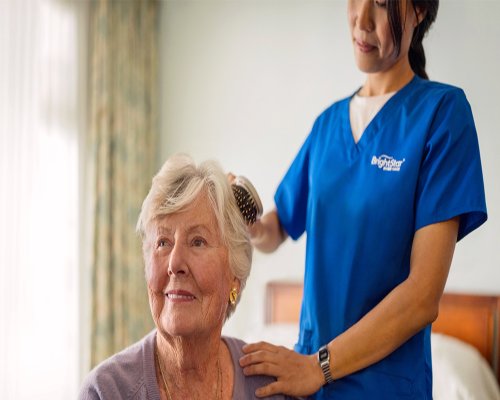
Where BrightStar Care of Pinellas Can Start
We start wherever your parents are comfortable starting, then add support only as it's wanted. That might look like:- Rides and company for doctor visits, errands or lunch with friends.
- Help with the chores that have gotten harder, like laundry, light cleaning and meal prep.
- Friendly medication reminders that fit into their routine.
- Regular companionship, with care taken to match personalities and schedules.
- Help with bathing, dressing and grooming, if and when it's wanted.
- A break for the family member who has been doing it all.
- Schedules that grow with them, from a few hours a week to overnight or around-the-clock care.
Every care plan is overseen by a Registered Nurse and adjusted as needs change.
Quick FAQs About Approaching In-Home Care with an Aging Parent
What if my siblings disagree?That's very common. It helps to get on the same page before anyone talks to your parent, even if that just means agreeing on one small first step. Bringing everyone into a single conversation with a care specialist also gives the whole family the same information instead of three different versions of it.
What if I live out of state?
Many families caring for a parent in Pinellas County are doing it from somewhere else. In-home support gives you someone local and dependable who sees your parent regularly, and we can talk through how your family would like to stay updated.
Will my parent see the same caregiver?
We work to match each client with a caregiver whose personality and schedule fit, because familiarity builds trust.
What does the first step look like?
A conversation with our team about your parent's routine, what's getting harder and what they'd be open to. No pressure and no commitment.
Help They Can Say Yes To
The goal isn't to win the argument. It's to find the kind of help your parent can say yes to, the kind that protects their independence instead of chipping away at it.BrightStar Care of Pinellas serves families across Largo, Clearwater, St. Petersburg, Palm Harbor, Dunedin, Seminole, Tarpon Springs, Safety Harbor, Oldsmar and the surrounding communities.
Call BrightStar Care of Pinellas at (727) 828-6030 to talk with a care specialist about the first step that makes sense for your family.