
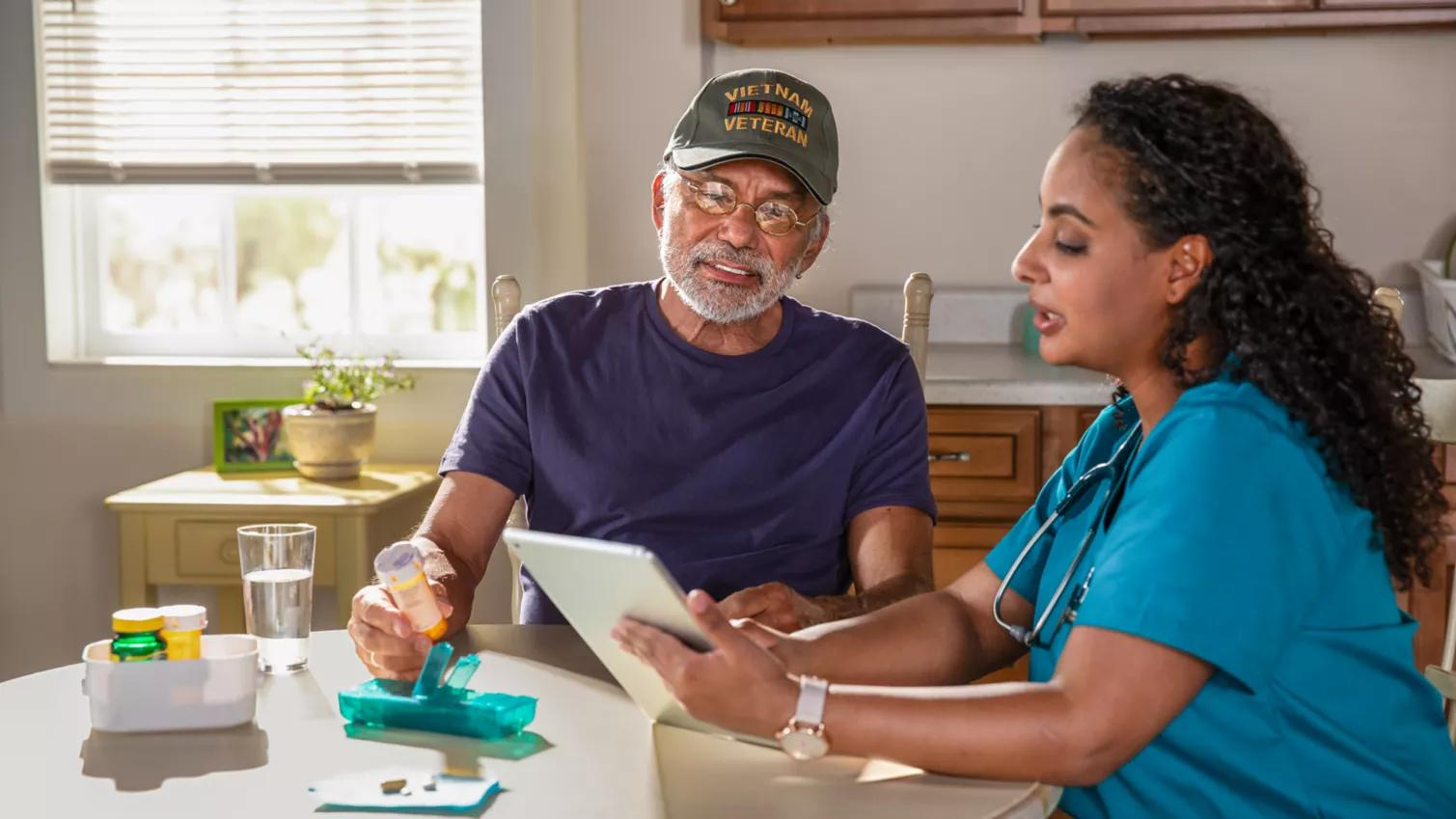
If you are a veteran or helping care for one, you have probably wondered what kind of help is actually available at home.
A lot of families start looking into in-home care when something changes. It could be a health issue, a fall, or just the realization that daily tasks are getting harder. This is usually when people start searching for answers and trying to understand what VA home care benefits really cover.
The good news is that there are options. VA in-home care is designed to help veterans stay safe, comfortable, and independent without having to move into a facility.
Let’s walk through what that actually looks like.
What Is VA In-Home Care?
VA in-home care allows veterans to receive care at home instead of going somewhere else for it. Depending on the situation, that care can be medical, non-medical, or a mix of both.
Some of the most common home health care services include help with bathing, dressing, and daily routines, along with skilled nursing care at home for those who need medical support. It can also include medication reminders, physical therapy, and general assistance around the house.
For many veterans, this kind of in-home health care makes everyday life easier while allowing them to stay in a familiar environment.
Who Qualifies for VA Home Health Care?
This is one of the most common questions, and the answer depends on a few factors.
Eligibility for VA home health care is usually based on military service, current health needs, and whether the veteran is enrolled in VA health care. In some cases, income may also play a role, especially when applying for certain VA benefits for home care.
What surprises a lot of people is how many veterans already qualify but have never applied. If you are already connected to the VA, the next step is usually a care assessment to figure out what kind of home care services are needed.
VA Programs That Help Cover In-Home Care
There are several VA programs that support veteran in-home care. Each one is a little different, so it helps to know what to look for.
The Homemaker and Home Health Aide program is one of the most commonly used services. It focuses on everyday support like bathing, dressing, meal preparation, and basic care at home.
Skilled home health care is more medical. This includes services provided by nurses or therapists for things like recovery, ongoing health conditions, or monitoring care needs at home.
The Aid and Attendance benefit is another important option. This program provides financial assistance that can help cover the cost of in-home care. It is one of the most searched VA benefits for home care because it can significantly reduce out-of-pocket expenses.
There is also Veteran-Directed Care, which allows more flexibility. Veterans can have a say in who provides their care and how their home care services are arranged.
Why More Veterans Are Choosing In-Home Care
More veterans are choosing in-home care services because it allows them to stay where they feel most comfortable - Home.
Being in a familiar space makes a big difference, especially when dealing with health challenges. With the right level of support, home health care can provide safety, consistency, and a better overall quality of life.
For families, it also helps to know that their loved one is getting one-on-one attention without leaving their home.
How to Get Started
If you are looking into home care for veterans, the process can feel like a lot at first. Breaking it down into steps can make it easier.
Start by making sure the veteran is enrolled in VA health care. From there, you can request a care assessment and ask about eligibility for in-home care services. It is also worth looking into programs like Aid and Attendance to see if financial assistance is available.
Many families also choose to connect with a home care provider who understands VA benefits and can help guide them through the process.
If you are exploring VA in-home care, you are already moving in the right direction. There are real home care options available for veterans, including home health care services and financial support through VA programs. It may take a little time to sort through everything, but once you understand what is available, it becomes much easier to make informed decisions about care at home.