
There is a moment that many families arrive at gradually, without quite noticing it is happening. The visits to Mom's house get longer. The phone calls get more frequent. A sibling starts dropping by on the way home from work just to check. Someone volunteers to handle the grocery shopping, then the medications, then the driving. The family has quietly become a caregiving team without anyone ever making a decision to do so.
This is how it usually starts. Not with a diagnosis or a crisis, but with a slow accumulation of small needs that the family absorbs one at a time, each one manageable on its own, until the total weight of them becomes something different.
And then comes the harder question: how do you know when the weight has exceeded what the family can or should carry alone?
For families across Janesville, Beloit, Beaver Dam, Portage, and throughout South Central Wisconsin navigating this question, this post is an honest attempt to answer it.
The transition from "we are helping out" to "we are the primary caregivers" is almost never a single step. It is a series of small steps, each of which seemed reasonable at the time. Which is why so many families look up one day and realize they are managing something far more demanding than what they originally agreed to and are not quite sure how they got there.
Several forces make it hard to see the line clearly.
Love makes it hard to be objective. When you care deeply about someone, you want to believe things are fine. You want to believe the situation is temporary, manageable, and not as serious as it might look to someone on the outside. This is not a weakness. It is what love does. But it can also keep families in denial about what they are actually dealing with for longer than is good for anyone.
Seniors are often skilled at reassuring their families. Most older adults are deeply motivated to maintain their independence and avoid being a burden. They will say they are fine when they are not. They will clean up the house before a visit. They will perform capability they do not consistently have. Families who rely primarily on their loved one's self-report are often working with incomplete information.
Caregiving expands gradually to fill available capacity. The family member who is closest, most available, or most willing tends to absorb more and more of the load often without the rest of the family fully registering how much has accumulated. By the time the weight becomes visible, it is already significant.
There is no official moment of transition. Unlike a diagnosis, which comes with a doctor's appointment and a conversation, the transition from independent senior to someone who needs substantial daily support often happens without any formal acknowledgment. Families are left to recognize it themselves which requires honesty that can be uncomfortable.
Changes in personal hygiene and appearance. When a person who has always been fastidious starts appearing unkempt hair unwashed, clothing unchanged for multiple days, dental hygiene neglected it is often a sign that bathing and grooming have become genuinely difficult or that motivation has declined significantly. This is one of the most consistent early indicators that daily personal care support is needed.
Unexplained weight loss or nutritional decline. A noticeably thinner frame, a refrigerator with little in it, evidence that meals have simplified to crackers, cereal, or nothing at all are signs that cooking and eating have become challenging in ways that are affecting health. Nutrition directly impacts energy, immune function, wound healing, and cognitive clarity. When it starts to decline, everything else follows.
Medication mismanagement. Pill bottles that are not being emptied on schedule, multiple missed doses, confusion about what to take and when, prescriptions that have lapsed medication non-adherence is one of the leading causes of hospitalization in older adults, and it is frequently the result of cognitive changes, physical difficulty with pill management, or simply the complexity of a multi-drug regimen that has grown over the years.
Falls or near falls. A single fall is a warning. Multiple falls, or a pattern of near misses, signal a mobility and balance problem that requires attention. Fall-related injuries are the leading cause of injury-related death among adults over 65, and the fear of falling even without an actual fall can cause a senior to restrict their movement in ways that worsen the underlying weakness over time.
A home in noticeable decline. Dishes piling up, laundry accumulating, mail going unopened, a yard that has not been tended in weeks visible household neglect is a reliable signal that the demands of maintaining a home have exceeded what the person living in it can manage.
Missed appointments and social withdrawal. A senior who has stopped attending the activities, appointments, and social engagements that used to anchor their week is often experiencing a combination of mobility challenges, low mood, and cognitive changes that make the logistics of getting out feel overwhelming. Isolation compounds every other health challenge they are facing.
Increasing anxiety or expressions of fear. Seniors who are aware that their capabilities are declining often experience significant anxiety about falls, about being alone, about what is happening to them. Expressions of fear or worry that are new or increasing warrant attention.
A primary caregiver is showing signs of burnout. Chronic exhaustion, increasing irritability, social withdrawal, neglect of their own health and needs are the markers of caregiver burnout, and they signal that the current arrangement is not sustainable. When the caregiver's wellbeing begins to erode, the quality of care the loved one receives erodes with it.
Family members are in conflict about care. Siblings disagreeing about what is needed, tension about who is doing how much, resentment accumulating without being addressed these are signs that the informal caregiving arrangement has outgrown the family's capacity to manage it without structure.
You are afraid to leave. When a family caregiver realizes they are no longer comfortable leaving their loved one alone for an evening, a full day, or even a few hours, that discomfort is information. It means the level of supervision and support required has exceeded what can be safely provided during the gaps between family visits.
You are managing a medical situation beyond your training. Wound care, medication administration, monitoring of complex chronic conditions, post-surgical recovery needs these are skilled nursing responsibilities, not family caregiving responsibilities. When a loved one's needs cross into clinical territory, professional nursing support is not optional. It is appropriate and necessary.Call Us Today Visit Our Website
One of the most persistent barriers to families asking for professional support is a mental picture of what that support looks like: a stranger taking over, a loved one's autonomy disappearing, family being replaced rather than supplemented.
The reality is different.
Professional in-home care is a support that works alongside the family, not instead of it. A caregiver who comes three mornings a week handles the personal care, meal preparation, and household support that has been straining the family and gives the family back the capacity to show up as the son, daughter, or spouse rather than the full-time aide. The relationship does not diminish. The family's role does not disappear. What changes is the distribution of the load.
At BrightStar Care of South Central Wisconsin, we provide both skilled nursing and non-medical home care services built around the specific needs of each client. For loved ones whose needs are primarily practical personal care, companionship, meals, transportation, household support our non-medical caregivers provide consistent, reliable daily assistance that preserves independence and dignity. For loved ones whose needs include clinical oversight wound care, medication administration, monitoring of complex conditions, post-surgical support our skilled nurses provide the medical layer that keeps them safe and well-managed at home.
We serve families throughout Janesville, Beloit, Beaver Dam, Portage, Baraboo, Wisconsin Dells, and surrounding communities across South Central Wisconsin.
Contact Us Today:
The families who navigate this transition most smoothly are rarely the ones who waited for a crisis. They are the ones who had an honest conversation about what they were noticing, about what was realistic, about what the right next step looked like before circumstances forced the issue.
That conversation is hard. It requires admitting things that feel like losses. It requires a senior to acknowledge that something has changed. It requires family members to say out loud what they have been quietly worrying about for months.
But it is far less hard than the conversation that happens after a fall, a hospitalization, or a rapid decline that requires emergency decisions with no plan in place.
If you have been wondering whether your loved one needs more support than the family is currently providing you probably already know the answer. The wondering itself is the signal. What comes next is simply finding the honesty to act on what you already see.
BrightStar Care of South Central Wisconsin provides skilled nursing and non-medical home care services for families throughout Janesville, Beloit, Beaver Dam, Portage, Baraboo, Wisconsin Dells, and surrounding South Central Wisconsin communities. To speak with a care coordinator about your loved one's needs, contact our office today at 608-314-8501.
Call Us Today Visit Our Website
This is how it usually starts. Not with a diagnosis or a crisis, but with a slow accumulation of small needs that the family absorbs one at a time, each one manageable on its own, until the total weight of them becomes something different.
And then comes the harder question: how do you know when the weight has exceeded what the family can or should carry alone?
For families across Janesville, Beloit, Beaver Dam, Portage, and throughout South Central Wisconsin navigating this question, this post is an honest attempt to answer it.
Why Families Struggle to See the Line
The transition from "we are helping out" to "we are the primary caregivers" is almost never a single step. It is a series of small steps, each of which seemed reasonable at the time. Which is why so many families look up one day and realize they are managing something far more demanding than what they originally agreed to and are not quite sure how they got there.Several forces make it hard to see the line clearly.
Love makes it hard to be objective. When you care deeply about someone, you want to believe things are fine. You want to believe the situation is temporary, manageable, and not as serious as it might look to someone on the outside. This is not a weakness. It is what love does. But it can also keep families in denial about what they are actually dealing with for longer than is good for anyone.
Seniors are often skilled at reassuring their families. Most older adults are deeply motivated to maintain their independence and avoid being a burden. They will say they are fine when they are not. They will clean up the house before a visit. They will perform capability they do not consistently have. Families who rely primarily on their loved one's self-report are often working with incomplete information.
Caregiving expands gradually to fill available capacity. The family member who is closest, most available, or most willing tends to absorb more and more of the load often without the rest of the family fully registering how much has accumulated. By the time the weight becomes visible, it is already significant.
There is no official moment of transition. Unlike a diagnosis, which comes with a doctor's appointment and a conversation, the transition from independent senior to someone who needs substantial daily support often happens without any formal acknowledgment. Families are left to recognize it themselves which requires honesty that can be uncomfortable.
The Signs That Professional Support Is Needed
These are not signs of failure. They are signals practical, observable indicators that the situation has grown beyond what family caregiving alone can sustainably address.
The Physical Signs in Your Loved One
Changes in personal hygiene and appearance. When a person who has always been fastidious starts appearing unkempt hair unwashed, clothing unchanged for multiple days, dental hygiene neglected it is often a sign that bathing and grooming have become genuinely difficult or that motivation has declined significantly. This is one of the most consistent early indicators that daily personal care support is needed.Unexplained weight loss or nutritional decline. A noticeably thinner frame, a refrigerator with little in it, evidence that meals have simplified to crackers, cereal, or nothing at all are signs that cooking and eating have become challenging in ways that are affecting health. Nutrition directly impacts energy, immune function, wound healing, and cognitive clarity. When it starts to decline, everything else follows.
Medication mismanagement. Pill bottles that are not being emptied on schedule, multiple missed doses, confusion about what to take and when, prescriptions that have lapsed medication non-adherence is one of the leading causes of hospitalization in older adults, and it is frequently the result of cognitive changes, physical difficulty with pill management, or simply the complexity of a multi-drug regimen that has grown over the years.
Falls or near falls. A single fall is a warning. Multiple falls, or a pattern of near misses, signal a mobility and balance problem that requires attention. Fall-related injuries are the leading cause of injury-related death among adults over 65, and the fear of falling even without an actual fall can cause a senior to restrict their movement in ways that worsen the underlying weakness over time.
A home in noticeable decline. Dishes piling up, laundry accumulating, mail going unopened, a yard that has not been tended in weeks visible household neglect is a reliable signal that the demands of maintaining a home have exceeded what the person living in it can manage.
The Cognitive and Behavioral Signs
Increasing confusion or disorientation. Getting lost on familiar routes, forgetting appointments, confusing days and times, struggling to follow a conversation or complete a previously routine task are signs that cognitive changes are affecting daily function in ways that require supervision and support.Missed appointments and social withdrawal. A senior who has stopped attending the activities, appointments, and social engagements that used to anchor their week is often experiencing a combination of mobility challenges, low mood, and cognitive changes that make the logistics of getting out feel overwhelming. Isolation compounds every other health challenge they are facing.
Increasing anxiety or expressions of fear. Seniors who are aware that their capabilities are declining often experience significant anxiety about falls, about being alone, about what is happening to them. Expressions of fear or worry that are new or increasing warrant attention.
The Signs in Your Family
A primary caregiver is showing signs of burnout. Chronic exhaustion, increasing irritability, social withdrawal, neglect of their own health and needs are the markers of caregiver burnout, and they signal that the current arrangement is not sustainable. When the caregiver's wellbeing begins to erode, the quality of care the loved one receives erodes with it.Family members are in conflict about care. Siblings disagreeing about what is needed, tension about who is doing how much, resentment accumulating without being addressed these are signs that the informal caregiving arrangement has outgrown the family's capacity to manage it without structure.
You are afraid to leave. When a family caregiver realizes they are no longer comfortable leaving their loved one alone for an evening, a full day, or even a few hours, that discomfort is information. It means the level of supervision and support required has exceeded what can be safely provided during the gaps between family visits.
You are managing a medical situation beyond your training. Wound care, medication administration, monitoring of complex chronic conditions, post-surgical recovery needs these are skilled nursing responsibilities, not family caregiving responsibilities. When a loved one's needs cross into clinical territory, professional nursing support is not optional. It is appropriate and necessary.
Call Us Today Visit Our Website
What Getting Help Actually Looks Like
One of the most persistent barriers to families asking for professional support is a mental picture of what that support looks like: a stranger taking over, a loved one's autonomy disappearing, family being replaced rather than supplemented.The reality is different.
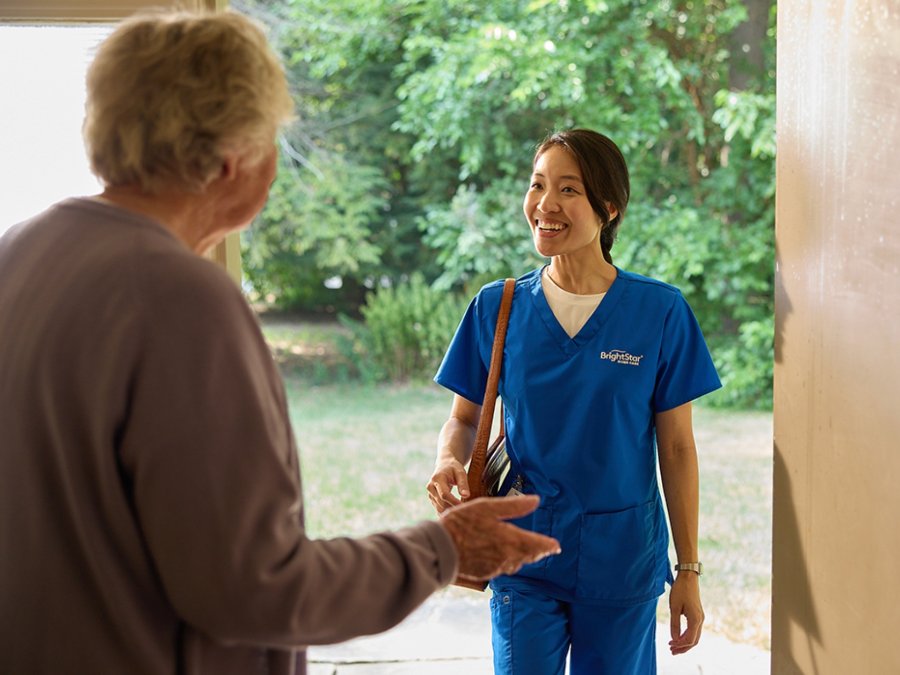
Professional in-home care is a support that works alongside the family, not instead of it. A caregiver who comes three mornings a week handles the personal care, meal preparation, and household support that has been straining the family and gives the family back the capacity to show up as the son, daughter, or spouse rather than the full-time aide. The relationship does not diminish. The family's role does not disappear. What changes is the distribution of the load.
At BrightStar Care of South Central Wisconsin, we provide both skilled nursing and non-medical home care services built around the specific needs of each client. For loved ones whose needs are primarily practical personal care, companionship, meals, transportation, household support our non-medical caregivers provide consistent, reliable daily assistance that preserves independence and dignity. For loved ones whose needs include clinical oversight wound care, medication administration, monitoring of complex conditions, post-surgical support our skilled nurses provide the medical layer that keeps them safe and well-managed at home.
We serve families throughout Janesville, Beloit, Beaver Dam, Portage, Baraboo, Wisconsin Dells, and surrounding communities across South Central Wisconsin.
Contact Us Today:
- Phone: 608-314-8501
- Address: 2501 Morse St. Janesville, WI 53545
- Visit Us Online: BrightStar Care of South Central / Janesville
The Conversation Worth Having Before You Have To
The families who navigate this transition most smoothly are rarely the ones who waited for a crisis. They are the ones who had an honest conversation about what they were noticing, about what was realistic, about what the right next step looked like before circumstances forced the issue.That conversation is hard. It requires admitting things that feel like losses. It requires a senior to acknowledge that something has changed. It requires family members to say out loud what they have been quietly worrying about for months.
But it is far less hard than the conversation that happens after a fall, a hospitalization, or a rapid decline that requires emergency decisions with no plan in place.
If you have been wondering whether your loved one needs more support than the family is currently providing you probably already know the answer. The wondering itself is the signal. What comes next is simply finding the honesty to act on what you already see.
Frequently Asked Questions
Q: How do I know when it is time to consider professional home care for an aging parent?
The clearest signs include changes in personal hygiene or appearance, unexplained weight loss, medication mismanagement, falls or increasing unsteadiness, visible household neglect, increasing confusion or social withdrawal, and a primary family caregiver who is showing signs of exhaustion or burnout. Most families recognize several of these signs before they act on them. If you are noticing more than one, it is worth scheduling a professional care assessment to understand what level of support would genuinely address the gaps.Q: Does hiring a professional caregiver mean the family steps back from caring for their loved one?
No. Professional home care is designed to work alongside family involvement, not replace it. A caregiver who handles personal care, meals, transportation, and household support frees family members to step back from the aide role and return to the relationship as a son, daughter, spouse, or friend rather than a full-time caregiver. Many families find that professional care actually improves their relationship with their loved one because the daily strain and exhaustion no longer color every interaction.Q: What is the difference between non-medical home care and skilled nursing at home, and how do I know which my loved one needs?
Non-medical home care addresses daily living needs such as personal care, companionship, meal preparation, light housekeeping, transportation, and medication reminders. It does not require a clinical license. Skilled nursing at home addresses medical needs that require a licensed nurse, wound care, medication administration, IV therapy, monitoring of complex chronic conditions, and post-surgical oversight. Many clients need both, and an agency that provides both can coordinate the two layers of care under a single plan. A care coordinator can help assess which services are appropriate based on your loved one's specific situation.BrightStar Care of South Central Wisconsin provides skilled nursing and non-medical home care services for families throughout Janesville, Beloit, Beaver Dam, Portage, Baraboo, Wisconsin Dells, and surrounding South Central Wisconsin communities. To speak with a care coordinator about your loved one's needs, contact our office today at 608-314-8501.
Call Us Today Visit Our Website