
October is Spina Bifida Awareness Month. For families across Dane County, Rock County, Columbia County, and Sauk County who are supporting an adult with Spina Bifida, the financial dimension of home care is rarely far from mind. Skilled nursing visits, personal caregiving hours, adaptive equipment, medications, and specialist appointments add up quickly — and the question of how to pay for it all is one that families face without always knowing what resources are available to them.
One of the most significant and least-known resources is the VA Spina Bifida Health Care Benefits Program. For families in Madison, Janesville, Beloit, Portage, and the surrounding South Central Wisconsin region whose loved one is the biological child of a Vietnam-era veteran, this federal program may cover home care costs that would otherwise fall entirely on the family.
This post is a practical guide to what the program covers, how that coverage applies to home care specifically, what it costs beneficiaries out of pocket, and how families in South Central Wisconsin can access it.
Visit Our Website Call 608-314-8501
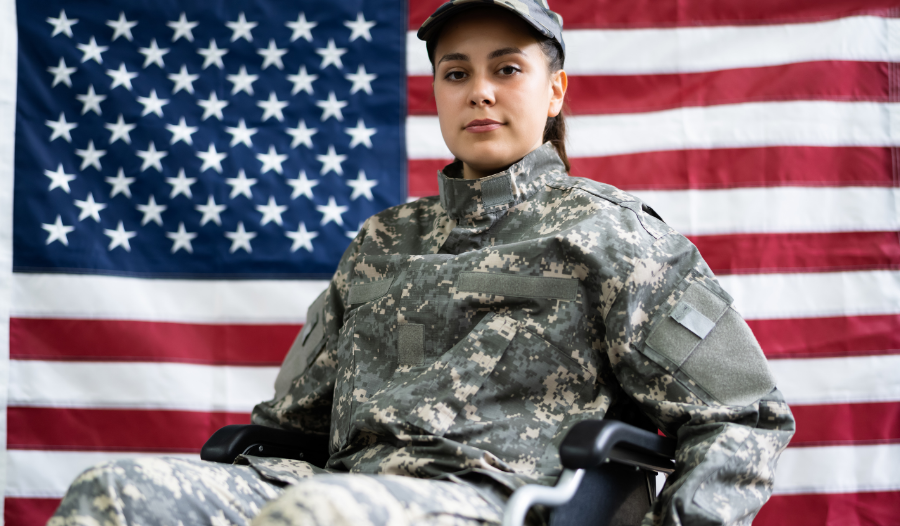
The VA presumes that when a Vietnam veteran has a biological child with Spina Bifida (except Spina Bifida occulta), the condition is due to the veteran's exposure to herbicides during service. The VA does not require evidence linking the condition to service. This presumption significantly reduces the burden on the family. You do not need to prove causation. You need to establish that your parent served in a qualifying location during a qualifying time period and that you have a qualifying Spina Bifida diagnosis.
You may be eligible if your biological mother or father served in the Republic of Vietnam or in Thailand for any length of time between January 9, 1962, and May 7, 1975, or served in a unit in or near the Korean DMZ for any length of time between September 1, 1967, and August 31, 1971. You must have been diagnosed with a form of Spina Bifida other than Spina Bifida occulta, and you must have been conceived after your parent first entered the qualifying service location during the qualifying time period.
Your parent's character of discharge and length of service do not affect your eligibility. Age is not a disqualifying factor either. Adults with Spina Bifida of any age may apply and receive benefits for the rest of their lives.
This is the part of the program that most families do not know, and it is the part that matters most for home care planning.
The VA Spina Bifida Health Care Benefits Program is a federal benefits program that provides comprehensive health care coverage to certain biological children of veterans who served in Vietnam, Thailand, or Korea and were exposed to herbicide agents including Agent Orange. Unlike standard VA health care (which serves veterans themselves) and unlike CHAMPVA (which serves dependents of permanently disabled veterans), the SBHCBP is its own distinct program with its own coverage structure.
As a result of a change to Public Law 110-387 in 2008, medical services and supplies for Spina Bifida beneficiaries are no longer limited to the Spina Bifida condition. The program now covers all medically necessary and appropriate health care.
That phrase — all medically necessary and appropriate health care — is the key. It means the program's scope is not limited to Spina Bifida-specific procedures. It covers the full range of health care that the person needs, including home-based medical services.
The program provides comprehensive health care coverage to beneficiaries with zero copays, zero deductibles, and zero premiums. For families who have been paying out of pocket for home care services, this is significant. Beneficiaries enrolled in the program access covered health care services — including home health — without the cost-sharing that private insurance typically requires.
The coverage that matters most for families reading this post is the home health benefit. Here is how it works in practice.
Skilled nursing in the home. For adults with Spina Bifida whose care plan includes skilled nursing visits — catheterization support, wound care for pressure injuries, bowel program oversight, shunt monitoring, medication management — these services may be authorized and covered under the SBHCBP. Authorization for in-home services is handled through VA's Office of Community Care, which administers the health care component of the program. Once a beneficiary is enrolled, their care coordinator works with the Community Care office to establish what services are authorized for their specific care plan.
The physician's documentation of medical necessity is the foundation of this process. Services that are clinically necessary for the management of Spina Bifida and its associated conditions — and documented as such by the treating physician — are within the program's intended scope. In South Central Wisconsin, where many adults with Spina Bifida receive specialist care through UW Health in Madison, the physician network is well-positioned to provide the documentation that Community Care authorization requires.
Non-medical personal caregiving. Personal caregiving services — assistance with bathing, dressing, bowel program assistance, transfers, mobility support, skin observation, and meal preparation — are the daily living support that many adults with Spina Bifida rely on most heavily. Whether personal caregiving is covered under the SBHCBP depends on the beneficiary's clinical profile, the physician's documentation of need, and the specific authorization from VA Community Care. It is worth pursuing this coverage explicitly and with documentation, rather than assuming it is or is not covered without verification.
Rehabilitation services. The program covers rehabilitation services including physical, occupational, and speech therapy. For adults with Spina Bifida experiencing upper extremity decline, new mobility challenges, or changes in function associated with aging, in-home physical or occupational therapy may be a covered benefit under the program. In-home rehabilitation can be particularly valuable for South Central Wisconsin residents managing the winter months, when travel to outpatient therapy facilities carries real accessibility challenges.
Assistive technology and adaptive equipment. Beneficiaries may be eligible for devices and equipment to improve their mobility, communication, or self-care, such as wheelchairs, prosthetics, and communication aids. Adaptive equipment that supports independent living at home — power wheelchairs, positioning systems, bathroom accessibility equipment — is within the program's coverage scope. This is a category where many families have been paying out of pocket without realizing VA coverage may be available.
Respite care. The program includes respite care services, providing short-term relief for primary caregivers. For South Central Wisconsin families where a family member is providing primary care for an adult with Spina Bifida, VA-covered respite care reduces caregiver burnout and makes the overall care arrangement more sustainable. This benefit is underutilized and worth actively pursuing for enrolled beneficiaries whose family caregivers are carrying a significant load.
Mental health services. Counseling and therapy services are available to address common mental health challenges faced by individuals with Spina Bifida and their families, such as depression, anxiety, and stress management. Depression and anxiety are significantly more prevalent in adults with Spina Bifida than in the general population. Mental health coverage under the SBHCBP means that addressing these needs does not require additional out-of-pocket spending or separate insurance navigation.
Visit Our Website Call 608-314-8501
Beyond health care coverage, the program also provides a monthly tax-free monetary allowance that functions as direct financial support — not reimbursement for specific expenses, but unrestricted income that can be used toward home care costs, adaptive equipment, housing modifications, or any other need.
The VA categorizes Spina Bifida beneficiaries into three distinct levels depending on the severity of their disability, and these levels determine the type and extent of benefits they are eligible to receive. The monthly allowance is determined by the disability level assigned at enrollment, adjusted periodically for cost of living, paid for life, and completely tax-free.
For adults with Spina Bifida who have significant ongoing care expenses, this monthly payment is a meaningful and reliable financial foundation. It does not cover everything — home care costs often exceed the allowance, particularly for individuals who need substantial daily support. But it provides a consistent base that reduces the out-of-pocket burden on the beneficiary and their family.
For a South Central Wisconsin adult with Spina Bifida who is enrolled in the SBHCBP and working with an authorized home care agency, the financial picture looks like this in its best-case form: VA-covered skilled nursing visits at no out-of-pocket cost, VA-covered personal caregiving hours authorized through Community Care, monthly monetary allowance providing unrestricted income, and VA-covered rehabilitation, equipment, and mental health services as needed.
This is not a guaranteed outcome for every enrolled beneficiary — the specific coverage for any individual depends on their disability level, their physician's documentation of medical necessity, and the specific authorization decisions made by VA Community Care. But it represents what the program is designed to provide, and pursuing it fully and proactively is worth the effort.
The families who access the most benefit from this program are those who do not wait for coverage to be offered to them. They document medical necessity thoroughly with their physician, they work actively with their VA Community Care coordinator, they use a home care agency that is experienced in VA systems, and they re-evaluate their authorized services as their needs change.
For families in Dane, Rock, Columbia, and Sauk County, the local VA infrastructure includes the William S. Middleton Memorial Veterans Hospital in Madison, which serves veterans and eligible family members throughout the region. The Madison VA has care coordinators and social workers who can assist with SBHCBP enrollment and benefits navigation for eligible beneficiaries.
Veterans Service Officers — available at no cost through organizations including the American Legion, VFW, Disabled American Veterans, and the Wisconsin Department of Veterans Affairs — are the most effective first point of contact for families beginning the application process. A VSO familiar with the SBHCBP can guide the documentation process, help establish qualifying veteran service, and ensure the application is complete before submission to the Denver VA Regional Office, which handles all SBHCBP eligibility determinations nationally.
UW Health's relationship with the local VA system is also relevant for South Central Wisconsin families: UW Health providers who are enrolled in the VA Community Care network may be able to see SBHCBP beneficiaries as authorized community care providers, which can reduce the need for specialty care travel.
Families who are navigating VA Spina Bifida benefits sometimes assume that if home care becomes complex or expensive, assisted living is the natural next step. For most adults with Spina Bifida, that is not the right framework — and for enrolled SBHCBP beneficiaries, the financial case for staying home is even stronger than it might appear.
Assisted living is not covered under the VA Spina Bifida Health Care Benefits Program. Residential facility costs — room, board, personal care in a group setting — are not within the program's scope. The benefit is structured to support community-based care, which means care in the person's own home or in a community setting, not institutional placement. Families who assume that VA benefits will transfer to an assisted living environment are often surprised to learn they will not.
Beyond the coverage question, assisted living creates clinical risk for adults with Spina Bifida that home care does not. The individualized, routine-specific management that Spina Bifida requires — the catheterization schedule, the bowel program, the daily skin inspection, the consistent caregiver relationship that makes all of these protocols work — is genuinely difficult to deliver in an assisted living setting with rotating staff and multiple residents to serve. Adults with Spina Bifida who transition to assisted living commonly experience increased UTI frequency, skin breakdown, and a decline in the quality of their condition-specific management.
For SBHCBP-enrolled families in Dane, Rock, Columbia, and Sauk County, the financially and clinically superior path is to use the program's home health, rehabilitation, equipment, and respite benefits to support robust home-based care. The zero-copay, zero-deductible structure of the program means that covered home care services cost the beneficiary nothing — a financial advantage that no assisted living arrangement can match.
The right time to consider institutional placement is not when care needs grow, but when the home environment cannot be safely adapted to meet those needs. Most South Central Wisconsin homes can be modified, and SBHCBP's adaptive equipment benefit can help fund those modifications.
Visit Our Website Call 608-314-8501
Selecting a home care agency for an SBHCBP beneficiary requires evaluating the agency on two dimensions: their clinical capability for Spina Bifida, and their experience navigating VA systems.
Does the agency have experience with VA Community Care? VA Community Care authorization has specific documentation requirements and an administrative process that differs from private insurance. An agency unfamiliar with that process may struggle to support the authorization of services — or may not pursue it aggressively on your behalf. Ask specifically how many clients the agency currently serves through VA Community Care and whether they have a staff member who manages that relationship.
Does the agency employ licensed nursing staff? Many home care agencies in Wisconsin provide non-medical personal care only. For Spina Bifida, skilled nursing is a clinical requirement. Catheterization, wound care, skin assessment, bowel program oversight, and medication management all require a licensed nurse. Any agency that cannot provide this cannot safely support the clinical dimensions of Spina Bifida care — and cannot document medical necessity for VA Community Care authorization the way a skilled nursing agency can.
How does the agency support the prior authorization process? Ask specifically what the agency does to help build the clinical documentation that VA Community Care authorization requires. A strong agency coordinates directly with the treating physician to ensure the medical necessity documentation is complete, submitted correctly, and followed up on. Families should not have to manage this process entirely on their own.
How consistent will the assigned caregiver be? For Spina Bifida, caregiver consistency is a clinical priority. The catheterization technique, bowel program specifics, skin inspection baseline, and transfer protocols are all individual to the person, and they only work reliably with a caregiver who knows them. Ask about turnover rates and scheduling practices before choosing an agency.
BrightStar Care of South Central Wisconsin provides skilled nursing and non-medical caregiving for individuals with Spina Bifida and their families throughout Madison, Middleton, Janesville, Beloit, Portage, Baraboo, and surrounding Dane, Rock, Columbia, and Sauk County communities.
For beneficiaries enrolled in the VA Spina Bifida Health Care Benefits Program, we are experienced in working alongside VA care structures, coordinating with VA Community Care, and building care plans that integrate with the coverage the program provides. Our care coordinators can help families understand how our services relate to their VA coverage, what documentation supports Community Care authorization, and how to maximize the home care benefit the program is designed to provide.
Our skilled nursing services include catheterization support and bladder management, skin assessment and pressure injury prevention and wound care, bowel program oversight, shunt monitoring, medication management, and specialist coordination. Our non-medical caregiving provides personal care, mobility and transfer support, skin observation, meal preparation, household management, and the consistent daily presence that safe Spina Bifida management requires.
If your family is enrolled in or applying for SBHCBP benefits and wants to understand how BrightStar Care of South Central Wisconsin can be part of your covered care picture, we are glad to speak with you.
Visit Our Website Call 608-314-8501
The timeline varies, but the application process — from submitting VA Form 21-0304 with supporting documentation to receiving an eligibility determination from the Denver VA Regional Office — typically takes several months. Health care enrollment through Community Care follows the eligibility determination. Working with a Veterans Service Officer from the start, ensuring the application is complete and the documentation is thorough before submission, reduces the likelihood of delays from requests for additional information. Starting the application as soon as possible rather than waiting for a crisis is the most important timing decision a family can make.
Potentially, for services that are authorized going forward. The SBHCBP does not typically reimburse for services provided before enrollment and authorization were in place. But once enrolled and authorized, services that fall within the Community Care authorization — including skilled nursing and, in some cases, personal caregiving — may be covered at no out-of-pocket cost. If you have been paying privately for home care that falls within the program's scope, enrolling in SBHCBP and pursuing Community Care authorization is worth doing promptly rather than continuing to bear those costs without the coverage the program provides.
BrightStar Care of South Central Wisconsin provides skilled nursing and non-medical home care services for individuals with Spina Bifida and their families throughout Madison, Middleton, Janesville, Beloit, Portage, Baraboo, and surrounding Dane, Rock, Columbia, and Sauk County communities. To speak with a care coordinator about SBHCBP coverage and home care support for your loved one, contact our office today.
One of the most significant and least-known resources is the VA Spina Bifida Health Care Benefits Program. For families in Madison, Janesville, Beloit, Portage, and the surrounding South Central Wisconsin region whose loved one is the biological child of a Vietnam-era veteran, this federal program may cover home care costs that would otherwise fall entirely on the family.
This post is a practical guide to what the program covers, how that coverage applies to home care specifically, what it costs beneficiaries out of pocket, and how families in South Central Wisconsin can access it.
Visit Our Website Call 608-314-8501
The Program and Why It Exists
The VA Spina Bifida Health Care Benefits Program was created by Congress to address a specific and documented injustice: that the children of Vietnam veterans exposed to Agent Orange and other tactical herbicides were born with Spina Bifida at elevated rates, and that those children — now adults — have been managing a complex lifelong condition without the federal support that their parent's military service warranted.The VA presumes that when a Vietnam veteran has a biological child with Spina Bifida (except Spina Bifida occulta), the condition is due to the veteran's exposure to herbicides during service. The VA does not require evidence linking the condition to service. This presumption significantly reduces the burden on the family. You do not need to prove causation. You need to establish that your parent served in a qualifying location during a qualifying time period and that you have a qualifying Spina Bifida diagnosis.
You may be eligible if your biological mother or father served in the Republic of Vietnam or in Thailand for any length of time between January 9, 1962, and May 7, 1975, or served in a unit in or near the Korean DMZ for any length of time between September 1, 1967, and August 31, 1971. You must have been diagnosed with a form of Spina Bifida other than Spina Bifida occulta, and you must have been conceived after your parent first entered the qualifying service location during the qualifying time period.
Your parent's character of discharge and length of service do not affect your eligibility. Age is not a disqualifying factor either. Adults with Spina Bifida of any age may apply and receive benefits for the rest of their lives.
What the Program Covers — and What It Costs Beneficiaries
This is the part of the program that most families do not know, and it is the part that matters most for home care planning.The VA Spina Bifida Health Care Benefits Program is a federal benefits program that provides comprehensive health care coverage to certain biological children of veterans who served in Vietnam, Thailand, or Korea and were exposed to herbicide agents including Agent Orange. Unlike standard VA health care (which serves veterans themselves) and unlike CHAMPVA (which serves dependents of permanently disabled veterans), the SBHCBP is its own distinct program with its own coverage structure.
As a result of a change to Public Law 110-387 in 2008, medical services and supplies for Spina Bifida beneficiaries are no longer limited to the Spina Bifida condition. The program now covers all medically necessary and appropriate health care.
That phrase — all medically necessary and appropriate health care — is the key. It means the program's scope is not limited to Spina Bifida-specific procedures. It covers the full range of health care that the person needs, including home-based medical services.
The program provides comprehensive health care coverage to beneficiaries with zero copays, zero deductibles, and zero premiums. For families who have been paying out of pocket for home care services, this is significant. Beneficiaries enrolled in the program access covered health care services — including home health — without the cost-sharing that private insurance typically requires.

How Home Care Specifically Is Covered
The coverage that matters most for families reading this post is the home health benefit. Here is how it works in practice.Skilled nursing in the home. For adults with Spina Bifida whose care plan includes skilled nursing visits — catheterization support, wound care for pressure injuries, bowel program oversight, shunt monitoring, medication management — these services may be authorized and covered under the SBHCBP. Authorization for in-home services is handled through VA's Office of Community Care, which administers the health care component of the program. Once a beneficiary is enrolled, their care coordinator works with the Community Care office to establish what services are authorized for their specific care plan.
The physician's documentation of medical necessity is the foundation of this process. Services that are clinically necessary for the management of Spina Bifida and its associated conditions — and documented as such by the treating physician — are within the program's intended scope. In South Central Wisconsin, where many adults with Spina Bifida receive specialist care through UW Health in Madison, the physician network is well-positioned to provide the documentation that Community Care authorization requires.
Non-medical personal caregiving. Personal caregiving services — assistance with bathing, dressing, bowel program assistance, transfers, mobility support, skin observation, and meal preparation — are the daily living support that many adults with Spina Bifida rely on most heavily. Whether personal caregiving is covered under the SBHCBP depends on the beneficiary's clinical profile, the physician's documentation of need, and the specific authorization from VA Community Care. It is worth pursuing this coverage explicitly and with documentation, rather than assuming it is or is not covered without verification.
Rehabilitation services. The program covers rehabilitation services including physical, occupational, and speech therapy. For adults with Spina Bifida experiencing upper extremity decline, new mobility challenges, or changes in function associated with aging, in-home physical or occupational therapy may be a covered benefit under the program. In-home rehabilitation can be particularly valuable for South Central Wisconsin residents managing the winter months, when travel to outpatient therapy facilities carries real accessibility challenges.
Assistive technology and adaptive equipment. Beneficiaries may be eligible for devices and equipment to improve their mobility, communication, or self-care, such as wheelchairs, prosthetics, and communication aids. Adaptive equipment that supports independent living at home — power wheelchairs, positioning systems, bathroom accessibility equipment — is within the program's coverage scope. This is a category where many families have been paying out of pocket without realizing VA coverage may be available.
Respite care. The program includes respite care services, providing short-term relief for primary caregivers. For South Central Wisconsin families where a family member is providing primary care for an adult with Spina Bifida, VA-covered respite care reduces caregiver burnout and makes the overall care arrangement more sustainable. This benefit is underutilized and worth actively pursuing for enrolled beneficiaries whose family caregivers are carrying a significant load.
Mental health services. Counseling and therapy services are available to address common mental health challenges faced by individuals with Spina Bifida and their families, such as depression, anxiety, and stress management. Depression and anxiety are significantly more prevalent in adults with Spina Bifida than in the general population. Mental health coverage under the SBHCBP means that addressing these needs does not require additional out-of-pocket spending or separate insurance navigation.
Visit Our Website Call 608-314-8501
The Monthly Monetary Allowance: A Financial Foundation
Beyond health care coverage, the program also provides a monthly tax-free monetary allowance that functions as direct financial support — not reimbursement for specific expenses, but unrestricted income that can be used toward home care costs, adaptive equipment, housing modifications, or any other need.The VA categorizes Spina Bifida beneficiaries into three distinct levels depending on the severity of their disability, and these levels determine the type and extent of benefits they are eligible to receive. The monthly allowance is determined by the disability level assigned at enrollment, adjusted periodically for cost of living, paid for life, and completely tax-free.
For adults with Spina Bifida who have significant ongoing care expenses, this monthly payment is a meaningful and reliable financial foundation. It does not cover everything — home care costs often exceed the allowance, particularly for individuals who need substantial daily support. But it provides a consistent base that reduces the out-of-pocket burden on the beneficiary and their family.
Putting the Coverage Together: A Realistic Picture
For a South Central Wisconsin adult with Spina Bifida who is enrolled in the SBHCBP and working with an authorized home care agency, the financial picture looks like this in its best-case form: VA-covered skilled nursing visits at no out-of-pocket cost, VA-covered personal caregiving hours authorized through Community Care, monthly monetary allowance providing unrestricted income, and VA-covered rehabilitation, equipment, and mental health services as needed.This is not a guaranteed outcome for every enrolled beneficiary — the specific coverage for any individual depends on their disability level, their physician's documentation of medical necessity, and the specific authorization decisions made by VA Community Care. But it represents what the program is designed to provide, and pursuing it fully and proactively is worth the effort.
The families who access the most benefit from this program are those who do not wait for coverage to be offered to them. They document medical necessity thoroughly with their physician, they work actively with their VA Community Care coordinator, they use a home care agency that is experienced in VA systems, and they re-evaluate their authorized services as their needs change.
Navigating the System in South Central Wisconsin
For families in Dane, Rock, Columbia, and Sauk County, the local VA infrastructure includes the William S. Middleton Memorial Veterans Hospital in Madison, which serves veterans and eligible family members throughout the region. The Madison VA has care coordinators and social workers who can assist with SBHCBP enrollment and benefits navigation for eligible beneficiaries.Veterans Service Officers — available at no cost through organizations including the American Legion, VFW, Disabled American Veterans, and the Wisconsin Department of Veterans Affairs — are the most effective first point of contact for families beginning the application process. A VSO familiar with the SBHCBP can guide the documentation process, help establish qualifying veteran service, and ensure the application is complete before submission to the Denver VA Regional Office, which handles all SBHCBP eligibility determinations nationally.
UW Health's relationship with the local VA system is also relevant for South Central Wisconsin families: UW Health providers who are enrolled in the VA Community Care network may be able to see SBHCBP beneficiaries as authorized community care providers, which can reduce the need for specialty care travel.
Home Care vs. Assisted Living: A Financial and Clinical Comparison for SBHCBP Families
Families who are navigating VA Spina Bifida benefits sometimes assume that if home care becomes complex or expensive, assisted living is the natural next step. For most adults with Spina Bifida, that is not the right framework — and for enrolled SBHCBP beneficiaries, the financial case for staying home is even stronger than it might appear.Assisted living is not covered under the VA Spina Bifida Health Care Benefits Program. Residential facility costs — room, board, personal care in a group setting — are not within the program's scope. The benefit is structured to support community-based care, which means care in the person's own home or in a community setting, not institutional placement. Families who assume that VA benefits will transfer to an assisted living environment are often surprised to learn they will not.
Beyond the coverage question, assisted living creates clinical risk for adults with Spina Bifida that home care does not. The individualized, routine-specific management that Spina Bifida requires — the catheterization schedule, the bowel program, the daily skin inspection, the consistent caregiver relationship that makes all of these protocols work — is genuinely difficult to deliver in an assisted living setting with rotating staff and multiple residents to serve. Adults with Spina Bifida who transition to assisted living commonly experience increased UTI frequency, skin breakdown, and a decline in the quality of their condition-specific management.
For SBHCBP-enrolled families in Dane, Rock, Columbia, and Sauk County, the financially and clinically superior path is to use the program's home health, rehabilitation, equipment, and respite benefits to support robust home-based care. The zero-copay, zero-deductible structure of the program means that covered home care services cost the beneficiary nothing — a financial advantage that no assisted living arrangement can match.
The right time to consider institutional placement is not when care needs grow, but when the home environment cannot be safely adapted to meet those needs. Most South Central Wisconsin homes can be modified, and SBHCBP's adaptive equipment benefit can help fund those modifications.
Visit Our Website Call 608-314-8501

How to Choose a Home Care Agency That Understands VA Benefits and Spina Bifida
Selecting a home care agency for an SBHCBP beneficiary requires evaluating the agency on two dimensions: their clinical capability for Spina Bifida, and their experience navigating VA systems.Does the agency have experience with VA Community Care? VA Community Care authorization has specific documentation requirements and an administrative process that differs from private insurance. An agency unfamiliar with that process may struggle to support the authorization of services — or may not pursue it aggressively on your behalf. Ask specifically how many clients the agency currently serves through VA Community Care and whether they have a staff member who manages that relationship.
Does the agency employ licensed nursing staff? Many home care agencies in Wisconsin provide non-medical personal care only. For Spina Bifida, skilled nursing is a clinical requirement. Catheterization, wound care, skin assessment, bowel program oversight, and medication management all require a licensed nurse. Any agency that cannot provide this cannot safely support the clinical dimensions of Spina Bifida care — and cannot document medical necessity for VA Community Care authorization the way a skilled nursing agency can.
How does the agency support the prior authorization process? Ask specifically what the agency does to help build the clinical documentation that VA Community Care authorization requires. A strong agency coordinates directly with the treating physician to ensure the medical necessity documentation is complete, submitted correctly, and followed up on. Families should not have to manage this process entirely on their own.
How consistent will the assigned caregiver be? For Spina Bifida, caregiver consistency is a clinical priority. The catheterization technique, bowel program specifics, skin inspection baseline, and transfer protocols are all individual to the person, and they only work reliably with a caregiver who knows them. Ask about turnover rates and scheduling practices before choosing an agency.
How BrightStar Care of South Central Wisconsin Fits In
BrightStar Care of South Central Wisconsin provides skilled nursing and non-medical caregiving for individuals with Spina Bifida and their families throughout Madison, Middleton, Janesville, Beloit, Portage, Baraboo, and surrounding Dane, Rock, Columbia, and Sauk County communities.For beneficiaries enrolled in the VA Spina Bifida Health Care Benefits Program, we are experienced in working alongside VA care structures, coordinating with VA Community Care, and building care plans that integrate with the coverage the program provides. Our care coordinators can help families understand how our services relate to their VA coverage, what documentation supports Community Care authorization, and how to maximize the home care benefit the program is designed to provide.
Our skilled nursing services include catheterization support and bladder management, skin assessment and pressure injury prevention and wound care, bowel program oversight, shunt monitoring, medication management, and specialist coordination. Our non-medical caregiving provides personal care, mobility and transfer support, skin observation, meal preparation, household management, and the consistent daily presence that safe Spina Bifida management requires.
If your family is enrolled in or applying for SBHCBP benefits and wants to understand how BrightStar Care of South Central Wisconsin can be part of your covered care picture, we are glad to speak with you.
Visit Our Website Call 608-314-8501
Frequently Asked Questions
Q: How do we get VA Community Care to authorize home care specifically? What does that process look like?
Authorization for in-home services under the SBHCBP begins with physician documentation of medical necessity. Your treating physician needs to document, clearly and specifically, why in-home skilled nursing or personal caregiving is medically necessary for your management of Spina Bifida. That documentation is submitted to VA's Office of Community Care, which makes the authorization decision. Working with a care coordinator at the Madison VA or through the SBHCBP's Office of Community Care in Denver can help clarify what specific documentation they need for your situation. BrightStar Care of South Central Wisconsin can also assist with the paperwork on our end — as a home care agency, we have experience supporting the Community Care authorization process for our clients.
Q: We are just starting the SBHCBP application process. How long does it typically take to get enrolled and start receiving benefits?
The timeline varies, but the application process — from submitting VA Form 21-0304 with supporting documentation to receiving an eligibility determination from the Denver VA Regional Office — typically takes several months. Health care enrollment through Community Care follows the eligibility determination. Working with a Veterans Service Officer from the start, ensuring the application is complete and the documentation is thorough before submission, reduces the likelihood of delays from requests for additional information. Starting the application as soon as possible rather than waiting for a crisis is the most important timing decision a family can make.
Q: We already pay for some home care privately. If we enroll in SBHCBP and get Community Care authorization, can VA cover services we are currently paying for out of pocket?
Potentially, for services that are authorized going forward. The SBHCBP does not typically reimburse for services provided before enrollment and authorization were in place. But once enrolled and authorized, services that fall within the Community Care authorization — including skilled nursing and, in some cases, personal caregiving — may be covered at no out-of-pocket cost. If you have been paying privately for home care that falls within the program's scope, enrolling in SBHCBP and pursuing Community Care authorization is worth doing promptly rather than continuing to bear those costs without the coverage the program provides.BrightStar Care of South Central Wisconsin provides skilled nursing and non-medical home care services for individuals with Spina Bifida and their families throughout Madison, Middleton, Janesville, Beloit, Portage, Baraboo, and surrounding Dane, Rock, Columbia, and Sauk County communities. To speak with a care coordinator about SBHCBP coverage and home care support for your loved one, contact our office today.
Contact Us Today:
- Phone: 608-314-8501
- Address: 2501 Morse St. Janesville, WI 53545
- Visit Us Online: BrightStar Care of South Central / Janesville