
When families begin looking into home care for an adult with a physical or developmental disability, they often start with a narrow picture of what is available and what it costs, who qualifies, and what a caregiver can actually do. That narrow picture keeps a lot of families from getting the help they need, sometimes for years.
This post is written to widen that picture.
In-home care for adults with disabilities is not a single service or a single category. It spans personal care and companionship, skilled nursing and therapy, complex medical support, and everything in between. The right combination depends on the individual on the nature of their disability, their current level of function, what they are trying to accomplish in their daily life, and what their family can realistically sustain.
For families in Madison, Janesville, Beloit, Beaver Dam, Portage, and throughout South Central Wisconsin who are caring for an adult with a disability or who are adults with disabilities navigating their own care needs here is what in-home care actually looks like, and what most families do not realize is available to them.
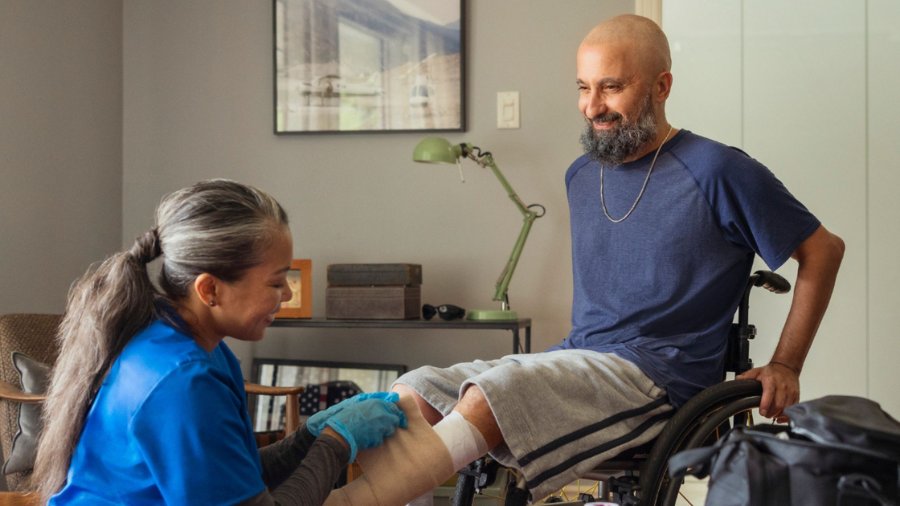
The most common reason families do not pursue in-home care for an adult with a disability is an assumption that it is not really an option that in-home care is primarily for elderly people, that the services available would not fit their loved one's needs, or that whatever is available would not be meaningfully different from what they are already doing on their own.
These assumptions are understandable. The marketing language around home care skews heavily toward seniors, and the conversation about disability support services is often siloed from the conversation about home health care in ways that make it hard for families to see the overlap.
But adult disability care is a core part of what home care agencies like BrightStar Care of South Central Wisconsin provide not as an afterthought, but as a genuine area of expertise. Adults with physical disabilities, developmental disabilities, traumatic brain injuries, spinal cord injuries, multiple sclerosis, ALS, cerebral palsy, and a wide range of other conditions that affect daily function are exactly the population that in-home care is designed to serve. The services are real, they are substantive, and for many families, accessing them changes the daily experience of disability fundamentally.
Our Care Services Call Us Today
Non-medical in-home care sometimes called personal care or companion care addresses the practical and social dimensions of daily life that a disability makes harder to manage independently. It does not require a physician's order and does not involve clinical procedures. What it does involve is substantial.
For adults whose disability affects mobility, strength, coordination, or stamina, the activities that most people perform independently bathing, dressing, grooming, toileting, managing continence can be physically demanding, time-consuming, or impossible without assistance. A personal care aide who provides this support does more than complete tasks. They give the person with a disability the energy and the time to direct toward the things in their life that matter most to them work, relationships, creative pursuits, advocacy, community involvement.
This is the practical foundation of independence for many adults with disabilities. The personal care tasks are not the goal. They are what makes everything else possible.
Preparing meals independently can be difficult or impossible for adults with upper extremity weakness, fine motor impairment, fatigue-related conditions like MS or ALS, or cognitive disabilities that affect planning and sequencing. A caregiver who prepares meals tailored to dietary needs and preferences and who can assist with eating when needed addresses a foundational health need that affects energy, cognition, medication effectiveness, and overall function.
One of the most significant practical impacts of disability is the loss of independent transportation and with it, access to medical appointments, employment, community activities, social connection, and the ordinary errands that sustain daily life. A caregiver who provides transportation and accompaniment does not simply get the person from point A to point B. They restore access to a community the disability has made harder to participate in.
Adults with disabilities are at elevated risk of social isolation from physical barriers to community access, from the social withdrawal that can accompany chronic illness and pain, and from the shrinking of social networks that often occurs when a person's daily life becomes significantly constrained. A companion caregiver who provides consistent human presence, engagement, and accompaniment into the community addresses this risk directly not as a supplemental nicety, but as a genuine health priority.
Maintaining a safe, functional home environment is harder for adults with disabilities and the consequences of a home that has fallen into disorganization or disrepair are not just aesthetic. They are safety risks, health risks, and sources of chronic stress that compound the burden of living with a disability. Light housekeeping, laundry, errands, and organizational support keep the home functional in ways that matter.
Our Care Services Call Us Today

Skilled in-home care involves licensed clinical professionals, registered nurses, licensed practical nurses, physical therapists, occupational therapists, and speech-language pathologists providing clinical services in the home. For adults with disabilities, skilled care addresses needs that go well beyond what personal care aides can provide.
Many adults with significant disabilities have complex medical needs that require ongoing nursing oversight. Medication management particularly for adults managing multiple medications, complex dosing schedules, or medications with narrow therapeutic windows is a core skilled nursing function that reduces the risk of medication errors with serious consequences.
Wound care is another area where skilled nursing is essential. Adults with limited mobility are at elevated risk for pressure injuries, and adults who use catheters, feeding tubes, or other medical devices require skilled assessment and care of insertion sites and surrounding tissue. These are not tasks that can be safely delegated to non-clinical caregivers.
For adults with conditions like ALS, MS, or spinal cord injuries that involve progressive respiratory compromise, skilled nursing monitoring of respiratory status and management of ventilator support or oxygen therapy may be central to safe home care. For adults managing chronic conditions alongside their disability, regular skilled nursing assessment catches changes in status early before they become acute problems requiring emergency intervention.
Adults with disabilities who have physical therapy goals maintaining current function, recovering function following an acute episode, building strength and endurance, improving transfer technique, or adapting to functional changes as a progressive condition advances can receive physical therapy at home. Home-based physical therapy has real advantages over clinic-based therapy for this population: the therapist works in the actual environment where the person functions, can identify barriers and solutions that a clinic setting would not reveal, and eliminates the transportation burden that makes consistent clinic attendance difficult for many adults with disabilities.
Occupational therapy for adults with disabilities focuses on the function of identifying what the person wants and needs to do in their daily life, and finding the combination of skill-building, adaptive equipment, environmental modification, and technique adaptation that makes those activities possible. An occupational therapist working in the home can assess the actual environment, recommend and train on adaptive equipment, and work directly on the activities that matter most to the individual cooking, dressing, computer use, work tasks, leisure activities.
Adults whose disabilities affect speech, language, swallowing, or cognitive-communication skills can receive speech-language pathology services at home. For adults with ALS, stroke, traumatic brain injury, or conditions affecting oral motor function, swallowing evaluation and dysphagia management are safety-critical services. Augmentative and alternative communication evaluation and training — for adults who cannot rely on verbal speech — is another area where a speech-language pathologist working in the home provides services that directly expand the person's ability to communicate and participate in their own life.
Our Care Services Call Us Today
Beyond the core service categories, a few things consistently surprise families who are new to in-home disability care.
The range of conditions served is much broader than most families assume. In-home care is not limited to the most severe disabilities or the most well-known diagnoses. Adults with MS, Parkinson's disease, post-stroke deficits, traumatic brain injuries, spinal cord injuries at any level, cerebral palsy, intellectual and developmental disabilities, rare neuromuscular conditions, and acquired disabilities from illness or injury are all people for whom in-home care is available and often transformative.
Skilled and non-medical care can be provided together. A person can have a personal care aide helping with daily living tasks and a skilled nurse providing clinical oversight and medication management through the same agency. Coordination between the two is not just logistically convenient, it is clinically meaningful. A personal care aide who works alongside a skilled nurse is better positioned to notice changes and communicate them. The integration produces better care than either service in isolation.
Care can be calibrated to what the person actually needs. In-home care is not a fixed package. It can be structured around a few hours of support per week for someone with modest needs, or around-the-clock staffing for someone with complex, continuous care requirements. The flexibility of home care in terms of hours, tasks, and the combination of skilled and non-skilled services is one of its most significant advantages over facility-based options.
The goal is not dependency. It is function. The best in-home disability care is oriented toward what the person is trying to accomplish the work they want to do, the relationships they want to maintain, the community they want to participate in, the life they are trying to live. Caregivers who approach their work from this orientation provide something fundamentally different from caregivers who simply complete tasks.
Not everyone who uses in-home care for disability-related needs is doing so through a family caregiver. Many adults with disabilities are their own primary decision-makers directing their own care, setting their own goals, and choosing the providers who work in their homes.
BrightStar Care of South Central Wisconsin works with adults with disabilities directly, not only through family members. If you are an adult with a disability who is evaluating in-home care options for yourself, we welcome that conversation on your terms.

At BrightStar Care of South Central Wisconsin, we provide both skilled nursing and non-medical personal care services for adults with disabilities throughout Madison, Janesville, Beloit, Beaver Dam, Portage, Wisconsin Dells, and surrounding South Central Wisconsin communities.
Our care is coordinated by a registered nurse who develops an individualized plan of care, oversees the care provided, and remains involved as needs evolve. We screen and train our caregivers carefully, match them to clients with attention to both the clinical requirements of the role and the personal compatibility that makes a care relationship work, and remain in active communication with families about how care is going and what is changing.
If your family or you yourself are exploring in-home care for an adult with a disability and are not sure what is available or whether it would fit your situation, we are glad to talk through it. No pressure, and no assumptions about what the right answer is before we understand your specific circumstances.
Contact Us Today:
An adult with a disability can absolutely arrange in-home care directly without going through a family member. Many adults with disabilities are the primary directors of their own care and prefer to engage with providers directly. BrightStar Care of South Central Wisconsin works with adults with disabilities as the decision-makers in their own care, not only through family intermediaries. If you are an adult with a disability evaluating your options, we welcome a direct conversation.
BrightStar Care of South Central Wisconsin provides skilled nursing and non-medical in-home care services for adults with disabilities and their families throughout Madison, Janesville, Beloit, Beaver Dam, Portage, Wisconsin Dells, and surrounding South Central Wisconsin communities. To speak with a care coordinator about what in-home care could look like for your situation, contact our South Central Wisconsin office today.
Our Care Services Call Us Today
This post is written to widen that picture.
In-home care for adults with disabilities is not a single service or a single category. It spans personal care and companionship, skilled nursing and therapy, complex medical support, and everything in between. The right combination depends on the individual on the nature of their disability, their current level of function, what they are trying to accomplish in their daily life, and what their family can realistically sustain.
For families in Madison, Janesville, Beloit, Beaver Dam, Portage, and throughout South Central Wisconsin who are caring for an adult with a disability or who are adults with disabilities navigating their own care needs here is what in-home care actually looks like, and what most families do not realize is available to them.
The Assumption That Keeps Families From Looking
The most common reason families do not pursue in-home care for an adult with a disability is an assumption that it is not really an option that in-home care is primarily for elderly people, that the services available would not fit their loved one's needs, or that whatever is available would not be meaningfully different from what they are already doing on their own.These assumptions are understandable. The marketing language around home care skews heavily toward seniors, and the conversation about disability support services is often siloed from the conversation about home health care in ways that make it hard for families to see the overlap.
But adult disability care is a core part of what home care agencies like BrightStar Care of South Central Wisconsin provide not as an afterthought, but as a genuine area of expertise. Adults with physical disabilities, developmental disabilities, traumatic brain injuries, spinal cord injuries, multiple sclerosis, ALS, cerebral palsy, and a wide range of other conditions that affect daily function are exactly the population that in-home care is designed to serve. The services are real, they are substantive, and for many families, accessing them changes the daily experience of disability fundamentally.
Our Care Services Call Us Today
What Non-Medical In-Home Care Provides for Adults With Disabilities
Non-medical in-home care sometimes called personal care or companion care addresses the practical and social dimensions of daily life that a disability makes harder to manage independently. It does not require a physician's order and does not involve clinical procedures. What it does involve is substantial.
Personal Care and Activities of Daily Living
For adults whose disability affects mobility, strength, coordination, or stamina, the activities that most people perform independently bathing, dressing, grooming, toileting, managing continence can be physically demanding, time-consuming, or impossible without assistance. A personal care aide who provides this support does more than complete tasks. They give the person with a disability the energy and the time to direct toward the things in their life that matter most to them work, relationships, creative pursuits, advocacy, community involvement.This is the practical foundation of independence for many adults with disabilities. The personal care tasks are not the goal. They are what makes everything else possible.
Mobility Support and Transfer Assistance
Adults who use wheelchairs, who have limited lower body strength or control, or who are at risk of falls often need physical assistance with transfers moving from bed to wheelchair, from wheelchair to toilet, from chair to car. Done incorrectly, transfers are a significant injury risk for both the person being transferred and the person providing assistance. A trained caregiver who performs transfers safely and consistently reduces that risk meaningfully for both.
Meal Preparation and Nutrition Support
Preparing meals independently can be difficult or impossible for adults with upper extremity weakness, fine motor impairment, fatigue-related conditions like MS or ALS, or cognitive disabilities that affect planning and sequencing. A caregiver who prepares meals tailored to dietary needs and preferences and who can assist with eating when needed addresses a foundational health need that affects energy, cognition, medication effectiveness, and overall function.
Transportation and Community Access
One of the most significant practical impacts of disability is the loss of independent transportation and with it, access to medical appointments, employment, community activities, social connection, and the ordinary errands that sustain daily life. A caregiver who provides transportation and accompaniment does not simply get the person from point A to point B. They restore access to a community the disability has made harder to participate in.
Companionship and Social Engagement
Adults with disabilities are at elevated risk of social isolation from physical barriers to community access, from the social withdrawal that can accompany chronic illness and pain, and from the shrinking of social networks that often occurs when a person's daily life becomes significantly constrained. A companion caregiver who provides consistent human presence, engagement, and accompaniment into the community addresses this risk directly not as a supplemental nicety, but as a genuine health priority.
Household Support
Maintaining a safe, functional home environment is harder for adults with disabilities and the consequences of a home that has fallen into disorganization or disrepair are not just aesthetic. They are safety risks, health risks, and sources of chronic stress that compound the burden of living with a disability. Light housekeeping, laundry, errands, and organizational support keep the home functional in ways that matter.Our Care Services Call Us Today
What Skilled In-Home Care Provides for Adults With Disabilities
Skilled in-home care involves licensed clinical professionals, registered nurses, licensed practical nurses, physical therapists, occupational therapists, and speech-language pathologists providing clinical services in the home. For adults with disabilities, skilled care addresses needs that go well beyond what personal care aides can provide.
Skilled Nursing Care
Many adults with significant disabilities have complex medical needs that require ongoing nursing oversight. Medication management particularly for adults managing multiple medications, complex dosing schedules, or medications with narrow therapeutic windows is a core skilled nursing function that reduces the risk of medication errors with serious consequences.Wound care is another area where skilled nursing is essential. Adults with limited mobility are at elevated risk for pressure injuries, and adults who use catheters, feeding tubes, or other medical devices require skilled assessment and care of insertion sites and surrounding tissue. These are not tasks that can be safely delegated to non-clinical caregivers.
For adults with conditions like ALS, MS, or spinal cord injuries that involve progressive respiratory compromise, skilled nursing monitoring of respiratory status and management of ventilator support or oxygen therapy may be central to safe home care. For adults managing chronic conditions alongside their disability, regular skilled nursing assessment catches changes in status early before they become acute problems requiring emergency intervention.
Physical Therapy
Adults with disabilities who have physical therapy goals maintaining current function, recovering function following an acute episode, building strength and endurance, improving transfer technique, or adapting to functional changes as a progressive condition advances can receive physical therapy at home. Home-based physical therapy has real advantages over clinic-based therapy for this population: the therapist works in the actual environment where the person functions, can identify barriers and solutions that a clinic setting would not reveal, and eliminates the transportation burden that makes consistent clinic attendance difficult for many adults with disabilities.
Occupational Therapy
Occupational therapy for adults with disabilities focuses on the function of identifying what the person wants and needs to do in their daily life, and finding the combination of skill-building, adaptive equipment, environmental modification, and technique adaptation that makes those activities possible. An occupational therapist working in the home can assess the actual environment, recommend and train on adaptive equipment, and work directly on the activities that matter most to the individual cooking, dressing, computer use, work tasks, leisure activities.
Speech-Language Pathology
Adults whose disabilities affect speech, language, swallowing, or cognitive-communication skills can receive speech-language pathology services at home. For adults with ALS, stroke, traumatic brain injury, or conditions affecting oral motor function, swallowing evaluation and dysphagia management are safety-critical services. Augmentative and alternative communication evaluation and training — for adults who cannot rely on verbal speech — is another area where a speech-language pathologist working in the home provides services that directly expand the person's ability to communicate and participate in their own life.Our Care Services Call Us Today
What Families Often Do Not Realize Is Available
Beyond the core service categories, a few things consistently surprise families who are new to in-home disability care.The range of conditions served is much broader than most families assume. In-home care is not limited to the most severe disabilities or the most well-known diagnoses. Adults with MS, Parkinson's disease, post-stroke deficits, traumatic brain injuries, spinal cord injuries at any level, cerebral palsy, intellectual and developmental disabilities, rare neuromuscular conditions, and acquired disabilities from illness or injury are all people for whom in-home care is available and often transformative.
Skilled and non-medical care can be provided together. A person can have a personal care aide helping with daily living tasks and a skilled nurse providing clinical oversight and medication management through the same agency. Coordination between the two is not just logistically convenient, it is clinically meaningful. A personal care aide who works alongside a skilled nurse is better positioned to notice changes and communicate them. The integration produces better care than either service in isolation.
Care can be calibrated to what the person actually needs. In-home care is not a fixed package. It can be structured around a few hours of support per week for someone with modest needs, or around-the-clock staffing for someone with complex, continuous care requirements. The flexibility of home care in terms of hours, tasks, and the combination of skilled and non-skilled services is one of its most significant advantages over facility-based options.
The goal is not dependency. It is function. The best in-home disability care is oriented toward what the person is trying to accomplish the work they want to do, the relationships they want to maintain, the community they want to participate in, the life they are trying to live. Caregivers who approach their work from this orientation provide something fundamentally different from caregivers who simply complete tasks.
A Note on Adults With Disabilities Who Manage Their Own Care
Not everyone who uses in-home care for disability-related needs is doing so through a family caregiver. Many adults with disabilities are their own primary decision-makers directing their own care, setting their own goals, and choosing the providers who work in their homes.BrightStar Care of South Central Wisconsin works with adults with disabilities directly, not only through family members. If you are an adult with a disability who is evaluating in-home care options for yourself, we welcome that conversation on your terms.
How BrightStar Care of South Central Wisconsin Serves Adults With Disabilities
At BrightStar Care of South Central Wisconsin, we provide both skilled nursing and non-medical personal care services for adults with disabilities throughout Madison, Janesville, Beloit, Beaver Dam, Portage, Wisconsin Dells, and surrounding South Central Wisconsin communities.Our care is coordinated by a registered nurse who develops an individualized plan of care, oversees the care provided, and remains involved as needs evolve. We screen and train our caregivers carefully, match them to clients with attention to both the clinical requirements of the role and the personal compatibility that makes a care relationship work, and remain in active communication with families about how care is going and what is changing.
If your family or you yourself are exploring in-home care for an adult with a disability and are not sure what is available or whether it would fit your situation, we are glad to talk through it. No pressure, and no assumptions about what the right answer is before we understand your specific circumstances.
Contact Us Today:
- Phone: 608-314-8501
- Address: 2501 Morse St. Janesville, WI 53545
- Visit Us Online: BrightStar Care of South Central / Janesville
Frequently Asked Questions
Q: What types of disabilities does in-home care typically serve?
In-home care serves adults with a very broad range of disabilities including physical disabilities from spinal cord injury, stroke, traumatic brain injury, cerebral palsy, MS, ALS, Parkinson's disease, and muscular dystrophy; intellectual and developmental disabilities including Down syndrome and autism spectrum disorder; sensory disabilities; and acquired disabilities resulting from illness, injury, or surgery. The common thread is not the diagnosis but the functional impact the ways the disability affects the person's ability to manage daily life independently and safely. If a disability creates needs that in-home support could address, in-home care is worth exploring regardless of the specific diagnosis.Q: What is the difference between skilled and non-skilled in-home care for adults with disabilities, and does a person need both?
Non-skilled care, also called personal care or companion care, addresses the practical and social dimensions of daily life: bathing, dressing, meals, transportation, household tasks, and companionship. It does not require a clinical license and does not involve medical procedures. Skilled care involves licensed clinical professionals nurses, physical therapists, occupational therapists, speech-language pathologists providing clinical services that require their training and licensure. Many adults with disabilities benefit from both: personal care that supports daily function, and skilled care that addresses clinical needs, monitors health status, and works toward rehabilitation or functional goals. The two services can be coordinated through the same agency, which improves communication and continuity.
Q: Does in-home care for adults with disabilities have to go through a family member, or can an adult with a disability arrange it directly?
An adult with a disability can absolutely arrange in-home care directly without going through a family member. Many adults with disabilities are the primary directors of their own care and prefer to engage with providers directly. BrightStar Care of South Central Wisconsin works with adults with disabilities as the decision-makers in their own care, not only through family intermediaries. If you are an adult with a disability evaluating your options, we welcome a direct conversation.BrightStar Care of South Central Wisconsin provides skilled nursing and non-medical in-home care services for adults with disabilities and their families throughout Madison, Janesville, Beloit, Beaver Dam, Portage, Wisconsin Dells, and surrounding South Central Wisconsin communities. To speak with a care coordinator about what in-home care could look like for your situation, contact our South Central Wisconsin office today.
Our Care Services Call Us Today