
September is Alzheimer's and Dementia Awareness Month. Among the many losses that dementia brings, one stands apart in the particular grief it generates: the moment a parent looks at you and does not know who you are.
It may happen gradually. A hesitation where there used to be immediate recognition. A searching look that lingers a beat too long. Calling you by a sibling's name, or a parent's name, or no name at all. Or it may happen abruptly, arriving one ordinary afternoon without warning. Either way, it is one of the most disorienting experiences in the entire arc of dementia caregiving, and one of the least talked about.
Families across Dane County, Columbia County, Sauk County, and throughout South Central Wisconsin are living with this reality. At BrightStar Care of South Central Wisconsin, we work alongside those families every day. This post is for anyone who has experienced that moment of non-recognition, or who is dreading it, and needs to understand both what is happening and how to carry it.
Our Alzheimer's and Dementia Care Call 608-314-8501
Recognition of familiar faces and people involves a complex network of brain regions, including the hippocampus, which stores episodic memories, the temporal lobe, which processes facial identity, and the prefrontal cortex, which integrates context and relationship information into a coherent sense of who someone is. Dementia, particularly Alzheimer's disease, progressively damages these systems.
The order in which recognition fails is not random. People with dementia typically retain recognition of the most emotionally and historically central relationships the longest. A parent may forget a neighbor before a sibling, a sibling before a spouse or adult child. Even within close relationships, the pattern can be variable: they may recognize you clearly on some days and not on others, depending on their level of fatigue, the time of day, the environment, and the current state of their cognition.
In some cases, a person with dementia retains the felt sense of familiarity even when they cannot access the specific identity. They know they know you. They know you are safe. They may not be able to say your name or identify your relationship, but the emotional recognition persists even when the cognitive recognition is gone. This is not nothing. It is often the most important thing.
The grief that families experience when a parent no longer recognizes them is real, significant, and in some ways uniquely difficult to process.
It is a loss without a death. The person is present. They are sitting across from you. You can touch them, speak to them, share a meal with them. And yet the person who knew you as their child, who held the shared history of your relationship in their memory, is in some fundamental way gone. This form of grief does not fit the standard frameworks. There is no funeral, no acknowledged ending, no clear permission to grieve. Many family members describe feeling guilty about mourning someone who is still alive.
This kind of grief has a name in the clinical literature: anticipatory grief, or ambiguous loss. It is the grief of losing someone in stages, of mourning a relationship that is still present in some forms and absent in others. It is one of the most psychologically demanding aspects of dementia caregiving, and it is made harder by the fact that it is largely invisible to the world outside the family.
It is also complicated by the ongoing nature of the caregiving role. You are grieving the loss of recognition while simultaneously showing up to provide care, to be present, to manage the practical and emotional demands of the disease. Grief and function exist side by side, which is exhausting in ways that are difficult to communicate to people who have not experienced it.
Our Alzheimer's and Dementia Care Call 608-314-8501
The impulse to correct or remind. When a parent looks at you blankly or calls you by the wrong name, the instinct is often to remind them who you are. "It's me, Dad. It's your daughter Sarah." Sometimes this works, particularly in early to middle stages when the reminder cues recognition. But in later stages, it often does not, and persistent reminders can produce frustration, confusion, or distress in both the person with dementia and the family member. The question worth asking is not whether the correction works, but whether it serves the person. If it regularly produces distress, a different approach may be more compassionate.
The feeling of being erased. Non-recognition can feel like a form of erasure, as if the relationship you have built over a lifetime is being unmade. This feeling is understandable and valid. It is also worth separating from what is actually happening neurologically. The disease is erasing the brain's capacity to retrieve relational information. It is not erasing the relationship itself, the history, the love, or the meaning of what has existed between you.
Wondering whether to keep visiting. Some family members, in the pain of non-recognition, begin to wonder whether to continue visiting. If they do not know who I am, what is the point? The research on this is unambiguous: continued presence from familiar people has a measurable positive effect on the mood, behavior, and quality of life of people with dementia, even when cognitive recognition is absent. The emotional brain retains its responsiveness to warmth, calm, and familiar presence long after the cognitive brain loses the ability to name who is providing it. Your presence matters even when it is not named.
The grief being complicated by relationship history. Not every parent-child relationship is uncomplicated, and dementia caregiving can stir a particular kind of grief when the relationship was difficult. The hope of a reconciliation that will now not happen. The loss of a parent who never became the person you needed them to be. These layers of grief are real and deserve acknowledgment, not just in the context of dementia caregiving but through whatever support the family member can access.
The question of how to show up once recognition has faded is one that families navigate differently, and there is no single right answer. A few principles tend to help.
Introduce yourself simply, without pressure. "Hi, it's Sarah, your daughter" said warmly and without an expectation of response removes the burden from the person while still providing orientation. It is not a test. It is a gift of information. If they do not respond with recognition, that is all right. You have told them who you are, and you can simply be together.
Focus on the emotional connection rather than the cognitive one. What the person with dementia can still experience, even in late stages, is warmth, calm, physical comfort, and the feeling of being cared for. Holding a hand, sitting close, speaking in a tone that is gentle and unhurried, playing music they loved, looking through old photographs together: these things reach the person even when names and faces do not. The relationship continues at the level of feeling even when it cannot continue at the level of recognition.
Let go of the script. Visits that are organized around the expectation of normal conversation, around reminiscing about shared history, around the person performing their former self, often produce frustration and sadness. Visits that are organized around simply being together, around sensory pleasure, around music or food or touch or laughter, tend to go better. The goal is not to recapture what was. It is to be present in what is.
Allow yourself to grieve outside the visit. Trying to hold grief and caregiving presence simultaneously, in the room, in the moment, is a significant psychological burden. Many family members find it helpful to allow themselves to grieve more fully in spaces outside the visit, with a therapist, a support group, a trusted friend, a journal. This creates a container for the grief that allows them to be more present with the person during the time they are together.
Accept that the relationship has changed form, not ended. This is perhaps the most difficult reframing, and the most important. The relationship you had with your parent before dementia has changed. The specific form of connection you knew, built on mutual recognition, shared memory, and conscious relationship, is no longer fully available. But something persists. The person you are caring for was shaped by a lifetime of relationship with you, even if they can no longer access that history consciously. Your presence still reaches them. Your care still matters to them. The relationship has changed form. It has not ended.
Our Alzheimer's and Dementia Care Call 608-314-8501
The Alzheimer's Association offers caregiver support groups throughout Wisconsin, including resources specific to families navigating the emotional dimensions of dementia caregiving. Their 24/7 helpline is available at 800-272-3900.
The Wisconsin Alzheimer's Disease Research Center, based in Madison, offers education and support resources for families throughout the state.
Individual therapy, particularly with a therapist experienced in grief, chronic illness, or caregiver burnout, can provide a dedicated space for processing the specific losses of dementia caregiving that do not fit standard grief frameworks.
Support groups for dementia caregivers, both in person and online, connect families with others who understand the particular texture of this experience in ways that friends and colleagues outside caregiving often cannot.
BrightStar Care of South Central Wisconsin provides skilled nursing and non-medical caregiving for individuals with dementia and their families throughout Madison, Middleton, Janesville, Beloit, Portage, Baraboo, and surrounding Dane, Rock, Columbia, and Sauk County communities.
Our role in these situations is not only to provide care for the person with dementia. It is also to be a reliable, consistent presence that reduces the caregiving burden on family members who are already carrying a great deal.
A consistent caregiver who knows the person well, who brings the same face and the same warm approach to every visit, provides stability for the person with dementia that reduces anxiety and behavioral symptoms. It also provides family members with something equally valuable: the knowledge that their loved one is being cared for with skill and genuine attention on the days and hours they cannot be present.
Our skilled nursing oversight monitors the clinical picture, communicates with the treating physician, and ensures that the care plan remains appropriate as the disease progresses. Our non-medical caregivers provide the daily human presence, the patience, and the consistency that dementia care requires at every stage.
If your family is navigating this loss, we are glad to be part of your support system.
Our Alzheimer's and Dementia Care Call 608-314-8501
BrightStar Care of South Central Wisconsin provides skilled nursing and non-medical home care services for seniors and adults throughout Madison, Middleton, Janesville, Beloit, Portage, Baraboo, and surrounding Dane, Rock, Columbia, and Sauk County communities. To speak with a care coordinator about dementia care support for your family this September, contact our office today.
Contact Us Today:
It may happen gradually. A hesitation where there used to be immediate recognition. A searching look that lingers a beat too long. Calling you by a sibling's name, or a parent's name, or no name at all. Or it may happen abruptly, arriving one ordinary afternoon without warning. Either way, it is one of the most disorienting experiences in the entire arc of dementia caregiving, and one of the least talked about.
Families across Dane County, Columbia County, Sauk County, and throughout South Central Wisconsin are living with this reality. At BrightStar Care of South Central Wisconsin, we work alongside those families every day. This post is for anyone who has experienced that moment of non-recognition, or who is dreading it, and needs to understand both what is happening and how to carry it.
Our Alzheimer's and Dementia Care Call 608-314-8501
What Is Actually Happening in the Brain
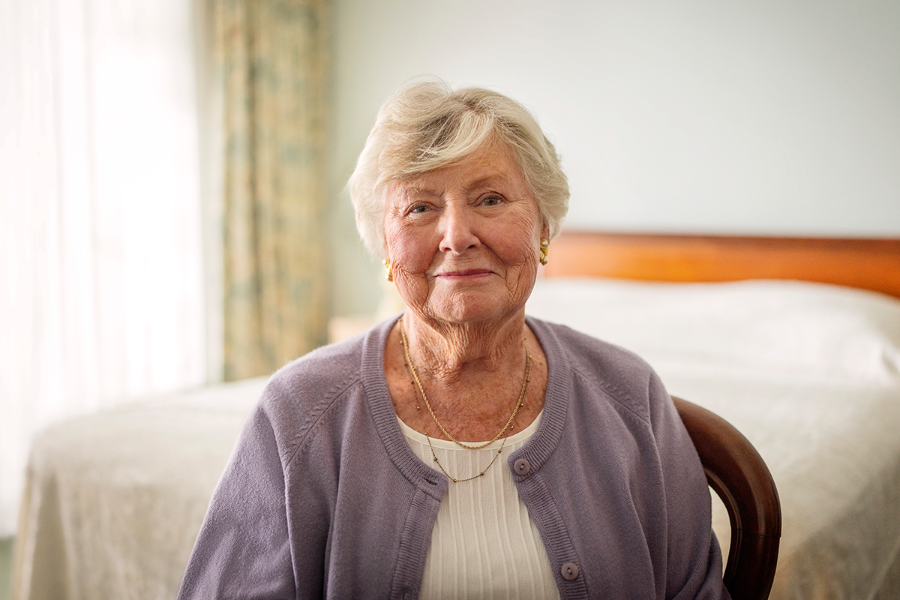
When a person with dementia fails to recognize a family member, it is not a choice, a rejection, or a sign that the relationship did not matter. It is the result of specific, measurable damage to the brain systems that store and retrieve the information that recognition requires.Recognition of familiar faces and people involves a complex network of brain regions, including the hippocampus, which stores episodic memories, the temporal lobe, which processes facial identity, and the prefrontal cortex, which integrates context and relationship information into a coherent sense of who someone is. Dementia, particularly Alzheimer's disease, progressively damages these systems.
The order in which recognition fails is not random. People with dementia typically retain recognition of the most emotionally and historically central relationships the longest. A parent may forget a neighbor before a sibling, a sibling before a spouse or adult child. Even within close relationships, the pattern can be variable: they may recognize you clearly on some days and not on others, depending on their level of fatigue, the time of day, the environment, and the current state of their cognition.
In some cases, a person with dementia retains the felt sense of familiarity even when they cannot access the specific identity. They know they know you. They know you are safe. They may not be able to say your name or identify your relationship, but the emotional recognition persists even when the cognitive recognition is gone. This is not nothing. It is often the most important thing.
The Grief That Comes With This Loss
The grief that families experience when a parent no longer recognizes them is real, significant, and in some ways uniquely difficult to process.It is a loss without a death. The person is present. They are sitting across from you. You can touch them, speak to them, share a meal with them. And yet the person who knew you as their child, who held the shared history of your relationship in their memory, is in some fundamental way gone. This form of grief does not fit the standard frameworks. There is no funeral, no acknowledged ending, no clear permission to grieve. Many family members describe feeling guilty about mourning someone who is still alive.
This kind of grief has a name in the clinical literature: anticipatory grief, or ambiguous loss. It is the grief of losing someone in stages, of mourning a relationship that is still present in some forms and absent in others. It is one of the most psychologically demanding aspects of dementia caregiving, and it is made harder by the fact that it is largely invisible to the world outside the family.
It is also complicated by the ongoing nature of the caregiving role. You are grieving the loss of recognition while simultaneously showing up to provide care, to be present, to manage the practical and emotional demands of the disease. Grief and function exist side by side, which is exhausting in ways that are difficult to communicate to people who have not experienced it.
Our Alzheimer's and Dementia Care Call 608-314-8501

What Families Often Feel and What to Do With It
The impulse to correct or remind. When a parent looks at you blankly or calls you by the wrong name, the instinct is often to remind them who you are. "It's me, Dad. It's your daughter Sarah." Sometimes this works, particularly in early to middle stages when the reminder cues recognition. But in later stages, it often does not, and persistent reminders can produce frustration, confusion, or distress in both the person with dementia and the family member. The question worth asking is not whether the correction works, but whether it serves the person. If it regularly produces distress, a different approach may be more compassionate.The feeling of being erased. Non-recognition can feel like a form of erasure, as if the relationship you have built over a lifetime is being unmade. This feeling is understandable and valid. It is also worth separating from what is actually happening neurologically. The disease is erasing the brain's capacity to retrieve relational information. It is not erasing the relationship itself, the history, the love, or the meaning of what has existed between you.
Wondering whether to keep visiting. Some family members, in the pain of non-recognition, begin to wonder whether to continue visiting. If they do not know who I am, what is the point? The research on this is unambiguous: continued presence from familiar people has a measurable positive effect on the mood, behavior, and quality of life of people with dementia, even when cognitive recognition is absent. The emotional brain retains its responsiveness to warmth, calm, and familiar presence long after the cognitive brain loses the ability to name who is providing it. Your presence matters even when it is not named.
The grief being complicated by relationship history. Not every parent-child relationship is uncomplicated, and dementia caregiving can stir a particular kind of grief when the relationship was difficult. The hope of a reconciliation that will now not happen. The loss of a parent who never became the person you needed them to be. These layers of grief are real and deserve acknowledgment, not just in the context of dementia caregiving but through whatever support the family member can access.
How to Be Present When Recognition Is Gone
The question of how to show up once recognition has faded is one that families navigate differently, and there is no single right answer. A few principles tend to help.Introduce yourself simply, without pressure. "Hi, it's Sarah, your daughter" said warmly and without an expectation of response removes the burden from the person while still providing orientation. It is not a test. It is a gift of information. If they do not respond with recognition, that is all right. You have told them who you are, and you can simply be together.
Focus on the emotional connection rather than the cognitive one. What the person with dementia can still experience, even in late stages, is warmth, calm, physical comfort, and the feeling of being cared for. Holding a hand, sitting close, speaking in a tone that is gentle and unhurried, playing music they loved, looking through old photographs together: these things reach the person even when names and faces do not. The relationship continues at the level of feeling even when it cannot continue at the level of recognition.
Let go of the script. Visits that are organized around the expectation of normal conversation, around reminiscing about shared history, around the person performing their former self, often produce frustration and sadness. Visits that are organized around simply being together, around sensory pleasure, around music or food or touch or laughter, tend to go better. The goal is not to recapture what was. It is to be present in what is.
Allow yourself to grieve outside the visit. Trying to hold grief and caregiving presence simultaneously, in the room, in the moment, is a significant psychological burden. Many family members find it helpful to allow themselves to grieve more fully in spaces outside the visit, with a therapist, a support group, a trusted friend, a journal. This creates a container for the grief that allows them to be more present with the person during the time they are together.
Accept that the relationship has changed form, not ended. This is perhaps the most difficult reframing, and the most important. The relationship you had with your parent before dementia has changed. The specific form of connection you knew, built on mutual recognition, shared memory, and conscious relationship, is no longer fully available. But something persists. The person you are caring for was shaped by a lifetime of relationship with you, even if they can no longer access that history consciously. Your presence still reaches them. Your care still matters to them. The relationship has changed form. It has not ended.
Our Alzheimer's and Dementia Care Call 608-314-8501
Getting Support for Yourself
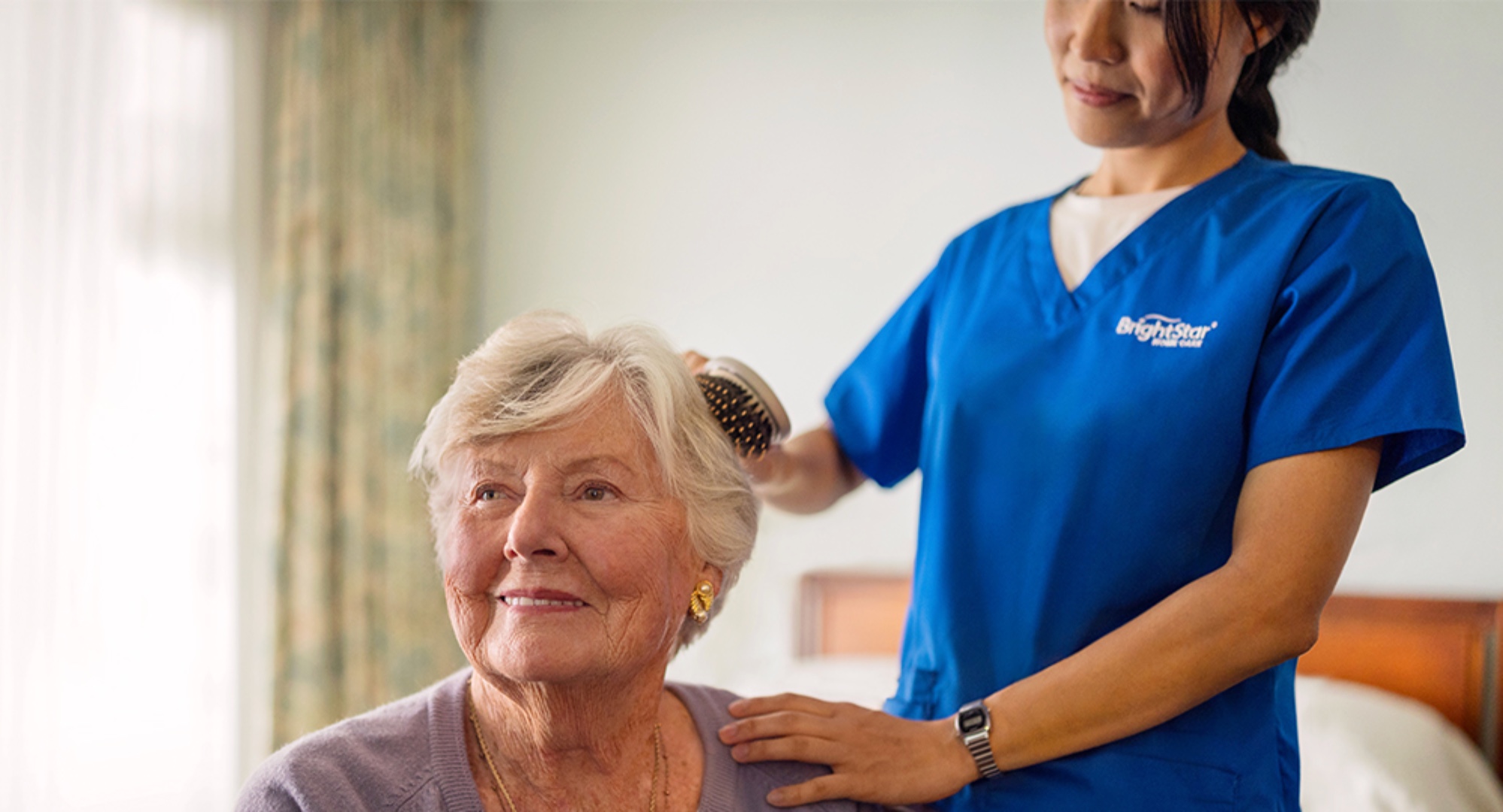
Caring for a parent who no longer recognizes you is a form of sustained grief that deserves real support, not just endurance.The Alzheimer's Association offers caregiver support groups throughout Wisconsin, including resources specific to families navigating the emotional dimensions of dementia caregiving. Their 24/7 helpline is available at 800-272-3900.
The Wisconsin Alzheimer's Disease Research Center, based in Madison, offers education and support resources for families throughout the state.
Individual therapy, particularly with a therapist experienced in grief, chronic illness, or caregiver burnout, can provide a dedicated space for processing the specific losses of dementia caregiving that do not fit standard grief frameworks.
Support groups for dementia caregivers, both in person and online, connect families with others who understand the particular texture of this experience in ways that friends and colleagues outside caregiving often cannot.
How BrightStar Care of South Central Wisconsin Supports Families
BrightStar Care of South Central Wisconsin provides skilled nursing and non-medical caregiving for individuals with dementia and their families throughout Madison, Middleton, Janesville, Beloit, Portage, Baraboo, and surrounding Dane, Rock, Columbia, and Sauk County communities.Our role in these situations is not only to provide care for the person with dementia. It is also to be a reliable, consistent presence that reduces the caregiving burden on family members who are already carrying a great deal.
A consistent caregiver who knows the person well, who brings the same face and the same warm approach to every visit, provides stability for the person with dementia that reduces anxiety and behavioral symptoms. It also provides family members with something equally valuable: the knowledge that their loved one is being cared for with skill and genuine attention on the days and hours they cannot be present.
Our skilled nursing oversight monitors the clinical picture, communicates with the treating physician, and ensures that the care plan remains appropriate as the disease progresses. Our non-medical caregivers provide the daily human presence, the patience, and the consistency that dementia care requires at every stage.
If your family is navigating this loss, we are glad to be part of your support system.
Our Alzheimer's and Dementia Care Call 608-314-8501
Frequently Asked Questions
Q: My parent sometimes recognizes me and sometimes does not. Why does it vary?
Fluctuating recognition is common in dementia and reflects the variability of cognitive function that the disease produces day to day and even hour to hour. Fatigue, time of day, environment, illness, medication effects, and the general state of the person's cognition on a given day all influence whether recognition is accessible. A parent who recognizes you clearly in the morning may not recognize you after a difficult afternoon. This variability does not mean the disease is progressing faster than it is, and it does not mean you are doing anything wrong. It is simply how the brain functions when it is damaged in this way.Q: My parent calls me by my grandmother's name. Should I correct them?
Not necessarily, and not for the sake of accuracy alone. Being called by the wrong name is disorienting for family members but usually harmless to the person with dementia. If the person is calm and engaged, correcting them may interrupt a moment of genuine connection for no functional benefit. If the misidentification is causing the person distress, a gentle reorientation may help. The guiding question is always whether the correction serves the person's wellbeing, not whether it makes the factual record accurate.Q: Is it normal to feel relieved sometimes when a visit ends, even though I love my parent?
Completely. Visits with a parent who does not recognize you, who may be agitated or confused, who requires sustained emotional presence and patience, are genuinely exhausting. Feeling relieved when they end is not a sign of insufficient love. It is a sign of how demanding the caregiving role is. That relief does not diminish anything about the relationship or the care you are providing. It is a human response to a genuinely difficult situation, and it deserves compassion rather than guilt.BrightStar Care of South Central Wisconsin provides skilled nursing and non-medical home care services for seniors and adults throughout Madison, Middleton, Janesville, Beloit, Portage, Baraboo, and surrounding Dane, Rock, Columbia, and Sauk County communities. To speak with a care coordinator about dementia care support for your family this September, contact our office today.
Contact Us Today:
- Phone: 608-314-8501
- Address: 2501 Morse St. Janesville, WI 53545
- Visit Us Online: BrightStar Care of South Central / Janesville