
Helping someone you love with meals or errands is one thing. Being responsible for a wound dressing, a catheter, or a changing medication routine can feel very different. You may want to help while also wishing someone with nursing experience could take the lead.
Skilled nursing at home is medical care provided by a licensed nurse in a person’s residence. It can include medication setup and oversight, wound care, catheter care, blood sugar checks, blood draws, and prescribed infusion therapy. People recovering from surgery, managing ongoing health conditions, or needing help with specific medical tasks may benefit.
At BrightStar Care of Lafayette, nursing support brings professional care into familiar surroundings, with services shaped around each person’s needs.
What does skilled nursing at home offer?
Skilled nursing addresses medical needs that require a licensed nurse’s knowledge and training. Some people need support for a short period. Others benefit from ongoing visits as part of their care plan.
BrightStar Care of Lafayette’s skilled nursing services include:
- Medication setup and oversight: Organizing medicines according to current prescription instructions, administering medications when included in the care plan, and communicating questions to the appropriate healthcare provider.
- Wound care: Assessing wounds and providing care according to the treatment plan, including dressing changes when appropriate.
- Catheter care: Maintaining a urinary catheter, a tube that drains urine from the bladder, and performing ordered changes.
- Blood sugar checks: Measuring blood glucose and documenting or communicating results according to the care plan.
- Blood draws: Collecting samples for ordered laboratory testing.
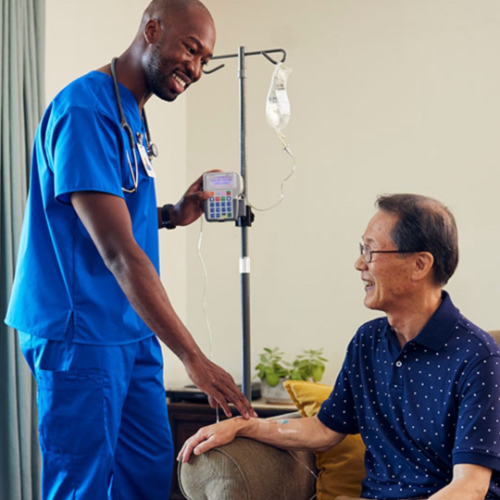
- Infusion therapy: Administering prescribed medication or fluids through a vein, with appropriate nursing monitoring.
- Health monitoring: Checking vital signs and assessing relevant changes in a person’s condition.
These services are not an all-or-nothing package. Someone may need medication-focused visits without needing wound care or help with daily activities. Another person may need several types of nursing support during recovery.
How can skilled nursing make care at home more manageable?
Medical responsibilities can take up more space than the task itself. There is the preparation beforehand, the uncertainty while doing it, and the questions that linger afterward.
A nurse brings professional attention to those responsibilities while helping individuals and families understand the care being provided.
There is someone qualified to handle the clinical tasks. Whether the need involves prescribed wound care or medication administration, a licensed nurse can provide appropriate care within the individual’s plan.
Questions have a place to go. Families can ask what a treatment involves, what information to keep track of, and how they can participate. They do not have to pretend they understand an instruction that still feels unclear.
Care includes observation and communication. A nursing visit is not simply a task checked off a list. It can also involve assessing the person’s condition, documenting findings, and communicating relevant concerns to the healthcare team.
For family members, that support can create room for a different kind of involvement: sharing a meal, enjoying a conversation, or being present without feeling responsible for every medical detail.
Who can benefit from skilled nursing at home?
Needing nursing support does not necessarily mean someone needs help with everything. A person may manage much of daily life independently while needing professional care for one specific responsibility.
|
|
|
|
|
|
|
|
|
|
|
|
|
|
|
|
|
|
Skilled nursing is not limited to older adults. The right support depends on the person’s medical needs and care plan, rather than age alone.
For families in Lafayette, West Lafayette, Delphi, Monticello, and nearby communities, the need may begin with a simple realization: “We are comfortable helping at home, but this part requires a nurse.”
How is skilled nursing different from personal care?
The difference is the kind of help being provided.
Personal care supports daily activities such as bathing, dressing, and grooming. Skilled nursing involves medical assessment or care that requires a licensed nurse.
For example, someone may need help getting dressed in the morning and separate nursing visits for a wound. Another person may bathe, dress, and prepare meals independently but need support with prescribed medications.
Some people benefit from both services. Others need only one. Understanding the distinction helps families describe the support they are looking for without assuming their loved one needs someone present all day.
Can medication-focused nursing visits help?
Medication routines can become difficult to manage when prescriptions change or several instructions need to be followed.
A medication setup means organizing medicines according to current prescription directions. Medication oversight can also help identify questions or discrepancies that need clarification with the prescribing provider or pharmacist.
Perhaps a family member has been filling a pill organizer but no longer feels confident that everything matches the latest instructions. Perhaps the person taking the medications wants professional support while continuing to manage other parts of life independently.
BrightStar Care of Lafayette can discuss medication-focused nursing visits, including whether weekly or every-other-week setups may be appropriate. The schedule depends on the person’s needs and care plan.
What else do families ask about home nursing?
Q: Is skilled nursing only for people leaving the hospital?
A: No. Nursing care may support recovery after a hospital stay, but it can also address ongoing medical needs. A person does not need to be recovering from surgery to ask about nursing support.
Q: Can nursing visits be occasional rather than daily?
A: Yes. Some care plans involve scheduled visits rather than daily nursing. Visit frequency depends on the medical need, required orders, assessment, and service availability.
Q: Can a person receive nursing care and still be independent?
A: Yes. Someone may need professional help with a specific medical task while continuing to make their own choices and manage much of their daily routine. Nursing support can fit alongside that independence.
How can your family explore skilled nursing support?
You do not need to take on every medical responsibility to be a caring, involved family member. Sometimes the most useful next step is recognizing which part would benefit from professional support.
Call BrightStar Care of Lafayette to discuss your loved one’s nursing needs and ask about a home care assessment. You can also visit our website to learn more.
Whether the need is short-term recovery support or ongoing nursing visits, the goal is care that respects the person, supports the family, and fits life at home.
BrightStar Care of Lafayette is independently owned and operated.
This content was produced by a human author with the assistance of AI. Similar to humans, AI can make mistakes too. We have done our best to ensure the accuracy of the information presented.